
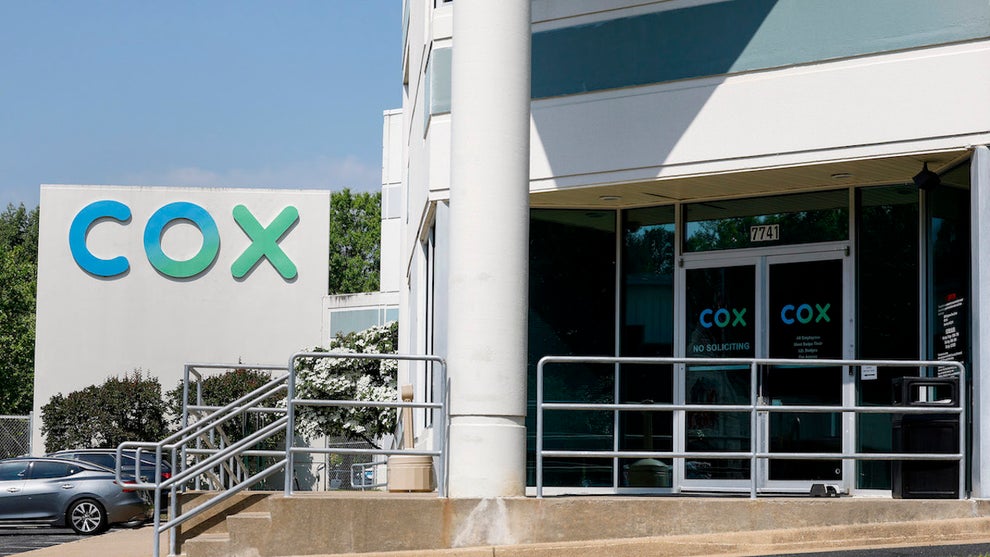
Charter Communications’ $34.5 billion merger with Cox officially closed on Thursday morning.
The Spectrum brand and pricing will now come to Cox markets in mid-September, with the combined entity taking the Cox Communications name within a year of closing. The company will also remain headquartered in Stamford, Connecticut, and will maintain a significant presence on Cox’s Atlanta campus.
The move, which received approval from the FCC and regulators across 45 states where the companies do business, creates the nation’s largest Internet and video provider by subscriber base.
“The addition of Cox to the Spectrum footprint is one that can be celebrated by customers, employees and investors alike,” Charter president and CEO Chris Winfrey said in a statement. “Together, we will bring the best products, at the best price, coupled with the highest level of customer service to more customers across our expanded 45-state Spectrum footprint. And Cox employees will soon have access to all the programs and benefits that have made Charter an employer of choice where its 100% U.S.-based employees can build long-term careers.”

A subsidiary of Cox Enterprises will now own approximately 26% of the combined entity’s outstanding shares after receiving 33.6 million common units in Charter Holdings, valued at approximately $5 billion, which are exchangeable for the company’s common stock.
It also received $6 billion in convertible preferred units of Charter Holdings and a total of $4 billion in cash. Additionally, approximately $12 billion of Cox debt and finance leases will remain outstanding at subsidiaries of Charter as a result of the transaction.
“For generations, my family has believed in building businesses that matter and stand the test of time,” Cox Enterprises Chairman and CEO Alex Taylor said. “The broadband industry has shaped how people live, work and connect with one another, and we believe deeply in its future. I look forward to partnering with Chris and the board to build on a proud legacy and create long-term value for our shareholders, customers, employees and the communities we serve.”

Additionally, Charter has completed an acquisition of Liberty Broadband in an all-stock transaction. Under the terms of that deal, Liberty Broadband shareholders received 0.236 of a share of Charter common stock for every share that they own, with cash paid in lieu of fractional shares.
As a result, Charter retired 38.6 million shares previously owned by Liberty Broadband and 33.9 million shares owned by its shareholders. Charter also assumed $840 million in Liberty Broadband net debt that will be repaid after closing and $180 million of preferred equity.
“When Liberty first invested in Charter more than a decade ago, we saw an opportunity to build scale behind a great management team and operating model,” Liberty chairman John Malone added. “The combination of Charter and Cox creates a stronger, more competitive company to further invest and innovate, while giving Liberty Broadband shareholders a direct interest in its future. I have tremendous respect for the Cox family and its long tradition of entrepreneurial leadership and responsible stewardship, and I look forward to seeing what Chris, Alex and their teams accomplish together.”

In order to clear the deal with the FCC, Charter committed to onshore all of the job functions currently handled off-shore by Cox within 18 months, matching its own longstanding commitment to a 100% U.S.-based customer sales and service employee workforce. It has also committed to extending its industry-leading jobs practices, including a $20 per hour minimum starting wage to Cox workers.
Additionally, Charter added new safeguards to protect against “DEI discrimination” and has reaffirmed the merged entity’s commitment to equal opportunity and nondiscrimination. Specifically, Charter committed to recruiting, hiring and promoting individuals based on skills, qualifications and experience.
In addition to its concessions to the FCC, Charter also reached a settlement with California’s Public Utilities Commission, the Public Advocates Office and the California Emerging Technology Fund (CETF), which includes a commitment to invest $30 million in digital inclusion initiatives, including broadband adoption, digital literacy training, community outreach and device access for underserved communities; at least $275 million to upgrade the company’s California network, completing symmetrical one-gigabit service capability across legacy service areas within three years; and $5 million in Community Development Financial Institutions to expand access to capital for underserved California small businesses.
The combined company also agreed to new affordable broadband offerings for low-income Californians, including multiple CaliforniaLifeLine service tiers and standalone broadband plans available for five years, as well as five years of free broadband and Wi-Fi service for 50 eligible “community anchor institutions,” such as schools, libraries and community centers. Charter-Cox will also expand outreach and enrollment assistance to help eligible households access affordable broadband services, expand workforce development through the VetConnect program and strengthen supplier diversity commitments.
Other protections include automatic bill credits for qualifying service outages lasting two hours or longer, continued honoring of eligible residential “price for life” service agreements, elimination of equipment exchange fees when customers upgrade or downgrade qualifying residential cable television service or return rented equipment in-person, enhanced battery backup options, annual customer notices for residential wireline voice service and new reporting and accountability requirements to monitor compliance with CPUC-ordered conditions.

Taylor will serve as chairman of Charter’s board, while Eric Zinterhofer will serve as independent director. Winfrey will continue as Charter’s president and CEO and board member. Cox also appointed Dallas Clement and Mark Greatrex to Charter’s 13-member board.
Advance/Newhouse, which, like Cox, contributed its operations to Charter’s partnership in 2016, will retain its two board seats held by Steve Miron and Michael Newhouse.
At close, Liberty Broadband ceased to be a direct shareholder in Charter and no longer designates directors for election to the Charter board. As a result, Martin Patterson and J. David Wargo have stepped down from the board, while John Markley Jr. retired. Balan Nair will continue to serve on the Charter board as an independent director.
Shares of Charter fell 4.4% on Thursday following the deal announcement.
