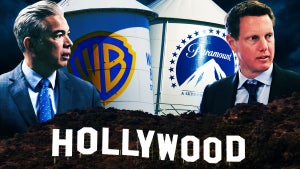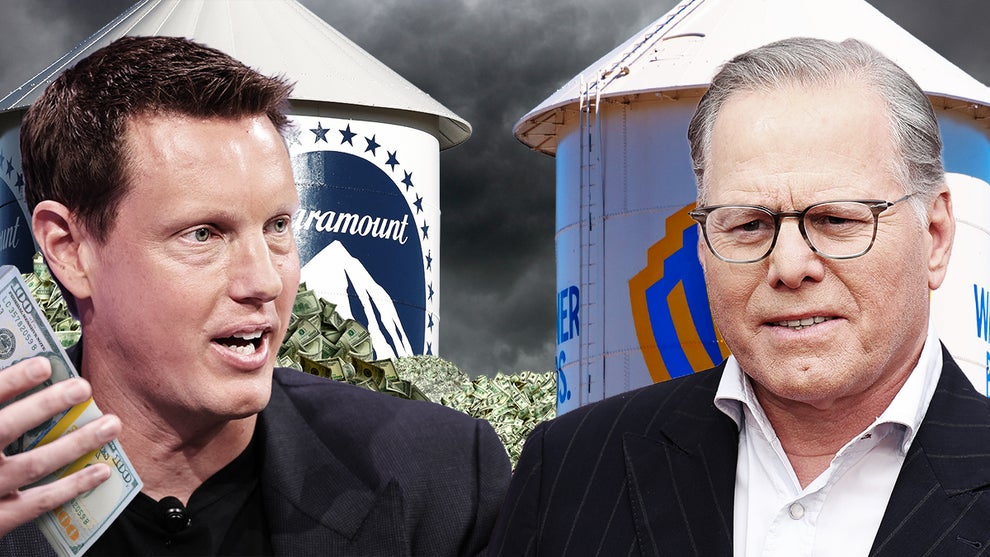
The proposed $110 billion merger between Paramount and Warner Bros. could be one of the largest financial transactions in American history. And now 12 state attorneys general, led by California AG Rob Bonta, filed an antitrust lawsuit to block it, in part voicing concerns about a “free and independent press.” The Writers Guild of America followed suit Tuesday, claiming it “would eliminate competition.”
But the central question under U.S. antitrust law is not whether a merger creates a larger company, but whether the government can show that it is likely to substantially lessen competition and harm consumers, workers or the broader economy – not merely competitors.
On the available evidence and our own analysis, the Paramount–Warner Bros. Discovery transaction does not meet that standard.
Instead, it would likely create a stronger competitor in entertainment and media, bringing new investment and dynamism to sectors under pressure while expanding choices and opportunities for consumers, workers, filmmakers, writers, directors, actors and theater operators who depend on a healthy production pipeline.

Any serious analysis must begin with the vast entertainment marketplace as it exists today. Consumers have access to an unprecedented array of content providers, streaming services, social media platforms, gaming companies and digital creators. Competition for audiences, subscriptions, advertising and creative talent is broad and intensifying.
A combined Paramount-Warner Bros. Discovery would face strong rivals not only in streaming but across film production and theatrical distribution. Sony, Universal, Lionsgate, A24 and independent producers compete alongside Netflix, Disney, Amazon, Apple and Comcast/NBCUniversal, while YouTube, TikTok and other digital-first platforms compete intensely for consumer attention and advertising dollars.
Nielsen reported that streaming represented 47.5% of total television viewing in December 2025. In Nielsen’s March 2026 Media Distributor Gauge, YouTube accounted for 13% of U.S. television watch time, while Paramount and Warner Bros. Discovery accounted for 8% and 6%, respectively. That’s hardly a Standard Oil monopoly.
Those are viewing shares, not formal antitrust market shares, and March Madness boosted both companies that month. Even so, they show that the combined company would operate amid substantial competition from Disney, Netflix, NBCUniversal, Fox, Amazon, Roku and others.
The challenge facing legacy media companies is not excessive market power but insufficient scale. Paramount and Warner Bros. Discovery own valuable studios, brands and libraries, but they compete against global platforms with larger technology budgets, deeper pools of capital and direct relationships with hundreds of millions of users.
If a merger enables two weaker firms to compete more effectively against larger rivals, that is procompetitive rather than anticompetitive. Blocking this transaction simply because the result would be a larger company confuses size with market power.

Former California Attorney General Bill Lockyer has argued that it should be reviewed carefully rather than automatically resisted, while former Connecticut Attorney General George Jepsen has warned that blocking the merger would not necessarily strengthen competition if it leaves legacy studios less able to compete against technology-backed rivals.
That evidentiary standard matters because the Justice Department conducted an eight-month investigation, reviewing more than two million documents from more than 80 custodians. It concluded that the transaction was not likely to harm competition, American consumers or workers in streaming video on demand, linear television or theatrical film development, production and distribution.
The department further concluded that its effect would be to “increase competition across the media and entertainment ecosystem, with benefits for American consumers and workers.”
The consumer benefits are concrete. A combined platform could bring complementary libraries into a more complete offering, improve search and discovery and reduce the need for some households to maintain two separate subscriptions. The transaction does not guarantee a lower sticker price, but a broader offering can increase value and place downward pressure on a household’s total streaming costs.
The labor question is whether a financially stronger company will finance more films and television programs and sustain more long-term demand for writers, actors, editors, camera crews, set builders, drivers, technicians, caterers and small businesses.
The Bureau of Labor Statistics reported that motion picture and video production shed 49,000 jobs over the decade ending in February 2026, a 21% decline. A merger alone cannot reverse that trend, but increased investment and production could support a more durable pipeline of work.
Paramount has committed to a minimum of 30 theatrical films annually across Paramount Pictures and Warner Bros., with the two remaining distinct studios and each film receiving a full theatrical release and at least a 45-day window before paid video on demand.
Their films together accounted for roughly one quarter of domestic box office revenue in 2025, leaving the majority to Disney, Universal, Sony, Amazon MGM, Lionsgate, A24 and other distributors. Theater owners would continue to have multiple suppliers and programming options.
The entertainment industry is fragmenting across viewing platforms, not consolidating into a single monopoly. This merger would strengthen the combined company’s ability to compete against numerous firms, several with larger global footprints.
These benefits are not guaranteed. The combined company should be held to its public commitments on 30 theatrical films annually, meaningful theatrical windows, continued investment in two distinct studios, streaming improvements and editorial independence. If it follows through, the result will be a stronger competitor and a healthier creative ecosystem.
The proper standard is careful, evidence-based review – not automatic resistance to scale. On that standard, the merger deserves approval. The federal government has ruled that way, and to benefit consumers, shareholders, and consumers, the states should follow suit.
Stephen Moore is a former senior economic advisor to President Donald Trump and now serves as the Chairman of Unleash Prosperity.
Robert Wolf served as CEO and chairman of UBS Americas and is the founder of 32 Advisors who served as an economic advisor to President Barack Obama on the Economic Recovery Advisory Board and Job’s Council.