
With the Writers Guild of America ratifying its four-year labor contract and SAG-AFTRA set to release its tentative agreement this week, the 2026 Hollywood labor contract cycle reaches its final stage this week with the Directors Guild of America set to begin talks with the Alliance of Motion Picture and Television Producers.
While the DGA went first in negotiations in 2014, 2017 and 2020, SAG-AFTRA went first in this contract cycle in part to have more time to discuss issues such as artificial intelligence protections and the guild’s recently launched streaming compensation fund for actors who work on films and shows that are particularly successful on newer platforms.
The WGA, meanwhile, reached a deal with the AMPTP that saw the studios contribute a record estimated $321 million to the guild’s struggling health plan in exchange for a four-year contract length instead of the usual three, an extension that is rare but not unheard of in the history of Hollywood labor as similar contract lengths were agreed to between studios and unions in the 1960s.
A deal with the DGA would represent a smooth wrap-up this contract cycle, which has served as a mirror to the last chaotic, strike-filled negotiation cycle. The WGA’s negotiations in particular were completed quicker than expected, bringing some stability to Hollywood at least in the immediate term. As with the other unions, the key issues for DGA revolve around AI and health care costs.
“The AMPTP is encouraged by the collaborative bargaining process that led to the WGA’s new contract and recent Tentative Agreement with SAG-AFTRA. We look forward to carrying that approach into formal negotiations with the DGA and remain optimistic that we can reach a fair and balanced deal that addresses key challenges, supports talented directors, and puts our industry on a path toward long-term stability,” the AMPTP said in a statement.

The DGA’s health plan is in a relatively more stable financial position than the WGA’s was. But insiders with knowledge of the upcoming talks note that like all union health plans in the United States, it is not immune to the effects of spiraling healthcare costs in the country, as the union’s most recent tax returns show that the plan lost $38 million in 2024.
A major infusion of employer contributions will be needed to ensure that the DGA plan does not get pushed to the verge of insolvency the way the WGA’s did. Like WGA and SAG-AFTRA, insiders at the DGA are staying mum on how open they are to making a deal for a four-year contract. But it wouldn’t be surprising if the AMPTP takes a similar approach to the WGA talks and offers a significant increase to studio health plan contributions in exchange for an extra year on the contract, even if the numbers and details change.
Also like the WGA, any health plan agreement will also mean increased member costs. The days of no premiums for individual members may soon be at an end, just as WGA health plan members will have to start paying $75 monthly premiums in July 2027. An increase to the $1,000 out-of-pocket limit may also be in the cards for DGA members.

Another key topic for DGA talks will be AI protections, namely when it comes to renewing the subletter that the guild secured in 2023. While the protections that WGA and SAG-AFTRA secured after months on strike got the headlines, the DGA was the first Hollywood union to secure language explicitly saying that the work done by their members cannot be delegated by a studio to generative AI.
While the sideletter’s renewal will empower established directors who are staunchly against using AI in their productions, the past three years have shown that such union protections have not stopped studios from exploring ways to use AI to streamline their production processes in ways that can cut out the work of human crew members, nor have they stopped film schools from integrating AI into their curriculums as they train the next generation of filmmakers.
The USC School of Cinematic Arts, for example, announced the construction of a new virtual production space that will allow students to utilize AI to generate backgrounds on LED panel walls. That space is set to open in Fall 2027.

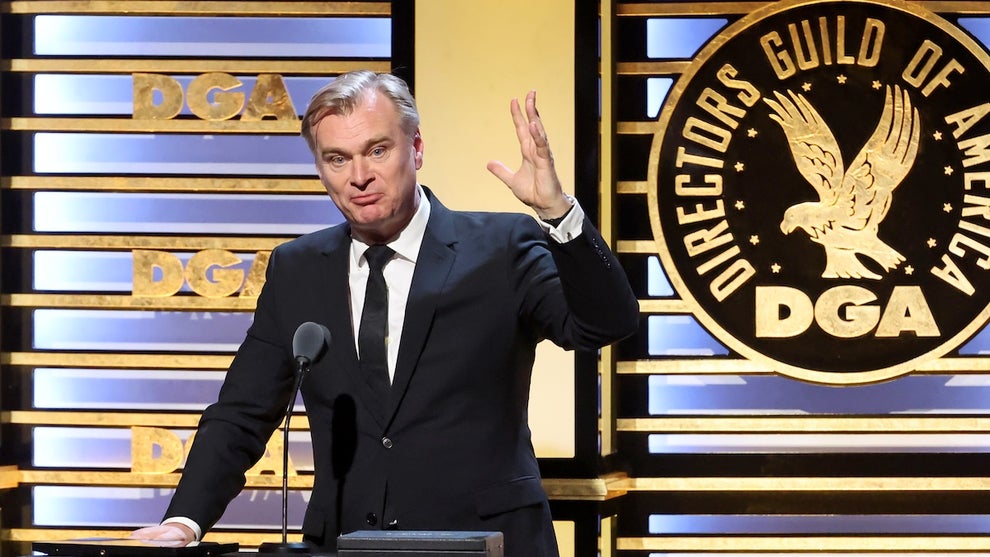
But while the DGA has little ability to halt the rise of AI, it is looking to halt the decline of jobs for its members. The guild’s associate national executive director Rebecca Rhine was a major voice advocating for the expansion of California’s production tax incentive last year, and has been pushing alongside DGA President Christopher Nolan and national executive director Russell Hollander for a federal U.S. tax incentive.
While much of the production job battle is legislative, DGA insiders told TheWrap they are exploring ways that it can increase employment through its labor contract, though it is keeping details confidential for now. We will see if and when a deal is reached whether new language securing more employment for assistant directors and unit production managers repped by the DGA is included in the agreement.
In addition to Nolan and Hollander, DGA’s negotiating committee is led by co-chairs Jon Avnet and Karen Gaviola. AMPTP president Greg Hessinger will lead talks on the studios’ side.
