
This weekend will be bookended by two major developments in Hollywood’s labor contract cycle.
On Friday, the Writers Guild of America will reveal the results of its membership’s ratification vote, and on Monday, the AMPTP will resume its contract negotiations with SAG-AFTRA after they went on pause more than a month ago.
It had been expected that SAG-AFTRA would not resume those talks until sometime in late May or early June, as the talks between WGA and AMPTP have been lengthy in recent contract cycles and negotiations with the Directors Guild are set to begin on May 11. But the window opened when, with a surprisingly brisk pace, the WGA reached a deal with the AMPTP on April 4 after just three weeks at the table.
It was a significant change not just from the April 2023 talks that led to a strike, but from several past WGA contract cycles where it took far longer to break through major impasses.
While the drastic changes were fueled in good part by the guild’s urgent need to fund its depleted health plan at a time when 1,319 union-covered TV writing jobs were lost from 2023 to 2024, insiders on both sides also created a more constructive approach to the talks with the AMPTP, which was led by its new president, former Screen Actors Guild executive director and CBS labor relations director Greg Hessinger.
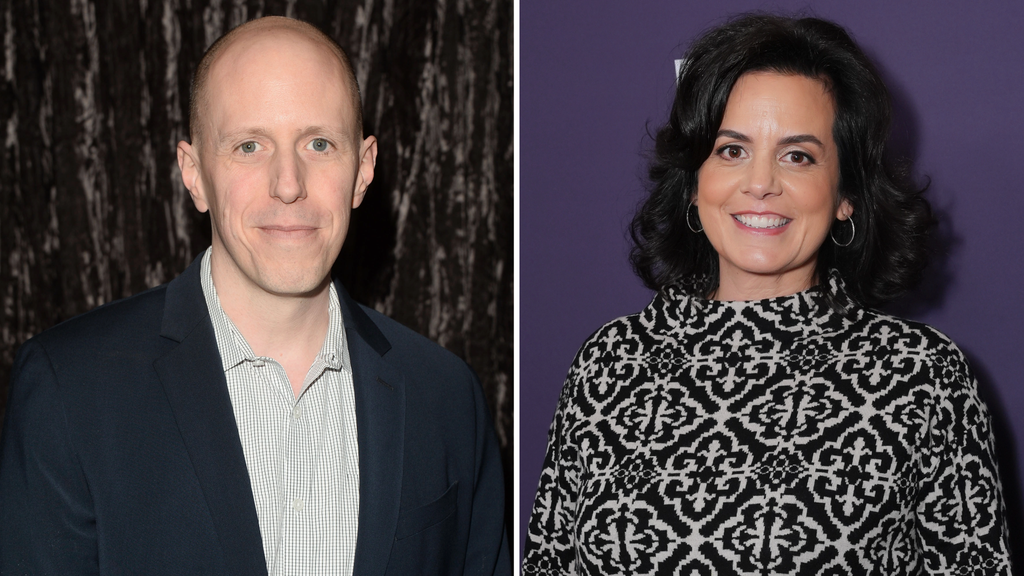
TheWrap spoke with WGA negotiating committee chairs John August and Danielle Sanchez-Witzel and several other insiders to find out how, exactly, this expedited deal happened, what main issues were on the table, how big of a role AI played and what this means for SAG-AFTRA’s ongoing negotiations with the AMPTP — including whether they may spring for the same trade-off WGA did.
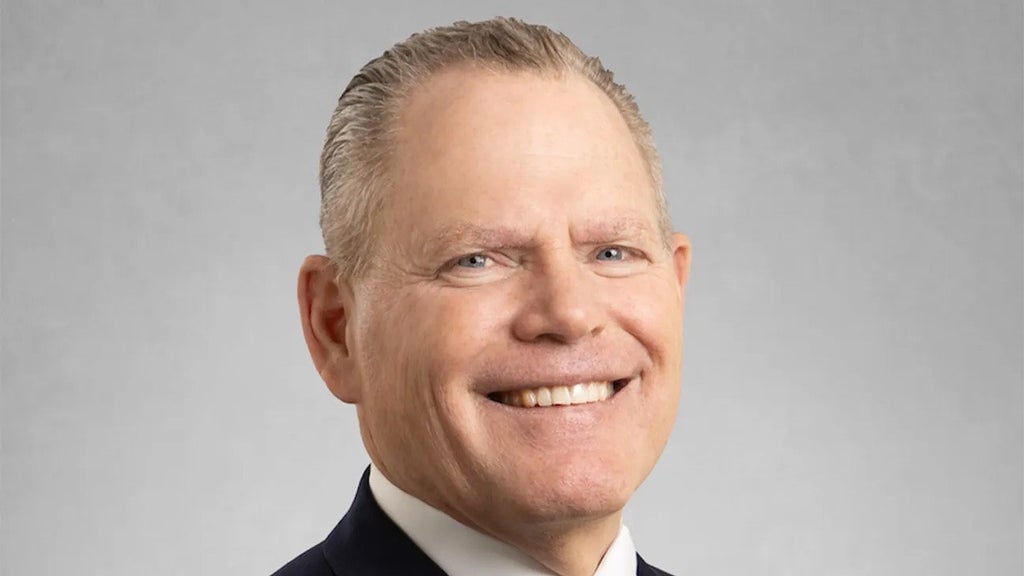
Hessinger wanted to send a message that the studios wanted to negotiate in good faith from the get-go by presenting an initial proposal that included a “significant and meaningful” increase to employer contributions to the health plan, according to studio insiders with knowledge of the AMPTP’s strategy. The record $321 million infusion was well above the estimated $66 million that the AMPTP agreed to during a contract negotiation period in 2017, which was so contentious that a deal wasn’t reached until less than an hour before the WGA’s strike deadline.
The hope within the AMPTP was that in doing so, the WGA would reciprocate by negotiating in good faith on the studios’ main demand: a longer contract cycle beyond the usual three-year period that has been the standard for the majority of the near century of Hollywood’s labor history.

In their account of the talks, Sanchez-Witzel did not have much to say about Hessinger specifically, but did say that they felt the AMPTP was far more willing to immediately dive into substantive talks over core issues compared to past cycles. In the opening days of the 2023 strikes, the WGA called out the AMPTP and then-chief negotiator Carol Lombardini for refusing to discuss terms on significant AI protections for writers as a major reason why they went to the picket lines.
“The big difference is that the companies came ready to talk on day one,” said August. “This is my fifth contract cycle and in past years there have been weeks where nothing got accomplished. We were getting to the actual brass tacks a lot faster.”
The issues
Which isn’t to say that there weren’t differences to work out. The AMPTP pushed for significant changes to the benefit structure of the plan to reduce the amount of money pulled out, while the WGA pushed further for more employer-side contributions. Studio insiders confirmed, though would not say by how much, that the final figure of $280 million in estimated employer contributions was larger than their initial offer and was one that the AMPTP agreed to in the final days of talks after a concerted push by the WGA.
Still, WGA members will be seeing their own healthcare costs go up. The days of no monthly premiums are over, as single participants will have to pay $75 per month starting in 2027 while those with multiple dependents will have to pay $200. In addition to other increases to deductibles and out-of-pocket maximums, the earnings threshold will increase beyond its usual annual rate in July 2027 from $46,759 to $53,773, 10% of the one-hour network primetime story and teleplay minimum.
When asked whether WGA members have voiced concern about those rising costs at a time when employment opportunities are scarcer, August acknowledged that there have been members who are worried, but noted that the one-time bump was a compromise to prevent a larger bump in the threshold that would have risked pushing more writers off of the plan.

“We wanted it anchored to something that actually exists in the contract. Before we came to that number, we sidebarred and spent an hour figuring out how would a member actually hit that number,” he said. “So that [$53,773] threshold is lower than being a staff writer on a 10-week writers room. It’s lower than being on a 20-week development room, lower than a 20-week normal TV room, lower than a 13-week Appendix A or a page one rewrite, so there’s members who are working are very often going to hit this threshold, though it is a change.”
AI and licensing
One major issue where there wasn’t much of a development was on AI. Though the technology has made major leaps and bounds since 2023, the WGA determined that those changes largely did not require modifications or expansions to the protections they negotiated three years ago, which included banning any AI-generated writing from counting as union-covered work or requiring writers to adapt from such material.
But the guild’s one big concern, the potential licensing of writers’ work to train commercial generative AI, stalled out fairly quickly in the negotiating room, especially after the demise of Disney’s $1 billion deal with OpenAI.
The AMPTP used that deal’s collapse as an example of how studios had not seriously developed a system that would make licensing creative material to AI companies into a revenue stream. The WGA agreed to terms that would allow them to call for a meeting with the AMPTP if a member studio moves forward on such a licensing deal over the next four years.
Entertainment attorney Jonathan Handel noted that it might not be tech advancements that decide if or when studios try another licensing deal, but the courts.
“The background law on fair use that applies when creative work is used to train models is still not settled. We only have two early decisions from federal district courts,” he said. “I don’t think the studios are going to make another major move on licensing deals until their legal departments are absolutely sure that they are on firm ground.”
Big gains with a trade-off
Sanchez-Witzel and August pointed to several other gains in the 2026 deal, including new minimums payments of $31,500 for low-budget films and $57,500 for high-budget films that require “page one rewrites,” where writers are hired to significantly or entirely rewrite an existing script, the closing of loopholes on the contract’s minimum staffing requirements for writers during production, and rules forbidding asking writers not on a project’s contract to do free work on a project.
That the AMPTP were willing to negotiate on any of these fronts came as a surprise to Handel.
“There might have been a scenario in the past where the AMPTP decided with the current state of the industry to go scorched earth. Just negotiate on the health plan, don’t talk about anything else,” he said. “That they agreed to things like the page one rewrite rule shows that there’s a big change in how the AMPTP is approaching these talks and how the WGA is approaching them as well.”
But all of that came with a major trade off, as the WGA’s contract will last four years instead of three with the next negotiations coming in the spring of 2030. Studios have argued that even one extra year of quiet on the labor front will give them more security to increase their film and TV output, which would theoretically allow them to reverse the downward trend in green lights that has unfolded since the 2023 strikes.
And now that one guild has agreed to a four-year cycle, pattern bargaining is on the AMPTP’s side as it resumes talks with SAG-AFTRA. While the two sides are on a media blackout and did not comment for this story, one insider at a studio told TheWrap that there is a feeling among the studios that a four-year cycle is one that SAG-AFTRA, which has to negotiate multiple contracts that influence one another, would be willing to agree to if terms on AI and other key issues can be agreed upon.
But AI especially will be key for SAG-AFTRA. While union AI protections for writers remain watertight against the advancement of technology over the past three years, the same cannot be said for actors. The likes of Tilly Norwood have made synthetic performers a real possibility for productions, and SAG-AFTRA will need to update its protections accordingly as it has in its interactive media and commercial contracts.
And with even more rapid developments to consumer-facing AI coming in the years ahead, the SAG-AFTRA contract will almost assuredly need to have language that will enable the union to modify its protections around performer consent and compensation in relation to that tech for the union to agree to any longer cycles.
As for the WGA, Sanchez-Witzel and August say that a four-year cycle doesn’t change the core mission of the WGA: look out for writers, enforce the MBA, and make sure that writers are paid and treated fairly.
“Collective action doesn’t just happen during an MBA cycle,” said Sanchez-Witzel. “It happens every day and in every step of the writing process.”
“It’s worth remembering that the WGA has agreed to four-year contracts in the 60s and 70s and went back to three years later on,” reminded August. “That is something we can do again in the future. For now, this was a deal we agreed to secure the future of our health plan, and we were able to get to a place where both sides felt good about the agreement.”
