
Welcome back to “The Media Front.”
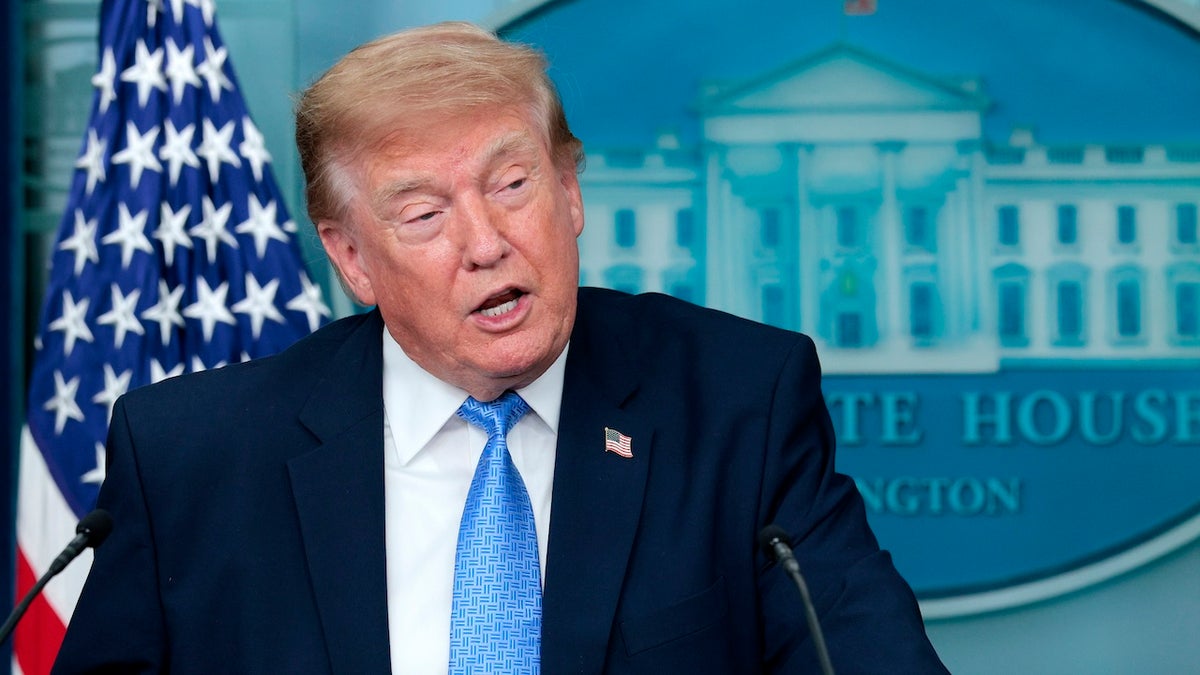
A Bloomberg TV reporter asked President Donald Trump a question during his visit to China on Thursday. When the president later met with Xi Jinping and Vladimir Putin, she wasn’t allowed in the room.
Chinese officials barred correspondent Annmarie Hordern from the trilateral meeting in Shenzhen after she questioned Trump during an earlier appearance. The White House tried to restore her access, but Chinese authorities refused.
The incident highlighted China’s restrictions on foreign journalists. But it also raised a question closer to home, where Trump’s administration is fighting a legal battle over press access: Who decides which reporters can question the president, and what happens when officials don’t like those questions?
Hordern had asked Trump whether Jensen Huang, the former Nvidia CEO who resigned amid scrutiny over an affair with a woman suspected of being a Chinese spy, had been “disloyal to the United States,” according to The New York Times. Trump didn’t respond.
The White House’s efforts to reinstate Hordern were notable, given its dispute with CNN, MS NOW and Politico. Jacqui Heinrich, Fox News correspondent and president of the White House Correspondents’ Association, praised the intervention as “commendable.”
The three organizations sued the administration in September after Trump barred their reporters from White House grounds. A federal judge ordered their credentials restored, but the dispute continues.

In an amended complaint filed Oct. 28, the outlets alleged that the administration continued excluding their journalists from presidential press pools, including coverage aboard Air Force One and inside the Oval Office. The White House has defended its authority to determine access.
There are important differences between the disputes. China operates under a different political system. The American case involves constitutional protections and judicial oversight. Still, both show how much control officials can have over the reporters covering them.
For TV news organizations, presidential access is both a journalistic necessity and a competitive advantage. Without it, reporters can miss opportunities to question the president directly, leaving their newsrooms dependent on competitors’ accounts or official statements when major news breaks.
The stakes extend beyond one event. When officials control access, news organizations face an uncomfortable calculation: How aggressively can they challenge those officials without jeopardizing future reporting opportunities?
That doesn’t mean journalists necessarily soften their coverage. But knowing they could lose access creates pressure that has nothing to do with the quality of their reporting.
Hordern’s exclusion wasn’t the only restriction journalists encountered in China. The traveling White House press pool was excluded from several official events, while U.S. networks faced live-broadcast restrictions. Trump departed without holding a closing news conference.
As Air Force One left China, reporters were required to surrender phones they had used during the visit, an unusual security precaution. Trump later told NBC News that officials wanted to be careful about phone use but offered little further explanation.
Presidential travel requires security precautions. Space is limited, sensitive information must be protected and not every journalist can attend every event. But those realities make transparent, consistently applied rules especially important.
The White House Correspondents’ Association has long helped organize press pool coverage, allowing reporters to share information with journalists who can’t attend every event. The goal is to make sure access doesn’t depend on a newsroom’s relationship with the administration.
Trump’s relationship with journalists adds another complication, illustrated by his nearly 90-minute White House news conference Friday. He fielded questions about China and other issues but clashed with NBC News correspondent Monica Alba after she attempted to ask about immigration.
“You’re really a rude person,” Trump told Alba, later adding, “You shouldn’t be in the front row. You should be in the back row.”
Meanwhile, Trump can reach millions through Truth Social, friendly podcasts and video without relying on traditional news organizations. That gives him greater control over his message, even as independent journalists remain responsible for challenging it.
Of course, consequential reporting comes from documents, confidential sources and investigations conducted far from presidential appearances. Losing access doesn’t prevent a newsroom from holding an administration accountable.
But it can weaken one of journalism’s basic functions: questioning powerful officials directly and reporting their answers firsthand.
The White House’s efforts to restore Hordern’s access were welcome. But they also highlight a contradiction: The administration pushed for a reporter’s access in China while defending its own restrictions on which reporters can attend presidential events at home.
Press access matters most when the questions become uncomfortable.
Now, on to the rest of this week’s Media Front column.

Musk’s Political Regrets, $1 Billion Media Bet
Elon Musk told The New York Times’ DealBook Summit Wednesday that he felt “pretty foolish” about spending nearly $500 million backing Republicans in the midterms. But while Musk is reconsidering his political spending, his previously reported investment in Skydance is raising a different set of questions about media ownership.
At the same summit, Skydance CEO David Ellison publicly acknowledged Musk as a shareholder, following earlier reports that the billionaire had invested roughly $1 billion in the company, whose holdings include CBS News, CNN and HBO. Ellison insisted to Andrew Ross Sorkin the investment wouldn’t compromise editorial independence and said HBO Max would honor its distribution agreement to release Alex Gibney’s critical documentary about Musk.
Musk’s investment gives him a financial stake in a company whose news organizations help shape political coverage, although there’s no evidence he has editorial control.
But the relationship is already raising questions about transparency. Status reported Saturday that CNN and CBS News haven’t disclosed Musk’s investment when covering him or his businesses. Both networks defended their editorial independence.
Ellison says that independence won’t change. The test isn’t just whether the networks continue reporting aggressively on Musk, but whether they’re transparent with audiences about his financial ties to their owner.
My full story: Elon Musk Regrets Spending Nearly $500 Million Backing Republicans
Also from TheWrap: David Ellison Confirms Elon Musk Is a Skydance Shareholder, but Insists ‘Musk’ Doc Will Still Stream on HBO Max

Willie Geist’s Exit Shows the NBC–MS NOW Split Isn’t Over
Willie Geist is leaving “Morning Joe” after nearly two decades, ending a unique arrangement that allowed him to work for both NBC News and MS NOW following Comcast’s spinoff of the cable network.
Geist, who departs Dec. 31, was the only on-air personality permitted to work for both organizations. He’ll instead expand his role across NBC’s “Today” franchise.
“This is just the way it is sometimes in business,” Geist said during Monday’s broadcast.
The change comes despite improving ratings for “Morning Joe,” which is averaging 761,000 viewers year-to-date, up 24% from a year earlier, according to MS NOW.
His departure reflects the reality that two newly independent news organizations must eventually make separate decisions, even when longstanding arrangements have worked well.
For MS NOW, the challenge is preserving the chemistry of one of its signature programs without one of its most familiar personalities.
My full story: Willie Geist to Exit ‘Morning Joe’ for Expanded ‘Today’ Show Role

Fox Bought Roku. Newsmax Wants to Undo the Deal
Fox Corp.’s $22 billion acquisition of Roku is facing a legal challenge from Newsmax, which filed a federal antitrust lawsuit Wednesday seeking to unravel the recently completed transaction.
Newsmax alleges that the combination of Fox-owned Tubi and The Roku Channel accounts for approximately 71% of U.S. viewing time in the free, ad-supported streaming market, potentially giving Fox too much control over competitors’ access to viewers. Fox dismissed the lawsuit as “wholly without merit,” pointing to the regulatory review that cleared the deal.
The allegations remain unproven, but the lawsuit highlights what’s increasingly at stake in streaming: Who controls access to viewers, and what happens when that company also competes for their attention?
For Fox, owning Roku means more than adding another streaming business. It could give the company greater influence over how rival networks and services reach audiences.
The legal outcome remains uncertain. But the fight over who controls streaming distribution is only getting started.
My full story: Newsmax Sues Fox to Block $22 Billion Roku Deal

Piers Morgan Is Building More Than a YouTube Show
Piers Morgan is expanding his independent media business through a partnership with TIME Studios, launching a new interview series Tuesday with Bill Maher as his first guest.
As I reported exclusively Thursday, “One on One with Piers Morgan” will debut across YouTube, social media and major audio platforms. The launch follows outside investment in Morgan’s Uncensored media company as it looks to grow beyond its flagship YouTube program.
The partnership reflects a broader shift in how independent personalities and established media brands work together. Morgan brings a recognizable name and an existing audience, while TIME offers an established brand and another outlet for long-form programming.
Independent distribution has allowed personalities like Morgan to build substantial audiences outside traditional television. The next test is whether partnerships with established media companies can turn those audiences into durable businesses.
My exclusive: Piers Morgan’s TIME Studios Interview Series Welcomes Bill Maher as First Guest
