
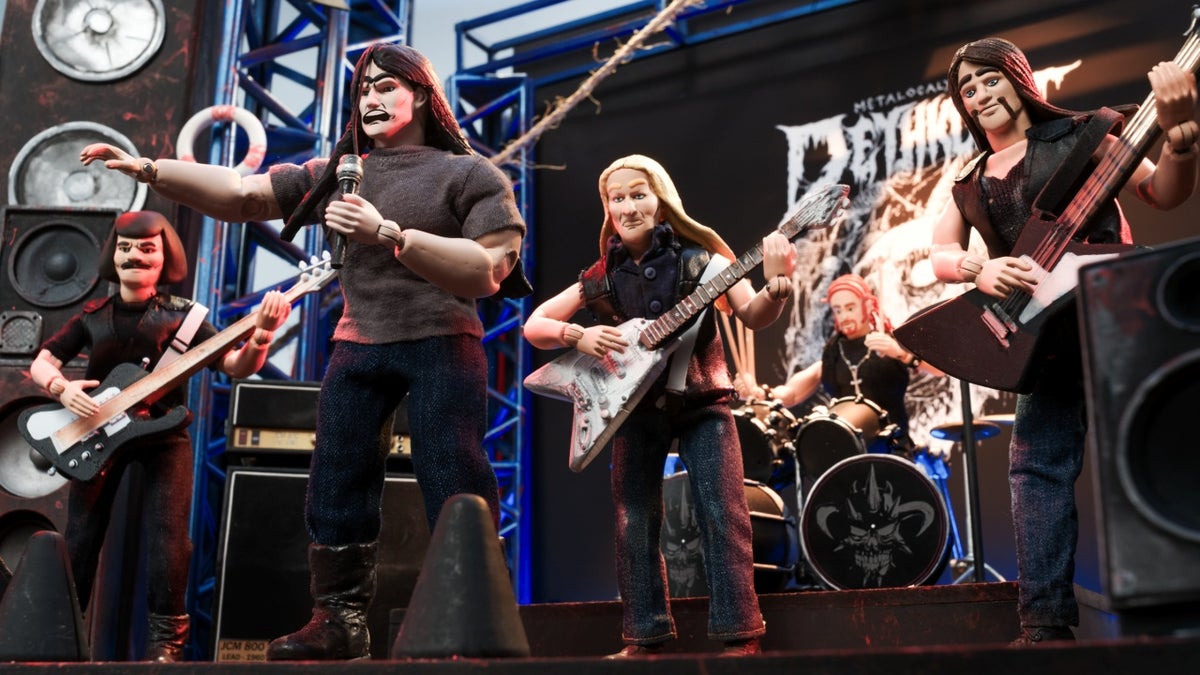
It’s difficult to watch the “Robot Chicken Adult Swim Special” — which features a fart-talking butt with legs and a holstered gun as a key character — without asking yourself “how is this allowed to be on TV?” That’s not a question you’re only asking about the episode, but about Adult Swim as a whole.
After all, it feels like a wicked joke that Cartoon Network’s late night programming block for adult animation, weird comedy and big swings — already an aberration when it launched in cable’s heyday in 2001 — is somehow thriving with its own ratings juggernaut in “Rick and Morty” even as the rest of cable slowly slides into oblivion.
Even the folks behind Adult Swim don’t really understand it.
“I don’t know the answer to that,” Michael Ouweleen, the president of Adult Swim, half jokingly told TheWrap. “The key to it is to not ask that question too many times out loud.”
Created by Seth Green and Matthew Senreich, “Robot Chicken Adult Swim Special,” which premiered Sunday, was created for the brand’s 25th anniversary and was designed to wonderfully capture its degenerate ping-pong match between crude humor and scathing cultural criticism. At one point, Dethklok — the metal band central to “Metalocalypse” — rocks so hard they awaken the sea god Poseidon. Minutes later, an AI robot is ranting that it can effortlessly replace the “random” humor of the programming block, echoing the very-real concerns of artists everywhere. It’s madness. But it’s also exactly the kind of madness that Adult Swim deserves.
The special underscores what has helped Adult Swim establish a distinct identity. Watching Adult Swim has always felt a bit like watching something shown to you by your older brother. You knew you probably weren’t supposed to be watching it, and that it was going to blow your mind. That ethos has been a crucial part of Adult Swim and Cartoon Network.
“There’s no separation between us and the audience. We’re interested in the exact same things and have the exact same approach to being interested in music, games, culture, obviously animation and comedy,” Ouweleen said. “We 100% see the job as we want to show you something they haven’t seen before and that we haven’t seen before. That gets us excited.”
That consistent approach throughout the years has paid off. During a time when so many networks have pulled back from animation, Adult Swim has debuted the same steady stream of about eight to 10 original shows. “Rick and Morty” has become a juggernaut across all of television, standing as Adult Swim’s most popular show of all time as well as a crown jewel in the Warner Bros. Discovery empire that’s frequently mentioned on earnings calls and in advertiser presentations.
But most importantly, during a time when cable is in decline and so few networks mean anything to the modern viewer, Adult Swim’s name still has value. When you watch Bravo, you know you’re going to get reality TV stars fighting in beautiful locations. And when you watch Adult Swim, you’re going to get funny stoner animation that will probably haunt you for weeks.
“I have super passionate feelings about Adult Swim and what it represents as a landing zone for all of these self-proclaimed misfit, bleeding-heart artists,” Green told TheWrap. “It’s a place where creators can try crazy stuff and maybe fail, where an audience knows they’re always safe to see something alternative to the average or commercial league pursuit. That’s what we tried to capture, as foolish as that may sound.”

For Adult Swim, it’s been a multi-decade battle of curating the right vibes, while being aggressively and almost stupidly unafraid of change. As so many other networks and studios are scrambling to lure Gen Z creatives to their channels, Adult Swim doesn’t have that problem thanks to that carefully crafted reputation.
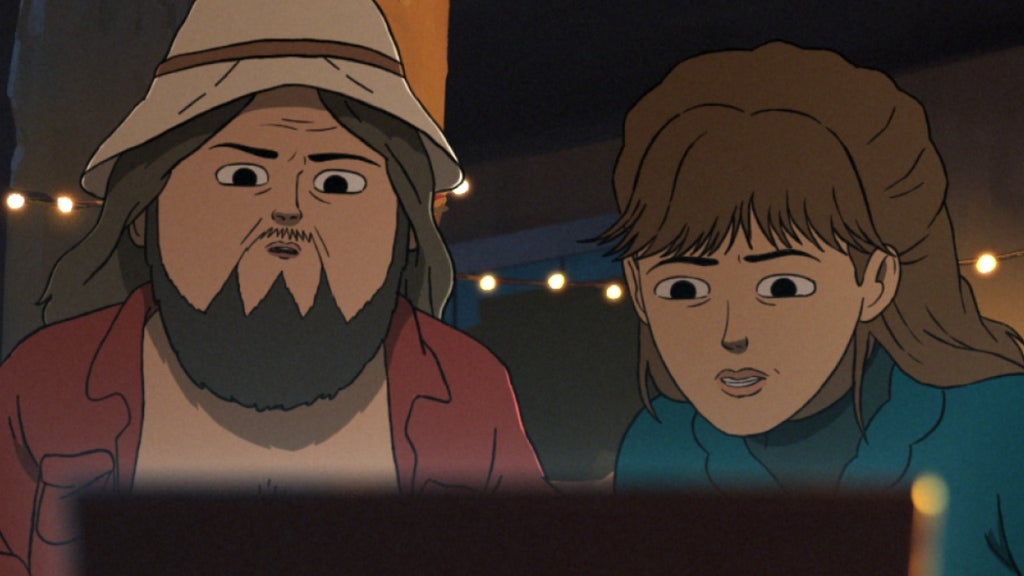
Joe Cappa, the creator of the bizarrely emotional “Haha, You Clowns,” grew up watching Adult Swim. So did Joe Bennett and Steve Hely, who created the ambitious crime noir “Common Side Effects.” Bennett, who was raised in Georgia, even used to pitch the comedy hub ideas at its Atlanta headquarters when he was in high school.
Then there’s Michael Cusack, the co-creator of the incredibly popular and innovative “Smiling Friends” as well as the deeply silly “YOLO,” who grew up as an Adult Swim fan from Australia. When he was younger, Adult Swim wasn’t even available in his country, meaning that he came to love the programming block through YouTube clips and videos swapped online. Stories like Cusack’s will likely become more common as HBO Max has made the niche brand available to an entire world of lovers of weird animation.
“These are people that have grown up enjoying what they’ve seen from Cartoon Network or Adult Swim,” Ouweleen said. “We’re like, ‘You finally came home. Thank God you’re here.’”
Creating the “Robot Chicken” special
“Robot Chicken” co-creator Matthew Senreich started pitching what would become the “Robot Chicken Adult Swim Special” five years ago. True to form for the comic-loving duo, Senreich pitched the special as a Secret Wars for Adult Swim, referring to the massive Marvel comics crossover event that included The Avengers, Spider-Man and the X-Men.
“When the 25th anniversary lined up, [Ouweleen] was like, ‘I think it’s time,’” Senreich said.
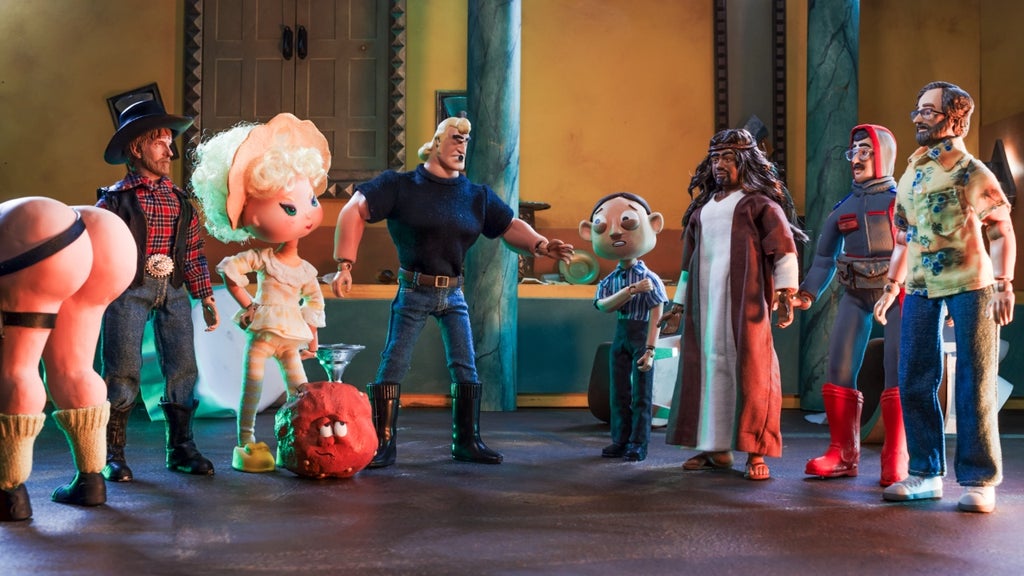
Though the 22-minute special was designed to be a big, celebratory crossover event, it was put together the same way as every “Robot Chicken” special. The story came first, a courtroom trial that sees Adult Swim on trial for a faulty cruise ship that caused 846 deaths. (Spoiler alert: AI is revealed to be the actual culprit.) After the general beats of the story were established, the team then focused on which Adult Swim characters to include based on which shows were important to the brand, their personal tastes and what made sense for the story.
After editing the special’s script, the team started to build out its vocal tracks, a process that required them to create a sort of radio play for the episode’s storyboard. All this work meant that the team had a good understanding of how long the special episode would be before animation work even began.
“There were plenty of things we wanted to include that simply didn’t fit. I can only fall on my sword, humbly apologize and say I cast the final vote,” Green said.

As for what made the cut, Green and Senreich focused on shows that were specific to Adult Swim. Unfortunately, that meant titles like “The Boondocks” — Aaron McGruder’s brilliant sitcom produced by Sony Pictures Television — and “Family Guy” — Seth MacFarlane’s longrunning Fox comedy — weren’t included even though both were a big part of the programming block’s history. Characters from Adult Swim’s most recognizable shows, like “Rick and Morty,” “Smiling Friends,” “Common Side Effects,” “The Venture Bros.” and “Tim and Eric Awesome Show, Great Job!” naturally appeared.
But Green and Senreich also included several lesser-known nods, such as “Space Ghost Coast to Coast,” one of Cartoon Network’s first forays into original programming, as well as Adult Swim’s first show to feature a female protagonist, “Lucy, the Daughter of the Devil.” Even Adult Swim’s live action content, like Tyler, the Creator’s “Loiter Squad,” “The Eric Andre Show” and Sandy Honig, Alyssa Stonoha and Mitra Jouhari’s “Three Busy Debras,” were given a spotlight.
Because of the sheer amount of characters featured in the special, scheduling was a challenge. Somewhat ironically considering how vital “Tim and Eric” were to sculpting Adult Swim’s voice, Eric Wareheim was the last star to record. “We were not entirely sure we were going to be able to get him. We were so close to mix,” Green said.
But generally, it was easy for the “Robot Chicken” team to pull so many voice actors and series creators into the studio, even those who hadn’t worked with Adult Swim in several years.
“Because Adult Swim has been so close knit with all the creators, it was not hard to make the initial phone calls to these people and just say, ‘Hey, we’re doing this crazy thing. Are you interested in playing with us?’ They all said yes,” Senreich said. “The hardest part was, when we went into the records with a lot of these people, they ended up hanging out way longer than they should have.”
Adult Swim’s punk identity
Adult Swim started in the midst of corporate parent company chaos.
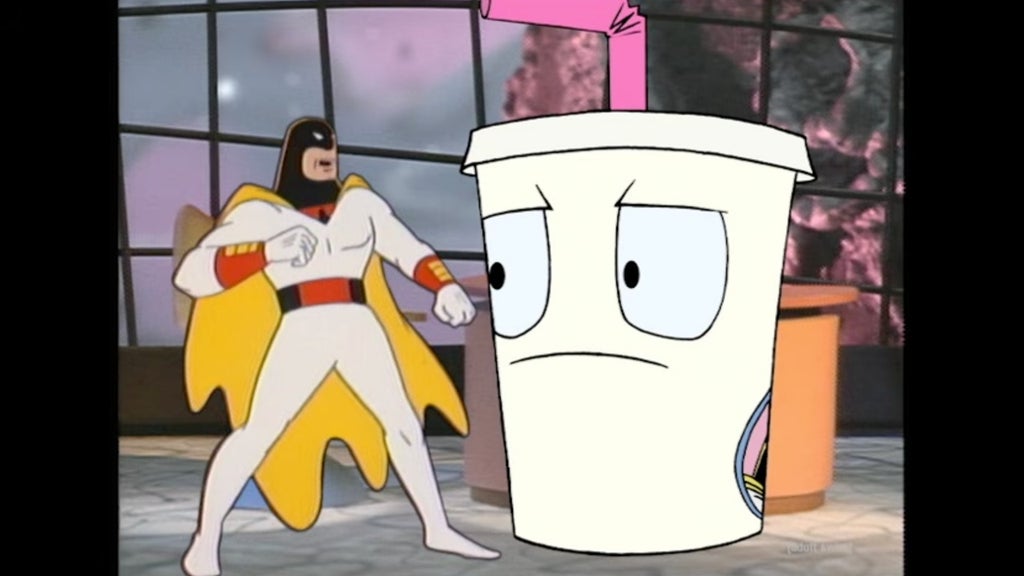
The four series that would join “Space Ghost Coast to Coast” in becoming the first wave of Adult Swim programming (“Sealab 2021,” “Harvey Birdman, Attorney at Law,” “Aqua Teen Hunger Force” and “The Brak Show”) premiered in late December of 2000. Days later, AOL acquired Cartoon Network’s parent company Time Warner Entertainment in a deal worth $182 billion.
The programming block was never a ratings juggernaut, but it became a cult favorite among a very specific and coveted demographic — young men aged 18 to 34. For that reason, Adult Swim was an advertising darling and often featured during upfronts presentations and fan-focused events like San Diego Comic-Con.
Adult Swim hasn’t been immune to the declines of cable. Last year, about 36% of U.S. consumers said they subscribed to cable or satellite TV compared to the 76% of viewers that subscribed to cable in 2015. But during this tumultuous time in television, the subset of Cartoon Network has retained its distinct identity, successfully launched popular new shows and maintained its popularity among young people interested in alternative comedy over the course of three corporate mergers (and with a possible fourth one on the horizon).
When asked what the secret was, Ouweleen said, “We live in Atlanta, Ga., in a building everyone forgets is part of the company.”
That’s only partially a joke. Adult Swim’s headquarters is in a former carpet warehouse that’s across a highway from the main campus that houses other Warner Bros. Discovery cable properties like TNT and TBS. That distance has bred a culture of scrappiness, experimentation and risk-taking.

From day one when Mike Lazzo, Khaki Jones and Andy Merrill were recutting clips of “Space Ghost” to make a talk show, the executives and showrunners behind Adult Swim have been obsessed with pushing the envelope to make shows and specials that have never been seen before. For example, Toonami, Adult Swim’s beloved anime block that was vital in popularizing anime in the United States, was created as a way for producers Sean Akins and Jason DeMarco to fill up programming time on Cartoon Network and show audiences cool shows they liked.
“It kind of becomes this family of young people coming in and pushing forward what we’re doing and evolving it,” Ouweleen said. “To use my English literature degree, T.S. Eliot had this idea about writers that the pencil is all of literature, and the people at the tip of the pencil are bringing the tradition into the modern era. That’s how I see what Adult Swim is doing.”
Ouweleen is acutely aware how difficult it is to create a truly original show, let alone an animated one. He estimated that his first show, “Harvey Birdman, Attorney at Law,” which was also co-created by Erik Richter, put three animation studios out of business before they figured out how to make it. “We almost got canceled like four times, and rightfully so,” he said.
“We all at Adult Swim think it’s our mission that if you’re good, we’re going to come help you and set you up. That’s what we’ve done since the beginning,” Ouweleen said. “We’ve broken more new, first-time series creators than anybody, almost recklessly. Because if you don’t know what you’re doing in animation, it will run you over.”
Those show creators include big names like Genndy Tartakovsky, Tim Heidecker, Eric Andre, Adam Reed, Lionel Boyce and Casper Kelly, the creator of “Too Many Cooks” and director of the film “Buddy,” which hit theaters this past weekend.
Maintaining the weird magic in 2026
Since Adult Swim content started living on HBO Max, giving cord-cutters access to its content and platforming megahits like “Rick and Morty,” a few things have changed.
“There was a real heyday where the advertising money was so important to the larger ownership that Adult Swim was allowed to operate with a degree of autonomy,” Senreich said. “As we’ve moved more into streaming priorities, there’s a little less free reign, and there’s thresholds that have to be met for any of it to be allowed to operate. But you have excellent stewards at the helm.”
The changing of the tides towards streaming has meant cutting odd experiments that didn’t have a viable business model, like “FishCenter Live,” a live talk show Ouweleen described as “creatively excellent” that was livestreamed on Adult Swim’s website from 2014 to 2020. It was cut at the same time the company shut down its livestream division. This new age also means navigating Adult Swim’s streaming strategy without cannibalizing cable viewership for new shows.
“We’ve had tremendous luck and success [on streaming],” Ouweleen said. “I’d say eight out of 10 things have completely worked on both linear and streaming, neither to the detriment of either platform.” One of those shows is “The Boondocks,” a show with a streaming performance that has “never flagged,” Ouweleen said.
“We’re using the same ethos in terms of development,” Ouweleen said. “We have enough reason to believe — performance-wise and research-wise — that everyone’s like, ‘Yes, yes, please, more.’”

There has been one change at the division. Because of the global reach of HBO Max, most Adult Swim shows have to be streaming-ready the same day they premiere in the U.S. That means show episodes need to be delivered eight weeks earlier to account for dubbing.
Adult Swim also has “Smalls,” its development program for newer animators and show creators as well as the programming block’s main way of working with emerging talent. Some of the artists featured on “Smalls,” like “Haha, You Clowns” creator Joe Cappa, have gone on to work for Adult Swim. As for trying to drive new interest to older IP, the social arm of the brand has been experimenting more with shortform content. Adult Swim’s social channels now feature a collection of funny, deranged snippets from long-canceled shows like “12oz Mouse” and “Xavier: Renegade Angel.”
Ouweleen doesn’t care much about how that content performs. “I care more about us experimenting there and learning,” he said.
But really, Adult Swim is committed to maintaining the same atmosphere it’s always had. “We haven’t quite gone into ‘Let’s do “Tim and Eric” for the vertical age.’ We haven’t, and it’s because there’s not a business model there,” Ouweleen said. “We think our main job now is animation.”
