
In this installment, we look at advice from top creators and creator industry experts on how to work with the TV and film industry.
These days, you can’t go a week without a headline about a new partnership between a widely popular creator and a legacy media company. Both Alex Cooper and Alix Earle have reality shows on Netflix. Dhar Mann is making content for Disney+ and Fox. Curry Barker is set to direct a reboot of “Texas Chainsaw Massacre” with A24 and an original horror movie with Universal Pictures.
The convergence between creators and Hollywood is here. But as these worlds become more intertwined, it’s less clear how creators should manage their newfound attention.
“For years, we’ve all been looking for mainstream validation, and it almost feels like we were made to want that,” Jay Shetty, the host of “On Purpose,” told TheWrap, just two months after signing a unique co-distribution deal with Spotify and Netflix.
Shetty’s right in his assessment. There are countless creators who only started posting online because they were having trouble landing acting, writing or directing jobs in Hollywood. But as they continued to post, these creators built large, loyal audiences from the ground up. Now these same creators that were ignored by the entertainment industry are the hot new kids around town.
It can be tempting for creators to fall into the same trap that has ensnared hapless Hollywood creatives throughout the decades, one that involves abandoning creative control and accepting mediocre deals for the chance of being part of showbiz. But, thanks to their large audiences, creators — whether they make shortform content on TikTok, longform YouTube videos or podcasts — have more leverage than almost any other creative profession that’s ever been part of Hollywood.

“We are at an unprecedented moment where Hollywood needs creators, and creators can benefit from Hollywood’s infrastructure, financing and expertise,” Greg Goodfried, an agent at CAA Creators, told TheWrap. ”My advice is to make sure both sides are getting something of real value from the relationship.”
So how can creators do that? After speaking to 12 experts in the creator economy as well as reporting on this industry daily for over a year, the same pieces of advice have emerged. Nearly all of the creators who have successfully expanded their channels to be part of the film and TV industries have followed these principles:
- Have conviction in your content
- Prioritize owning your IP
- Stay true to your audience
- Choose to go into business with the right people
- Don’t abandon your online platforms
- Learn how to speak the language of Hollywood
- Prepare for a marathon, not a sprint
Welcome to Trade Secrets, TheWrap’s insider guide to making it in Hollywood. In previous installments, we’ve shared industry knowledge about how to get a TV show or film greenlit, how to break into a writers’ room, get into a film festival and find representation.
When a creator successfully partners with Hollywood, it can be a thing of beauty. In addition to expanding their audience to a different demographic and creating another possible income stream, partnering with streamers, networks and studios can increase a creator’s financing for more ambitious projects, provide them with a more robust marketing and distribution plan, assist with production and provide support for logistical headaches like making sure a project is cleared for a specific age range or that it’s accurately dubbed.
But more than anything else, creators who partner with these traditional industries gain the benefit of Hollywood’s talent pool. For years, Hollywood has been the global gold star when it comes to creating mass entertainment. If you’re looking for a partner to make your creative project better, it’s hard to argue with the hundreds of thousands of professionals who have devoted their lives to doing that very thing.
If you’re a creator looking to jump to the next level, here’s what you should keep in mind before scheduling that pitch meeting.
Have conviction in your content
The most important quality every creator needs is confidence in their content. If you’re in a position where a major company like Universal or Disney is seriously considering partnering with you, you’ve done something right. Don’t let the potential allure of a bigger partner or the notes from an executive you’ve just met dissuade you from what you know is core to your art.
“The key is to have a really clear point of view that is evident in your content and to have a meaningful, engaged audience,” an executive at Netflix who specializes in creator content told TheWrap.
When Netflix is evaluating whether or not they’re going to work with a creator, they pay more attention to how engaged a creator’s audience is rather than their overall viewership numbers. If your fans follow you from YouTube to TikTok, chances are they’ll follow you from YouTube to Netflix. If that’s the sort of behavior your viewers demonstrate, highlight that.
“Creators build their audiences on authenticity and a strong point of view, and my advice is to carry that with them as they step into bigger opportunities,” Kudzi Chikumbu, vice president of Creator Partnerships at Tubi, told TheWrap. “Many are used to being the entire crew — writing, shooting and editing on their own, so succeeding here means bringing that same voice into a room built on collaboration.”

It’s important to be confident in shows, movies and concepts you’ve already developed — especially since there’s proof that they resonate with your audience. But it’s equally important to stay true to your gut feelings as an artist and creator. That’s where many creatives can run into trouble.
“Pick the things that matter to you. Pick the things that you have a vested interest in,” Seán McLoughlin, better known by his YouTuber name Jacksepticeye, told TheWrap.
McLoughlin noted that when a creator starts a social media channel, they can do so to build a business or use it as an artistic outlet. The creator, who has more than 31 million YouTube subscribers and who is a producer on Sony Pictures’ upcoming “Bloodborne” movie, is more interested in the latter.
“I want to make something that’s good,” McLoughlin said. “I don’t want to just start getting my name attached to every single adaptation because it’s being offered. When you do jump into this space, you do start having a lot of conversations from people that will throw a million projects at you. I trust my own instincts for what I know will work and what won’t work and what I attach my name to. It has to be something that I’m into. So I would say, stick to your guns, trust your instincts. If something feels off, which it invariably will, listen to your gut and what that’s telling you, and only get involved in the stuff early on that you feel like you can add to.”
Prioritize owning your IP
One of the biggest assets a creator can have, especially when it comes to potentially expanding with studios, is ownership over their intellectual property. If possible, don’t relinquish that ownership, which can be your most valuable asset.
“My advice is going to sound backwards: Build a business that doesn’t need Hollywood, and Hollywood just might be interested,” comedian and actor Kevin Fredericks, aka KevOnStage, told TheWrap. In addition to having over 2.6 million followers on Instagram, Fredericks also has a multi-project deal with Tubi and is part of five podcasts.
“Studios don’t take risks on unproven ideas. So the moment you own your craft is usually the moment you become interesting to them,” Fredericks said. His advice is similar to a common refrain heard across the creator economy.
“The biggest mistake creators make when a network or studio comes calling is walking in as talent instead of as a business,” Neil Waller, co-founder and co-CEO of Whalar Group, told TheWrap. “The ones who do well show up with their own IP, their own audience and their own production capability. They’re negotiating a partnership, not auditioning for one.”
Shetty echoed the importance of ownership, noting that “owning your creativity is the greatest lesson you’ll ever have in your entire life.”
That ownership can take many forms such as a creator and studio co-owning a property or a creator agreeing to air co-created series on a streamer for a limited time before gaining the ability to add the show to their YouTube channel. Beyond potential financial gains, IP ownership also gives creators a say over the future of their projects. Even if a streamer may want to cancel a series, if a creator owns the series’ IP, they can continue making that project on a digital platform rather than being forced to abandon what could very well be a passion project.
Stay true to your audience and trust your analytics
Most entertainment creatives have a good sense of their artistic voice, but what sets YouTubers and TikTokers apart are their audiences. Traditional filmmakers will make a movie or a short over the course of months and then wait even longer for their project to be released. That’s not the case with creators, who know what resonates with their audience within minutes.
Most studio heads would kill for the kind of insights creators have on their channel’s dashboard. So when you’re entering these meetings, don’t be distracted by a corporation’s insights. You know your audience better than anyone else, and you have the data to back that up.
“This is the first generation of creatives and storytellers that have grown up with that direct access to that data, meaning they haven’t been led with just their own blind gut or the loudest voice in the creative room,” Brandon Baum, who has 16 million YouTube subscribers, told TheWrap. “I think that listening has only sped up the training flywheel of us going from creation to getting insights and then learning how we can do better the next time.”
Baum believes that these insights will contribute to creators potentially becoming “the greatest generation of storytellers that we’ve ever seen.” Knowing exactly what resonates with your audience and how that preference aligns with the art you want to make can help you stay true to your artistic vision. That level of audience expertise can also make you attractive to potential studio partners.
Creators also have the ability to use their audiences to directly communicate with traditional celebrities. Kurt Stadelman, the vice president of Talent Management at the creator marketing company Pearpop, thinks of a creator’s relationship with their audience as a “superpower.”
“They have their highly engaged audience that will take action on their behalf, and so if a creator really wants to get the attention of a certain somebody in Hollywood and they don’t necessarily know how to do that directly, they have the ability to let their audience kind of do it for them,” Stadelman said. “That’s unique to creators who have this social capital with their audience because they have this connection that they’ve developed over years and years of creating content and interacting with them.”

Choose to go into business with the right people
As you’re building out a potential expansion, make sure you’re doing it with people who understand your vision. That’s true of anyone looking to build a business or trying to make a career in the entertainment industry, but it’s especially true of creators. Because creators are often entrepreneurs, talent, directors, writers and producers all at once, they have more complicated needs than the average entertainment professional. The right agent, manager and executive understands that distinction and works with creators rather than treating them like just another actor or director.
“Having the right people behind you will definitely help you,” Laro Benz, who has 24.9 million TikTok followers, told TheWrap. Benz stars in Tubi’s “House Rules,” his first hosting job on a competition show, and he praised his agent for making sure he felt comfortable in this new role. “They’re doing what’s best for me. There are people who won’t do that, but I feel like if you have the right people that genuinely want to see you succeed, want to see you win and want to see you grow — not just as a creator, but just in this business in general — that’s what you really have to look for.”
Wondering what you should look for as a creator interested in representation? We’ve got you covered on that front.
Don’t abandon your online platforms
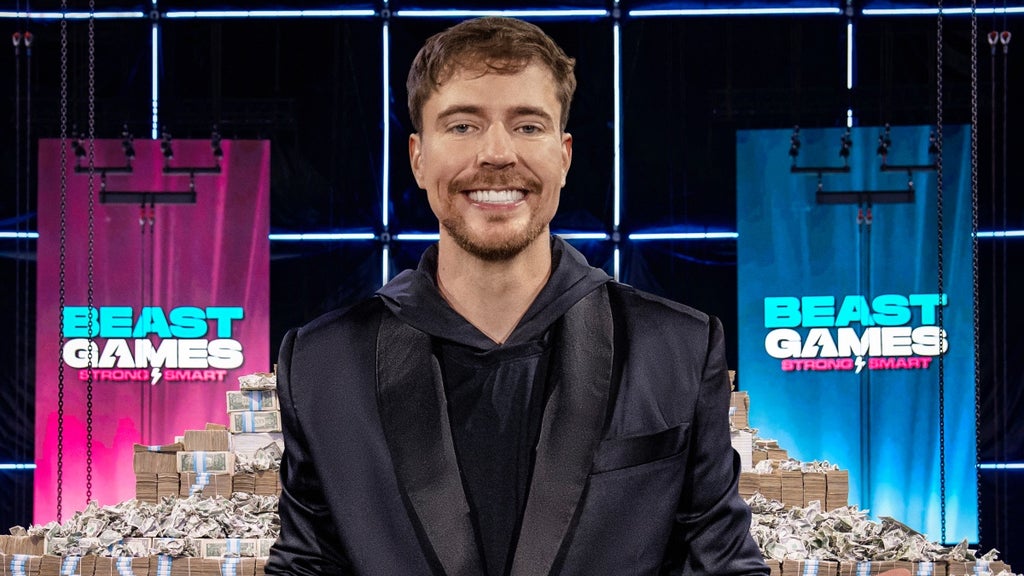
There’s a common belief in Hollywood that once a creator “makes it big” on a show or movie, they’re going to ditch their online followers. However, the most successful creators out there have done the exact opposite. After “Beast Games” became the biggest unscripted show in the history of Prime Video, MrBeast, aka Jimmy Donaldson, continued to make content on YouTube. Donaldson said he has no intention of leaving YouTube and has even experimented with different content on the platform. And after Kane Parsons’ “Backrooms” became the highest grossing movie in A24 history, Parsons went back to uploading unsettling hallways on his YouTube channel.
Those aren’t flukes. They’re intentional decisions.
“Creators should be careful not to abandon the online platforms and communities that built their careers and keep them directly connected to their audiences,” Goodfried said. “The focus should be on identifying specific projects that are best suited for traditional television, film or streaming, and working with networks and studios to bring those projects to life while continuing to invest in and engage the powerful communities creators have built online.”

Learn how to speak the language of Hollywood
The worlds of Hollywood and creators have their own shorthand, and mastering both will give any creator a leg up in negotiations.
“Part of my job is being fluent in both the traditional entertainment world and the creator economy,” Ali Wald, vice president of talent at Digital Brand Architect, told TheWrap. “Right now, most rooms are only speaking one of those languages fluently, and at DBA we’re often translating between the two.”
Failing to learn the language of the entertainment business is a common pitfall for anyone looking to make the leap to Hollywood. To make this pivot successfully, you have to understand what streamers, networks and studios are looking for in a creative partner. Most often, these institutions are looking for original voices that resonate with a large audience, proof that audiences will follow a creator across platforms, proof that an audience will watch a creator’s work for an extended amount of time and flexibility. Being able to execute one idea well is great, but proving that you can adapt across multiple formats from game shows and reality to scripted series is a game changer.
“For creators looking to make that transition, the key is learning how to translate the value you’ve already built online into something the traditional entertainment world can understand and get behind. Your following may get you the meeting, but what gets you the deal is being able to clearly and specifically articulate your point of view, who your audience is and why nobody else can tell this story the way you can,” Wald said.

“Hollywood networks and studios are inherently risk-averse, and for good reason. They’re used to spending a lot of money on content, with a lot riding on whether it works,” RJ Larese, the U.S. president of the creator talent agency Sixteenth, told TheWrap. He noted that creators come from the exact opposite world where they often experiment with their content and can take major risks that would often be deemed too costly for a major studio.
“Use that to your advantage. If you have an idea for a show, don’t just put it in a deck and wait for someone in Hollywood to say yes. Make a version of it. Put it on social. See what people respond to. Iterate on it. Build an audience around it,” Larese said. “Then, when you walk into a network or studio, you’re not asking them to take a leap of faith on an idea. You can show them the idea, the execution, the views, the comments and the audience response. You’ve already started to de-risk it for them.”
Larese believes that the smartest creators will use the ability to test and prove ideas on digital platforms to their advantage.
“And if Hollywood still doesn’t get it, make it anyway,” he added. “Partnering with a network or studio can give you incredible resources, distribution and scale, but it’s no longer the only way to get something made or find an audience. That shift in power is one of the most exciting things about being a Creator right now.”
Prepare for a marathon, not a sprint
Finally, don’t expect the perfect Hollywood partnership to manifest overnight. Everything mentioned above — developing your voice, creating engaging IP, proving that there’s an audience for that IP and building the right team — takes time. As frustrating as the process can seem, that time can prove to be your greatest strength.
Take Shetty for example. His deal with Netflix didn’t happen overnight but was the result of working with people on the streamer’s team for nine years. Those nine years allowed Shetty to hone the voice of “On Purpose” and truly understand what he wanted out of a partnership.
“I almost think that the pace to get there is good because you have a lot more confidence by the time you’re there,” Shetty said. “I’d also add, if you’re rejected, it might be the best thing that ever happened to you.”
