
In this installment of Trade Secrets, we offer advice for what aspiring filmmakers should do once they graduate from film school.
It’s an experience shared by many a college grad: You walk across the stage, grab your diploma and are soon mobbed by family and friends all with the same question: Now what?
It’s a hard question to answer. You can spend years in film school gaining skills and making connections, but finding post-grad employment is a whole different beast. That’s made all the more difficult in a fast-contracting industry where things like box office, California production and legacy studios just aren’t what they used to be.
“We have definitely seen a contraction in the traditional model where it’s like, ‘Oh, we’re going to graduate and go directly into the unions,’” Alyssa Katalyna, special project coordinator for the Office of Industry Relations at the University of Southern California, told TheWrap. “The jobs just simply aren’t there.”
But it’s not all doom and gloom. Katalyna’s office specializes in helping students set themselves up for success and make crucial connections in the industry that will carry them to employment.

While the old models of production are undeniably changing, Katalyna sees growth in areas like indie production, short filmmaking, an internet-to-big-screen pipeline and more.
“Just because one way gets dammed up doesn’t mean people are going to stop,” she said. “The dreams just expand into different things that weren’t there before.”
TheWrap spoke to a series of filmmakers, including horror architect Jason Blum and Gen Z phenomenon Curry Barker, as well as Sundance filmmakers like Natalie Erika James and Adrian Chiarella, to see how they broke into the industry and what advice they have for the next generation of film school graduates.
Here are the key takeaways:
- Use your connections: The people you went to film school with are the same people trying to break into the industry.
- Keep your eyes open: Don’t lock yourself into one discipline if you’re finding opportunities in another. What new mediums (like verticals) are out there?
- Lean on artist development programs: Grants, foundations and mentorship opportunities exist to give new artists a shot. Find one that works for you.
- Don’t be afraid to pick up a camera: Platforms like YouTube are making it easier than ever to get your work out there. If you’re not getting the opportunities you want, make your own.
Welcome to Trade Secrets, TheWrap’s insider guide to making it in Hollywood. In previous installments, we’ve covered the process of how to get a movie greenlit, who the actors are with green light power and in our last installment, what creators need to look for in representation.
“The biggest hurdle for that is them believing that people want to see their stories. I think it usually takes about a year or two for people to find the courage to be like, ‘You know what? It doesn’t matter. If I’m making it for me, then I’m getting better, I have a portfolio,’” Katalyna said. “It’s actually quite beautiful when they find that confidence to start sharing stuff. They get so personal and they get so weird with it.”
Where should I start?
If you’re reading this article, you probably already know the story of Curry Barker.
Barker made one of the year’s biggest hits in “Obsession,” a horror movie about a man who faces deadly ramification after wishing his crush would love him more than anyone. It went on to become the highest-grossing feature to cost less than $1 million of all time, crossing the $400 million mark at the worldwide box office in early July.
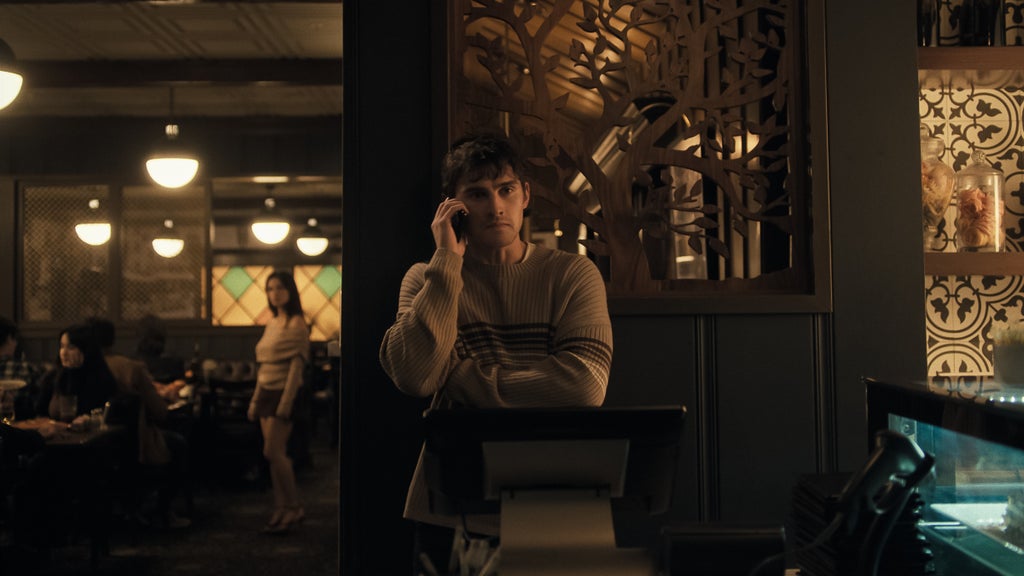
The opportunity to direct “Obsession,” his first theatrical feature, didn’t simply land in Barker’s lap. He attracted investors through years of hard work as a filmmaker outside the traditional studio system, cultivating an audience on YouTube through a mix of sketch comedy and low-budget horror short films.
“I’m always thinking about budget,” Barker told TheWrap. “Actually, I feel like it really changes my style quite a bit.”
There’s a lesson to be learned here: This director founds massive success as a direct result of the hours he put in on YouTube. There, he learned how to write on a budget and how to turn projects around quickly, all while acting, directing, writing and editing. It’s a process Barker started honing during his own days in film school at New York Film Academy’s Los Angeles campus.
“When I was doing ‘Real World,’ which was my first short film ever, that was like working on a script and being in a school where there were enough people around to do this,” Barker said of his film school days. “Gathering those people around, it’s not about money, it’s about, ‘Hey, we’re doing this thing. Do you want to be a part of it?’”

Barker would soon leave film school before graduation, dropping out with his frequent collaborator Cooper Tomlinson to pursue their sketch/horror channel, That’s a Bad Idea, full-time. Of course, you might call dropping out of school to be a YouTuber a “bad idea” in its own right. But it clearly paid off for Barker, who said these videos taught him how to write on a budget and deliver projects well before his first feature opportunity came knocking.
“You have to rely on things happening off camera. You have to rely on sound design,” he said of writing low-budget. “In my early work, I did a whole short film called ‘Drywall,’ which is about World War III happening, but it all takes place inside this apartment. It’s just sound design, literally just hearing stuff outside their apartment. It was a way of doing a crazy movie for no money.”
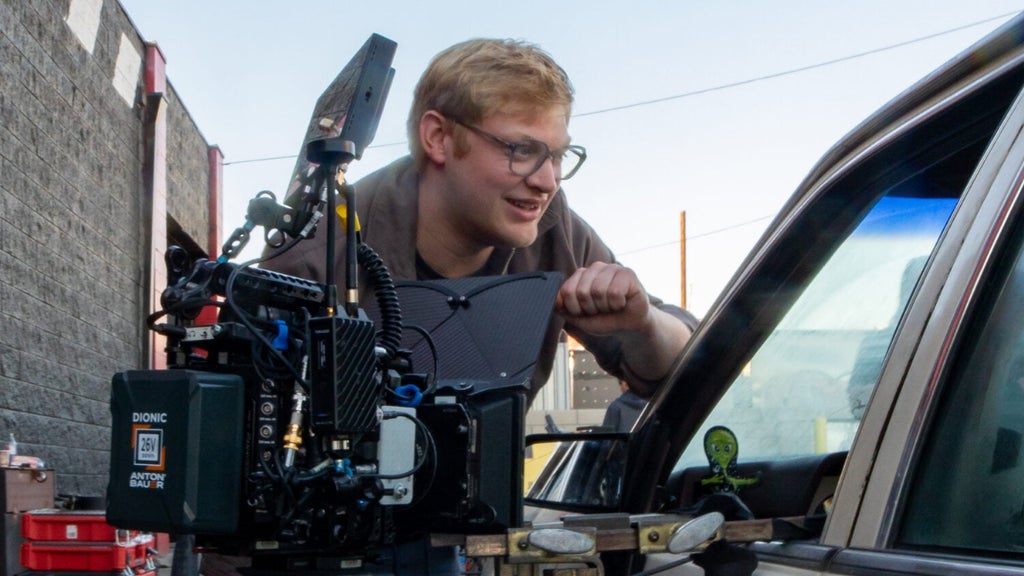
Horror bigwig Jason Blum says the online pipeline has become an increasingly viable way for young filmmakers to get their careers off the ground (it also paid off for Kane Parsons, who made “Backrooms” into A24’s highest-grossing feature ever).
“I sometimes teach classes with film students and they always say, ‘What advice do you have?’ I always say, ‘Make stuff and put it on YouTube,’” Blum told TheWrap. “I couldn’t do that when I was young. There was no opportunity to do that. I think it’s great. I think it’s a really fertile place to find new voices and transition people.”
Katalyna likewise supported the method of filmmakers using short films and video platforms to build their resumes fresh out of school rather than jumping immediately to features. Her office compares filmmaking to hiking: “No one’s going to climb Mount Everest their first time. That’s how people get hurt.”
“Build that community with the shorts so that you have, much like Curry — that revenue of trust so you can do the bigger things and you can create something as incredible as ‘Obsession,’” she suggested. “I think every person that we’ve now talked to in the last two months since that movie has come out, they’re in here like, ‘How do I do that?’ We’re just like, ‘Do what Curry did.’”

Do I need to stick to my plan?
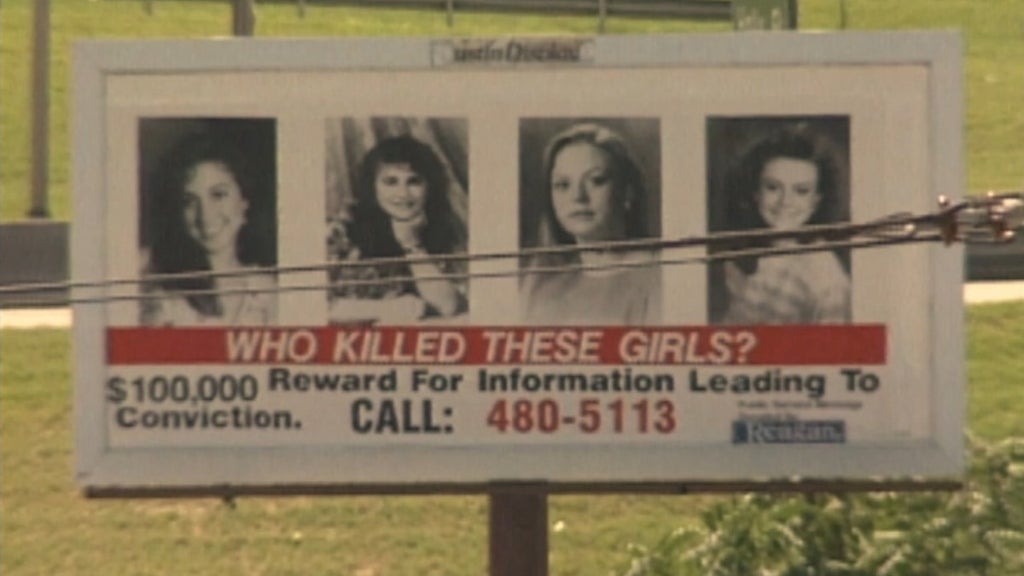
But maybe YouTube isn’t the path for you. Maybe you decide to go through more traditional channels and work experiences. That was the path taken by Maragaret Brown, the filmmaker behind HBO’s buzzy true crime doc “The Yogurt Shop Murders.”
“I had a million odd jobs. When I started, I was PAing. I was interning to meet people. This one internship I did at Good Machine, it was like James Schamus, Ted Hope, they all were my bosses,” Brown said. “I still know a lot of the interns that work there.”

Brown started her film career as a student of cinematography at NYU, taking on PA and location gigs when she transitioned to the professional workforce. When back problems prevented her from pursuing cinematography professionally, she kept herself open to new opportunities, using the skills and connections she’d gained to transition to directing documentaries.
“I remember the first interview I did for my first film, it was for this band in Texas called The Flatlanders — Joe Ely, Jimmie Dale Gilmore, Butch Hancock — and they just teased me the whole time because I was so nervous and so shy,” she said. “I really had to change my personality to be a director. That doesn’t come to me naturally.”
In a similar vein, Katalyna noted that new avenues consistently open up for filmmakers to explore. Though there’s much skepticism around the field, she said that many USC alumni are finding value in working verticals (also known as microseries) and gaining experience as filmmakers in that fast-growing arena.
“We have quite a few recent alumni who are making a really good living directing, writing, producing,” she said. “What’s even better about that is that most of our international people are able to get those jobs, so alumni who previously were struggling to get any kind of visa, struggling to get anyone to sponsor them, they now have work where they are leaders as soon as they graduate, and that is incredible.”
The fast nature of these vertical films, Katalyna said, allows alumni the opportunity to gain a breadth of experience and hone their craft without making the same commitments you would find on long-term productions.
“They’re shooting those things within two months, whereas, unfortunately, the traditional sets, it’s maybe half a year, three quarters of a year. With verticals able to spin their episodes so quickly and get the next one up and running, you’re seeing these teams start forming and say, ‘OK, this is a writer, director and producer team that have been moving through the different verticals,’” she said. “They have been able to negotiate better contracts for themselves, been able to negotiate bigger budgets, so that’s been a success story.”
Do I need to take the first (non-paying) gig that comes up?
Brown similarly encouraged alumni to keep their minds open, exploring various opportunities as they come — with one significant note.
“Try to get paid,” she said. “Your time is worth money.”
That’s a conversation that comes up in Katalyna’s line of work often. Though she acknowledged that sometimes students feel forced to take on jobs that are unpaid, she also noted that there are multiple ways to get value for your time.
“In the ideal world, no one would ever work for free. However, you can’t be hired as a script reader if you’ve never done it before. So I think it’s trying to find those places where your volunteer work is being compensated in other ways, like the Austin Film Festival, where you can read your way into a producer’s badge and then get to be part of a beautiful writers’ conference,” Katalyna said. “That’s a good handoff. But if someone’s asking you to donate your mind, body, soul and time for nothing in return, I think there’s other avenues to look at.”

Should I take jobs outside my chosen field?
It can be tempting as a young filmmaker to pounce on the first job you can get. A bird in the hand, right? But Natalie Erika James, director of the 2026 horror movie “Saccharine,” got a piece of advice when she was a young film school grad that’s stuck with her ever since.
“I thought I should look for a job working as, like, an AD, because that was something that I did for my friends at film school. My teacher at the time told me, ‘If you want to pursue directing, you should just direct. Just don’t get too sidetracked.’ I always remembered that.”
This advice served James well. Her debut feature, “Relic,” premiered at Sundance before being acquired by IFC Midnight during the pandemic. She later went on to direct “Apartment 7A,” a “Rosemary’s Baby” prequel that streamed on Paramount+. In 2026, “Saccharine” got acquired by IFC and Shudder right at the start of Sundance.
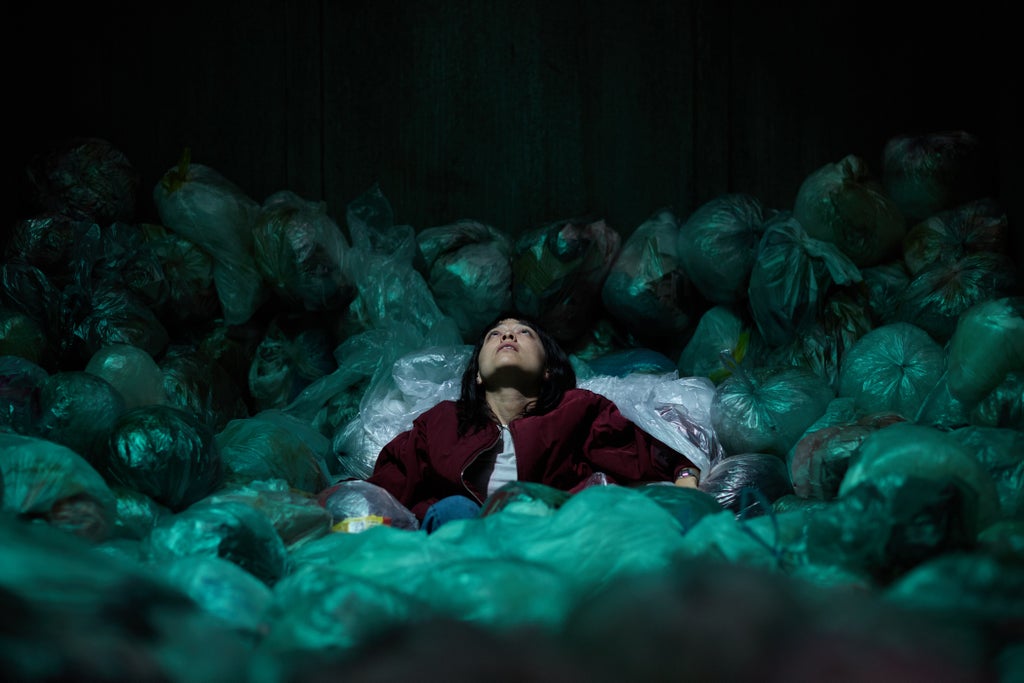
The horror filmmaker acknowledged the harsh reality that sometimes, you need to take what jobs you can get to pay the bills. Still, she encouraged those who can afford the opportunity to only take long-term gigs that help get them where they want to go.
“I think it’s really important to obviously do what you can to make rent, but also have that clarity of vision of where you’re going and make sure you’re climbing the right ladder,” she said. “Particularly if you’re working in longform, that can eat up a lot of your time. It meant that I was doing things that fit around my creative work — I’d shoot weddings and worked more in commercials, and I certainly worked in production and ADed commercials. But I never went down the longform paths on set that weren’t leading to growing.”
Katalyna had a similar piece of advice, encouraging alumni to not stifle their passions by taking on a slew of jobs that aren’t serving them in the long-term.
“Don’t burn yourself out as you’re trying to get started, because then you’ll lose the love of the game really quickly,” she said. “I think it’s really important that folks focus on what they can afford to do both mentally and monetarily.”
What’s the real value of film school?
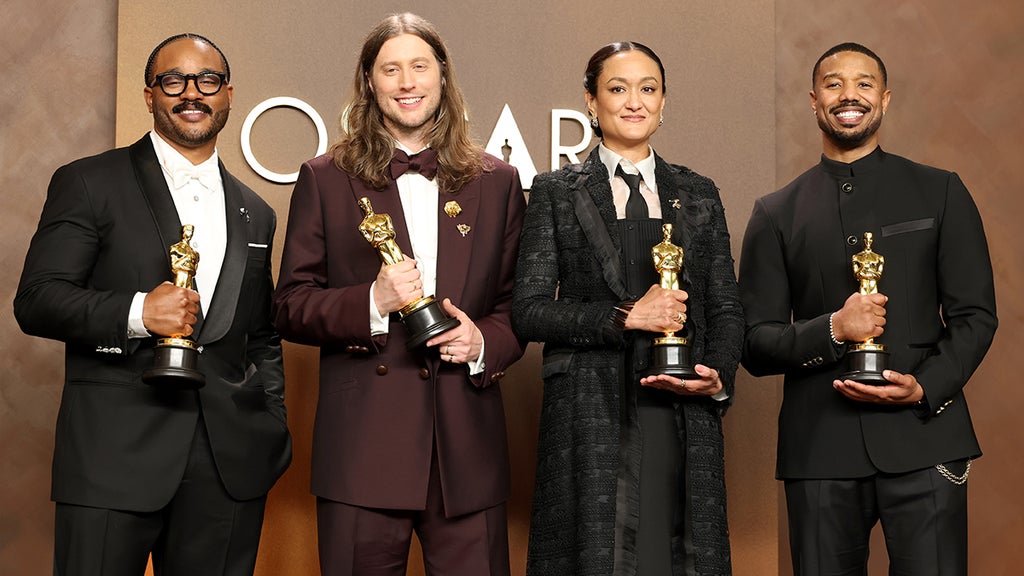
At the 2026 Academy Awards, Ryan Coogler took the stage to accept the statue for Best Original Screenplay for his smash hit “Sinners.” Though his films had already picked up a few awards, it was the first Oscar personally won by the “Creed” and “Black Panther” filmmaker.
“Everyone’s North Star is Ryan, as he continues to hold that torch for us,” Katalyna said of the USC alum. “We just love to see it.”
Soon after that, Ludwig Göransson went up to accept the Academy Award for Best Original Score for his work on “Sinners” — his third Oscar total following score wins for “Black Panther” and “Oppenheimer.”
It was a big night for Coogler and Göransson, two collaborators who worked together long before they were winning Oscars. In fact, their team-ups date back to their days at USC, where the pair met.

The story of Coogler and Göransson speaks to one of the most valuable aspects of going to film school, something you won’t find in any lecture or on any exam: the ability to form connections with likeminded creators looking to move forward in the industry.
“I would hope that those people made some really great connections while they were there, because I think that is the greatest asset of film school,” filmmaker Adrian Chiarella said of recent grads. “People talk about going there for the classes or because maybe you’ll get a budget to make films, but it’s really about meeting other creatives and other people. Perhaps they’re people who, if you’re a director, you may have met a great DP or editor who’s going to be your lifelong collaborator. Maybe they’re just other directors that you check in with every now and then and sort of go, ‘What’re you working on?’ and you keep each other motivated and talk about ideas.”
Chiarella just released his first feature, “Leviticus,” a queer horror indie he wrote and directed. The film opened at Sundance Film Festival to rave reviews, quickly getting acquired by Neon for a June theatrical run.
Like Brown, Chiarella’s cinematic journey didn’t start with him as a director. It didn’t even start at film school. His first job, the one that launched his career, was an editing internship with acclaimed moviemaker Baz Luhrmann, working in-house as an editor at the filmmaker’s company and editing previsualization for the film “Australia.”
“From there, I went to film school and started studying editing more formally and edited a lot of shorts for the directing majors while I was at film school,” Chiarella said. “A lot of those directors became very good colleagues and very dear friends to this day. They helped me and mentored me when I was ready to start making my own shorts and writing my own scripts.”
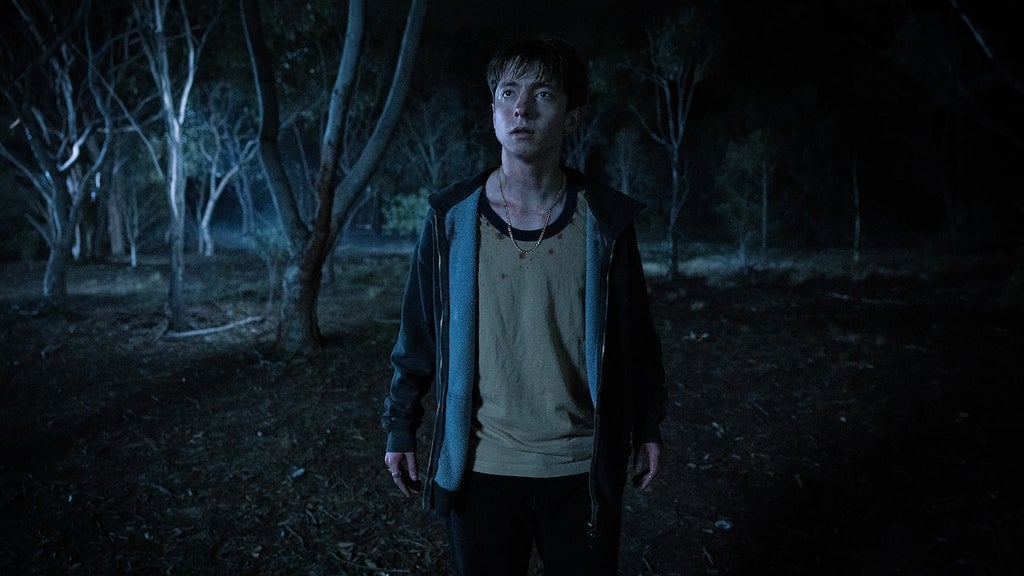
There’s a lesson to be learned in Chiarella’s story: Taking job opportunities as they come, mixing professional experience with formal education, remaining open to various disciplines to become a stronger director in the long run. Still, he said the rest of his education pales in comparison to the connections he made as a film school student — connections he leaned on to eventually get his big project off the ground.
“I wouldn’t have made (‘Leviticus’) if I didn’t have this community of incredible creative filmmakers around me through this last decade or two,” he said. “It’s probably the strongest thing about going to film school. It’s probably for me the main reason you do it.”
What if you missed out on those film school connections?
Of course, this advice is all well and good for students who made plenty of connections during their years of school. But what if circumstances prevented you from finding your Coogler or Göransson?
Katalyna said offices like hers specialize in giving students the assistance to make those connections, regardless of who they already know from film school.

“We definitely encountered that a lot after the COVID graduation years where a lot of people felt they missed out on the chance to do exactly that: get to work for each other on set, where they got to actually meet people,” she said. “We really encourage everyone to look for the community film groups that are out there.”
One such group Katalyna recommended is Antigravity Academy, an organization founded by “Blindspotting” director Carlos López Estrada that seeks to elevate new voices and help aspiring filmmakers get their start in the industry. The company, which made its feature debut with Sean Wang’s celebrated 2024 film “Dìdi,” runs both a short film studio and screenwriters camp that assist new filmmakers in getting their projects off the ground.
“They believe in bringing people together who would’ve never had a chance to meet otherwise,” Katalyna said. “We encourage (people) to go towards artist development programs like Film Independent, those free screenings. You never know who’s going to be there because they’re interested in film too but they’re also looking for the next great collaboration of their career.”
Katalyna said she’s surprised that many alumni are unfamiliar with various artist development programs that are out there for support, with organizations like Tribeca, Netflix and the Academy offering filmmakers fellowships to make their voices heard.
“Sometimes, we get a lot of alumni who are like, ‘Oh, well, I wouldn’t qualify.’ How would you know that? Do your application. You were chosen for this school. You’ve already done it once. You can do it again.”
Katalyna also noted that places like USC’s Office of Industry Relations are there to help alumni get connected with smaller productions that are looking for new talent to get involved.
“It’s not being on the Marvel set for four months as it used to be in the 2000s or 2010s before my time, but we can help you get connected to the indie feature that’s shooting out here, the next Curry that’s looking for special effects or camera crew,” she said. “We’re here to help build within those communities and, again, to start small and be building big.”
