
Welcome to Trade Secrets, TheWrap’s insider guide to making it in Hollywood. In previous installments, we’ve shared industry knowledge of how to land a TV green light in the current landscape. But if you’re looking to land a steady gig in the TV writing space, how do you get into a writers’ room?
For aspiring TV writers, the dream of selling a series goes hand-in-hand with landing a spot in the writers’ room of a popular show under the direction of a high-profile showrunner. A writers’ room serves as the creative engine of the show, but it also acts as a pipeline for up-and-coming talent. These kinds of positions led to the rise of acclaimed TV creators such as Larry David, Quinta Brunson, Judd Apatow, Tina Fey, Seth Rogen and Liz Meriwether, among many others.
While the 22-episode orders of the broadcast TV era would employ roughly a dozen or more writers in years past, like everything in the biz, writers’ rooms have transformed with the rise of streaming. The result has been smaller staffs, meaning fewer opportunities for new writers and shorter writing periods for those who can get in the room. The days when TV writers could live on staffing one show per year are gone.
“The little ways that you used to make your year are going away,” “Going Dutch” showrunner Joel Church-Cooper told TheWrap. “Every writers’ room spot is precious now … especially in comedy writers’ rooms, because there’s just not that many of them.”
The lack of openings is why “Abbott Elementary” bosses Justin Halpern and Patrick Schumacker said they’ve had the highest number of submissions they’ve seen in their careers as they staff their upcoming Netflix series “I Suck at Girls,” which saw established writers offering to enter at a lower job title than they’ve previously had, or even a pair of writers being offered for the price of one — practices Halpern and Schumacker noted they did not participate in.

“It speaks to people wanting to work and make a living, and how much more challenging that has gotten,” Halpern said, while still noting he’s optimistic that longer episode orders could be rolling in after the success of HBO Max’s “The Pitt.”
So, with the slots available to aspiring writers shrinking, what catches the attention of a showrunner and earns someone a spot in the room? I talked to 14 showrunners about how they built the writers’ rooms for their current hits, and, despite the industry shrinkage, why there are still many TV creators working to train the next generation of writers and showrunners.
Here are some key insights:
- Showrunners are still looking for diverse voices, whether that be in identity to give a voice to certain characters and dynamics or in background for expertise in the show’s dealings.
- It’s still possible to work your way up from being an assistant.
- Each room has a different vibe depending on the series, so finding a writer means finding a good fit for the room.
What is a writers’ room?
A writers’ room is just that: a collection of writers tasked with working with each other to “break,” or lay out, stories and write scripts for a season of TV. Writers’ rooms are typically only employed for a greenlit season of TV, though “mini-rooms” have increasingly been put together to break story and draft scripts before getting the Season 1 green light, in a push that largely replaced the traditional pilot season — though NBC made an effort to bring that back this year.
Mini rooms started popping up over five years ago as streamers and cable networks began giving straight-to-series orders off of scripts for a potential first season, but became a key point in the 2023 WGA strike and led to guild minimums for development rooms that Halpern calls a “huge win” that has been “life changing” for a number of writers.

How are writers’ rooms structured?
Writers’ rooms are often led by one showrunner or two, who also usually serve as the creator/writer/executive producer. In cases of a busy TV creator, a separate writer/executive producer might serve as showrunner and the day-to-day guardian of the show. This might happen when the creator also stars in the series, like Quinta Brunson for “Abbott Elementary,” which is co-showrun by Halpern and Schumacker, or Donald Glover for “Mr. & Mrs. Smith.” For example, busy TV creator Bill Lawrence, whose series on the air include “Rooster,” “Scrubs” and “Shrinking,” leans on his co-showrunners to keep his many shows afloat.
The credits that roll at the end of a TV series might include titles from staff writer to story editor to producing writers — which range from co-producers to executive producers. But, according to anecdotes from writers, titles don’t matter in the room, with ideas encouraged to flow from everyone, even assistants.
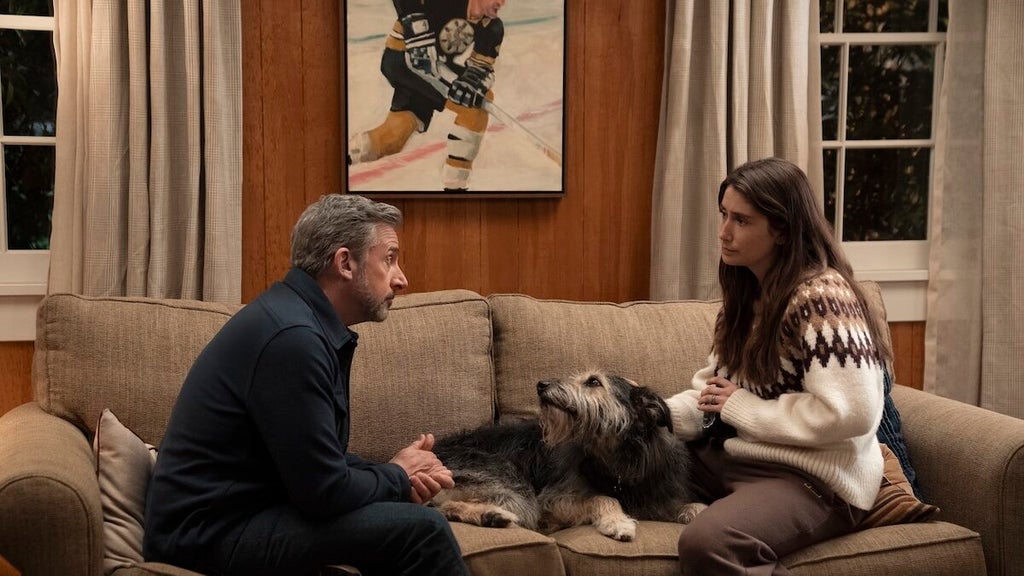
In fact, sometimes it’s the younger, less senior people in the room whose voices are the most essential, like in Lawrence and Matt Tarses’ “Rooster,” which takes place at a college and sees Steve Carrell’s Greg reckoning with shifting standards of acceptability on campus.
“We really had to surround ourselves, in a generational show, with young, diverse writers and assistants who would make us aware of what college is now,” Lawrence told TheWrap.
How big are writers’ rooms nowadays?
WGA staffing guidelines require a minimum of six writers for series with 13 episodes or more, but, when that number drops lower — which is commonplace for nearly every streaming series — so does the number of writers. Only three writers are required for series with one to six episodes, though the median staff size for a half-hour series is six and for an hourlong show it’s five. That kicks up slightly for shows with 7-12 episodes, with five writers required and median sizes at eight writers for half-hour shows and seven for hourlong shows.
Since the size of a room is largely determined by episode count and broadcast typically embraces larger episode counts than streaming and cable, rooms are generally a bit bigger on network TV.
With a median episode order of 13 or more for broadcast, network TV has a median 12 writers on half-hour shows and nine for hourlong shows, as compared to a median eight writers on cable and streaming half-hour shows, a median six writers on cable hourlong shows and seven writers on streaming hourlong shows.

Can writers’ rooms grow throughout seasons?
Yes, depending on if episode-count and commitment from the studio/network increases. That was the case for ABC’s “Shifting Gears,” which kicked up from a 10-episode freshman season to a 13-episode Season 2.
“We had 10 episodes, and we had this great staff, but we had the opportunity in the second season to really pull together a bunch of people that we all had known and worked with before, and now we have a lot more people,” showrunner Michelle Nader told TheWrap.
How often are writers on set?
While the traditional TV model — which broadcast still embraces — has long enough writing periods that writers can see how the scripts are playing out on set and adjust from there (like a type of comedy that isn’t best suited for an actor), shorter episode orders might see the writing of a show mostly conclude before production kicks off.
Other times, production might be less accessible should it be abroad for cost-cutting or location purposes, as was the case for “Going Dutch,” which is shot in Ireland. While Church-Cooper fed his writers’ room key details about how production was going and producers were flown out to get the on-set experience, some of the show’s lower-level writers paid their own way to Europe without network support just to get that first-hand experience.
For Church-Cooper, who received “the totality” of the experience even as a PA working in multicam on the Warner Bros. lot, the new model raises concerns about the lack of a “roster” for incoming showrunners with on-set experience.
“I do feel a little bit like I was the last of the old model,” he said, noting that he learned under Lawrence, who would teach his writers all of the facets of showrunning. “I tried to do the same to my writers’ room, it’s just … really hard.”
Who’s in the writers’ room?
Broadly speaking, writers’ rooms are largely made up of past collaborators of the showrunners, which means rooms might not shift in between seasons of long-running series — except in the case of an anthology series like “Beef,” for which Lee Sung Jin aimed to craft a “new vibe.”
“Because I knew this season was going to be so different, we mostly started over with the room,” Lee told TheWrap, noting that only two writers came back from Season 1 and he instead filled the room with some creative peers like playwright Anna Ouyang Moench.
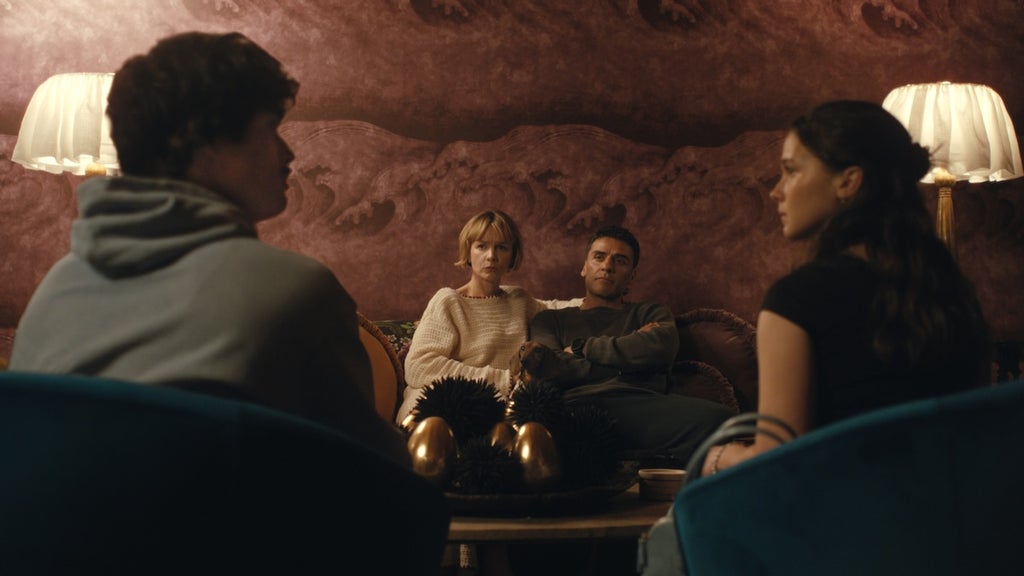
That’s not typically the case for most series, which often start with past collaborators, like Lawrence and Tarses who worked together on the original “Scrubs” for “Rooster” or R. Scott Gemmill who teamed up with “ER” collaborators John Wells and Noah Wyle for “The Pitt,” or “The Mindy Project” collaborators Mindy Kaling and Ike Barinholtz — the list goes on.
From there, those creators might bring in writers from past projects with whom they’re especially connected with, bypassing the stage of looking at samples, resumes and interviews.
“I was able to bring in a lot of people that I had worked with before, which was really great,” “The Diplomat” showrunner Debora Cahn told TheWrap of her writers’ room, which includes plenty of “The West Wing” veterans. “We share a vocabulary. We share kind of an attitude towards storytelling, and those people are able to help me generate a story that is fresh and relevant and intense.”
“When you get your opportunity to make your show, you’re so grateful for the time that you were paying your dues,” “St. Denis Medical” showrunner Eric Ledgin told TheWrap. “Part of it is because everything you learn and all that time you didn’t have to have this other pressure on you, but a huge part of it is just that you have access to all these wonderful writers that you’ve worked with over the years, and trust, and you know what they’re capable of.”
Is it possible to work up from an assistant?
Absolutely, the experts say. In fact, it’s a key way of getting in those showrunners’ circles, with Barinholtz pointing to “Running Point” writer Akshara Sekar, who “literally started off as Mindy’s assistant at ‘The Mindy Project,’ and has worked her way up through multiple rooms and is completely invaluable,” as well as Patrick Scott, who started off as a writers’ assistant. “We promote from within,” Barinholtz told TheWrap.

Take it from Cahn, who started out as an assistant and relishes in the opportunity to keep the pipeline going. “The incredible new talent that you can find … if you have the luxury of bringing people in and allowing them to learn as their assistants, as their researchers, as their staff writers and seeing them kind of come into their own is gratifying,” Cahn said.
And, as Lawrence and Tarses noted above, assistants might even be called upon for the perspective of a younger person, or a specific experience, should it apply to the show at hand.
What are showrunners looking for when they hire outside of this circle?
Don’t stress if you’re not friendly with the next big name in TV — there’s still plenty of spots for those not directly connected to the head honcho. “Tell Me Lies” showrunner Meaghan Oppenheimer only had one friend and close peer join the room for the Hulu series, and the rest were brought in from reading scripts and interviews.
For those newcomers, what showrunners are looking for differs from show to show, with Jennie Snyder Urman noting she looked for stronger comedy writers, those with background in telenovelas and a culturally relevant background for “Jane the Virgin” and more drama-focused writers and those with a legal background for “Matlock.”
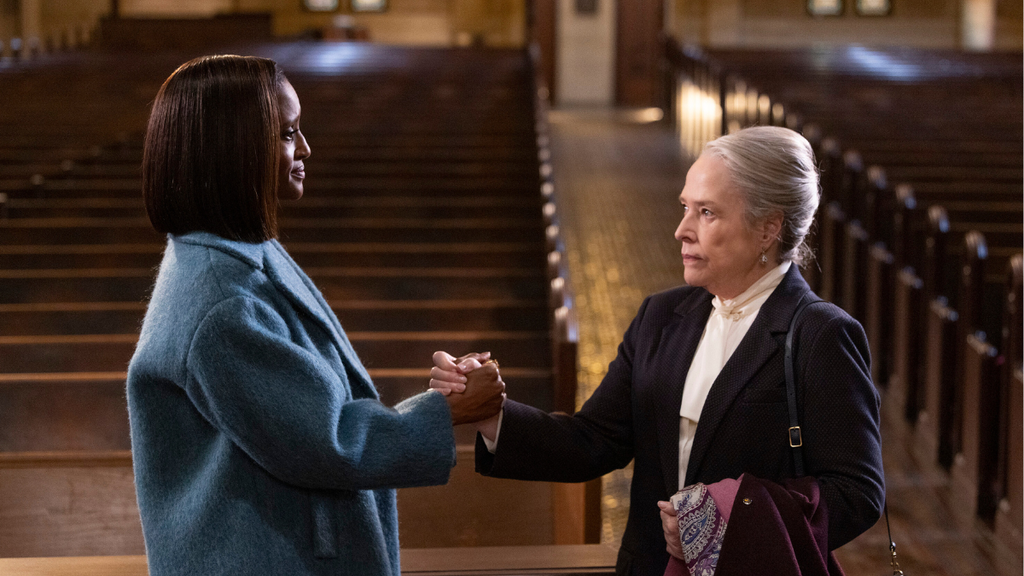
“It’s what happens in the meeting and how specifically people connect to the material and can talk about it in deep ways,” Snyder Urman said about what else she looks for. “[Matlock’] is a show that has so many different access points: It has grief … mother-daughter relationships, female friendship, women in the workforce … and they’re all equally important.”
Likewise, for a revival, reboot or spinoff series — all the rage in the current landscape — knowledge of the original is required, with “Scrubs” revival showrunner Aseem Batra pointing to a writer whose extreme familiarity with the original material helped her become a barometer for how their lead characters might behave.
“[We] definitely looked for people who understood the show and watched it,” Batra said. “But the room was really about building who could be the voice of now as well.”
But when it comes to IP, sometimes a lack of familiarity with the source material can be a plus. Damon Lindelof staffed his Emmy-winning “Watchmen” writers’ room with writers who had never read Alan Moore’s graphic novel to make sure his series would make sense to viewers not familiar with the IP.
Are showrunners still valuing diversity?
Hiring different voices came up organically from showrunners TheWrap spoke with, including Batra, who noted they sought out “younger” and “diverse voices.” The “Rooster” duo Lawrence and Tarses looked for female writers who would be writing for several female characters and this generation of college students, while Schumacker noted HBO Max’s “Harley Quinn” “would not be what it was without having queer voices in the room tell us not to do certain things.”
The same can be said for Gemmill on “The Pitt.”
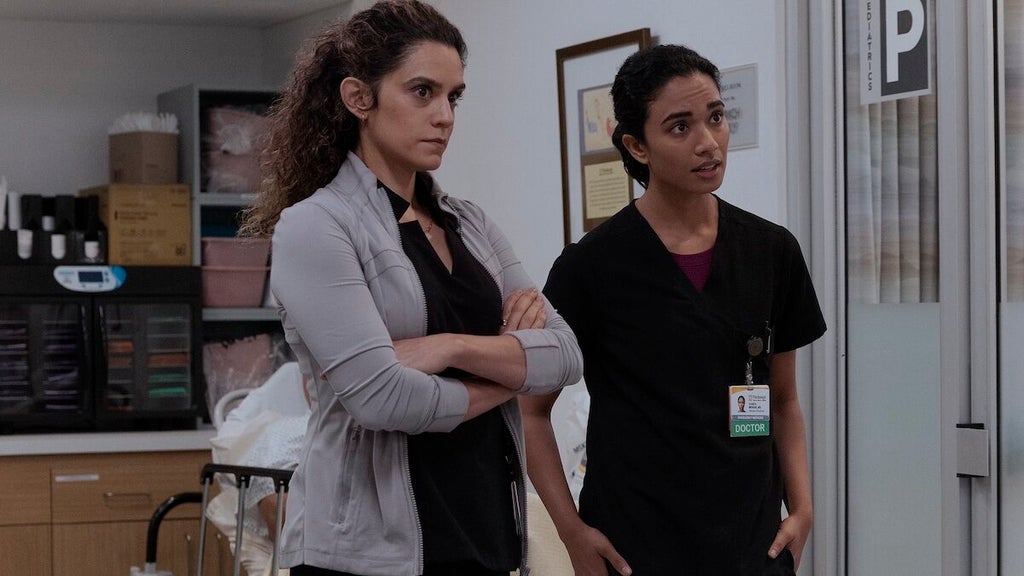
“It was just looking for a lot of different voices — a lot of women, a lot of people of color, and really trying to have a writers’ room that’s as diverse as our cast,” Gemmill told TheWrap. “All the writers who come in, by the time they make it to us to meet them, they’ve already been very successful writers, and so it’s really about personalities and voices at that point.”
What if I’m new to writing entirely?
You might be able to utilize your past career, especially if you were in a procedural-friendly job in the medical or legal field, which both Batra and Snyder Urman noted were of assistance when breaking stories that required industry expertise, with several writers in the “Matlock” room having legal backgrounds. “That’s been really important for Matlock, because so much of … the procedural aspect gives us so much structure for the show,” she said.
Even “Westworld” and “Fallout” EP Lisa Joy was a Harvard-educated lawyer before her first TV writing gig on USA’s “Burn Notice.”
So, if you went to med school or law school but are looking for a career pivot, you might just be in luck.
What are showrunners looking for in writing samples?
As for what makes a good writing sample, Oppenheimer said she won’t take an episodic script, noting “we break all the scenes together — it’s impossible to judge a writer based on a draft of episodic television, so I always want an original draft of something.”
Within those samples, Snyder Urman hopes the story grabs her within the first 10 pages, and beyond that, it’s all about character work. “Sometimes I’m laughing, sometimes I’m like, ‘What’s happening next in this thriller?’ Sometimes I’m so moved by … emotional depths of the work, but to me it’s all coming from character one way or another,” Snyder Urman said. “It’s really having a big voice that has a lot of sparkle to it.”
On the comedy side, what Halpern and Schumacker are looking for when it comes to lower level writers is simple: is the script hilarious? ”The craft stuff can be taught,” Schumacker said. “If the script is one of the funniest things we’ve ever read, but the structure is kind of a mess, we don’t care at that level.”
While understanding the tone of the project is key, the last thing needed by showrunners is to duplicate their own voice. “You want everybody in the room to be pitching something that isn’t exactly what the person next to them would pitch, and certainly not the same as the showrunner,” Halpern said. “You want people who are going to challenge your perspective, challenge your point of view … that’s what’s going to get you to a show that feels more interesting.”
And sometimes that writing sample could be a hit show someday. Katie Dippold got hired as a staff writer on “Parks and Recreation” with an original writing sample called “Widow’s Bay.” 18 years later, that pilot script is now a hit Apple TV series starring Matthew Rhys and showrun by Dippold herself.
Jose Alejandro Bastidas and Tess Patton contributed to this report.
