


In the latest episode of “Hacks,” Jean Smart’s legendary comedian Deborah Vance is approached by a potential investor who asks if he can use her standup library for an AI comedy tool. What follows is an episode that wrestles with the moral and ethical implications of the technology before Deborah ultimately rejects the offer.
“Why are you trying to optimize the creative process?” Deborah tells the investor in the episode. “I mean, that’s one of the things we’ve actually figured out.”
The show, and its writers, might as well have been speaking to the Hollywood and tech executives who have embraced the technology.
While AI continues to be a dirty word in Hollywood, it’s also fertile ground for TV writers who have incorporated society’s — and their own — anxieties about it in a number of shows, from “Hacks” to “The Comeback.” AI is being discussed in the medical field, Hollywood, schools and between everyday people through characters on TV.
TV shows have always served as a medium for mainstream audiences to be exposed to new ideas — “The Jeffersons” represented affluent Black families on screen, Ellen DeGeneres came out publicly on her ’90s sitcom and “Gilmore Girls” commented on the wonders of Google in the 2000s. Even “The Comeback” — a show that has one of the most nuanced and interesting conversations about this new technology — explored how the rise of reality TV would impact Hollywood as a whole during its first season in 2005.
In 2026, that spotlight is now on AI.
“Hollywood has always followed the money, and the money means who’s watching. When we all thought reality TV was the end of narrative, that was real,” “The Comeback” co-creator Michael Patrick King told TheWrap. “Instead, it just became a wing on a house called television, and we went on to have what is called the second golden age of television in narrative. So we don’t know what’s coming. We do know that [AI] is here.”
These anxieties aren’t new. During the WGA strike three years ago, TV writers rallied around AI protections in fear that the emerging technology would compromise their ethics and take away their jobs. While they eventually won more AI guardrails in their new contract with studios, many in Hollywood still feel a looming threat from this technology.
TheWrap spoke with writers and showrunners about their decisions to weave AI into their storytelling, and their choices ranged from channeling their characters’ concerns about the technology to simply finding the most relevant way to move their stories forward.

AI and comedy
“Hacks” co-creator Jen Statsky admitted taking AI on was “scary” due to its changing nature, but said it ultimately felt true to the conversations Deborah and Hannah Einbinder’s comedy writer character Ava might have. Throughout the five seasons of the HBO Max comedy, “Hacks” has relied on a dynamic with Deborah offering an older generation’s perspective on pressing issues like climate change and Ava countering with a more progressive attitude from her millennial perspective.
In a key scene from its final season, Ava critiques the aforementioned venture capitalist (played by Alex Moffat) who is trying to convince Deborah to sell him her archive to train an AI language learning model, also known as an LLM.
“AI is here, and it’s here to stay,” says Moffat’s Graham Sweeney. “You either get on board or you get left in the past.”
Ava retorts that AI represents “this forced inevitability. People like you are always saying it’s going to happen whether you like it or not, but you are the one making it happen … I’m sorry, it is technological R.A.P.E.!”
Throughout the episode, Ava maintains her passionate anti-AI stance, while Deborah’s initial take on the technology is more forgiving as she insists that good writers will never be replaced.
“We had a strong POV, and we felt Deborah and Ava would have strong POVs, and that’s the most important part — that it’s never us just wanting to talk about a topic,” Statsky told TheWrap. “It felt organic that these characters would encounter this and be grappling with it in their own lives.”
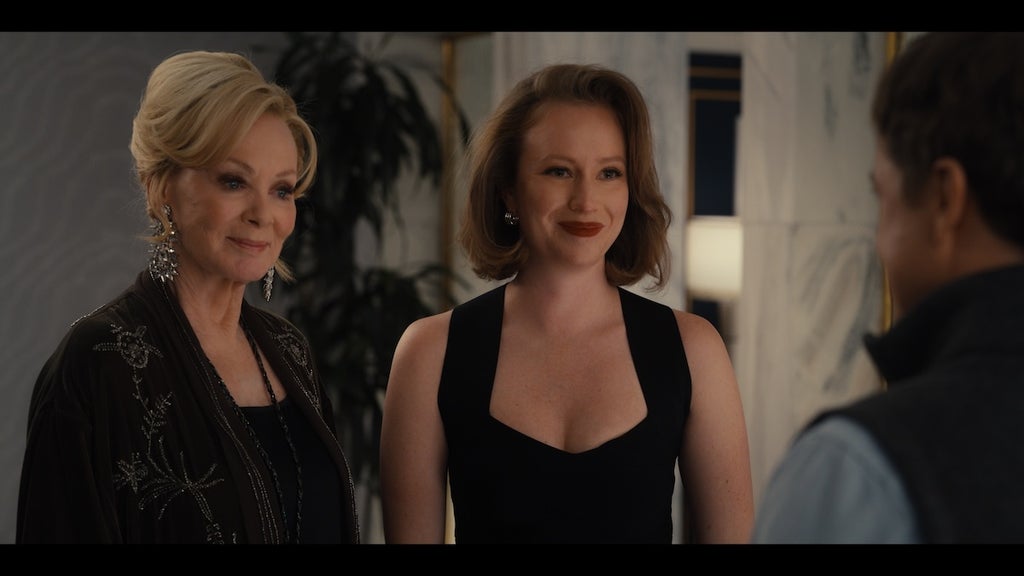
Ultimately, Deborah withdraws from the deal, but it’s not the overall moral reasoning that deters her — it’s not wanting to take shortcuts in her own comedy.
“Even though she’s coming at it from the perspective of a comedian … it’s really true for anybody,” co-creator Paul W. Downs said. “The work of writing a thank you letter is important … [AI] is faster and cheaper — I don’t think it means it’s better or that it’s not beneficial for you to put in the work, because it is what makes you you.”
But no show this TV season addresses AI in Hollywood more aggressively than the final season of HBO’s “The Comeback.” The season starts with Valerie Cherish (Lisa Kudrow) being offered the increasingly rare opportunity to star in a new network multi-cam sitcom called “How’s That?!”
The twist? That show is being written by AI.
The ensuing episodes follow Valerie as she tries to balance her latest comeback with trying to hide her show’s AI roots from her fellow cast members and the press, while also pushing past the moral quandaries of keeping that secret. It’s an especially fraught season considering that, during the show’s first two seasons, Valerie’s biggest rivalry was with her shows’ writers — the profession she’s forced to defend this time around.
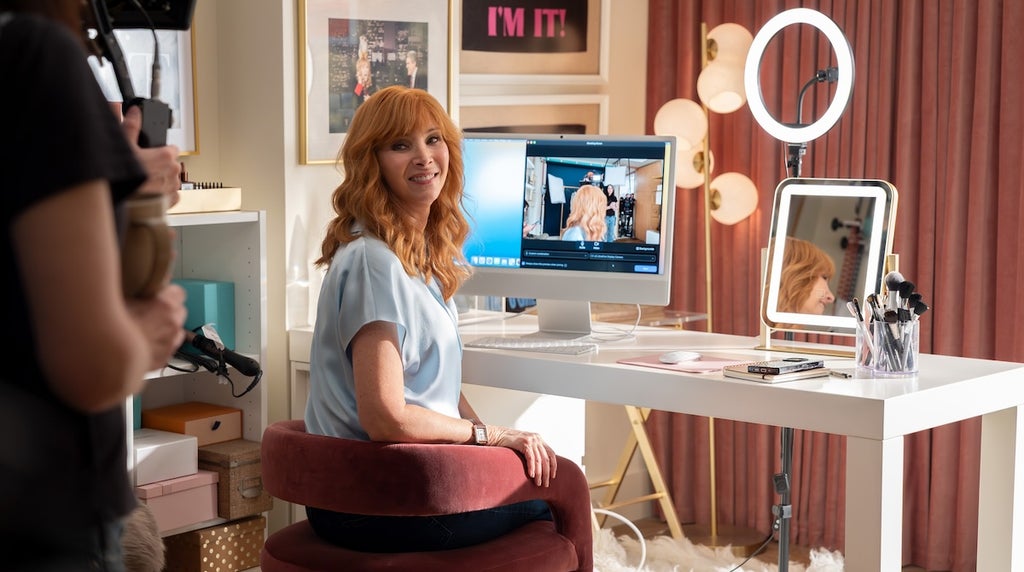
Initially, the AI — nicknamed “Al” so as not to arouse suspicions — seems to work fine. In “Valerie Does It All,” the tool quickly comes up with 15 alternative lines, saving a lackluster scene. But even in its triumph, the limits of this technology begin to show, causing legendary TV director Jimmy Burrows — known for his work on “Cheers,” “Will & Grace” and “Frasier” — to quit and dub the model’s writing “good but never going to be great.”
“The machine is fast and cooperative, I’ll give it that. But I saw every one of those jokes coming, and so did you,” Burrows, playing himself, tells Valerie. “Surprising only comes from a group of writers huddled in a corner beating themselves up to beat out a better joke. It’s the chubby guy who’s a secret alcoholic. It’s the gay guy, who — despite all the work he’s done — still hates himself a little. Or the funny woman who’s been invisible for way too long. They turn all that pain into a joke. And Val, those broken, beautiful souls are what make something great. And you didn’t see it coming.”
When “Al” is asked to write a second episode of the series, the technology falters even more, hallucinating a nonsensical episode that puts Valerie’s character in jail for no plot-related reason. As Valerie rushes to her executive producer, the series’ showrunners and eventually the network’s executives about her concerns, she’s repeatedly shrugged off, with everyone content to let Al write its nonsensical show devoid of logistical consistency or artistic merit.
“I am not going to f–king teach Al how to be better,” Abby Jacobson’s showrunner character Mary tells Valerie in the episode, barely holding back her fury. “I am not helping to build the scaffold that kills my profession.”
“Somebody asked us, ‘What’s the moral of the story? What are you telling people? What are you telling writers?’ It threw us for two days until we realized we’re reporting what’s happening,” series creator King told TheWrap. “We don’t really know what will happen [with AI]. We know we can report from the battleground.”
“We weren’t trying to demonize AI … we, of course, are in favor of the writer and the creative. But to be able to hold both things to be true and … stop looking for the villain,” series star and executive producer Dan Bucatinsky told TheWrap. “This was a way for us to figure out what would it really be like? What would be the downsides and what would be the upsides, and how do we live with both.”
The goal of this season was to explore this shift in the TV ecosystem through the character of Valerie, an eternal optimist and talented comedy star who’s always been on the cusp of breaking through. Though Valerie is often the butt of the joke on “The Comeback,” her reservations about AI mirror Kudrow’s own insights into the technology.
“[The audience] will tell you whether they buy it or not,” Kudrow told TheWrap. “We already know younger people, they can tell when it’s AI — more than I can tell because it’s gotten good — and they don’t like it. So the audience will let you know.”
Hospitals, schools and death
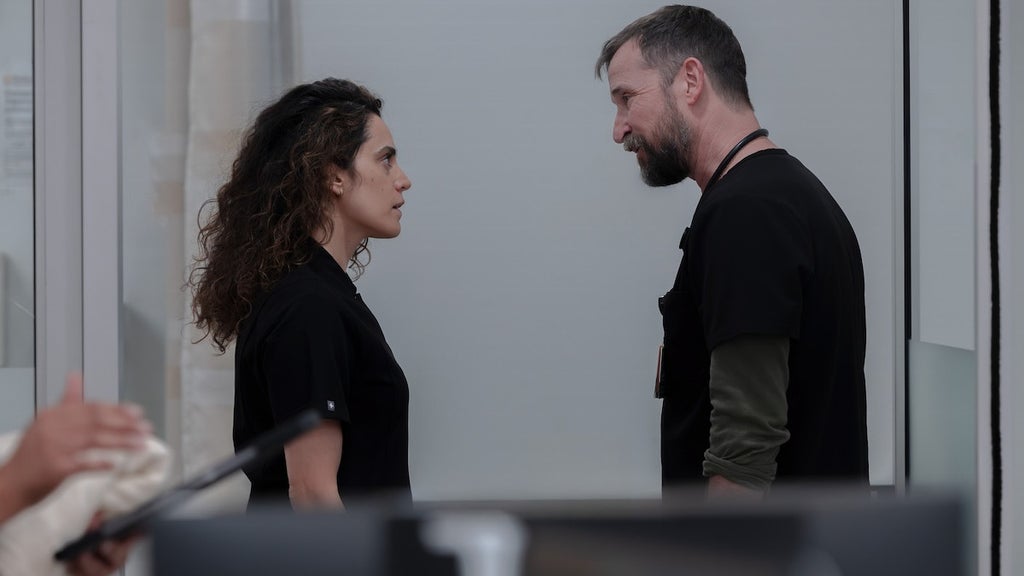
While Hollywood-centered shows like “Hacks” and “The Comeback” speak to the tech’s impact on the creative community, TV shows that deal with different industries are similarly grappling with how AI will impact its characters, including HBO Max Emmy winner “The Pitt,” which in Season 2 sees a debate about doctors relying on AI transcriptions of their notes play out between Dr. Robby (Noah Wyle) and Dr. Al-Hashimi (Sepideh Moafi).
While Dr. Al-Hashimi encourages her medical students and residents to use an AI transcription software to record and write notes from their conversations with patients, that encouragement is couched in warnings that any work using AI needs to be double-checked. The warning is borne out when an incorrect lab order is made after the AI transcribes the wrong word into the doctor’s notes, putting the patient on a path to dangerously wrong treatment.
There are real-life instances of patients suing hospitals over botched surgeries that involve AI, as well as studies that have found LLMs designed to predict the likelihood of a hospitalized patient dying having trouble detecting worsening symptoms. These concerns are mirrored by Dr. Al-Hashimi’s warnings.
“Like any new technology, it has great potential benefits, but it also has setbacks,” “The Pitt” showrunner R. Scott Gemmill told TheWrap. “And like anything new, there are people who embrace change and there are those who are going to resist … kicking and screaming.”
Those trade-specific questions surrounding AI were also tackled in ABC’s “Abbott Elementary” this season during its finale, when the school was in danger of shutting down due to the prospect of AI powering online classes — until the teachers found a way to save their jobs at the last minute. Like the medical field, conversations about AI have surrounded education for years, with co-showrunner Justin Halpern noting they did a storyline three years ago on “Abbott” when schools started dealing with ChatGPT.
“It’s always been in the atmosphere of our show,” Halpern told TheWrap. “A school show is inherently kind of political, so we’re trying not to just … play the hot button topics, and instead, if it organically comes up in the show, we’ll deal with it.”
“It feels like it’s inevitable, and somehow we’re going to have to embrace it at some point in time,” “Abbott Elementary” co-showrunner Patrick Schumacker added.
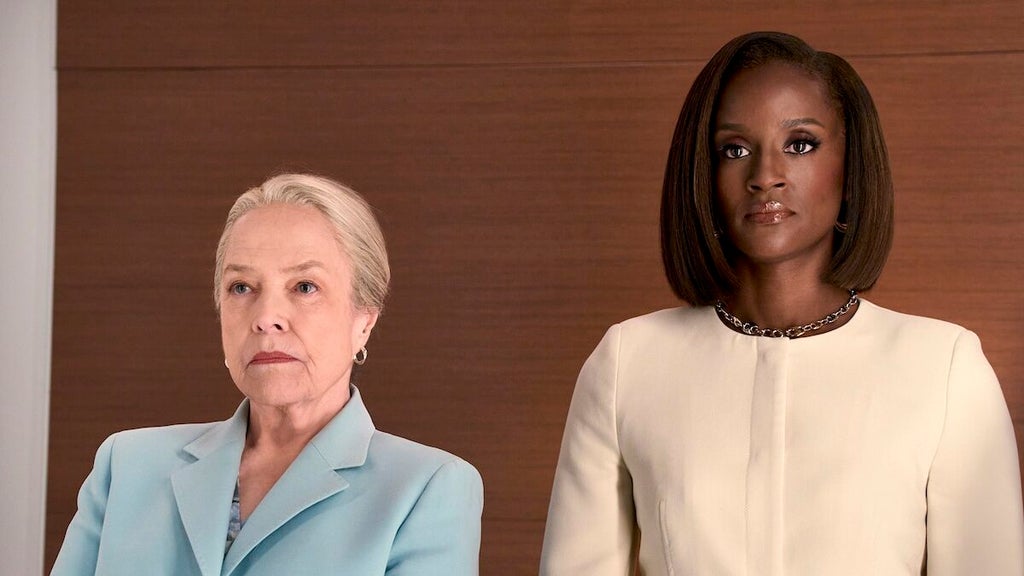
In two other notable instances, AI was referenced this spring on CBS’ “Matlock” and Prime Video’s “Scarpetta” as its characters processed their grief for lost loved ones with the use of AI bots that mimicked their likeness and voice.
For “Matlock” showrunner Jennie Snyder Urman, tackling the plotline felt relevant to the afterlife industry, but was more a character-motivated move for Kathy Bates’ Matty Matlock that created a metaphor with the underlying theme of addiction found in the show.
“We really wanted to see how it would hit Matty, what it would mean to be able to talk to a loved one again, and what else it would teach her in terms of addiction, in terms of doing something that you know is not totally right for where you are and you’re hiding it,” Snyder Urman told TheWrap.
“Scarpetta,” the Prime Video crime series starring Nicole Kidman, also grappled with the ethics of resurrecting a loved one through AI by having the title character’s niece, played by Ariana DeBose, consumed by conversing with her dead wife through an AI avatar. While that choice could have been a one-off side plot, it ended up being a running arc throughout the show as other characters wrestled with the ethics behind the practice. Is is healthy for Lucy (DeBose) to work through her grief through this AI avatar, or is it holding back her grieving process? Would Lucy’s late wife be OK with this implementation of technology or horrified by it?
And then there’s AI coming into television by way of brand integration. Most notably, ABC dramas “High Potential” and “Grey’s Anatomy” both referenced Microsoft AI tool Copilot in recent episodes as part of a paid integration with Microsoft that were disclosed in the credits of the series, TheWrap learned.
This came just months after a Super Bowl that was criticized for the sheer volume of AI-generated or AI-sponsored commercials throughout the game.
In short, we’re just at the start of AI on screen. Buckle up.
Tess Patton contributed reporting to this story.
