
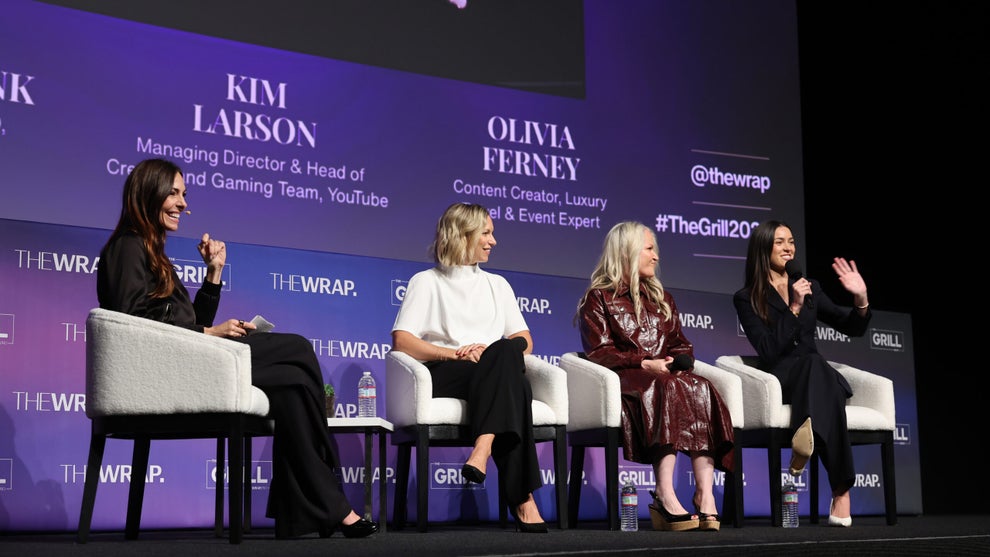
Creators who experiment with live streaming are seeing returns. Kim Larson, the managing director and head of the Creator and Gaming Team at YouTube, revealed as much during TheGrill 2026, TheWrap’s annual conference that brings industry leaders together to explore some of the biggest topic in the entertainment industry.
“Do not sleep on live, particularly in this time where audiences are craving authenticity,” Larson said Wednesday afternoon at the DGA Theater Complex. “For the creators that I work with that add live into their repertoire, it supercharges their fandom and creates such close connection in a way that is really hard to quantify.”
Larson went on to warn that live-streaming isn’t “for the faint of heart,” largely because the popular format doesn’t allow creators to hide behind editing. But if a creator can handle it, Larson called the option a “powerful medium.”
The YouTube head took the stage for the “Creator Capital: Navigating the Future of Media” panel, which was presented by City National Bank. The panel was moderated by Marie-Josée Cantin Johnson, the senior vice president of strategy, AgilLink and Exactuals, Entertainment and Sports Banking at City National Bank. Larson wasn’t the only one on the panel who emphasized authenticity. Travel creator Olivia Ferney, known for the popular travelwithlivii Instagram account, warned creators against signing equity deals too quickly and explained why she doesn’t use AI in her content.
“As an entrepreneur first, I think that I’m overly cautious with a lot of these deals. I would urge everyone in this room, especially if you’re a creator who’s growing, to just look everything over,” Ferney said.

In the wake of creators like Alix Earle aligning with Poppi, more and more creators have been looking to sign equity deals with brands rather than just signing more standard brand partnerships. Though Ferney acknowledged that the move is “trendy,” she pointed to how often businesses fail.
“As a young business person, make sure that you are also setting yourself up for success. Don’t take ownership in 20 companies, thinking, ‘I’m going to exit out in a year and be set for life’ because you also left money on the table that might set you or your kids or your family up in the future. Only be a part of projects that mean something to you, and be a little bit cautious,” Ferney said.
The creator is in the middle of signing her first equity deal, though she estimated that about 11 or 12 have been brought to her. Ferney’s deal is with the AI assistant company, Tab. Though she said the company integrates well into her business, Ferney was adamant about not using AI in her content.
“I believe that AI can be an amazing tool in my business life,” Ferney said. “On the creator side — and you will hear every creator on planet Earth say authenticity is key, and it sounds so overused now — but my gosh, am I sick and tired of seeing the same stuff be repeated online with everybody trying to go viral and make it make millions. So for me, I sit with my notepad, I brainstorm, I turn my phone off and just think, ‘How can I connect with my people? What do my people want to see? How can I make them feel more connected to me? How can we make the client feel represented properly and just make entertainment?’”
Though the panel cautioned against equity deals, Jo Cronk, co-CEO of Whalar, emphasized that she sees creators serving as brand consultants as being a major trend in the next 12 months.

“The time has come for creators to have a much bigger seat at many tables,” Cronk said. “They’re literally the tip of the spear of what’s happening, not just trends but with communities. What is their audience asking for? What are they desiring? So much happens in the DMs that none of us can see unless we’re the recipient. Actually bringing them in as consultants for what’s going on in culture, with creativity and with other other creators is going to be really critical.”
Cronk emphasized that creators have a higher return on investment on ad spend than any other media channel, including TV. If ad investment in creators is done well, ROI can be 2.4 compared to the typical 1.2 ROI from TV. Cronk also believes that spending from advertisers will continue to move to the creator economy as the market matures and evolves.
“The dollars took forever to move from print to digital to mobile. We’re in this moment right now. The creator economy is tracking to be worth $44 billion by the end of the year. It’s growing at 4x the pace of any other media channel, but the creator economy is still only representing 3.9% of all advertising spend,” Cronk said. “Like the maths don’t math, but it will get there.”
“Behavior takes a long time to change,” Larson added, agreeing with Cronk. “Now I have brands coming to me saying, ‘Kim, who should we work with? Here’s the type of audience we want to attract, and here are our marketing goals.’ That has been a shift I would say within the last 18 months.”
