
The seemingly endless twists and turns in the Paramount-Warner Bros. saga finally came to an end on Wednesday when a federal judge signed off on its settlement with a dozen state attorneys general, clearing the way for the $110 billion merger.
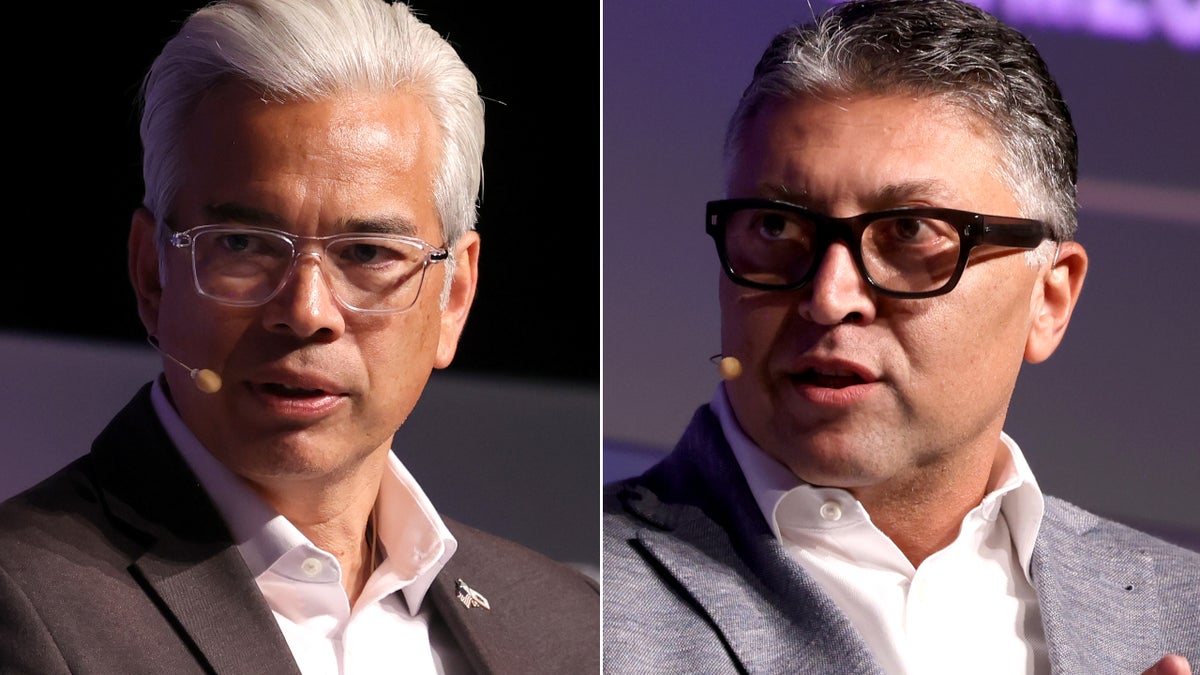
Just in time for California AG Rob Bonta and Paramount Chief Legal Officer Makan Delrahim, the two key figures on each side, to unpack the resolution at TheWrap’s annual business conference TheGrill.
Both Bonta and Delrahim appeared on stage (albeit in separate panels) with The Wrap CEO and Editor-in-Chief Sharon Waxman, who asked the questions everyone wanted to ask.
The sessions marked a fitting capper to a remarkable and unpredictable 12 months filled with a bidding war, competing corporate egos, several false starts and a dramatic final stand with between Bonta and Paramount. In a final turn, both Delrahim and Bonta talked up the benefits of the deal.
“When you talk about jobs, an increase from 5% to 40% is massive job increases for the United States, and that’s why IATSE, SAG-AFTRA, the Teamsters, the Laborers, and the Directors Guild of America all support the settlement,” Bonta said, while “vehemently, respectfully” disagreeing with the notion that he caved under political pressure.
“It’s a deal that is pro-competitive. It’s a deal that is transformational. That’s why we committed to it,” Delrahim said. “I’m just grateful for the time and the attention and the professional work that Attorney General Bonta and his 11 other colleagues did to work with us in good faith.”
Despite Delrahim’s claims of “good faith,” there were many bumps on the road to get to the settlement, from a canceled mediation meeting over leaks to a threat by Ellison to move Paramount out of California, risking thousands of jobs and billions in economic output.
But now comes the hard part: making good on the settlement’s requirements and building what Ellison has referred to as a “stronger Hollywood.”
Below is a recap of the key takeaways from Bonta and Delrahim.

What turned the tide in reaching the settlement?
When asked about what was the turning point that made both sides reach a settlement, Bonta told TheWrap it was Paramount deciding to negotiate in good faith.
“They weren’t addressing the concerns that we had in the case,” he said. “When they finally decided to sit down and make real commitments on the issues that we cared about when it came to the antitrust enforcement case, that’s when when we settled the case.”
Meanwhile, Delrahim argued that the key to getting a settlement done was that the 12 states had no antitrust case. He said that their argument that Paramount-WBD would have a combined market share of 27% in the theatrical film market didn’t take Amazon MGM Studios, Lionsgate or A24 into account.
“Once you factor those in, that market share goes below 20%, and that’s assuming you take their time frame from ’22 to ’25 for that market share, which is based on box office revenues,” he said. “That’s just not how antitrust works. So once the facts were out before a judge, it would have never ever held up.”
“Every step of the way when you have a bad case, you’re making precedent, and as a former enforcer, it makes it more difficult for the future. So now, every time the state AGs bring a case, guess what the parties are going to do? They’re going to file the motion we filed,” he continued. “The state AGs, I think, realized there’s not a case here. Why are we doing this? And they realized that delay is not going to help anyone, which is why all the unions and everybody supported that.”
He also credited Ellison himself with getting the deal over the finish line during the Yom Kippur holiday.
“David was incredibly involved in this process himself with the staff. He and I would fly up, come down. He was personally invested and he is the single best client a lawyer can have because he’s incredibly genuine, he’s credible, and as a former producer and a guy who understands his business, he can speak with authority when asked these questions and allegations come up about different parts of the business,” he said. “It is incredible. You don’t even have to prepare because the truth actually is incredibly powerful.”
Though Delrahim said Ellison’s threat to move was “not a bluff,” he dismissed the idea that it played any major role in settling the litigation.

Bonta defends settlement, touts it as “opposite” of Disney-Fox merger
Under the terms of the settlement, Paramount-WBD is required to invest a minimum of $1.5 billion over five years in domestic TV and film production.
It also must release at least 30 films a year in theaters for two years and 32 per year for the following three years. At least four films per year must be independent films and at least 20% must be blockbusters. If Congress passes a federal film tax credit, Paramount agreed that 20% of all film production must be in the U.S. for the first two years of the merger and 30% of the next three.
Bonta told TheWrap that the film requirement is the “opposite” of the Disney-Fox merger, noting that the two companies made about 28 films per year before the combination, which would later drop to 14 films per year.
“If the federal film tax credit passes and a California film tax credit passes, it could be a 700% increase in films being made in the United States. Only about 5%, according to Paramount’s own numbers, of their total film production is made in the United States. That could get to 40%,” he added. “So when you talk about jobs, a 700% increase from 5% to 40% is massive job increases for the United States.”
Additionally, the combined company must negotiate the distribution agreements for Paramount and Warner’s suite of cable networks separately and set up an independent editorial board to oversee CNN and CBS News’ operations.
When asked about the future of CNN, news and free speech, Bonta admitted that he’s concerned about there being too much misinformation and disinformation, but argued that the editorial board would help “ensure journalistic integrity and fact-based, non-biased, objective reporting.” Similarly, Delrahim said that while he understands the political concerns around Ellison’s ownership, he does not believe that CNN and CBS News will “foreclose access” to information.
Other settlement terms include continuing to operate Paramount and Warner Bros. Discovery’s studio lots for five years, honoring collective bargaining agreements with Hollywood’s unions and making community investments, including a $5 million-per-year contribution to an independent film fund and $9.5 million annually for film and TV career training and development programs to benefit qualified educational institutions and community arts organizations.
Failure to comply with the various commitments in the settlement range from a $30 million penalty per film that misses the theatrical goal to forced divestitures of the company’s 49% Miramax stake within a 12-month period as well as BET, Comedy Central, VH1, Smithsonian, Destination America and Science Channel within a 120-day period.
“The proposed consent decree reflects a settlement between the parties
that is a fair, reasonable, and good faith approach to address the competitive harms alleged in the Complaint, and does not violate the law or public policy,” Judge Araceli Martínez-Olguín wrote in her order on Wednesday.

Did Bonta cave?
Despite reaching the settlement, some are concerned that the agreement does not go far enough to address the potential harms posed by the merger.
“Allowing the Paramount Skydance-Warner Bros. Discovery merger to move forward with no meaningful structural remedies will cost jobs, mute creativity, weaken independent journalism, and damage our First Amendment rights. The ripples of this merger will be far-reaching, long-lasting, and impossible to contain,” the Block the Merger coalition said in a statement. “We are going to continue the fight.”
Bonta has also been accused of caving due to Ellison’s threat to move and pressure from California Gov. Gavin Newsom, Los Angeles Mayor Karen Bass, the Democratic nominee in California’s gubernatorial race Xavier Becerra — a claim he “vehemently and respectfully disagrees” with and said had “no influence” on the states’ decision.
“My job is to focus on the antitrust concerns and getting a resolution. So what a company may or may not do, what a governor or a next governor says or doesn’t say, has no influence,” Bonta said. “I’m the attorney general of California. I need to make a decision about the case that I brought with my 11 other attorneys general, and if we get a resolution to that case, as we did when Paramount finally came to the table in good faith, then we take it and we resolve the case.”
He added that it was ultimately a “unanimous” decision for the states to settle the case, though Connecticut AG William Tong unsuccessfully pushed for Paramount-WBD to divest CNN and CBS News during negotiations.
When asked about the political opposition surrounding the deal, Delrahim accused the Block the Merger coalition’s Norm Eisen of using the campaign against the merger as a fundraising opportunity for himself. He also doubled down on previous remarks that some who opposed the merger were antisemitic.
But when asked if there would be any retaliation against creatives who opposed the merger, Delrahim said that would be “silly.”
“We’re in the business of storytelling. We’re in the business of fulfilling consumers’ demands, and you don’t do that,” he said.

What happens now?
With the settlement now approved, the next order of business is to officially close the merger. Ellison has said the deal would close within two weeks of reaching the settlement, putting the closing date in early October.
Paramount’s Class B stock listing is expected to move from the Nasdaq to the New York Stock Exchange on Oct. 5 and begin trading on the NYSE on Oct. 6. Paramount would distribute warrants to purchase those shares on Oct. 13.
However, the merger is “subject to further closing conditions, and the ultimate timing for the closing of the WBD merger, if any, is not yet certain,” the company noted in a Friday SEC filing. As a result, Paramount may choose to cancel or postpone the move.
While the deal isn’t officially closed, Ellison has already started shaking up the combined company’s leadership team, tapping HBO CEO Casey Bloys to run Paramount+ and HBO Max, with Paramount Streaming head Cindy Holland exiting on Tuesday. Paramount has also recruited Mattel CEO Ynon Kreiz to serve as co-CEO of the combined company.
Shares of Paramount closed at $10.33 apiece, up 3.4% at the end of Wednesday’s trading session, while WBD shares finished at $30.95 per share, up 0.32%.
