
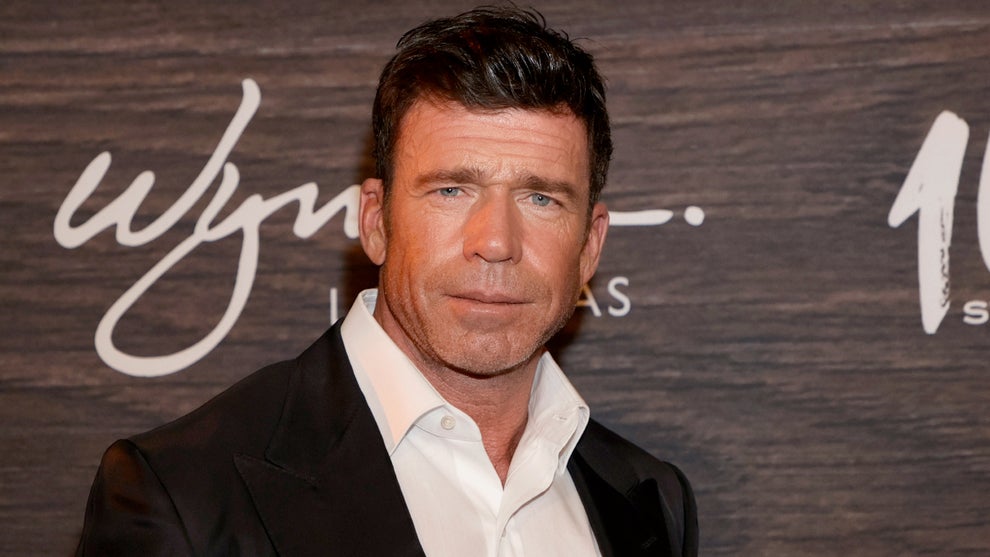
“Yellowstone” creator Taylor Sheridan revealed on SiriusXM’s “The Howard Stern Show” this week that it was a pay dispute on FX’s “Sons of Anarchy” that inspired him to transition from acting to writing full time, noting, “I realized my value.”
Before he created shows like “Yellowstone,” “Tulsa King,” “Lioness,” “1923” and “Landman” and, along the way, became one of television’s most prolific creators, Sheridan got his start in Hollywood as an actor. He landed his first major recurring screen role in 2008 as Deputy Chief David Hale in the first season of “Sons of Anarchy,” a part he reprised in the hit FX series’ second season.
However, his character meets an abrupt, violent death in the “Sons of Anarchy” Season 3 premiere, a decision that was the result of a behind-the-scenes salary issue between Sheridan and the show’s producers. Speaking with Stern, Sheridan called the dispute in question the “worst beating” and “greatest gift” of his career.
“Season 2 of ‘Sons of Anarchy’ had ended, and it’s a very successful cable show. I’m an actor on this show. Making scale,” Sheridan recalled. “There’s two dudes on the freaking DVD. One is Charlie Hunnam, who was the star, who’s a great guy, and me. We’re it, and I literally would leave the set of that show and go to my other job, because I didn’t make enough on that show to pay my rent and live.”
“After Season 2, I told them, I said, ‘Guys, I’m not coming back and doing this again for this price. I’m just not doing it. I want what the other 14 people — not even asking for what Charlie gets or Katey [Sagal] or Ron Perlman — I just want what the other 11 guys are getting.’ And they couldn’t do it,” Sheridan explained.
He noted that he asked at the time to be paid the same $20,000 per episode gross rate that many of the show’s other actors were being paid.
“They said, ‘We’ll give you $15,000 and we’ll guarantee you 10 episodes. That’s all you’re getting.’ I do the math on it and I said, ‘That’s not a raise. What is that?’” Sheridan remembered. “My attorney responded to this business affairs guy. He said, ‘Look, I’ve got kids on f—king cooking shows on YouTube that make more than that.’ And he goes, ‘Well, then the guy should go get a cooking show on YouTube. We just don’t have to pay him because there’s 50 of that dude. I can recast that guy tomorrow.’”
Sheridan said the conflict taught him an important lesson about his place in Hollywood, as well as where the actual autonomy and power within the industry tends to lie among creatives.
“I realized my value is, ‘I’m imminently replaceable.’ My business did not respect me, and I thought to myself, ‘Man, I can’t take this job and tell my son, ‘Son, you can be anything you want to be, but I’m going to miss your soccer game because I’ve got a Windex audition,’” Sheridan told Stern. “So I quit the show.”
“The people that have all the power are the people telling stories. So I’m going to tell my own stories,” he added. “That’s when I decided that I was going to write. I quit.” Stern praised the decision, telling the “Yellowstone” creator and one-time Oscar nominee that the move took “f—king balls.”
Now, Sheridan is one of Hollywood’s busiest and most successful working writers.
