
Perhaps this is one of the perks of knighthood: Before Sir Ben Kingsley even enters the restaurant at the Four Seasons Hotel in Beverly Hills, there's a table in the corner waiting for him, with two pots of tea and a basket of pastries.
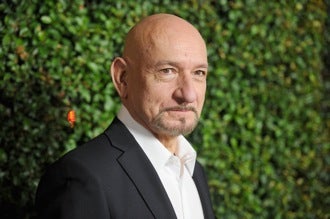 When he sits down, though, there's nothing terribly stuffy or regal about the Oscar-winning actor who plays silent film pioneer Georges Melies in Martin Scorsese's "Hugo." Rather, Kingsley is affable, articulate and eager to talk about acting, storytelling and the director who, he says, sees everything on a movie set.
"Hugo" has proven to be a tricky sell commercially, and it's unlikely to be a moneymaker – but the film is a marvelous and magical journey that fully justifies Scorsese's decision to adapt Brian Selznick's book "The Invention of Hugo Cabret," and to shoot it in 3D. And Kingsley is sly, sad and commanding as a man desperate to bury his glorious past.
Were you familiar with the book, or with Georges Melies' work?
Neither. Neither the book nor Georges' work. My starting point was the script by John Logan, which was a wonderful read. The arc of everyone's character is so extraordinary it jumps off the page.
And also, I loved to see that Georges would be filmed by Marty at the height of his powers, in his glass palace where he was a king with so many domains: writer, director, designer, set decorator, editor, leading man, magician, special effects creator … Probably because he didn’t know what the limits were, he was breaking boundaries all the time. Because he was the first of the great auteurs, nobody told him, "Georges, you can't do that, "as I'm afraid they would today. He just had no boundaries whatsoever. I watch those early films of his, and his joie de vivre was completely contagious. It must have affected his audiences.
But when we first meet him, that feeling is long gone.
Yes. What I loved was to have that sequence filmed by Marty in which I'm deeply happy, at the peak of my creative powers, and then to film the sequence where I'm standing by an enormous conflagration as Georges burns all his things.
That was a very real day for me. The bonfire was extremely hot, and quite painful. I was burning things that our company had made, and they were beautiful. The moon's face, the spheres, the swords, the costumes, the helmets, the drawings of my wife, they were all perfect. And I was able to inhabit Georges' sense of utter defeat, and probably anger.
It's a very violent act, a kind of little suicide. He was the king in his palace, then the suicide, then the toy shop. For me, that was an arc that I could fully appreciate and fully inhabit.
Did you film it in that sequence?
As a matter of fact, I didn't. But I have a way of approaching a script rather like a symphony, in that if I know each movement well in my heart, then I can inhabit it, even if I haven't played that sequence yet. Knowing that I would be in that glass palace gave me an appreciation of Georges' imprisonment in that toy shop.
There's actually a drawing that Georges made himself, where he has a dog collar around his neck and is chained to the back of the wall of his shop. As I saw in his early films, Georges had a very straight dancer's back. But in this drawing, he drew his back completely round and collapsed. And so when I talked to Sandy Powell, our costume designer, I asked for a padded back and tummy to wear.
 It took me about two hours to get completely ready for Georges in terms of makeup and costume, and then I was stuck in defeated Georges all day. And I also realized that Georges did all his own stunts, and I've noticed this on a film set when I am involved in a stunt: In the evening, once the adrenaline has dropped, I'm lying in the hot tub, and there's a bloody great bruise on my thigh, and it hurts. You're not aware of it when you're working, so he was probably living on adrenaline for about seven years. And I know a little bit about that withdrawal. When they say "it's a wrap," those are the worst words in my vocabulary.
Was it wearying, though, to be the defeated Georges so much of the time?
Well, I think John Logan and Brian Selznick explored something that I find eternally true as an image, something that can be mined and mined and mined and it'll never be exhausted. And that is the myth of the blind man in exile, led back into life by the hand of a child. There's something utterly pure and eternal about that. And that sustained me throughout the filming.
I need a truth that can sustain my performance day after day on a film set. Filming is very fragmented, so you need some glue for yourself to join all these fragments together. And my glue is exactly that wonderful piece of mythology, which is probably thousands of years old. If I can find that in any performance – the primal myth, if you like – then it's all I need. And it will sustain and guide me throughout the whole filming.
Do you always look for those myths?
Yes I do. A tiny story, a phrase. That becomes the spine of the character and the heart of the film.
Did you have that, say, even for a brutal character like the one you played in "Sexy Beast?"
Oh yes, absolutely. "Once upon a time there was an abused child who was never healed, and he went on to abuse the world." That is a truth.
Are you always able to find that line, or are there times when it's just not there for you?
Honestly? If I don’t find it, I can't do the role. [laughs] Unless my accountant says, "Sorry, tax bill!" If I can't find it, it's better I don’t do it. And when I do find it, I physically experience it. A phrase will pop in my head, and I think, There he is! "I know your tricks," I say to the page. "I know your tricks, I know what you're up to." And then I scrape away a few other layers, and there's that wonderful story that I can put in my pocket for the rest of the shoot.
I love our connection to mythology, and we should celebrate it. Storytelling is there to sustain and to nourish and to explain and to comfort, to bring joy. Those are all the reasons for telling a good story. And once the story has disappeared from the screen, I think we're going to be in poor shape.
 I'm sure that's why we have "The Artist," "My Week With Marilyn," "Hugo" … Some filmmakers are saying that if we stretch this technology any further, it's going to snap. We need to harness this technology into a tool for telling beautiful stories. If we just harness it for a chain of special effects, the audience will leave the cinema having eaten too much popcorn, and that’s about it.
I think it's a bad investment to just patronize the audience and say, "Oh, just give them special effects, they're fine because they have no attention span anyway."
In many ways, we think of 3D as just another special effect. But "Hugo" doesn't treat it like that at all. It uses 3D to say, "Come into this space where our story is happening."
Yes, absolutely. Absolutely. Marty does bring you into the world, and he uses 3D to surround you with that world: the railway station and the toy shop and the apartment and the little hole in the wall where Asa lives. He pushed 3D round a very important corner, I think. He's done it.
Did shooting in 3D change how you did your work?
Yes. Every gesture you make has to be linked directly to the narrative. Nothing can be arbitrary. Nothing can be explained. I learnt a long time ago, you must never explain anything to the camera, because it doesn't need it. All it needs is to see the behavior of the character. It doesn’t want to see any acting. The camera is allergic to acting, it hates it. But the 3D camera has such x-ray capacity that you almost have to modify your acting to a terrifying degree.
Fortunately, my first 3D experience was with Martin Scorsese. And between action and cut, he sees everything. He sees every single gesture, nuance, shift in emphasis that you offer him on every take. So if you take the 3D camera, plus working with Asa, who has no filters and works from the heart, plus Marty, it forces you into a corner out of which there's only one way. And that's your version of the absolute, honest truth. Anything else will interfere, and the 3D camera will see it, and the audience will say "Oops, bit of acting there!" You daren't act. You daren't act.
I'm sure I'll coin the right phrase for it sooner or later, but it's an exercise in under-acting. That's the only way I can put it, rather crudely right now. It's under-acting.