
At the end of the live-action “Moana” remake I found myself asking a question that, if I’m being honest, I’d been asking ever since the live-action “Moana” was first announced: “What’s the point?”
John Musker and Ron Clements’ original “Moana” is only 10 years old, and it did almost everything right the first time. I’ve got light bulbs older than the original “Moana.” Half the children who saw the original “Moana” in theaters are still children. Disney is still making sequels to the original “Moana,” and the last one made over a billion dollars. There’s nothing that needs to be fixed and there’s no new audience to reach. So why bother?
The obvious answer is Disney really, really, really likes money. But that’s absurd. Disney doesn’t just really, really, really like money; Disney worships money like it’s a Lovecraftian god who demands constant sacrifice and only has a taste for lucrative intellectual property. The best thing you can say about the new “Moana” is that the long, long list of people name-checked in the closing credits got paid. But that’s not a positive review of the movie, that’s just nodding in the general direction of capitalism. I’m glad there are people who will benefit from the making of this movie. It’s a shame the audience won’t.
Like the original, “Moana” tells the story of a young girl living on the ancient Polynesian island of Motunui. Her people live in seclusion, never sailing past the reefs, content to live unremarkable and comfortable lives. Moana, played by talented newcomer Catherine Laga’aia, is the chief’s daughter and she’s destined, or so she’s told, to stay home and take up his mantle. But like most Disney heroes, she dreams of more and she loves to sing about it, and the plot quickly obliges.

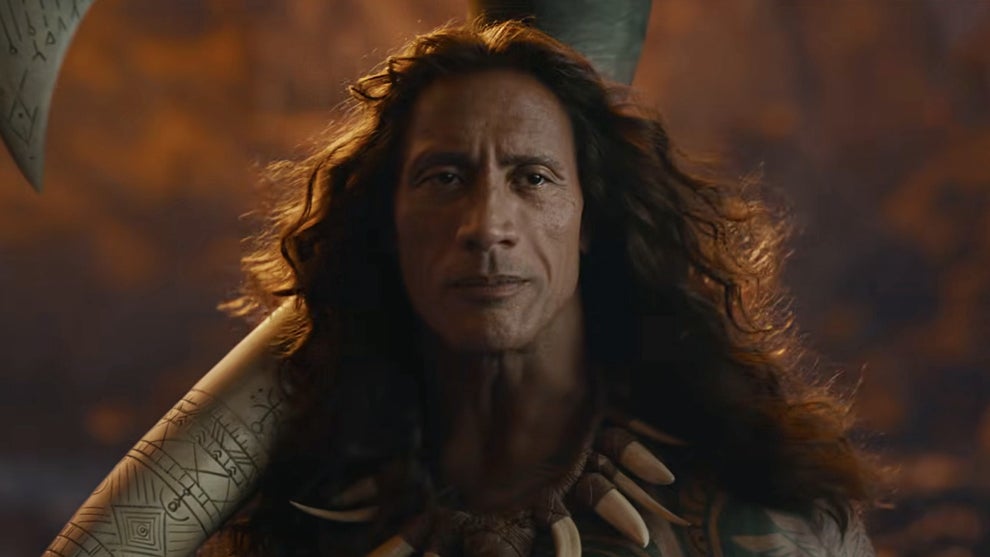
When a terrible infection ruins Motunui’s crops and fishing waters, Moana goes on a quest to save her people — and the world — by returning a magical stone to an ancient god. That stone was stolen a thousand years ago by Maui, a demigod played convincingly by Dwayne Johnson and unconvincingly by his wig. It’s up to Moana to track Maui down, make him admit he screwed up and help him once again become a hero.
The original “Moana” was, again, borderline flawless and filmmaker Thomas Kail (“Hamilton”) seems to recognize this, because his version changes almost nothing. There’s a little more backstory to Moana’s father, Chief Tui (John Tui), and a little more of a mentor relationship between Maui and Moana. Although, that may have more to do with the fact that, in live-action, Dwayne Johnson looks like he could be Catherine Laga’aia’s father (or even her grandfather), which would subconsciously alter the dynamic whether the filmmakers rewrote the script or not. So the new “Moana” leans into it and devotes a few extra minutes to Maui teaching Moana how to sail.
The music is as wonderful as ever, and it tells the story in a grand fashion. Naturally, there’s one big new number which, like the new songs in most musical remakes and adaptations, adds nothing except eligibility for an Academy Award for Best Original Song. After all, if “Moana” needed another song to flesh out its story and characters it probably would have been in the first movie already. At least Lin-Manuel Miranda’s superfluous but serviceable ditty “Along the Way” plays over the closing credits instead and wasn’t randomly shoved in elsewhere, all willy-nilly.
Still, the performers deserve credit. Catherine Laga’aia has a magical quality that will serve her well in future films where she can put her stamp on characters with less baggage. Dwayne Johnson spends a lot of the live-action “Moana” coasting on his Dwayne Johnson-ness, preening and joking charismatically in front of one lackluster digital ocean backdrop after another. But Disney should send a bouquet of flowers and a big truckload of money to Rena Owen’s doorstep. She takes over the role of Moana’s grandmother, Tala, and makes this whole production light up whenever she’s on screen — and not just when she’s literally glowing bright blue.

The Best Movies of 2026 So Far
Cinematically, the only time the live-action “Moana” comes alive is when it’s animated. The bioluminescent lair of Tamatoa, the giant Lovecraftian crustacean who obsessively hoards money and “Moana” merchandise — oh, he must be the god Disney worships! — is a sumptuous Las Vegas casino blacklight experience. The computer-generated chicken, Heihei, is always good for a quick laugh. Even the film’s signature number “You’re Welcome” includes memorable CG elements, which I’d say compensate for the fact that live-action offers fewer creative opportunities than animation, but you can’t compensate for a lack of animation by adding animation. Then it’s just animation again.
So yeah, thank god for animation — I guess we’re thanking Tamatoa — because without it, this live-action movie would have been drab, drab, drab. There’s a generic visual language that many modern Disney remakes employ, a sun-dappled haziness that robs even the most exciting visuals of their majesty, and the live-action parts of “Moana” speak it fluently. Even though they have nothing to say.
“Moana” is far from the worst Disney live-action remake, but it’s arguably the most redundant. I’m sure there are people who will enjoy paying extra, again, to watch a recent movie they already liked, again, but longer and not as good, again. If Disney insists on wasting the audience’s time, there are worse ways they could do it. Heck, they’ve already done worse. They’ll probably do worse again.
But there are better ways to waste an audience’s time — and you know what? Not wasting our time was an option, too.
