When you get down to it, there aren’t that many Big Themes. Man against Nature and Man against Self; first loves and last rites; coming of age and teenage sex and death. But, I suppose, as the years go by, I find myself most attuned to one particular concern: How do you be? How do you trust and treat others, keeping an open heart in a world primed to crush it? I think about this often — as I imagine we all do — but rarely with such focus as over the course of the quiet and searing “Gentle Monster,” which left more than a few Cannes attendees in tears.
The intensity of that emotional reaction is all the more surprising given the film’s explosive subject, which follows a woman wrestling with her husband’s alleged pedophilia. To her immense credit, writer/director/bomb-defuser Marie Kreutzer (“Corsage”) tacks so forcefully toward sensitivity over sensationalism that even those — and hopefully most — who have never confronted such circumstances can still recognize their own questions echoing throughout.
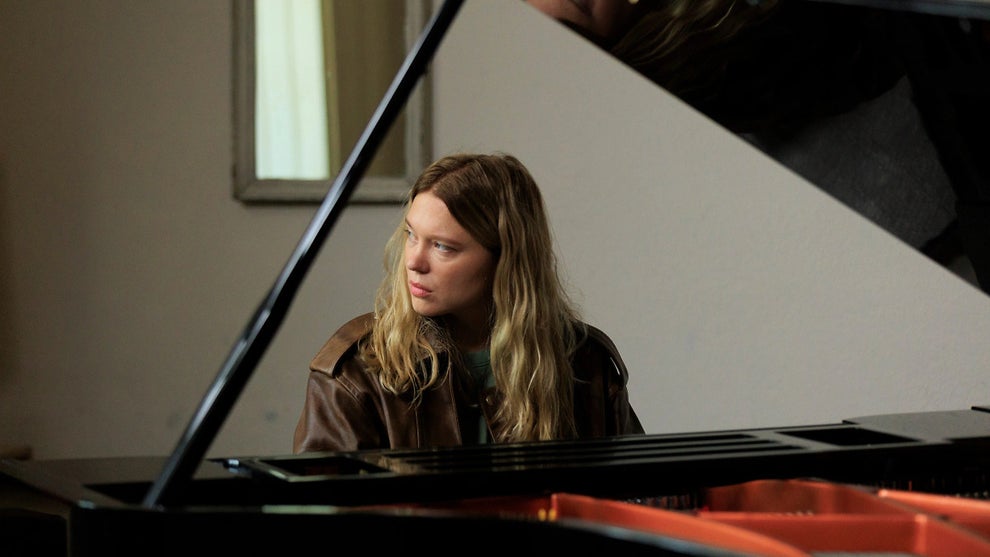
Guilt, however, is not among those questions, which musician Lucy (Léa Seydoux) discovers early one morning when police arrive to arrest her husband and confiscate his hard drives. If Philip (Laurence Rupp) can’t exactly deny their contents, he does lean on his profession as a filmmaker to explain his need for research. You might scoff at the explanation, but Kreutzer already anticipates as much; she opens the film, after all, with Lucy seated at a piano, soulfully singing Charles & Eddie’s “Would I Lie to You?” before superimposing the title card over an ominous shot of Philip. She’s not playing for ambiguity.

She’s far more interested in uncertainty — both looking backwards, with questions about what, if anything, happened between Philip and their school-age son Johnny (Malo Blanchet), and looking forward, as the family has just settled into a stately farmhouse in the Bavarian countryside. Focusing on a couple fluent in English, French and German, and on a family home turned instantly and irrevocably into a crime scene, the film shares more than a few parallels with “Anatomy of a Fall” — most notably in the overlay of emotional unruliness against cold legalese. Lucy loved, desired and supported her partner up until the moment the police knocked on their door; whatever happens next, those emotional pillars don’t so quickly fall.
As befitting a cerebral Austrian drama, “Gentle Monster” chillingly interrogates how that titular adjective reshapes the noun, but the film never once falls into the trap of moral relativism — or worse, pedophilic apologia — precisely because it never truly centers Philip at all. He is at best a cipher in a film that instead imagines Lucy as a kind of hyper-cerebral European pop star: one who sits at her baby grand, dismantling The Cure’s “Boys Don’t Cry” without ever fully bridging the gap between the chorus and her own life. In the end, it settles firmly into Woman against Self.
Well, almost. Because Kreutzer also threads in a parallel strand following the investigating officer. Professionally, Frau Kühn (Jella Haase) seems a perfect inversion: she looks at matters head-on, collecting evidence, building cases, and making arrests that blow up families in the name of a greater moral good. Then she gets up the next morning and does it all again. Her work is necessary and numbing, and her approach inherently militaristic — she takes down her targets while leaving no small amount of innocent collateral damage.
Off the clock, however, she shares the same ethical blind spots when tending her own garden. Given the demands of her job, she doesn’t quite have the emotional bandwidth to build new social relationships, so she must do what she can to avoid blowing up the family life she already has.
Before closing on an ironic tag that feels more than a bit over-determined, the film makes effective use of this central inversion. The two women circle each other with a fundamental bemusement that mirrors our own unsettled thoughts. Kühn cannot fathom how Lucy might will herself to stay, especially given the evidence. For her part, Lucy doesn’t see how someone could construct — and devote so much of their life — to looking squarely into the abyss. And really, neither can we.
And though Kreutzer never lets any adult character off the moral hook — except, perhaps, Lucy’s mother, played in cameo by Catherine Deneuve — she also refuses to shade these relationships with outright antagonism. Instead, they are all appraising one another, weighing others’ actions to balance their own ethical scales, and in doing so, trying to better understand themselves. That’s the same reason we turn to art.
