

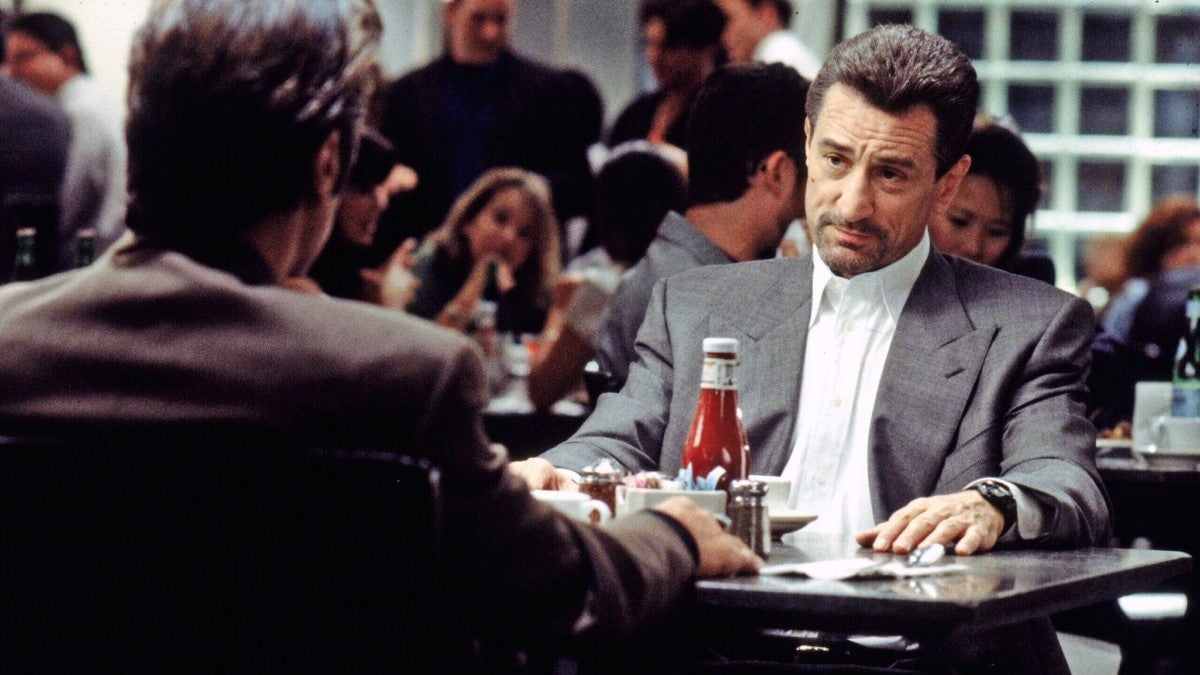
It was the perfect crime – an adaptation of an internationally bestselling novel, which also happened to be the follow-up to a movie that has grown in esteem and estimation over the years, eventually becoming one of the most important catalogue titles in modern history.
Sure, it was expensive. But it was being directed by one of the industry’s last remaining auteurs, a man whose exacting vision and attention to detail have gained him a place amongst the most celebrated filmmakers of his generation.
At long last, Michael Mann was going to make “Heat 2.”
But the path to production took more detours than expected, caught in a web of executive intrigue and corporate politics as the project moved from Warner Bros. to a Sony/Paramount co-production to its final form: an Amazon MGM Studios movie.
So how did Amazon, the relative new kid on the block, pull off getting the hottest property in town? And how did Sony and Paramount fumble their agreement to co-produce and co-distribute Michael Mann’s highly anticipated follow-up?
Like any good crime story, it’s full of twists and turns, competing egos and unreliable narrators.
It’s also one that underscores the shifting powers in Hollywood, with well-funded players like Amazon MGM making the kind of bets on expensive projects traditional studios are reluctant to make. And with opportunities that come from streaming, merchandise, additional sequels and making a name for themselves in the industry — all backed by massive cash-generating tech services — these players operate on a different kind of math.
The sequel, which as TheWrap exclusively reported has now lined up Leonardo DiCaprio and Christian Bale to star ahead of a November production start and is one of the most anticipated upcoming projects in Hollywood, almost fell apart multiple times.
This is the inside story of how one of the biggest projects in Hollywood survived a whiplash-inducing studio shuffle.

Literary beginnings
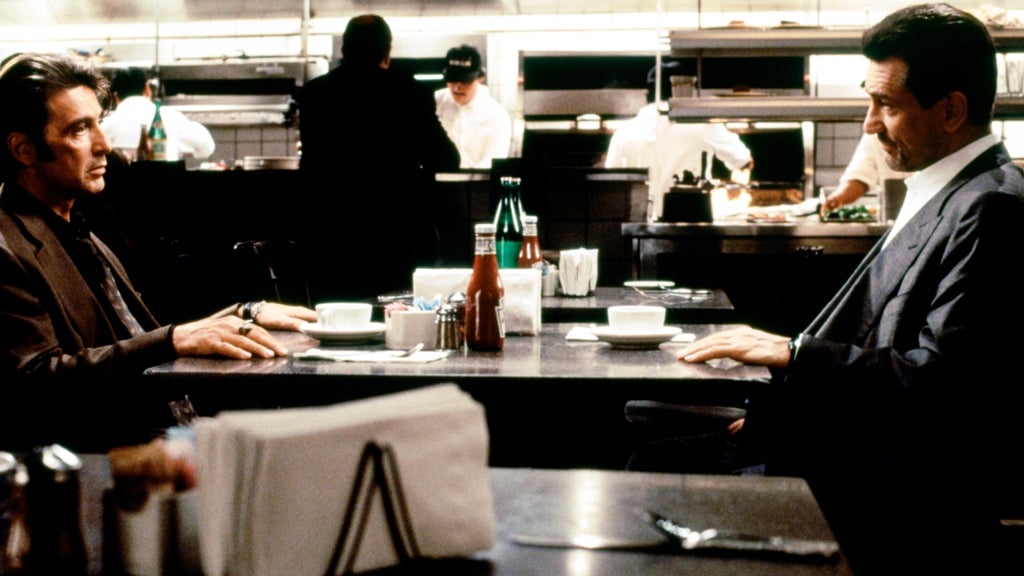
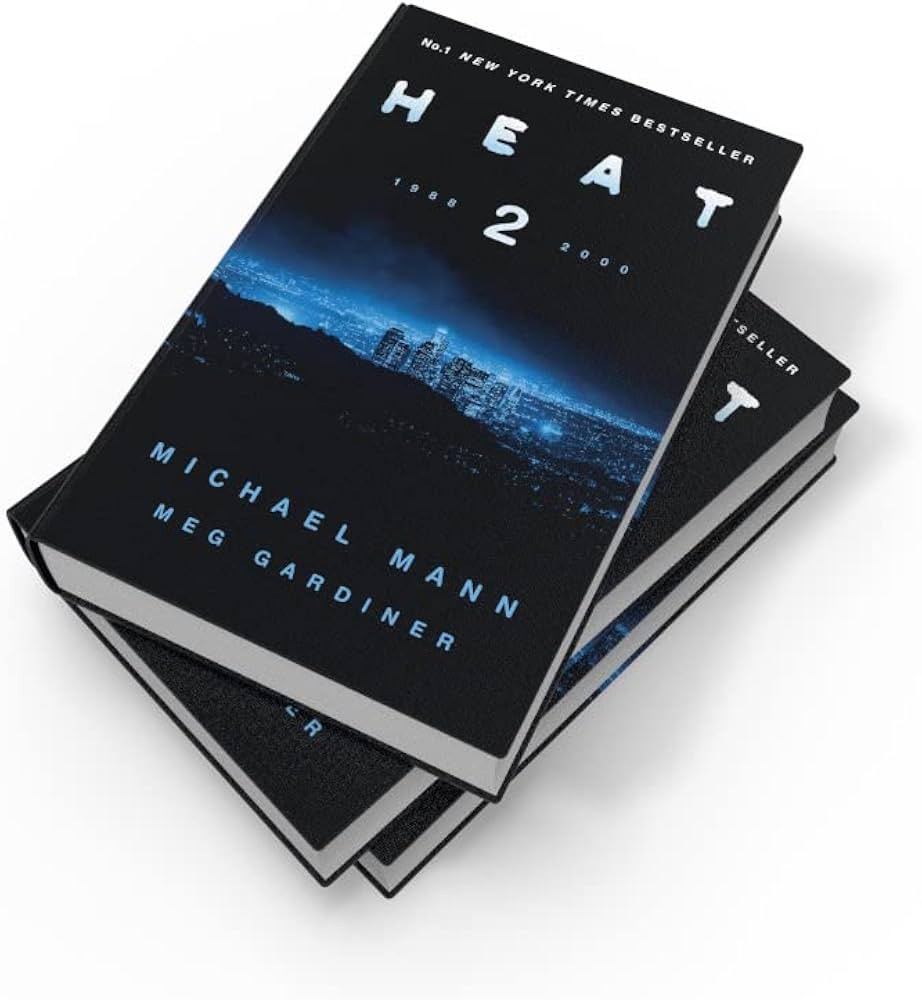
In 2016, Mann launched a publishing initiative and announced that he would be working on “Heat 2” as a book, serving as both a prequel and a sequel to his 1995 thriller that starred Al Pacino and Robert De Niro (sharing scenes for the very first time) as a dogged LAPD detective and the criminal mastermind who has eluded his grasp, respectively. It was Mann’s literary agent and close collaborator Shane Salerno who suggested the idea.
Novelist Meg Gardiner signed on as a co-author and a 2022 release date was set. As the novel was being released — where it debuted as a No. 1 New York Times bestseller — Mann noted his intention of turning “Heat 2” into a movie. He was bolstered by the critical and commercial success of the book, which demonstrated that “Heat,” as a brand, was still just as hot 30 years later.
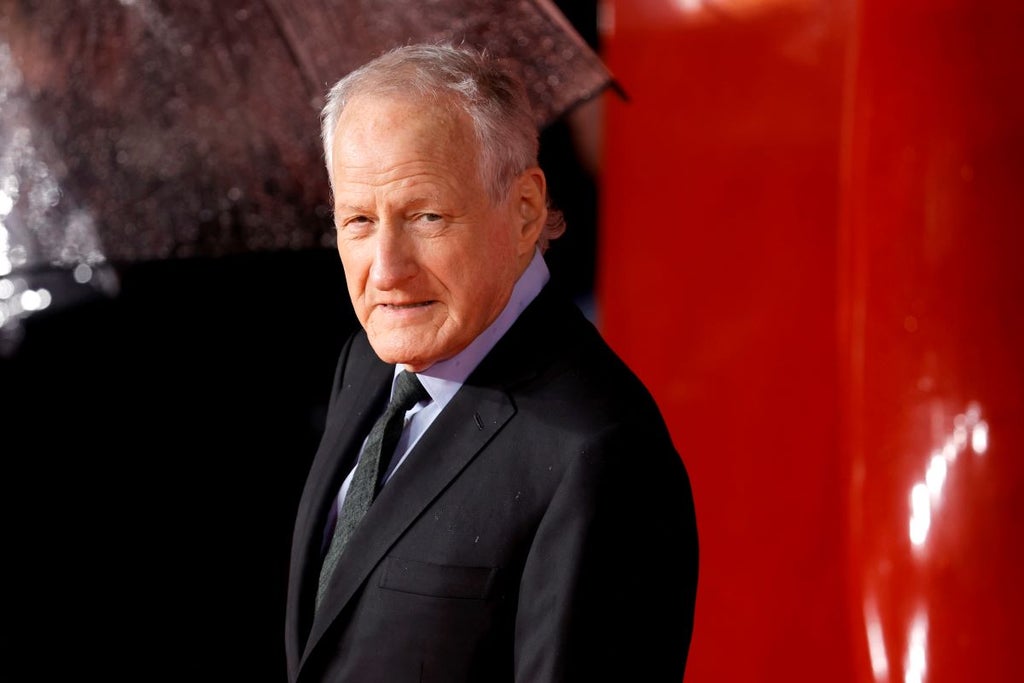
Mann’s movies, particularly “Heat,” are defined by a novelistic sprawl. This is, partially, what makes them so compelling. When writing the “Heat 2” novel, Mann was able to really indulge, as you learn everything from intimate details of characters’ backstories to the intricate inner workings of a Chinese crime syndicate in South America. (Mann is nothing if not a process guy.) It’s a beast, with the novel’s many storylines stretching from 1980s Chicago to present-day Paraguay.
It was always going to be a lot to wrangle into a single film. But if anybody could crack the safe, it’d be Mann.
The struggle begins
Mann delivered a draft of the “Heat 2” screenplay to Warner Bros. in March 2025. Warner Bros. had distributed the original film with Regency Enterprises fully financing and co-producing with Forward Pass. Coming off his well-regarded but not astronomically successful Neon movie “Ferrari” in 2023, “Heat 2” was seen as a potential return to Mann’s wheelhouse. A crime epic from the crime epic master. Once the script was submitted, it was widely praised and highly coveted.
At the time that the “Heat 2” script was delivered, Warner Bros. film chiefs Pam Abdy and Michael De Luca were under heavy fire in the press after a string of expensive misfires – among them the Robert De Niro-led crime drama “The Alto Knights,” Bong Joon-ho’s “Parasite” follow-up “Mickey 17” and the disastrous “Joker” sequel “Joker: Folie à Deux.” Combined, the movies had cost Warner Bros. hundreds of millions of dollars.
And Abdy and De Luca were staring down the barrel of several more hugely expensive bets in 2025 – among them Ryan Coogler’s period horror movie “Sinners,” Paul Thomas Anderson’s political “One Battle After Another” and Maggie Gyllenhaal’s bizarro “The Bride!,” which had already been rejected from Netflix for being too costly. According to a source with knowledge of the situation, Warner Bros. told Mann they would make the film for $125 million. (A second source close to Warner Bros. said the number floated to Mann was $150 million.) Mann was told that he could make it however he wanted if he could hit the budget, the first person said. But hitting that budget, with the epic, globe-trotting nature of the story, would be tough.
There were also widely circulated reports that, following the “Joker 2” and “Mickey 17” flops, Warner Bros. Discovery CEO David Zaslav was meeting with other executives to potentially replace Abdy and De Luca. (Warner Bros. denied the reports.)
Ultimately, many of the studio’s 2025 gambles paid off; “Sinners” and “One Battle After Another,” in particular, were commercial hits and critical darlings. Each took home several Academy Awards this past March, and “Sinners” broke box office records. But before knowing that those gambles would work, De Luca and Abdy felt they needed to make “Heat 2” at a strategic pricepoint, particularly without the starry cast that Mann had assembled in the months since presenting the project to Warner Bros.
Now in the midst of a brutal 2026 for the studio, Warner Bros. brass has told multiple people they wish they had “Heat 2,” with DiCaprio and Bale now attached to star, according to a source with knowledge.
When Mann delivered the script, he also had a preliminary budget worked out that exceeded Warner Bros.’ desired $125 million, which eventually settled to $170 million, according to two insiders with knowledge of the film’s proposed budget. The individual close to Warner Bros. said Mann wanted a budget in the $220 million range.
Spooked, the executives attempted to get the budget even lower, going back and forth with Mann about potential solutions. The problem, according to a member of the “Heat 2” team, was that some of the scenes the studio wanted to cut were essential to the film and were essential to landing DiCaprio as Chris Shiherlis, the role formerly occupied by Val Kilmer.
Warner Bros. and Mann couldn’t come to an agreement on a reduced budget for “Heat 2.” And De Luca and Abdy, who were facing a potential ousting, couldn’t greenlight such an expensive movie, particularly after Mann’s “Ferrari” biopic made just $43.6 million globally on a budget of more than $95 million.
An essential part of any heist is the team put together to pull off the job. Now Mann and his collaborators were out looking for a few more guys to get it done.

New suitors
A few months later, in August 2025, De Luca and Abdy allowed Mann to shop the “Heat 2” script. If Warner Bros. wasn’t going to make it, they agreed, then somebody else should.
During this period, David Ellison, hot off Skydance’s successful acquisition of legacy studio Paramount, was looking to make a splash. “Heat 2” certainly fit the bill and Ellison was a huge fan of the original film. Plus Ellison knew all about legacy sequels – Skydance had co-financed “Top Gun: Maverick,” along with two regrettable “Terminator” follow-ups and a long-overdue “Spy Kids” sequel (but we don’t need to talk about those).
At the time, according to a third insider, Paramount entered into an agreement with Sony Pictures to divvy up the costs associated not only with the production but with distribution and marketing. With a budget of $160 million, each studio would put up $80 million. Mann attended the meetings with Paramount and Sony alongside Jerry Bruckheimer, who produced Mann’s first theatrical feature, 1981’s “Thief.”
Not only is Bruckheimer one of the most powerful producers in town, but he’s also uniquely attuned to the needs (and potential pitfalls) of a sequel, having shepherded successful follow-ups to “Beverly Hills Cop,” “Pirates of the Caribbean,” “Bad Boys” and, of course, “Top Gun.” Mann had never made a sequel before. Bruckheimer was the additional firepower Mann needed, just to give the project some extra oomph.
But there were disagreements between people at the two studios on how the actual production would be run. According to a source with knowledge of the production, some at Paramount insisted on running the day-to-day operation of the “Heat 2” shoot, while others at Sony argued that Paramount’s executive team was too new and instead the “Heat 2” production should utilize Sony’s existing infrastructure.
Ellison, whose Skydance had long operated as a co-financier of some of Paramount’s biggest hits, feared that he and the Paramount team would be relegated to simple “financiers.” The exec hated this idea and wanted Paramount to lead the charge on the “Heat 2” production.
And while a third insider said that the studios worried about Mann’s demanding reputation, another source said that he had been an open and willing collaborator and partner. Mann just wanted the best version of “Heat 2” made, period.
As the deals were nearing completion between the two studios, press announcements were prepared heralding the historic union of two of Hollywood’s biggest powerhouses for one of its most feverishly anticipated projects.
Late on the evening of Sept. 26, 2025, a flurry of emails were exchanged between the “Heat 2” production team and Tom Rothman at Sony. Paramount had pulled out of the deal. This, according to a person close to the “Heat 2” team, was a shock to the filmmakers. It was also a shock to Sony. When Rothman tried to call Ellison back the next day (a Saturday), Ellison was unavailable.
A person with knowledge of Paramount’s thinking argued that the deal between Paramount and Sony was far from done, and said that while cursory conversations had taken place, they had not signed on in any meaningful way and therefore the characterization that they had pulled out was untrue. This person also downplayed that there was any friction about which studio would run the day-to-day operation of the production, as conversations had not gotten that far. What made Paramount uneasy was the budget.
Speaking of, Sony was now responsible for all of the costs associated with the project. Those costs were not inconsiderable.
A source with knowledge of Sony’s involvement suggested that Sony and Paramount were deep into conversation about the “Heat 2” deal and that after Ellison dropped out of the conversation, Mann and Rothman discussed a way forward. This person also said that the chat was too preliminary for the discussion of how the production would be divvied up to take place, but that there was no fighting between the two studios. They stress that it was too early in the process to work out those specifics.
While some within Sony worried that “the film wouldn’t be profitable theatrically at that budget,” according to a fifth insider, Rothman was still interested in making the film. According to a member of the “Heat 2” team, Rothman called Mann and told him, “We are still here and our $80 million is still on the table. And we can get another $40 million.” Rothman said that he would need four to six weeks to get the rest, either by finding partners or drumming up the money internally. Sony had huge success with Quentin Tarantino’s “Once Upon a Time in Hollywood,” another R-rated passion project starring DiCaprio that grossed nearly $400 million.
But Sony’s $120 million was below the $125 million that Warner Bros. had wanted and Mann was antsy to get started.
Quickly, though, another player emerged.
In October 2025, Amazon MGM Studios, led by Courtenay Valenti, and United Artists entered into negotiations to take the project on.
For Amazon, theatrical is not the end-all, be-all, but a small piece in a very large, cumbersome mechanism that includes consumer products, home video and future projects that could further extend the world of “Heat.” If anything, Sony was thinking too small. Amazon MGM Studios was willing to take in the big picture and all of its moving pieces. They had been presented with data showing the extraordinarily long tail of the first film, knew how big the film could be for its platform and had been chasing DiCaprio for a decade. Plus, the studio had tech company money to spend.
To make Amazon feel even more confident, Bruckheimer and Mann installed Thomas Hayslip, one of the most experienced and highly regarded line producers in the business, to help control the bottom line and provide assurance on a project as large and complicated as “Heat 2.”
Now, it was all clicking into place, like a master safecracker with his hands on the dials.
Final form
With production scheduled to begin in November and Bale and DiCaprio fully onboard, “Heat 2” has reached its final form.
Bruckheimer is set to produce alongside Mann, United Artists’ Scott Stuber and Nick Nesbitt. Bruckheimer is coming off the huge success of “F1,” which was made for Apple TV but released in partnership with Warner Bros. Bruckheimer, according to a person with knowledge, thinks that “Heat 2” will follow a similar trajectory as “F1” – overperform theatrically and become a monster hit on streaming. It should also be noted that “F1” was nominated for the Best Picture Academy Award, just like “Top Gun: Maverick.” (Mann has been nominated for four Academy Awards – for Best Picture, Best Director and Best Adapted Screenplay with Eric Roth for “The Insider,” and for Best Picture for producing Martin Scorsese’s “The Aviator.”)
Roth and Salerno will serve as executive producers. A spokesperson for Amazon MGM Studios said that no cast deals are closed at this time.
And while the budget might have ballooned well past $200 million in previous iterations, one insider said the current budget for the project is sitting at $165 million, thanks in large part to Mann winnowing down his once 190-page screenplay to a more manageable length and a $40 million rebate from the California Film Commission for the movie partially shooting in the great state of California. An Amazon insider said the budget hasn’t been finalized.
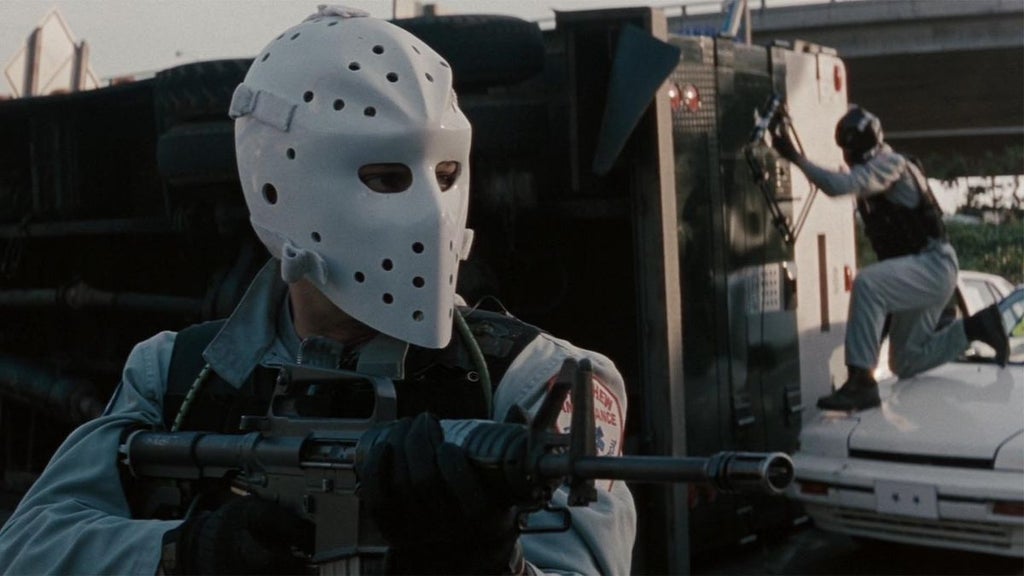
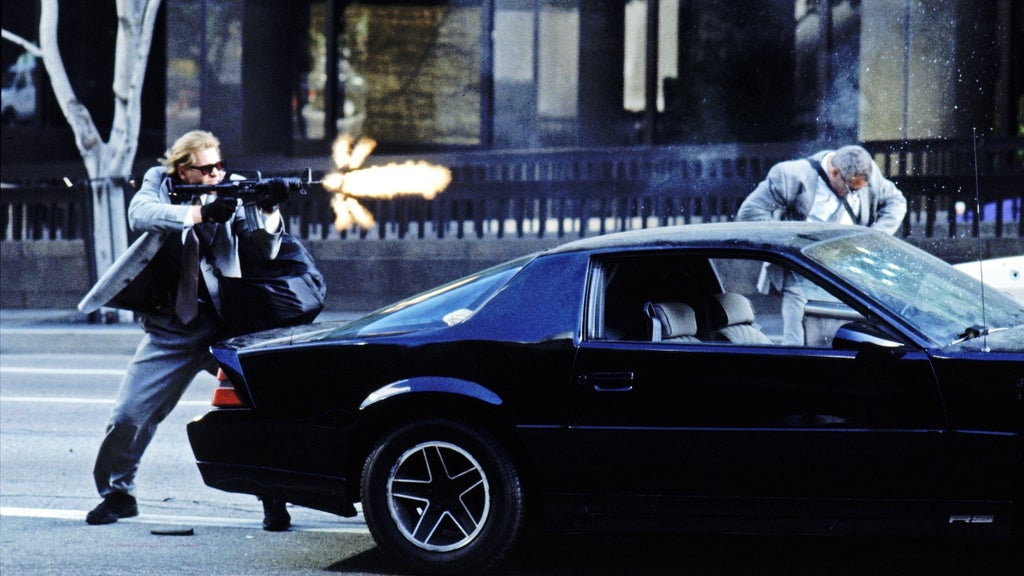
The scope of the movie, according to those with knowledge, has not shrunk at all and features action sequences that dwarf the first film, including the legendary heist/gunfight largely considered one of the greatest action sequences of all time that was also so realistic that law enforcement agencies use it in training exercises.
There is optimism that “Heat 2” could be a global hit, especially in the wake of the box office success of Christopher Nolan’s R-rated epic “The Odyssey.”
“’Heat 2’ could do for men of different ages what ‘Barbie’ did for women,” said one source in the production. “It won’t reach the same box office but it could easily approach more than $500 million which would make the film profitable theatrically and then a huge hit for Amazon on their platform.”
The decision to go with Amazon instead of waiting for Sony to find a partner (or partners) was partially driven by the company’s ability to monetize the project long after the film’s original window expires. And, yes, according to a source within the “Heat 2” camp, there is a third film being plotted, which would extend the world of “Heat” (and its related properties and products) even further.
While it might have been an overlong and somewhat torturous trek to partnering with Amazon MGM Studios, those making the film feel like it’s a good match. “Heat 2” ended up where it was supposed to be. And Sony will still be involved in “Heat 2,” serving as an overseas distribution partner with Amazon MGM by supporting in territories in which Amazon is not set up, according to two insiders. Sony recently served as the international distribution partner on Amazon MGM’s hit “Project Hail Mary.”
At the end of the day, it’s Amazon MGM Studios and United Artists that are walking away with the big score.
