

Netflix is on a roll with a very particular type of original movie.
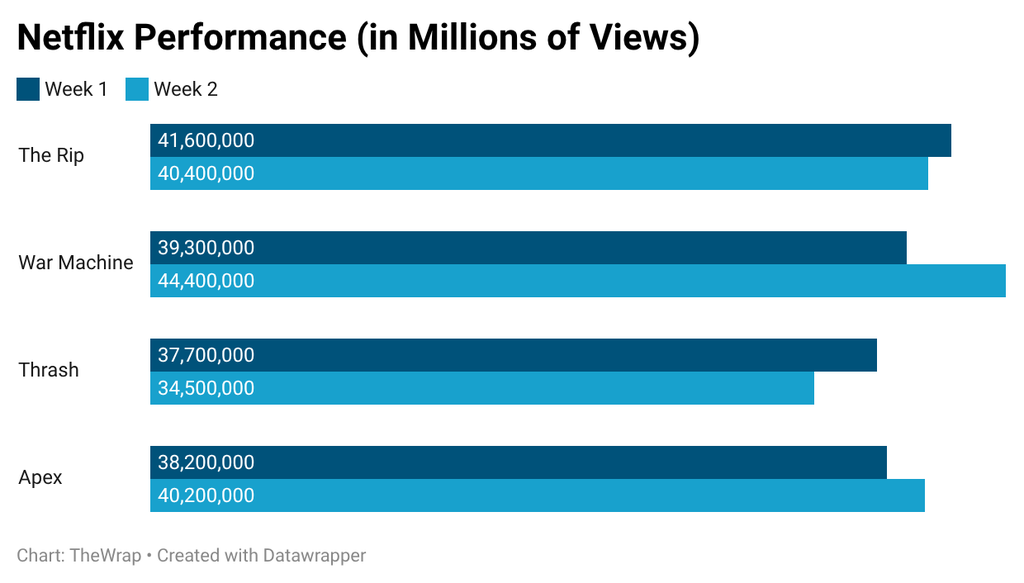
Beginning with Ben Affleck/Matt Damon thriller “The Rip,” released in January, and continuing with Alan Ritchson actioner “War Machine” (March 6), shark movie “Thrash” (April 10) and, most recently, Charlize Theron/Taron Edgerton action-thriller “Apex” (April 24), Netflix has generated huge viewership numbers.
Each one of the movies has reached the Top 10 in at least 92 of Netflix’s 93 country charts and, altogether, have held the global #1 spot for half of the year so far. “War Machine” opened at No. 1 on the English Films list, stayed there for two weeks, and spent eight consecutive weeks in the Top 10 with 128.4 million views during that run.
But perhaps more important than the astronomical numbers these movies have generated is the fact that Netflix is seemingly (and single-handedly) resurrecting a genre that mainstream Hollywood has all but forgotten: the R-rated blockbuster.
It’s not an accident. As Hollywood studios have largely abandoned the “blockbuster for grown-ups,” Netflix has consciously pivoted to fill that gap. And now, with this stunning four-movie run in 2026, the bet is paying off as Netflix subscribers are flocking to the kinds of movies that others just aren’t making anymore.
It used to be that you could go see a starry, mature movie with rich thematic concerns and spicy adult content. Films like “Lethal Weapon,” “Die Hard” and “True Lies” used to routinely rule the box office. These days, though, the experience of watching an R-rated blockbuster in the theater has all but gone extinct as studios seek films that have broad appeal (i.e. families).
This year’s biggest movies have been all-ages animated features like “The Super Mario Galaxy Movie” ($897 million worldwide) and Pixar’s “Hoppers” ($371 million), along with appealing, PG-13-rated live-action fare like “Project Hail Mary” ($638 million) and “Michael” ($615 million).
The R-rated theatrical hit is now relegated to horror movies (“Scream 7” brought in $207 million) and occasionally a steamy literary adaptation that is made economically enough that they don’t have to tame it down for mainstream audiences (“Wuthering Heights” made $241 million, “The Housemaid” $399 million). There will also be the rare, comic book-adjacent R-rated smash like Marvel Studios’ “Deadpool & Wolverine” or DC’s “Joker.”

This is not the case on Netflix, where every single week of 2026 has had at least one action or thriller film for grown-ups somewhere in the English Films Top 10. And according to Netflix’s own internal metrics, viewers aren’t just showing up for one film; they are here for the whole slate. The majority of households that watched “Thrash” or “Apex” had already watched “The Rip” or “War Machine,” Netflix insiders told TheWrap.
The winning strategy was pulled off by both producing these kinds of films in-house and staying open to partners who might be looking for a new home for projects in limbo.
“It has been a conscious decision to fill gaps in the marketplace when legacy studios are leaning into reboots and remakes.
“Our strategy is not strictly R-rated but wholly original films that feel nostalgic to older audiences and fresh to younger audiences,” Ori Marmur, VP of Netflix Film, told TheWrap. “Our slate will continue to have these types of films because there is enormous global demand for them. While others have slowed down making these types of original, high concept action films that dominated the late ’90s and early 2000s, we’re seeing in real-time how much they still resonate and how much audiences still love them.”
“We talked a lot about how this felt like a throwback movie while we were shooting. These are the kind of movies we grew up watching and love,” said Lucy Damon, who produced “The Rip” for Artists Equity. “I actually don’t know why more of them aren’t made. I think it requires having faith that if you make something good, the audience will be there for you.”
Damon said that the response to “The Rip” was instantaneous and recognizable.
“We’ve really felt the success of ‘The Rip’ in our daily lives. There’s such goodwill for the film. People keep coming up to me on the streets and in airports wanting to talk about it, which is very exciting,” she said. “We really feel the reach of Netflix.”
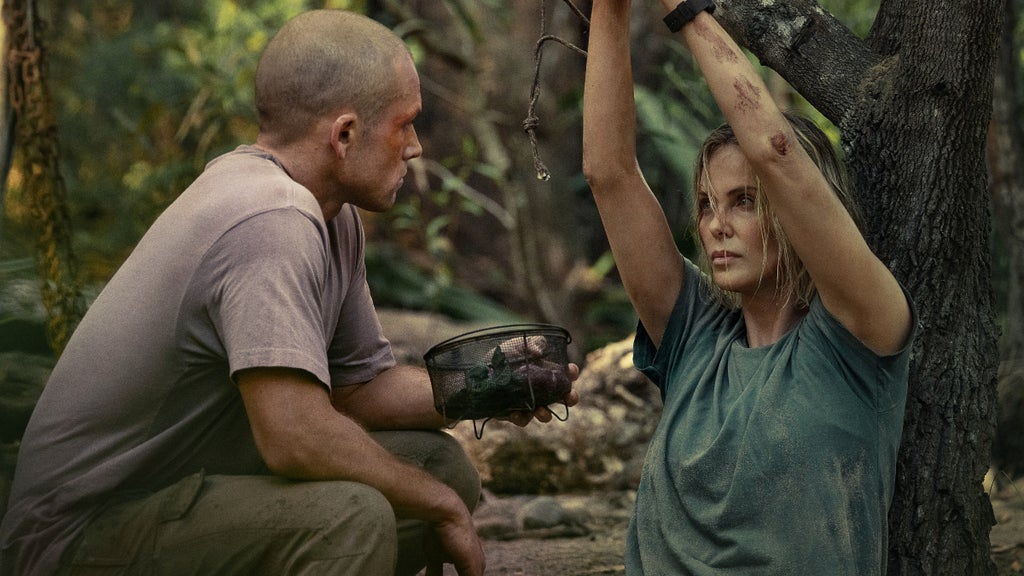
The movies are all incredibly different – “The Rip” is a 1990s-style cop thriller with Damon and Affleck that calls to mind director Joe Carnahan’s breakthrough “Narc;” “Thrash” is a wild, man-against-nature shark thriller with ecological undertones; “War Machine” is a muscular, 1980s-style sci-fi movie about a broken warrior (played by Ritchson, a known face to streaming audiences) going up against an evil alien robot; and “Apex” is a cat-and-mouse survivalist thriller starring Theron and Egerton that would make for a great double feature with 1997’s “The Edge.”
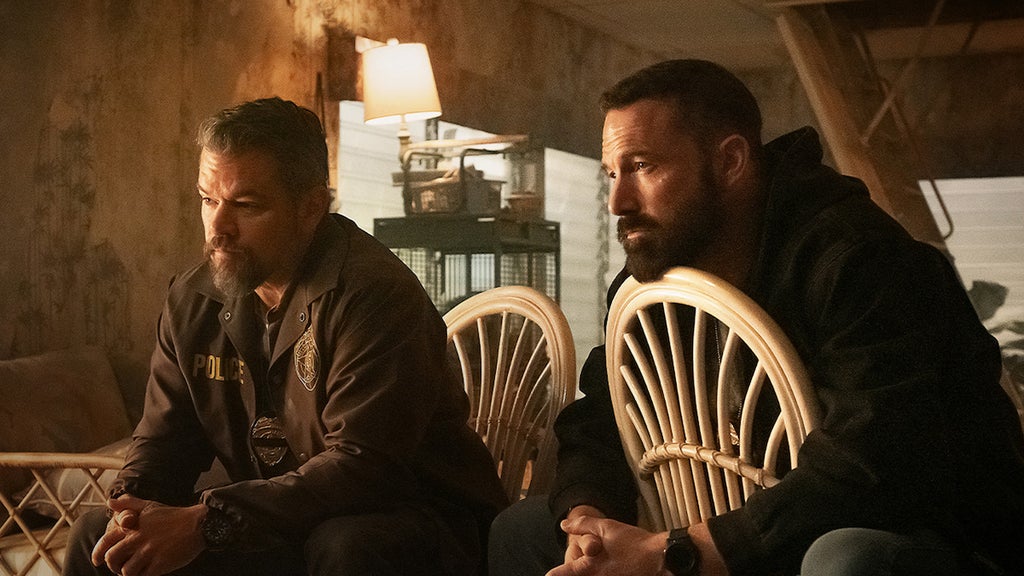
“The Rip” and “Apex” were both developed internally at the megastreamer, while “War Machine” was produced by Lionsgate in partnership with Netflix. “Thrash” was nearly finished when Sony decided it wasn’t going to release it, then Netflix stepped in as part of their ongoing deal with Sony, finished the movie and released it globally. Talk about making a splash.
And there’s more where that came from. The experience of making “The Rip” was so good, Lucy Damon said, that Artists Equity immediately looked for ways to “forge a larger partnership” with Netflix. “Animals,” a crime thriller directed by and starring Affleck and produced by Artists Equity, will arrive on the platform later this year. It is expected to be rated R.

***
“War Machine” writer/director Patrick Hughes remembers the moment when he came up with the idea for what would eventually become the Netflix hit.
He was shooting his first film, the white-knuckle Australian thriller “Red Hill,” in a small outback town and they had to shut down. They moved the cars out of the road and watched as “200 dudes with the little red laser light” crested the hill and came through the town where they were shooting; the night was so cold that the production team had to scrape ice off the cars, but these guys were just jogging, “in a dead silent formation.” They had numbers on their arms. There were other people who were watching the men in their formation in night vision goggles, in case one of the men collapsed.
Someone told Hughes that the men were trying out for the SAS or SASR, the Special Air Service Regiment, an elite, special forces until of the Australian Army that was formed back in 1957 and first deployed to Borneo during the Indonesia-Malasia Confrontation. The unit’s motto, borrowed from the British SAS, is “Who Dares Wins.” They were backlit by a giant military truck, its headlights casting the men in silhouette. Hughes could see their breath in the cold night air.
“I was just like, OK, that’s one of the most cinematic things I’ve ever seen,” Hughes remembered.
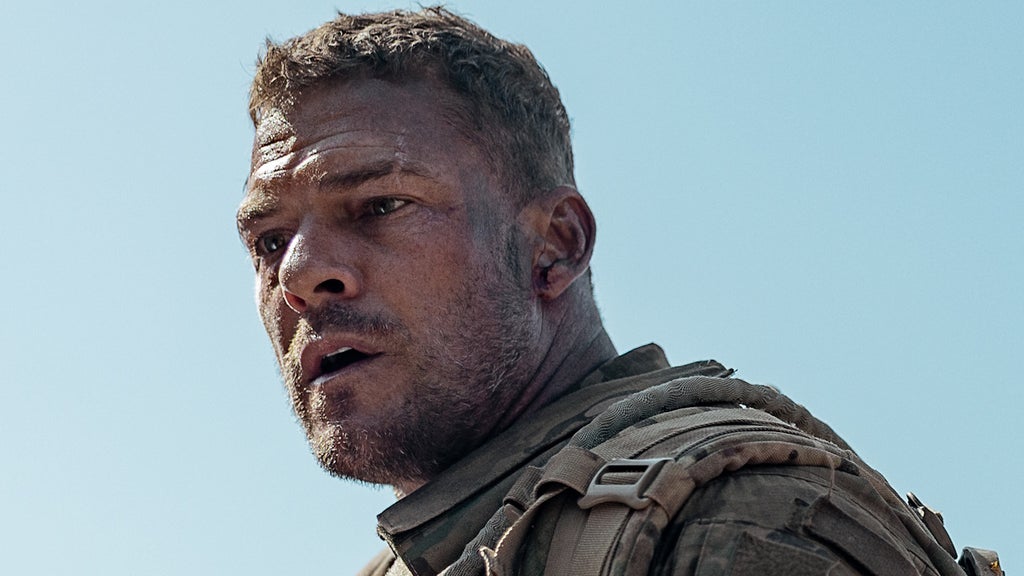
Hughes became fascinated, researching the SAS selection programs, which he discovered mirrored the process for their British counterparts, along with the Army Rangers (who wound up in “War Machine”).
“They all follow the same pattern, which is very much aligned with storytelling, which is, through death we find rebirth,” Hughes said. He noodled on the idea while making other movies, like “The Hitman’s Bodyguard” and its sequel. He crafted the story of a soldier (Ritchson), who loses his brother in combat and then goes on to attempt the Ranger selection process, partially inspired by a story of two brothers who made a pact to try out for the Navy SEALs.
Soon enough, he had grafted the story to one that he had around the same time about an alien invasion.
“I had these two polar different stories that I thought would be really unique. I always had this idea to tell an invasion movie where you start on the micro and you end on the macro,” Hughes said. He also wanted to tell a story about robots. “Everyone thinks these little green men are going to come. I’m like, ‘No, they’re not.’ What’s the first thing we send into battle? F–king drones, dude. It’s going to be machines,” Hughes said.
He sold the idea for “War Machine” to Lionsgate in 2018, with the intent of making it in Australia. When Hughes revisited it, though, he realized that it was going to be costlier and more cumbersome than originally imagined.
“It came down to a position with the numbers,” said Hughes. “There was a version we could do. But in my mind, I was thinking big scale always on this movie, so that’s where we partnered up with Netflix.”
Lionsgate’s Motion Picture Group President Erin Westerman told TheWrap that Netflix’s passion won out over other potential partners for the project:
“We could have made it theatrically, we could have taken it to one of the other streamers that was bidding on it, but their passion won out, and they were tremendous partners,” she said.

The movie that Hughes and co. got to make with Netflix, with all the blood and the sweat and the viscera and the outdoor locations that were a pain in the ass to reach, is the one that is resonating with audiences. It was a labor of love for Hughes and Ritchson; the two got matching “War Machine” tattoos. (Seriously.)
Hughes is proud of the movie and the fact that it feels like something of a throwback. It’s easy to imagine watching the movie at the theater attached to your local mall or renting it from your mom-and-pop video store on a Friday night after school.
“I’m just incredibly grateful that there are avenues to get these types of films made. We tend to lean away from that bare bones sort of action filmmaking where it’s not overcrowded or over-complicated in the sense that it’s just decision-making under pressure,” Ritchson said. “I’m really grateful for Netflix to get to make a movie of the scale that I wanted to make it. They really came behind and really believed in it, and then you get to put it in front of a massive audience. It’s just a dream come true, especially coming off the success of it.”
As Marmur said, “We really respond to fun, high concept ideas that cut through the noise. Films that feel escapist and aspirational, films that make the viewer think what would I do in this situation?”
***
The way “Thrash” producer Kevin Messick tells it, Netflix saved the movie from drowning, or getting consumed by a ravenous shark. Messick, who produced the movie with his partner Adam McKay and Tommy Wirkola, the film’s writer/director, sold the project to Sony a couple of years ago. It was then called “Beneath the Storm.” Like “War Machine,” they shot it in Australia. At the end of last year, Sony said that it was not going to release “Thrash” on its intended July 3, 2026 slot, “which they’re allowed to do,” Messick said.
Messick and McKay took the movie to Netflix, where they had made “Don’t Look Up.” Netflix sparked to the project but gave them a firm release date of April 10, 2026. That put the filmmakers into overdrive.
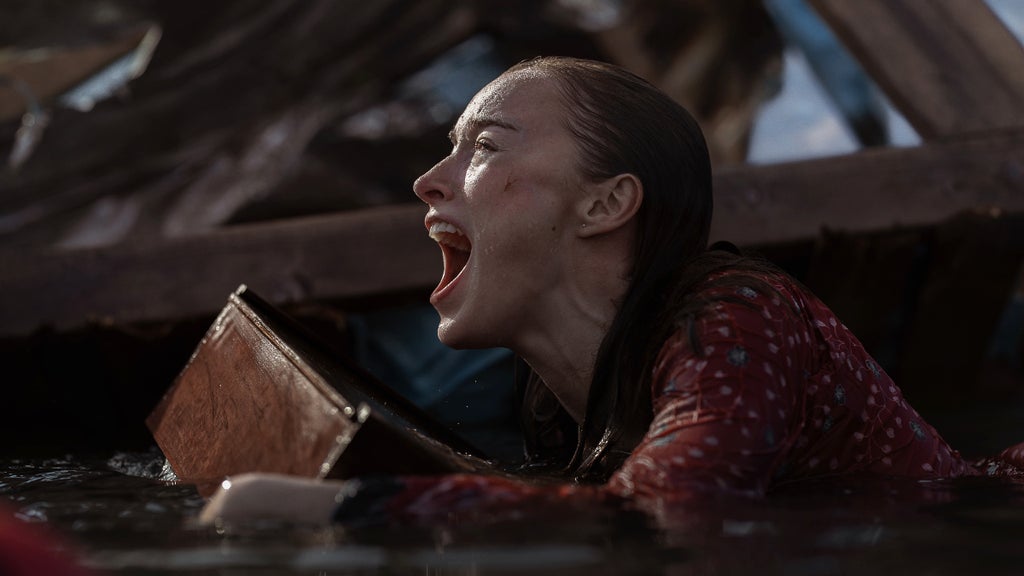
“The effects weren’t done, the score wasn’t done. Netflix said, We love this film but we also love it on this date in April. Can you hit those dates? We worked our asses off to do that,” Messick said.
Messick and McKay’s Hyperoject Industries had wanted to do a thriller about climate change and had been big fans of Wirkola’s since they produced “Hansel & Gretel: Witch Hunters” years before. It was Wirkola’s idea to combine the concept of “climate and rapidly intensifying storms” with a shark movie. “McKay’s always wanted to make a shark movie as long as I’ve known him,” Messick said.
When Wirkola pitched the idea of a small town, home to a meat packing plant, which is overrun by a historic hurricane that also brings sharks into the town, they were sold. It was irresistible. Wirkola turned in the script and they sold it to Sony.
The idea of combining the social consciousness of McKay’s other movies with the bloody thrills of a shark movie was a key part of what made “Thrash” unique.
“Tommy’s approach felt like it was a movie that lived in our reality versus a million other high concept mashups that you can come up with,” Messick said. “It’s a fun popcorn shark movie but this one felt like it lived in the real world.”

The production was a logistical nightmare, with a large swath of a small coastal town being built on massive soundstages. When buildings start to be submerged, since they could only get so much water onto the stage, they would just shorten the houses, little by little, so that it appeared like the water level was rising. In a sequence where a main character has to give birth on a bed that is being pushed up by the water, the set would actually be lowered into the water to achieve the effect. Later, digital storm elements and sharks would be added.
Still, they knew that they had something special, in part because of the environmental message at the movie’s center.
At preview screenings for the film, someone would invariably raise their hand and ask if maybe “Thrash” could happen in their small town.
Messick isn’t upset that the movie didn’t get a theatrical release, but he does think about its oversized success on Netflix and how that maybe could have translated. “I think it was over 80 million views after this weekend. You can’t play the game of extrapolating that into box office … but it’s a fun game,” Messick said.
Since its debut, “Thrash” has appeared in the English Films Top 10 every week (now four weeks running) and held the #1 spot for two of those weeks.
***
The R-rated Netflix originals will keep coming – this summer sees the release of “The Last House,” a contained thriller featuring recent Oscar nominee Wagner Moura and Greta Lee and directed by Louis Leterrier, and serial killer thriller “The Whisper Man,” starring Adam Scott and Robert De Niro. The fall has the untitled Quentin Tarantino/David Fincher movie, a sequel to “Once Upon a Time in Hollywood” that once again stars Brad Pitt, and Fernando Meirelles’ star-studded heist movie “Here Comes the Flood,” with Denzel Washington, Robert Pattinson and Daisy Edgar-Jones. And, of course, Affleck’s “Animals,” which also stars Kerry Washington, Gillian Anderson and Affleck’s “The Rip” co-star Steven Yeun.
Clearly the vein of the R-rated blockbuster is something that Netflix will continue to stoke and cultivate, along with the more family-friendly four-quadrant fare like Greta Gerwig’s “Narnia” (now bumped to 2027) and the fairy tale “Steps,” positioned as their big animated movie for the fall. It also compliments – and potentially crosses over – with the streamer’s prestige fare, which usually is composed of the same kind of star vehicles, with slightly more prestigious filmmakers and subject matters (think “Jay Kelly” or “Train Dreams”).
But as we saw with last year’s Oscars, which saw R-rated hits “Sinners” and “One Battle After Another” become awards season smashes, soon enough the next R-rated Netflix hit could also be the next Academy Award juggernaut.
After all, are vampires all that different from sharks or serial killers or giant robots?
