
It’s easy to have a soft spot for coming-of-age movies. When we’re children we dream of becoming an adult. When we’re adults we dream of being kids again, even though our memories of childhood make us wince. When we’re in the middle of growing up, neither young nor old, earning our wisdoms the hard way, we feel inexplicably alone, even though every other person our age is going through similar anguish, similar excitement, similar confusion.
In every phase of our lives, stories about our transitional periods make us feel seen. And whether we admit it or not the “coming-of-age” formula makes that possible. Everyone’s childhood is different and everyone’s obstacles are unique but everyone has to experience life’s big moments for the very first time. It may happen when you’re five years old or when you’re 22, but someday we all experience the death of a loved one, and our very first heartbreak. Figuring out how to live through it and live with it is universal, even if we mess everything up. Which we usually do.
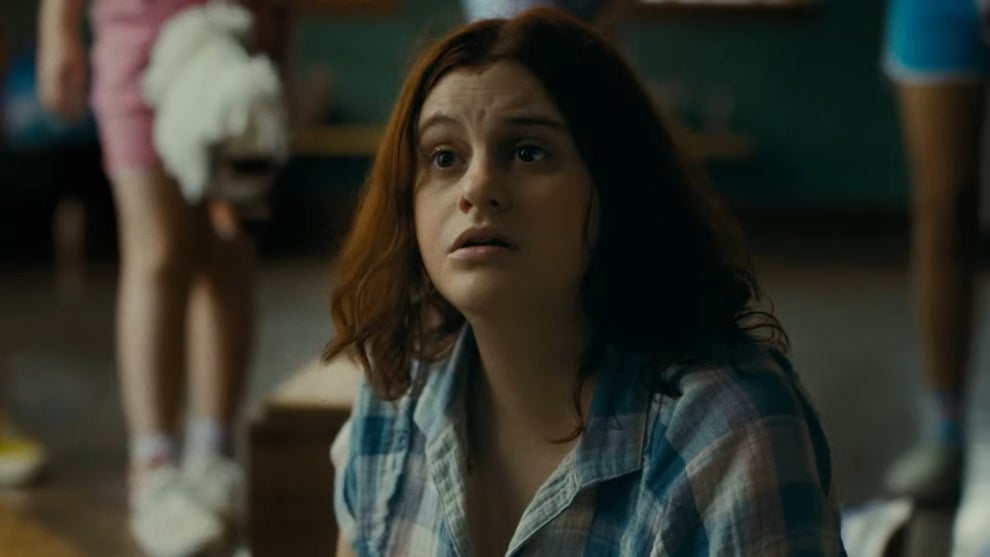
Lauren Meyering’s “Horsegirls,” one of the better recent coming-of-age movies, beautifully dramatizes these familiar moments while telling its own, distinctive story. The film’s protagonist, Margarita (Lillian Carrier, “Everything’s Gonna Be Okay”), is a young autistic woman whose mother, Sandy (Gretchen Mol), is undergoing chemotherapy. Sandy is afraid Margarita won’t be able to hold down a job when she dies so she starts pushing her daughter harder, and pushing her away in the process. She doesn’t realize that although Margarita still has a lot to learn, so does Sandy, and she needs to let Margarita decide what she values. Even if it’s competitive hobbyhorse riding.
You read the last sentence correctly. The protagonist of “Horsegirls” has a job at a local Halloween store, but she secretly ditches it early to participate in a group activity with light gymnastics and dance choreography using toy horses on sticks. Margarita can’t have a real horse but she’s always wanted one and this is the closest she can get. She is, in essence, having simple dreams of leaving Spirit Halloween. And although she knows her mom will scream “Marg, what have you done? You’re fake pony girl and you dance in a club!” she’s just having fun. On the stage, in her feels. Where she belongs.

Hobbyhorse riding is easy to misunderstand at a glance. You could say the same thing about Margarita, played magnificently by Carrier. Lauren Meyering’s film is about an autistic woman who never has to explain herself. Some people don’t understand Margarita as well as others, but most people see her as the upstanding person she is, with as many fine qualities and flaws as anyone else. But even though the film makes Margarita’s story accessible to all, “Horsegirls” also understands that being on the spectrum affects the way Margarita experiences all her interactions, so the film never downplays it. It’s a fact of her existence, portrayed honestly and fairly, with sensitivity and complexity.
“Horsegirls” never makes the mistake of trying to introduce autism to the audience, lecturing as though the assumed target demographic must be neurotypical. Meyering wrote the screenplay from a story by Mackenzie Breeden, and the writing is observant and genuine, not pandering. The sweep of the narrative is familiar. The specifics have a welcoming, fresh perspective that speaks to audiences who rarely get to see a character like Margarita as the protagonist in a major motion picture, and will appreciate being seen in return.
That Margarita is played by an autistic actress who brings her own experience and insight to the character makes the film all the more inviting, a place where disability representation isn’t just on-screen, it’s off-camera as well. That shouldn’t be as rare as it is, and although the behind-the-scenes narrative of “Horsegirls” is arguably not what we’re here to discuss, it does support the story Meyering is telling and that makes a big difference whether the audience is aware of it or not.
Films like “Horsegirls” can fall apart at any stage, with just the slightest miscalculation on how to present the characters, which parts of their lives to dramatize, and how they exist in a larger social context. “Horsegirls” never wavers. Every creative choice is confident and feels correct. The film’s preoccupation with an unusual pastime is, admittedly, quite quirky yet it’s also something the characters who participate in the hobbyhorsing sport take seriously. Everything matters to the characters and the filmmakers and the audience. In the end, “Horsegirls” brings all its warm, difficult, funny, desperate elements together to highlight how personal growth can take many wonderful forms, in any conceivable situation.
“Horsegirls” isn’t just another coming of age film. It hits a lot of familiar notes, but that’s not a critique. It’s that very familiarity that brings us all closer together. At their best, coming of age stories generate the most wonderful cinematic quality — empathy — and “Horsegirls” is a coming of age story at its best.
