
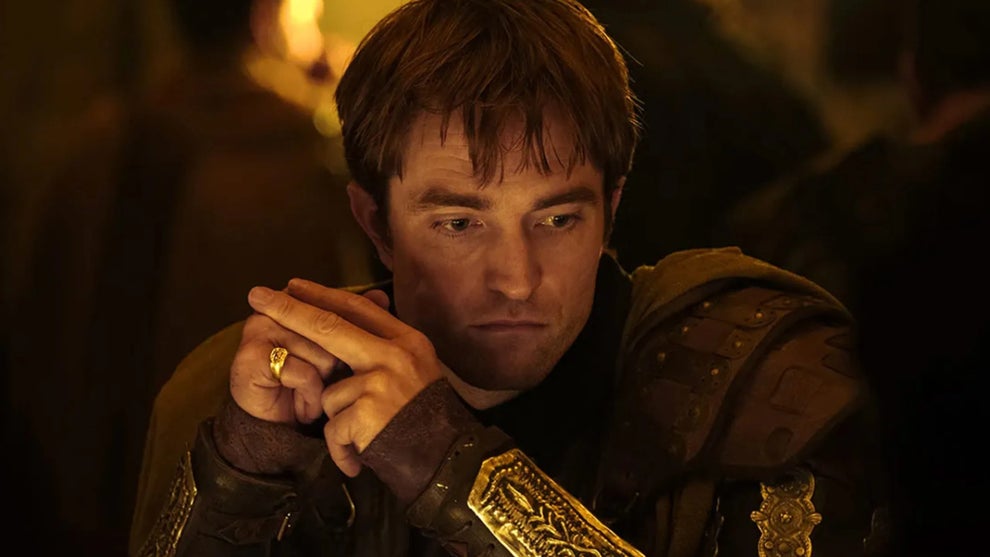
In 2001, Heath Ledger starred in a movie called “A Knight’s Tale,” a reasonably popular action-comedy that treated 15th century medieval jousting like modern professional sports. The film caused a stir at the time because filmmaker Brian Helgeland, who’d recently won an Oscar for co-writing “L.A. Confidential,” chose to include 1970s rock songs in the soundtrack, including David Bowie’s “Golden Years” and Queen’s “We Will Rock You.” Naysayers argued movies don’t get more anachronistic than that. Others, like film critic Roger Ebert and Helgeland himself, accurately pointed out that an orchestral score — which was, had been, and still is the movie industry standard — would be equally out of place. After all, orchestras wouldn’t be invented until hundreds of years later.
Today, certain filmgoers are complaining that Christopher Nolan’s “The Odyssey” includes contemporary-sounding words like “dad,” and that the casting is too diverse to be historically accurate. They’re not concerned that the characters are speaking a language that wouldn’t be invented for another 1,500 years, or that the film has an orchestral score 2,500 years too early, or any of the other historical inaccuracies we all routinely ignore for the sake of dramatic license.
Some people just don’t think the film passes a vibe check, whether the vibe is “not old-timey enough” or “not white enough.”
Of course, all this “discourse” (if we really have to call it that) ignores the fundamental problem with complaining about any historical inaccuracies in “The Odyssey.” This is a movie about stuff that didn’t happen. Historians can’t even agree on whether the Trojan War was a real thing (or for that matter, if Homer was a real person). But if it was, on their way home a bunch of soldiers from Ithaca weren’t eaten by a 20-foot-tall cyclops or transformed into pigs by a wicked, wicked witch.
Historical accuracy is appreciated in serious films about historical events, but even then it isn’t always a virtue, nor is it always possible. And if audiences start demanding absolute accuracy from fantasy films about monsters and gods, they will never be satisfied. Unless someone reading this can tell me what a “historically accurate trip to Hades” really looks like.

The question isn’t why “The Odyssey” is inaccurate, because it’s no more or less accurate than any fantasy story in a historical setting, whether that setting is real or imagined. The question is: Why do some people only get passionate about historical inaccuracies when they invalidate preconceived notions of history, which may be inaccurate themselves? Why is it so important to decry any dramatization of history that challenges preconceived notions and pre-existing worldviews, without also questioning those notions?
With “The Odyssey,” some people — let’s give one of them a fake name so nobody knows who we’re talking about, I’ll go with “Blelon Busk” — claim that casting actors of color in a Greek historical epic is “desecrating Homer,” specifically targeting Oscar-winner Lupita Nyong’o’s casting as Helen of Troy. Never mind that a heck of a lot of cultures are adjacent to the Mediterranean Sea. Never mind that in Greek mythology Helen of Troy — who wasn’t real — isn’t completely human, and was born after Zeus transformed himself into a swan and impregnated a human woman with magic swan eggs. It’s probably “inaccurate” to portray this particular demigod without feathers, but I don’t see anyone complaining about that. They’re just complaining that she’s not white.
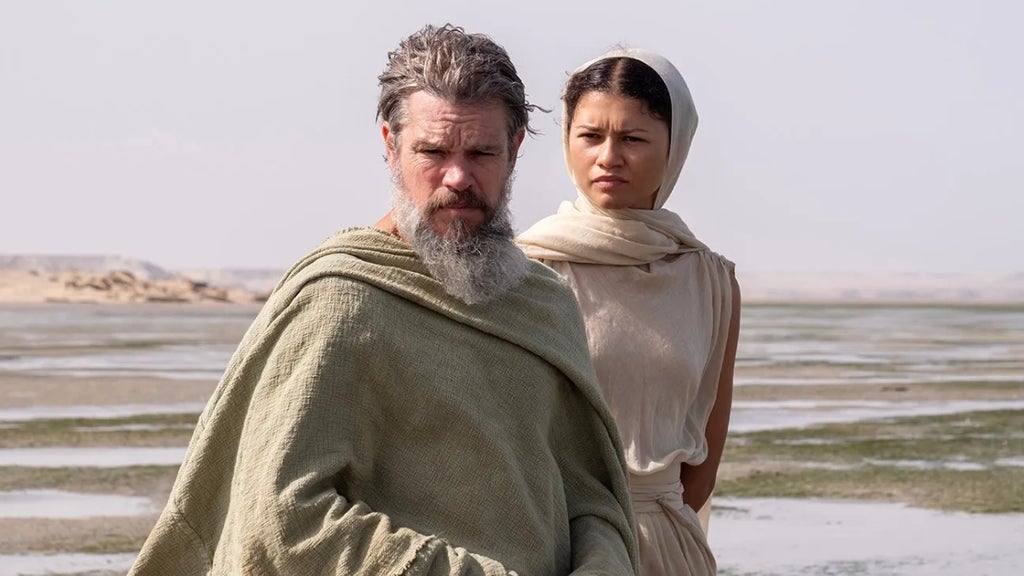
We’re not here today to complain about history professors, who often use popular, inaccurate movies to teach real history lessons about events, people and eras which pique a modern audience’s interest. Scientists do the same thing. Nobody else in the audience for James Cameron’s “Titanic” was distracted by the fact that the stars in the night sky were in the wrong place while the ship sank, but having a great big nerd point it out can be fun, and it raises our awareness about the fascinating world of science. Similarly, very few people in the audience complained about all the kilts in “Braveheart,” even though the historians were probably rolling their eyes, because that particular fashion choice wouldn’t be invented for another 500 years.
But complaints about “The Odyssey” raise the question: Why do some people have it in their heads that history was all white in the first place? We can blame Hollywood for a lot of this. Historical movies were de rigueur in the early days of cinema, which popularized our contemporary ideas of what the wild west, ancient Rome and medieval England looked like. You know what was also de rigueur at the dawn of cinema? Institutionalized racism, sexism and homophobia.
Prominent Hollywood productions weren’t in the habit of starring people of color in prominent roles, or women in roles that challenged contemporary gender norms, or openly queer people in any context, especially after the censorious Hays Code took control of the industry and saw to it that stories featuring homosexuality, non-Christian values, sex, foul language, and mixed-race romance functionally forbidden.
So if your concept of what history “looked like” stems from old Hollywood films — or even the new Hollywood films which follow in those almost all-white, all-straight, all male-centric footsteps, whether the inspiration is conscious or unconscious — then it’s not really based on history. It’s based on what history was allowed to look like when history wasn’t to allowed be portrayed as diversely as real life always has been.
If someone you know is clinging to the idea that the existence of non-white, non-queer people in the past is “inaccurate,” they’re actually complaining that the worldview they never questioned before has been challenged. What’s more, the insistence that these outdated ideas about history should be rigidly enforced, or shamed back into the mainstream, isn’t based on any real concern for human beings or an honest depiction of our past. It’s indicative of a disturbing underlying belief that any depiction of life where white, straight men and women conforming to traditional standards of masculinity and femininity aren’t the center of attention is suspect or dishonest. These are bigoted notions, whether the people championing those beliefs are comfortable admitting it or not.

But again, on top of all of this, even if you want to take politics out of it, the truth is that “The Odyssey” isn’t true. It’s not a history textbook, it’s just really old fiction, and it was probably historically inaccurate when it was written. What we’re talking about is a legend, and as Jean Cocteau’s modern day adaptation of “Orpheus” famously began: “Where does our story take place, and when? A legend is entitled to be beyond time and place. Interpret it as you wish…”
There’s a difference between filmmakers making mistakes and filmmakers making conscious, creative decisions about how to convey classic tales to connect with modern audiences, and that includes writing dialogue that reflects modern sensibilities, and casting actors who look like modern audiences.
Those choices aren’t “inaccurate,” they’re working the way they’re supposed to. And you won’t know how well they work until you watch the actual movie with an open mind, capable of at least considering the possibility that you have something to learn. If not about history, then at least about how the way we choose to dramatize history represents humanity, here and now.
