


Jack Black drew big applause at the first night of CinemaCon last week, bursting onto the stage in Las Vegas to promote his third installment in the “Jumanji” franchise at the annual gathering of theater owners. While he busted chops with co-stars Dwayne Johnson and Kevin Hart, nobody in the audience knew that Black would become the week’s biggest CinemaCon staple.
The actor showed up again the next night, belting a parody of “Steve’s Lava Chicken” from his 2025 hit “A Minecraft Movie” to celebrate next year’s Warner Bros. slate. And the actor took the stage again the evening after that, introducing the Illumination slate during the Universal Pictures panel amid the second “Mario” movie’s current success in which he voices Bowser.
As Black tried to exit the stage, Illumination founder and CEO Chris Meledandri went off-book to call him “a true movie star,” thanking him profusely for drawing moviegoers out to theaters.
It’s a hard point to argue and yet still kind of hard to believe that a 5’6″ middle-aged actor with a mess of facial hair, epic eyebrows, pot belly and perpetual grin has raked in more than $11 billion at the box office.
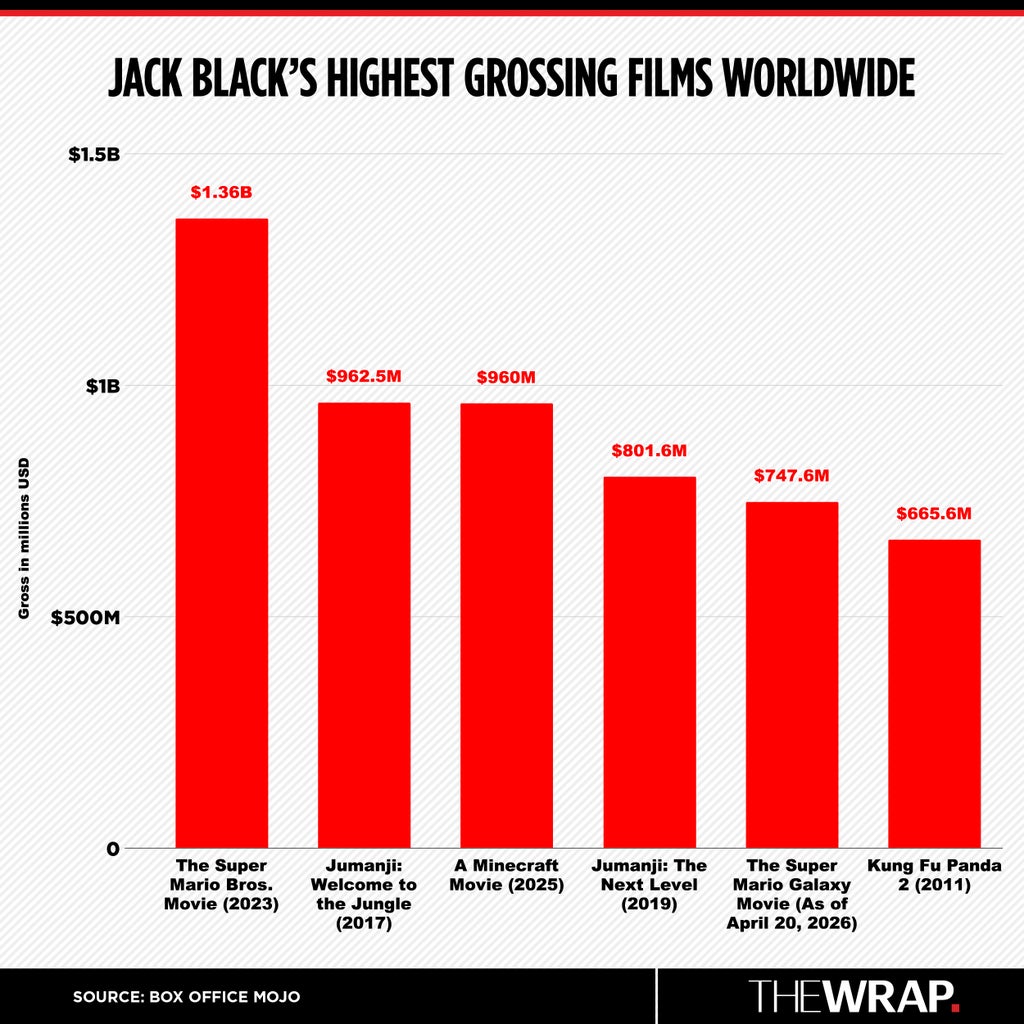
But it’s a fact: Jack Black will soon have starred in five films that grossed more than $800 million each.
How come? Hollywood insiders says Black has broad appeal while somehow remaining edgy – and drives marketing like a machine.
“They talk about the four-quadrant movie,” said Paul Dergarabedian, head of marketplace trends at Comscore. “Jack Black is the four-quadrant movie star.”


Always bet on Black
After scene-stealing turns in films like “High Fidelity” and “Enemy of the State,” Black really began building his movie star cred in 2003 with the Richard Linklater family film “School of Rock,” in which he played a quirky music teacher who starts a rock band with his students. Through the mid-2000s, he kept building it with a villainous turn in Peter Jackson’s “King Kong” remake, which grossed $556 million worldwide, followed a year later by the family comedy “Nacho Libre,” which grossed $99 million worldwide and became a cult classic.
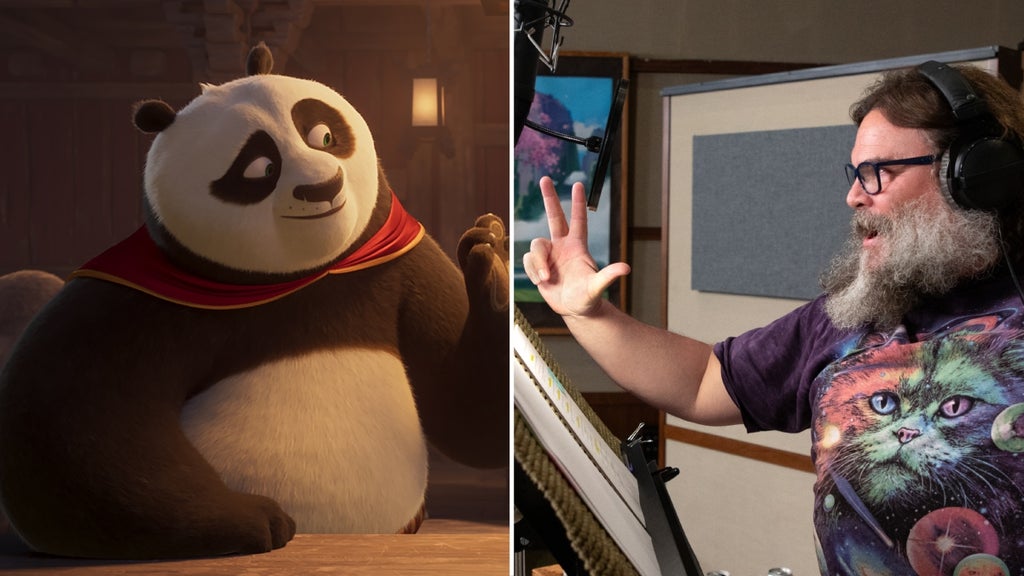
But his big break as a superstar came with “Kung Fu Panda” in 2008, a movie that showed Black’s chops as a lead voice actor and became one of DreamWorks’ most successful franchises with more than $2 billion in global grosses across four films. In the years since, he grew his franchise repertoire by starring alongside Dwayne Johnson, Kevin Hart and Karen Gillan in Sony’s 2017 hit “Jumanji: Welcome to the Jungle” and its 2019 sequel “The Next Level,” which combined for $1.75 billion worldwide.
With “Jumanji” refreshing his name brand recognition, Black has become one of the faces of the post-pandemic blockbuster scene. While Tom Cruise might have gotten the credit as the savior of movie theaters with “Top Gun: Maverick,” Black has arguably been just as pivotal since he took the role of Bowser in “The Super Mario Bros. Movie.”
Since that movie, Black’s films over the past three years alone have combined for more than $3.3 billion, including “The Super Mario Galaxy Movie,” which is about to cross $650 million worldwide and will pass $1 billion in the days ahead. This brings his lifetime box office total to more than $11 billion.
In fact, “The Super Mario Galaxy Movie” will mark Black’s fifth film overall to gross more than $800 million, a high threshold that no movie star would sneeze at. Both of Black’s “Jumanji” films passed this number, as did the original “Super Mario Bros. Movie” and “A Minecraft Movie,” one of the biggest box office phenomena of 2025.
All five films are ensemble pictures, with Black either sharing the spotlight or (in “Mario’s” case) playing the antagonist. Still, the actor’s persona became a major part of marketing across the board, whether he wore a Bowser onesie or inadvertently spawned the infamous “Chicken jockey!” craze. It’s hard to separate audiences’ fondness for Black with the success of these films.
“A movie star and a leading man are two very different things,” Dergarabedian said. “He’s a team player. That dude is always a marketing machine.”

A multi-generational movie star
So what is it that gives Jack Black such box office potency? For starters, audiences have had a long time to grow up with the guy.
“He’s got onboarding points for a lot of different generations,” said Michael Moses, chief marketing officer for Universal Pictures.
Black, crucially, hasn’t only served as the star of kids’ movies for three decades. One of his early calling cards was “Tenacious D,” the comedy rock group he formed with Kyle Gass that defined his audacious, high-pitched persona. In the early 2000s, Black would just as soon star in Nancy Meyers’ rom-com “The Holiday” or Noah Baumbach’s drama “Margot at the Wedding” as he would do a voice part in “Ice Age” or play a luchador in “Nacho Libre.”
“He’s super family friendly while still being edgy,” Degarabedian said. “That’s the magic.”
Family-friendly is the key there. These “onboarding points” can be found every few years since the start of the 2000s, with audiences of all ages finding new franchises to form their own connection with Black.
“School of Rock” arrived in 2003 before the “Kung Fu Panda” franchise launched in 2008, captivating Millennials and, eventually, Gen Z. In the 2010s, Black picked up new franchises like “Goosebumps” and “Jumanji” to keep Gen Z interested and introduce himself to Gen Alpha. Now, he’s already got two new franchises under his belt for the 2020s between “Mario” and “Minecraft” (with “Kung Fu Panda” and “Jumanji” both still delivering new installments).
It’s a career unique to Hollywood’s other modern movie stars. Black hasn’t made a name for himself in action franchises like Cruise or superhero series like Robert Downey Jr. He has largely focused on building franchises for audiences of all ages — a strong decision for a box office bolstered by younger viewers.
“Jack Black has had a career that doesn’t look like it was planned. He doesn’t have a master plan,” said Dergarabedian. “He doesn’t put on airs. He’s a guy everyone can relate to on several levels.”
