

After more than six years since the last “Star Wars” movie, the franchise returned to theaters over Memorial Day weekend with “The Mandalorian and Grogu.” The movie’s performance at the box office has fallen short of expectations so far.
“Mandalorian and Grogu’s” domestic opening weekend box office ($82 million) fell short of “Solo: A Star Wars Story” ($84 million). To be fair, the theatrical landscape in 2018 when Solo premiered was a long time ago in a galaxy far far away from the post-Covid reality theatrical releases face today.
Long before “The Mandalorian and Grogu” hit theaters, the property established itself as the undisputed anchor of Disney+. But that might have been a factor in its box office performance — even if the film will ultimately be a slam dunk for the company.
When looking at the first 30 days following a season premiere, three of the top four most in-demand season premieres across both the “Star Wars” and Marvel television universes on Disney+ belong to “The Mandalorian” Seasons 1, 2, and 3. The show’s debut was a cultural phenomenon that coincided with the launch of Disney+. In the show’s first month, US demand for “The Mandalorian” was nearly 100 times greater than that of the average series.
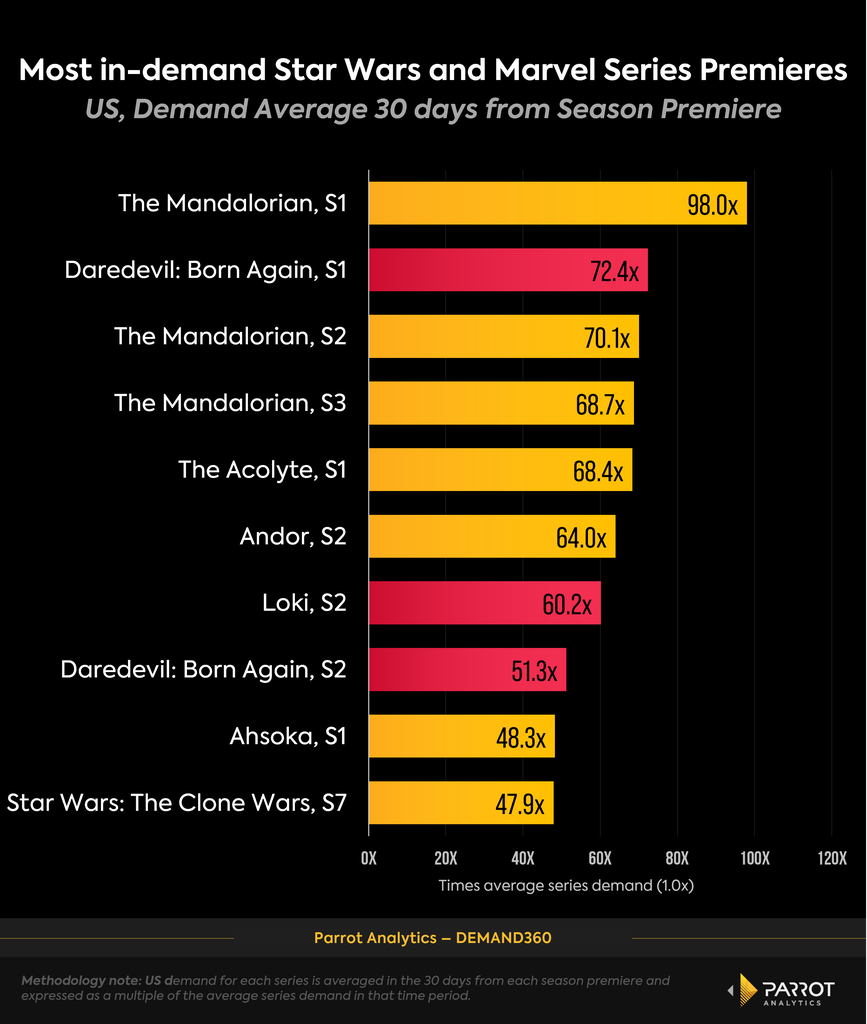
The success of the source material on Disney+ may actually be part of the explanation for the underwhelming performance on the big screen. For over half a decade, Disney conditioned its audience to view “The Mandalorian” as premium at-home entertainment. By successfully making it the anchor of Disney+, the company fundamentally changed the consumer’s value calculation.

When you train an audience to expect Mando and Grogu on their couch for a flat monthly subscription, asking them to suddenly pay premium ticket prices, buy popcorn and arrange for a babysitter introduces massive friction. The demand exists, but the urgency to see it in a theater does not.
In addition to having the highest demand, “The Mandalorian” is the “Star Wars” title that has done the best job reaching a true four-quadrant audience. Historically, the audience for most “Star Wars” shows and movies is heavily male-skewing (even more so than the Marvel franchise). However, “The Mandalorian” breaks this mold. By appealing to both younger and older viewers, as well as narrowing the gender gap, the series captured a demographic sweet spot that legacy sequels and spin-offs have occasionally struggled to find.
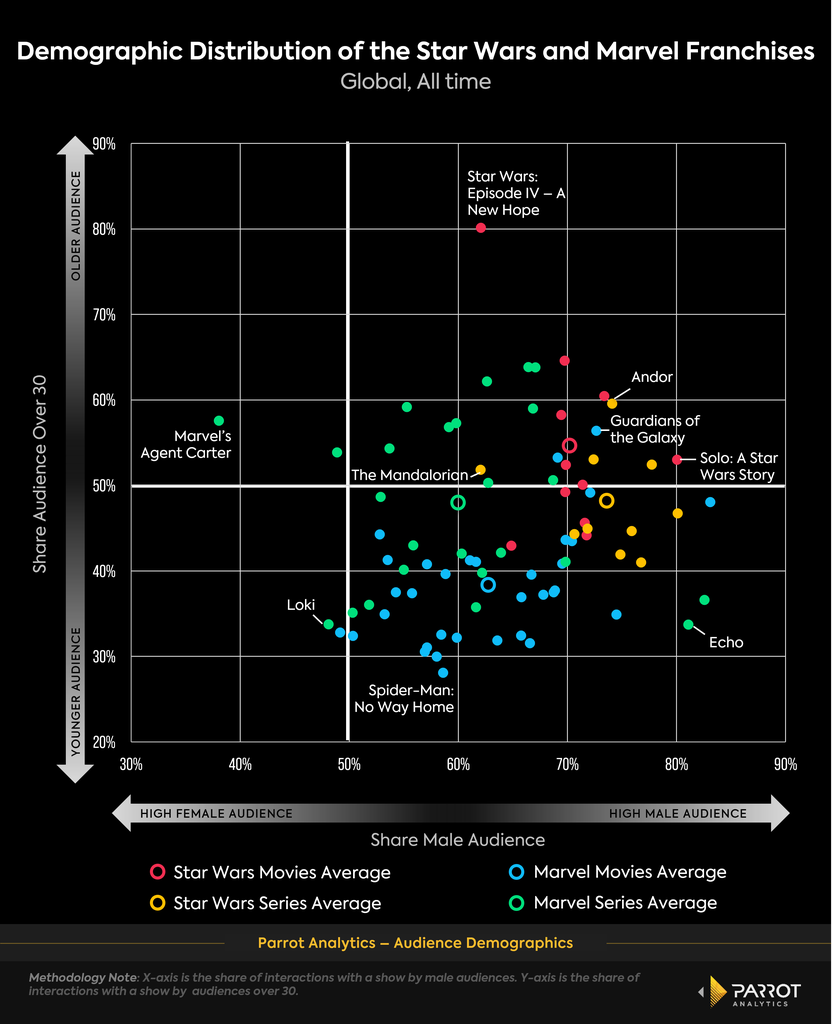
While being “everything to everyone” is the holy grail for a streaming platform needing to minimize churn, it can sometimes lack the sharp edge of FOMO required to drive opening-weekend theatrical rushes.
Consider the recent success of “Obsession,” a low-budget horror movie that is outperforming at the box office. Movies like this thrive on a highly communal, visceral experience that gets diluted at home. Horror audiences rush to the theater because the genre is built on jump scares and the collective energy of a screaming crowd. A four-quadrant space opera is perceived as “safe” to watch later but a viral R-rated horror movie demands immediate participation.
Ultimately, how much does analyzing the box office success of a movie like “The Mandalorian and Grogu” matter? Less than it would have in the past. In the 2018 “Solo” era, theatrical box office was the primary metric of a film’s success.
Today, a theatrical release for a franchise like “Star Wars” functions as the top of a massive monetization funnel. The theatrical run acts as a high-profile, revenue-generating marketing campaign for the IP. Even if the box office is leaner, the film will eventually drop on Disney+, where it will serve its ultimate purpose: retaining subscribers, dominating platform demand, and selling millions of dollars in Grogu merchandise.
