
The last time I spoke to David Lowery was in the fall of 2024.
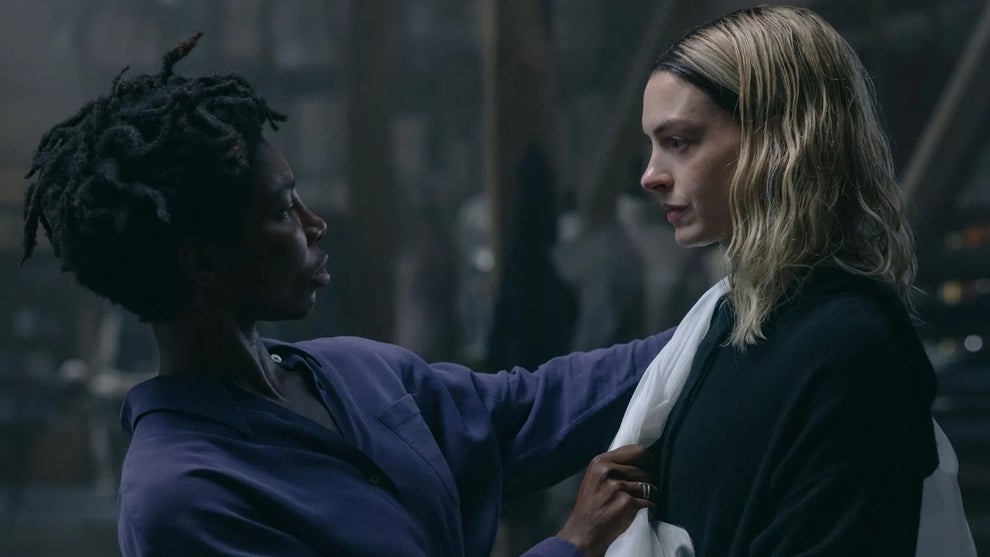
We were talking about a pair of episodes of “Skeleton Crew,” a “Star Wars” series from Disney and Lucasfilm, that he had directed, and a charming stop-motion short he had made for Disney+. Lowery had also just finished shooting “Mother Mary,” which is now in theaters from A24, after a lengthy, complicated shoot. At the time, he said he didn’t know what the movie, starring Anne Hathaway and Michaela Coel, was, exactly. But he hoped to figure it out soon.
“It’s really interesting that that’s when we last spoke, because by December of 2024, I felt like I had figured the movie out. It was such a strange and elusive movie. But I felt like I had found a structure that made sense. I felt like I had it all clicked together. And I remember watching it right after Christmas and thinking that we were pretty much done. We had succeeded,” Lowery said.
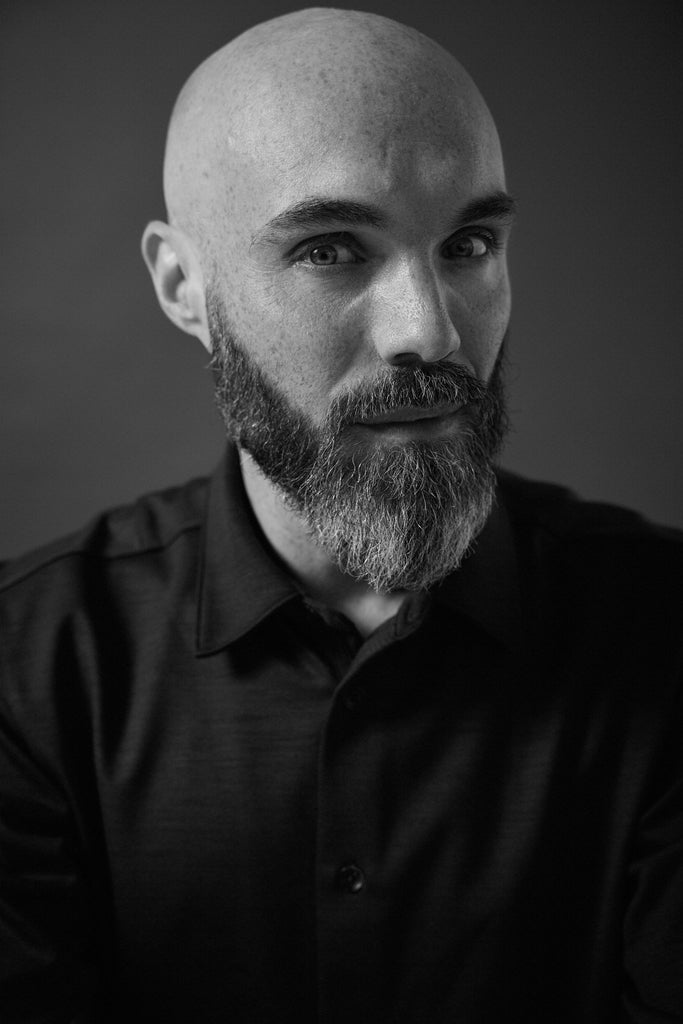
In January 2025, he decided to show the movie to people.
“The reaction suggested to me that I had not quite achieved the clarity that I was after,” Lowery admitted. It led to another full year of editing “Mother Mary,” wherein the movie didn’t change that dramatically, but it was all about fine-tuning what was already there. On “Mother Mary,” like on most of his smaller films, Lowery served as his own editor.
“It was focusing on the minutia, extracting the minutia in a way that that illuminated what it was that we were after. It took a long time because so much of this movie, what we were after was so hard to put into words,” Lowery said. “For a movie that is full of language and full of almost nothing but words, we never could quite find the right words to describe what it was we were after. It was a feeling. It was an emotion. And achieving that emotion took a lot of trial and error.”
One of the things that Lowery and his collaborators zeroed in on was the use of music, which he said was important “both for establishing the character, but also telling the story of how she got to where she is when we meet her.”
There were so many options with how to deploy the music (with songs written by Charli XCX and Jack Antonoff, along with FKA Twigs) – there was one version of the movie where, midway through the film, it just fell into a concert movie; another version had all of the songs at the very beginning of the movie, as a way of acclimating yourself to the world of Mother Mary (Hathaway) before she seeks out her ex-costume designer (Coel). Yet another version only featured snippets of songs and not full performances.
It was all in service of Lowery getting to where he wanted to go – “a two-hander chamber piece that occasionally blossomed into full-blown pop concert sequences. It’s easy to say that on paper, but then actually putting that to practice in the edit was a lot trickier.”
Initially, the concert footage was diagrammed to go in very specific places in the movie; what Lowery found when he settled into the edit was that they were “far more pliable,” adding, “There were just so many different options as to where they could land.”

There’s a moment deep in the movie set to “Holy Spirit 2,” one of Mother Mary’s songs, that Lowery said was particularly challenging.
“That entire sequence is probably the one that went through the most rigorous editorial alchemical process, because that sequence, which encompasses that song but also so much more, what was on the page and what we shot wound up being insufficient for what the movie needed,” Lowery said. ”We had to find a way to expand that sequence in a really profound way, using the materials that we already had. That was the biggest editorial challenge.”
The sequence has one of the movie’s most striking visuals, with Coel’s Sam Anselm recounting a memory. As she does, she exits the drafty barn where most of the movie takes place, the giant barndoors swinging open into the middle of a packed concert. Lowery said that he borrowed the image from an earlier movie of his – “The Green Knight.”
“I was like, I’m going to take this image from ‘The Green Knight’ and drop it into the middle of a pop concert. And then that eventually gave way to the idea of Sam needing to journey into the past and using the same visual cue to signify that journey,” said Lowery. In “The Green Knight,” he built castle gates in the middle of nowhere “just to get the perfect vista,” and here they built barndoors in a park “so that she could open them into a concert and achieve that transition.”
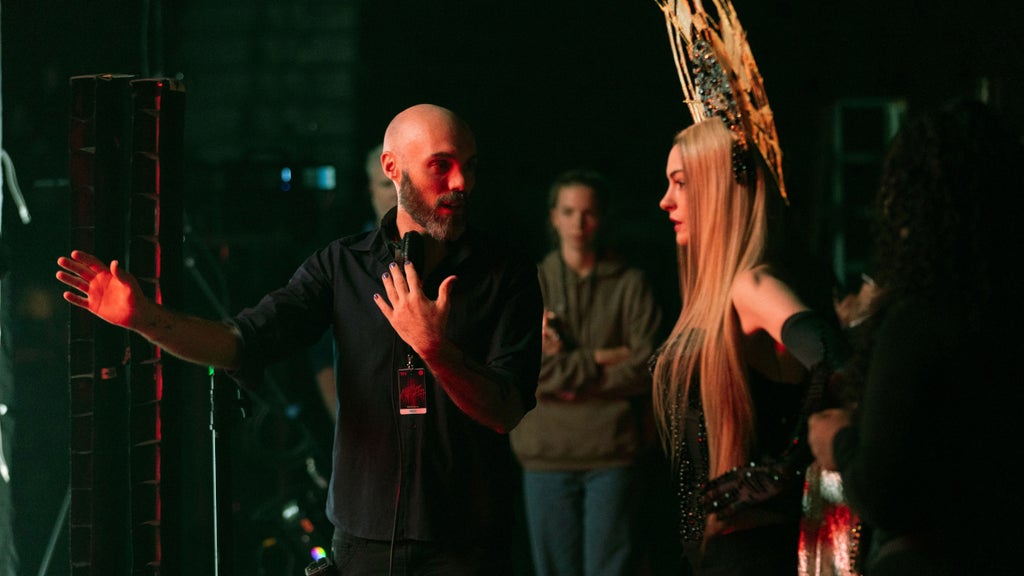
Lowery had been here before; a finished version of “The Green Knight” was accepted by the South by Southwest Film Festival and was set to screen on March 16, 2020. Of course, the pandemic shut down the film festival and pretty much everything else and allowed Lowery to reconceive “The Green Knight” in the edit; it took six months before he achieved a version he was happier with. It was finally released the following summer.
But is the version that Lowery finally landed on his preferred version of “Mother Mary?”
He says yes.
“I did a gut check back in January, where I went and watched the version from a year prior to make sure that I hadn’t just fallen in love with something because it was new, that this was, in fact, better, and it was,” Lowery said. “Everything has clicked into exactly the right place in a way that feels like they’re all where they’re always meant to be.”

In some ways, the protracted post-production process on “Mother Mary” was par for the course. The movie has a modest scale, largely set within the aforementioned barn, and had a healthy 55 days to shoot. But those 55 days took place over two years because of the strikes, the filmmaker said.
“When the actors strike kicked off, that had a ripple effect of other things moving. And we really just had to wait for everyone’s schedules to line up so we could all get back together to shoot the rest of the movie,” said Lowery.
While it was hard to maintain momentum, Lowery always had enthusiasm for the project, even while waiting to finish shooting it.
“I was very enthusiastic to finish it. When you have half a movie sitting in front of you for a year, you come up with all sorts of new ideas. It wasn’t that the movie changed, but the silver lining of that delay is that is that we came back a year later and had a much better idea of what we needed to finish the movie with. There were definitely some new approaches to scenes we went back and re-shot, a few things that I knew we could do better or do differently,” Lowery said.
A monologue towards the end of the movie, delivered by Hunter Schafer (who plays Sam’s put-upon assistant) was something that Lowery invented while waiting for production to resume; had had pieces of the ending before but the monologue really tied it all together.
“I would never wish a year-long delay on any movie – my own or anyone else’s. But when you are given those limits, one of the glasses of lemonade that comes out the other end is you can really fine-tune what it is you’re going to be doing when you return,” Lowery said.

Another thing that changed during the protracted editorial process was the music.
A24 had connected Lowery to Antonoff and Charli. He wanted them to teach him about pop music. He wasn’t sure what his approach would be, exactly, and how Antonoff and Charli would help that.
“I didn’t just want to have someone come in and write a song for themselves and give it to me. I wanted this to be like we were writing songs for a character. And I really wanted to figure out what that process meant. I knew that Jack and Charli were, in addition to being incredible artists in their own right, they had the understanding that they knew that goal was to try to create songs for a character that would feel personal to that character,” Lowery said.
He was also adamant that he didn’t want Mother Mary to sound like the same tone as the rest of the film. He felt the same way when he brought in FKA Twigs, first to star in one of the movie’s very best sequences and then later to write songs too. He didn’t want the character Mother Mary to become “an alternate dimension version of FKA Twigs.” After she was cast in the sequence, Lowery said, “It became clear to me that her voice also needed to become part of the musical fabric of the film.” The result was “My Mouth is Lonely for You,” a bop that Lowery said makes him dance “when I’m sitting in my chair editing.”
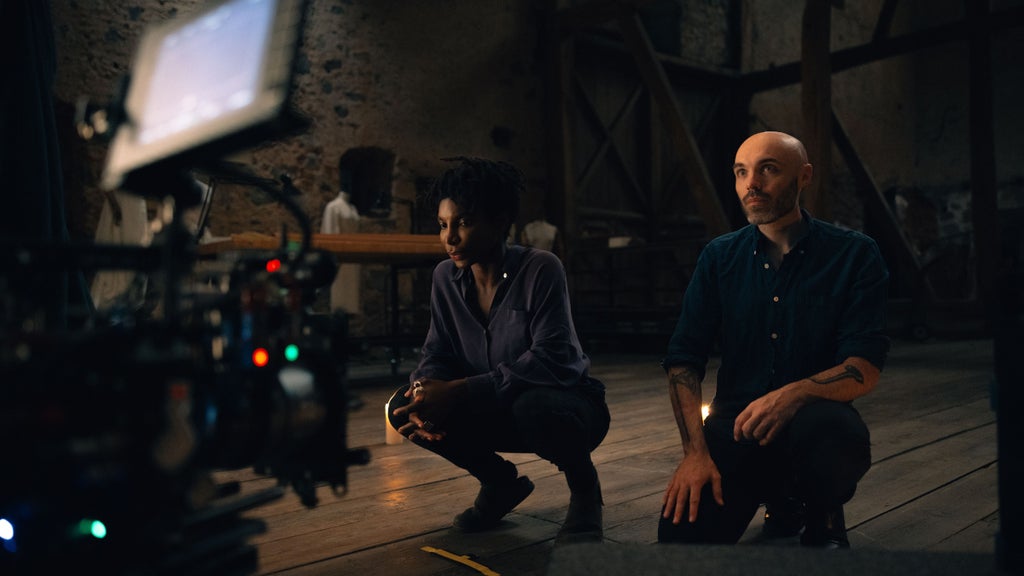
The music, Lowery said, “evolved constantly.” During the break in-between shoots, Antonoff and Charli watched an assembly of footage. “They wrote three or four more songs, because they all of a sudden understood that everything had been theoretical up until that point, but suddenly they saw the movie and the way Anne was playing the character and the tone of the movie and they could write towards that,” Lowery said. “A lot of the songs were written from scratch after we’d shot the first half of the film. And then everything else was redone and re-recorded so they would fit into what it was we’ve done.”
Daniel Hart’s score, too, changed. It once had “the same electronic backbone,” but soon shifted to a more orchestral approach.

“There’s a certain chunk of the movie where his score becomes the primary mode of expression on a sonic level. And it is a full on symphonic movement for about 25 minutes. It doesn’t stop building and building and building,” Lowery said. “And that’s a contrast to the first half of the movie, which has almost no score in it. We go from zero to 500 pretty quickly at a certain point.”
“Mother Mary” feels, in some respects, like the ultimate David Lowery movie. There are ghostly elements, which bring to mind 2017’s “A Ghost Story” and a moment where Coel brings out a box of items for a séance recalls the 1980s RPG vibe of “The Green Knight.”
“It is the most openly me movie I’ve made yet, because it really is just a catalog of my emotional state when I was making it. But then so many of the things that I like… sometimes you want to put things you like into a movie, because they make you happy, and that can be indulgent, and so I’m always trying to walk that line,” Lowery explained.
“But this is a film that is full of what I describe as a repository for all the things that interest me, and luckily, all the things that interest me do cohere into a hopefully somewhat propulsive narrative that is singular and has a sense of focus to it. I can use all of those elements – all of the little gestures that I’ve used in previous movies, when I’ve genuflected in one direction or another, towards a genre, or towards a tone, or towards a type of film, or even towards a visual. With this movie, I wanted to pull all those things forward and just let them be front and center.”
At times “Mother Mary” is genuinely frightening and Lowery said that a full-on horror movie is “on the to-do list.” “It’s one that is in a very nebulous stage in my pile of unfinished screenplays, but it will happen,” Lowery promised.
He said while making 2023’s “Peter Pan & Wendy,” an underrated big-budget Disney live-action movie, he would dream of making a horror film. “There was a point where I was just pretending I was making a Dracula movie. I’m shooting Captain Hook entering a castle with a certain type of light. And I was like, I know I’m making a Peter Pan movie, but in my heart, I’m making a Dracula movie,” Lowery said.
Since opening in theaters last weekend, “Mother Mary” has gotten some polarizing reviews; some are claiming that it’s a visionary masterwork (Indiewire’s David Ehrlich called it a “singular, hypnotic, and formally unbound psychodrama”) while others feel it is confounding and ill-formed (The New Yorker’s Richard Brody remarked that “the script’s blank spots and evasions leave the drama feeling unfulfilled and unsatisfying.”)
Lowery hadn’t read the reviews when he spoke, but he said that the response is fine with him.
“I know that it’s divisive. I went into it knowing, like, This is going to be a movie that won’t be for everyone. And because it’s at a larger scale than something like ‘A Ghost Story,’ that divisiveness is going to be more pronounced,” Lowery said. He even joked that some people are going to want to see “The Devil Wears Prada 2” and “go into the wrong Anne Hathaway movie and not have the experience they wanted.”
Lowery said that he thinks about himself going to see the movie and not being “in the mood for a movie that ends with a degree of emotional sincerity, the way that this one does.” Would he also cringe?
“As an audience member, I might not be in the mood for this because I want a more caustic or cynical ending. I might want the Lars von Trier ending as opposed to the David Lowery ending,” Lowery said. “For an audience member who is open to both of those experiences, I empathize with people who are like, This isn’t for me, or I’m not getting what I want out of it. But I hope that, whether it does prove to be satisfying to any given audience member, that it’s worthy of the engagement. It’s not disposable, even if you don’t like where it takes you. I hope that the experience, even if it’s frustrating, I hope it’s the good type of frustrating type that you have to wrestle with.”
Now, after so many years working on “Mother Mary,” does Lowery know what’s next, besides attempting to get A24 to release a 4K disc of the movie, one loaded with an in-depth behind-the-scenes documentary? (“We’ve just started talking about the extra features, and I’m like, The biggest extra feature is making sure it’s 4K like that, to me, is like, number one,” Lowery said.)
Yes, Lowery said, he thinks he knows what will be his follow-up.
“I am ready to step out of that cocoon and go make something else. It’s been a long journey with this one. I have two or three things, and one of them will be the next one, and hopefully the other ones will come immediately after,” Lowery said. “Because whenever I come out of a movie and it’s taken a long time, I’m like, I want to make a bunch of things quickly now. I’m pretty sure I know what the next one will be.”
But if the experience of making “Mother Mary” has taught him anything, it’s to expect the unexpected.
