
Back in the days before “Parasite,” a big question around the Oscars’ international category was why voters were so stubbornly resistant to South Korean cinema. They routinely bypassed the work of gifted directors like Kim Ki-duk, Bong Joon Ho and others, ignoring one of the most vital scenes in global cinema until Korea was a regrettable 0-for-29 with voters, never even making the shortlist.
Then came Lee Chang-dong’s “Burning” in 2018. The quiet, patient love triangle and murder mystery wasn’t nominated, but it became the first South Korean film to make the shortlist – and it kicked off an eight-year stretch in which movies from the country made the shortlist four times, most memorably in 2019 when Bong’s “Parasite” upended the Academy’s old habits and won not only the Best International Feature Film Award, but also Best Original Screenplay, Best Director and Best Picture.
Given the timing, you have to credit Lee Chang-dong and “Burning,” with an assist for the “Parasite” wins. At the time, it was director Lee’s first film after an eight-year hiatus – but paving the way for “Parasite” didn’t inspire him to capitalize on the Academy’s newfound affection for Korean cinema; instead, it took him another eight years to make his next film, “Possible Love.”

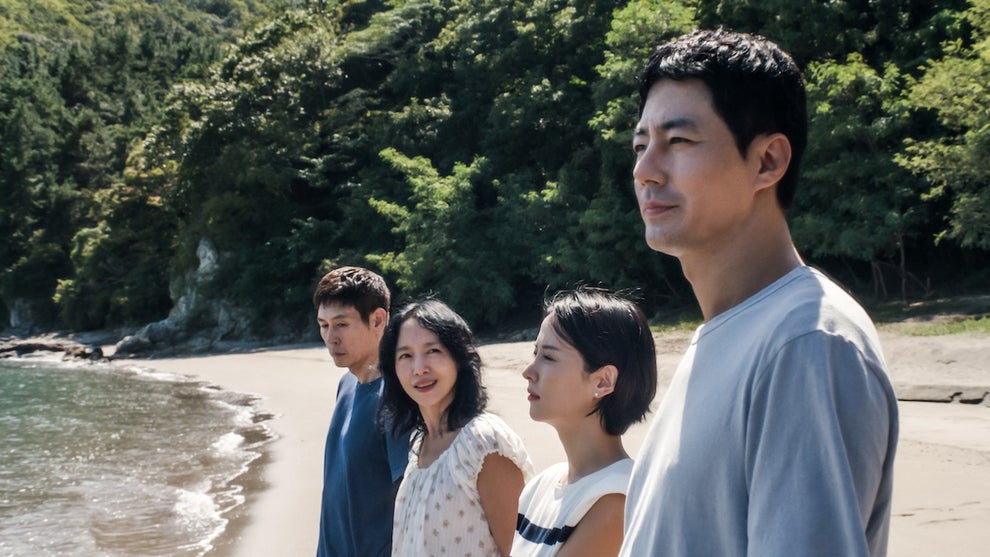
That long-awaited followup had its world premiere on Sunday at the Venice Film Festival. An intricate story of class conflict, journalistic ethics and the difficulty of healing, the upcoming Netflix release is another slow-burn story from Lee, circling issues of deep trauma and loss for almost three hours in a measured tempo that simply refuses to rush.
Its central characters, Ho-seok (Sul Kyung-gu) and Mi-ok (Jeon Do-yeon), are a husband and wife who’ve been devastated by the aftermath of a factory labor dispute that turned into a violent confrontation with state militia. While many of the laid-off workers have joined support groups in the aftermath of a co-worker’s suicide, Ho-seok remains closed-off and uncommunicative; he drinks, but he barely talks.
Mi-ok, on the other hand, tries her best to find strength in community. When they arrive at a memorial service for the dead friend, Ho-seok initially refuses to even enter the building, while his wife goes in and agrees to talk to a documentary filmmaker Ye-ji (Cho Yeo-jeong, the matriarch of the rich family in “Parasite”) who is making a movie about the aftermath of the strike. “He told me that if he talked about everything inside him, there’s no telling what might happen,” Mi-ok says of her husband. “He might flip out, start killing people.”
Ho-seok agrees to talk to the filmmaker, then finds himself unable to do so. But he goes out to dinner with Ye-ji and her rich husband, Sang-woo (Zo In-sung). Although Mi-ok is intimidated by the director, who is widely considered something of a fashionista, the two couples gradually fall into a state that might pass for friendship.

But Lee Chang-dong is too savvy and too austere a filmmaker to tip his hand; instead, he lets questions linger in the air. Is the documentary filmmaker really supporting the workers, or is she using them? Is this friendship, or exploitation? There are curious layers here: Ye-ji’s documentary uses a Steadicam to shoot footage of the workers, while the “Possible Love” cinematographer, Kim Ji-yong, uses a hand-held camera to shoot the guy with the Steadicam. (Does that make the film more trustworthy than the film within the film?)
“Possible Love” uses lengthy flashbacks and digressions, and the backstory emerges slowly: Ho-seok was beaten so badly when the labor dispute was broken up that he was unconscious for three days, and then he was taken out of the hospital and thrown in jail for a month and a half. He finally goes to group therapy, where he finds himself unable to speak, but then he consents to a family vacation at Ye-ji and Sang-woo’s secluded beach house, and even agrees to do an interview for the documentary film while he’s there.
When the working-class couple get to the vacation house, Mi-ok is stunned. “This looks like a place from a novel I haven’t read,” she says. But when the rich couple are alone, even Sang-woo questions his wife’s intentions. “You’re different from these people, trying to pretend you’re the same,” he says.
“I’m trying to love these people,” she insists.
The connection between the couples is tested, celebrated, shattered and perhaps restored over the course of scenes that take place in brightly lit, sterile rooms and in overgrown swaths of wilderness. When emotions are finally unleashed, “Possible Love” can be devastating, though Lee is not afraid to follow the storms with a coda that can be downright leisurely.
The pacing requires patience, to be sure, but it’s also a strength in a movie that has a lot of issues to explore. For an audience that can settle into its rhythms, the film never feels as if it’s shortchanging a storyline or a character. “Possible Love” accumulates power as it goes – and the fact that it keeps going for two hours and 46 minutes means there’s a lot of power here to accumulate.
“Possible Love” will be released in theaters on Oct. 23 and on Netflix on Nov. 6.
