
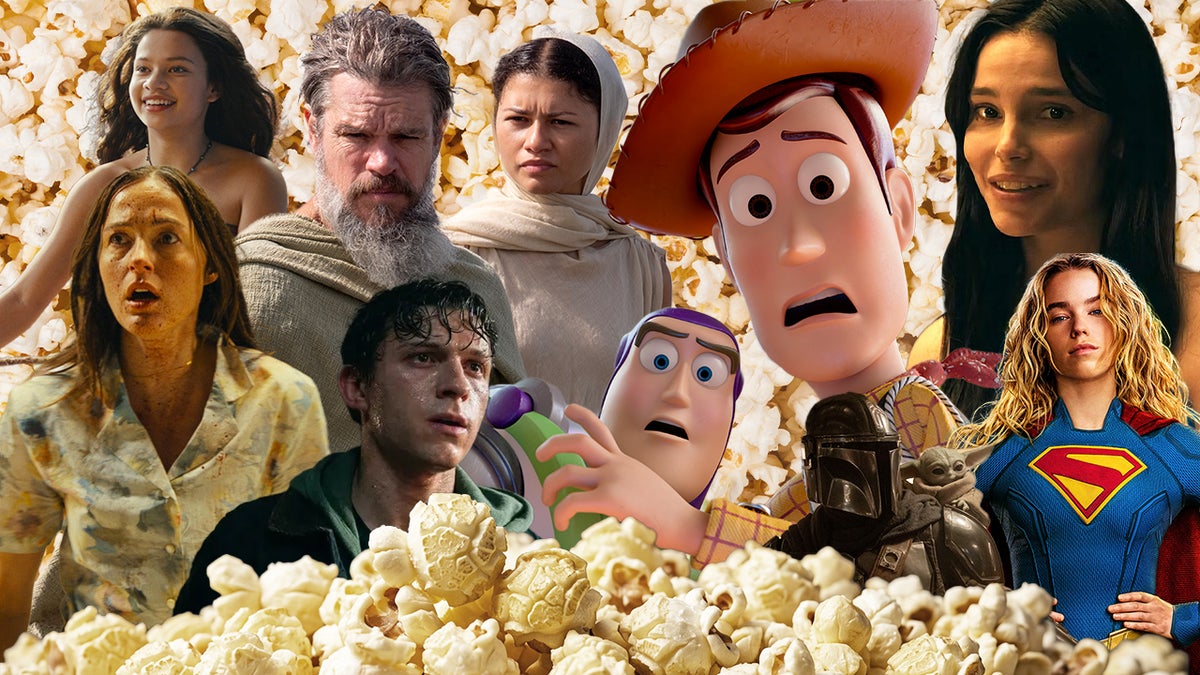
For years, movie theaters have sent the same message to Hollywood over and over: make more films for us, and the box office will bounce back. Moviegoing isn’t dead; it just needs a new wave of films of all budgets and genres to give it a shot in the arm — and of course, a few of the biggest surefire filmmakers and IP to do a lot of the heavy lifting would help too.
2026 brought all of that, and the result, depending on final numbers still being crunched, is the highest grossing summer in box office history.
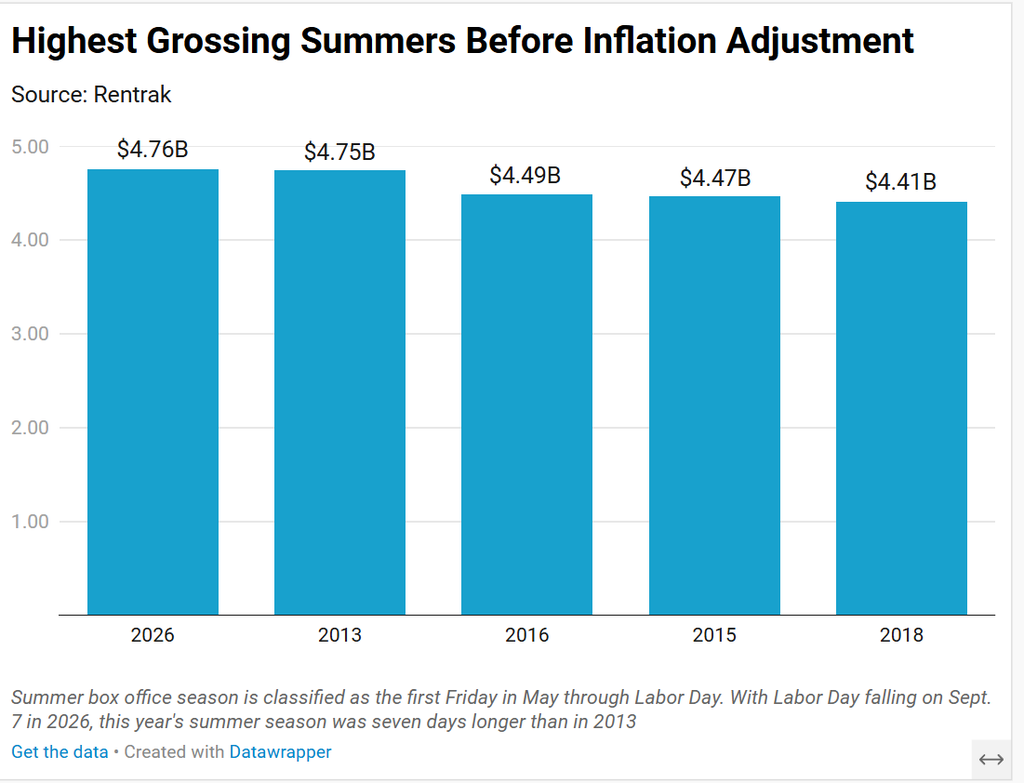
Thanks to a mix of historic indie horror hits, a more consistent week-to-week slate, and three films that grossed more than last year’s top summer hit “Lilo & Stitch,” this summer reached an estimated domestic total of $4.76 billion, just above the $4.75 billion recorded in 2013.
Of course, with the dramatic increase in movie ticket prices and growing interest in premium formats, the environment is radically different than it was 13 years ago when movies like “Iron Man 3” and “Despicable Me 2” topped the charts. Also, because the summer season is measured from the first Friday in May to Labor Day, which this year fell on Sept. 7, the 2026 period lasted seven days longer.
But compared to more recent years, the enormity of this summer is plain to see, and it’s a stark reversal after many opined whether theaters were a dying breed just a few years ago. 2026 outgrossed summer 2025 by more than $1 billion, and it outperformed 2023, the summer of “Barbie” and “Oppenheimer,” by more than $700 million.

Not everything was rosy. While the box office was up, the actual number of attendees is still down from before the pandemic, with those who attend the movies getting squeezed a bit more to make up the difference. And this summer saw its share of flops, from DC’s sophomore stumble “Supergirl” to Disney’s live-action “Moana.” The nuanced details of this record summer still raises the question of whether the theatrical business can sustain this level of profitability when the likes of Tom Holland and Christopher Nolan aren’t gracing the slate.
But as Rentrak analyst Paul Dergarabedian observed, this was the summer where everything seemed to finally click in place.
“I think this is the year that finally proved what those in exhibition have always known: that there is always going to be a desire among millions of people to go to the movies as long as they are given quality movies to see,” said Dergarabedian. “This was the first summer we’ve ever had where $1 billion-plus grosses were recorded every month from May to August. Whatever caveats you want to put in about how the market has changed from before COVID to now, that’s something that should make everyone in this industry feel very optimistic.”
So here’s the story behind the record-breaking summer. How it happened, which movies made the biggest impact and the caveat hanging over it all as theaters head into the fall.
The indie hits
It’s not unusual for a surprise summer hit to come from the independents; Neon’s “Longlegs” and Angel’s 2023 calling card “Sound of Freedom” are recent examples. But that’s nothing compared to Curry Barker’s history-making run with “Obsession.”
When Focus Features released the film to a $17.1 million debut in mid-May, it was clear that the overwhelmingly strong word-of-mouth from opening night audiences was going to help the film break out. But judging by past movies with exceptionally long legs, it seemed like “Obsession” would make around $150-170 million domestic, putting it alongside mainstream horror films like “A Quiet Place” and “Final Destination: Bloodlines” with an excellent 10x multiple.
“Obsession” got a multiple of 15.4x for $263 million domestic. It became the fourth-highest grossing film in the U.S. this summer. It made more than double what Disney’s “Moana” remake did with Dwayne Johnson’s full marketing power behind it. Globally, it became the first original film since the pandemic to gross more than $500 million.
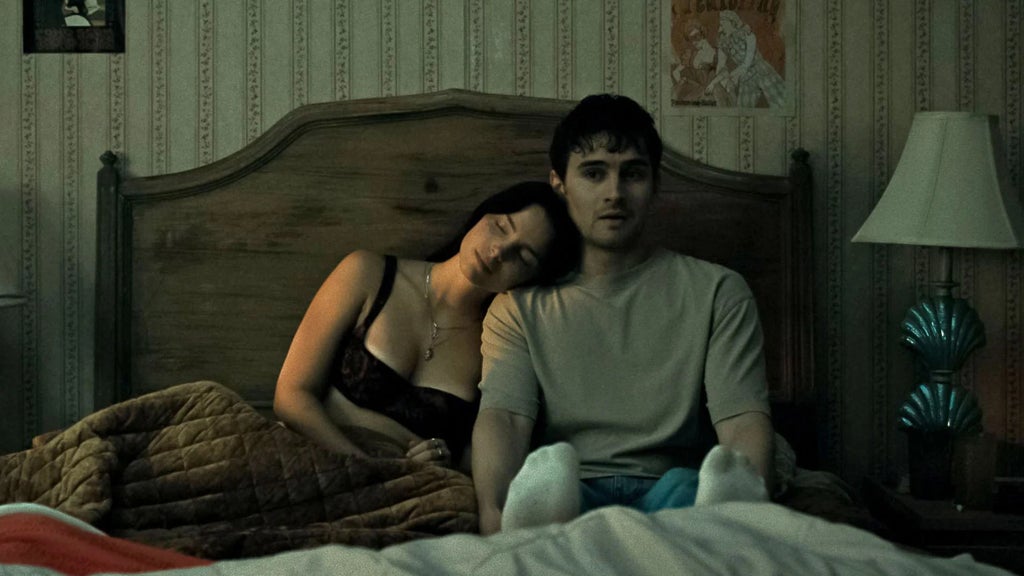
Shortly afterwards, A24’s “Backrooms,” made by the 20-year-old wunderkind Kane Parsons, struck gold with $197.5 million domestic, also outgrossing the aforementioned franchise family films and lapping movies like “The Mandalorian & Grogu” as the nearly 50-year-old “Star Wars” franchise is now well past its prime as an undisputed box office heavyweight, felled by two films made by directors who cut their teeth on YouTube.
At that point in the summer, there were some hot takes over whether this was a sign that Hollywood would turn away from its franchise obsession. That isn’t really the case, and we’ll get to that. But “Obsession” and “Backrooms,” ironically, proved a point that two big IP-driven films, “A Minecraft Movie” and “Five Nights at Freddy’s” also proved: Hollywood needs to make more movies with Gen Z as a priority.
Yes, films reviving ’80s and ’90s icons like “Top Gun: Maverick” and “Scream” can still hit with those who weren’t born when they first hit theaters, but it’s not going to satisfy the feeling every generation craves when they get a film that speaks directly to them. This extends downstream to the new wave of under-30 cinephiles that have become the core customer base for art houses and have shown up for indie films ranging from “Marty Supreme” to, more recently, “Teenage Sex and Death at Camp Miasma,” a film that isn’t lighting the box office on fire but is holding its own in a specialty market steadily being revived with movies like “The Invite” and “The Amazing Digital Circus” also finding a foothold.

Big names still matter
All of that said, if the first six weeks of the summer were carried by films made at least partially outside of the Hollywood system, the second half was carried by films firmly made within it.
It started with Disney/Pixar’s “Toy Story 5,” the highest grossing film in the 31-year-old animated franchise before inflation adjustment and a movie that, combined with 20th Century’s “The Devil Wears Prada 2” at the start of the season, allowed Disney to withstand the misfires of “Mandalorian” and “Moana.”
Its $478 million domestic, $1.13 billion global total nearly tripled the $389.6 million total of Pixar’s original offering “Hoppers” this past spring, showing once again that sequels and known IP continue to dominate theatrical animation as other originals like DreamWorks’ “Forgotten Island” and Laika’s “Wildwood” arrive this fall.
And then came the duo that has defined the box office for the past seven weeks: Sony/Marvel Studios’ “Spider-Man: Brand New Day” and Universal’s “The Odyssey,” films that respectively showed the cultural dominance of Spider-Man and Christopher Nolan.
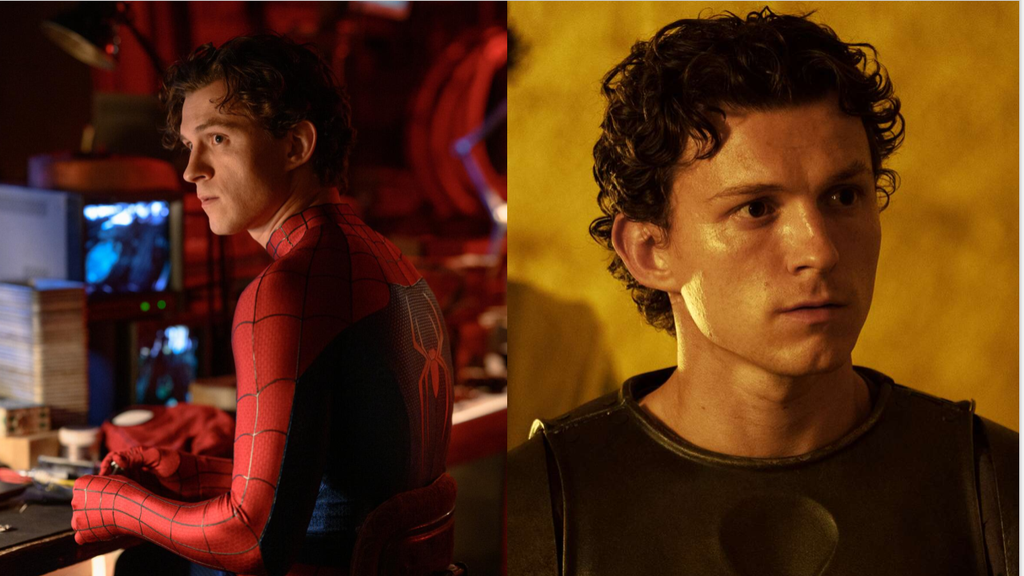
Even if Marvel’s recent record – and the bombing of DC’s “Supergirl” – show that audiences aren’t as willing to readily embrace new superheroes the way they were in the 2010s, Spider-Man is not only immune to any effects of superhero fatigue but capable of matching the box office heights of the “Avengers” films. Even in an IP-driven world, star power still matters, and Tom Holland has left a mark on the history of Peter Parker as indelible as the one Tobey Maguire left two decades ago.
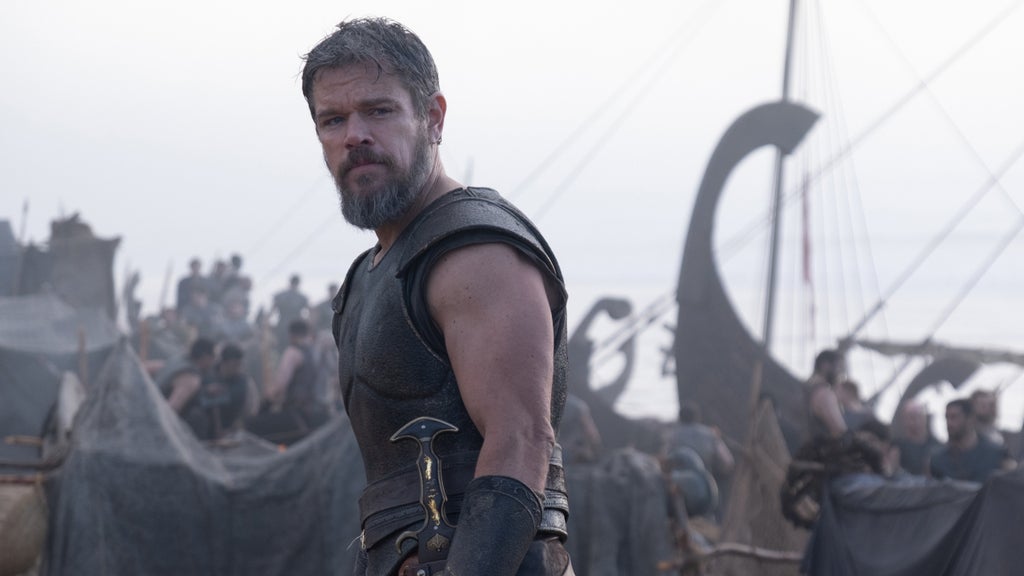
And then there’s “The Odyssey,” a film that proved that Christopher Nolan’s unique position as a director with global box office drawing power is by no means a fluke. In the weeks to come, the acclaimed Homer adaptation will become Universal’s unadjusted all-time highest grossing film, having already reached the all-time R-rated record.
And with its limited Imax 70mm run set to keep playing in 41 theaters worldwide through the end of September thanks to ongoing demand, a final total exceeding $650 million domestic and $1.8 billion worldwide is very possible. R-rated films aren’t supposed to outperform summer PG-rated family films, but that is just what “The Odyssey” is doing, on pace to pass the $1.69 billion global run of the 2024 Pixar film “Inside Out 2,” once the all-time animated record holder and the highest-grossing film of that year.
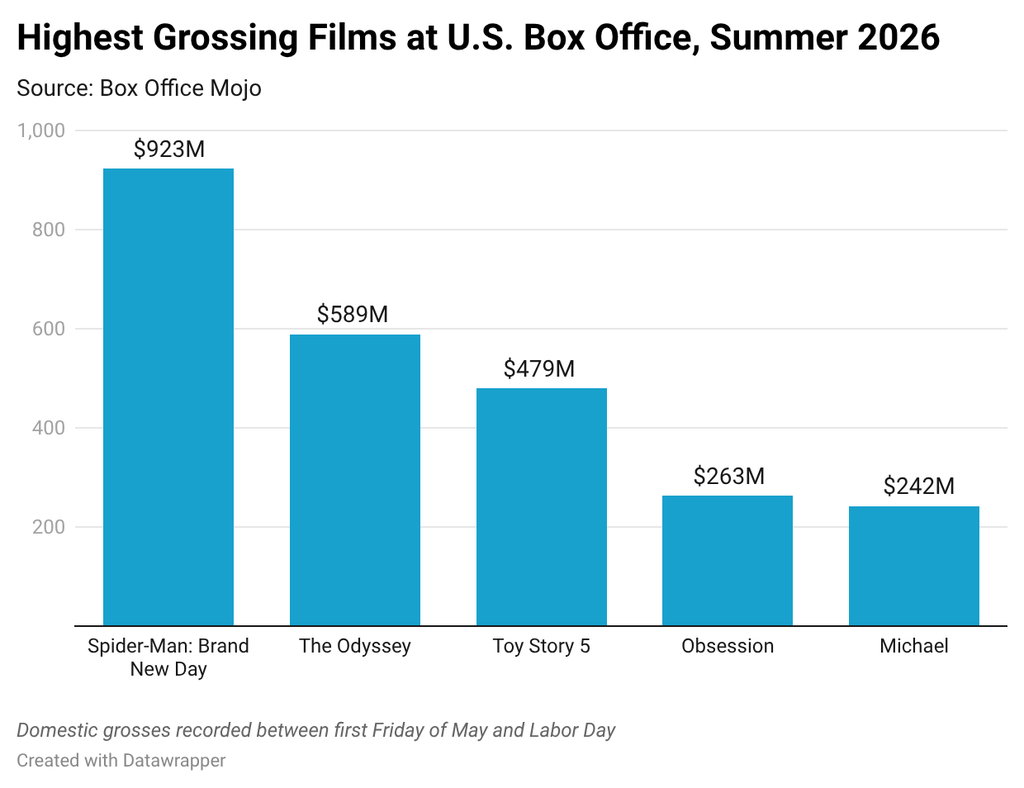
Combined, “Brand New Day,” “The Odyssey” and “Toy Story 5” have made more than $2 billion in domestic grosses this summer, roughly matching the combined domestic gross of the top 5 films of summer 2023, led by “Barbie” with $612 million. Theaters would count their blessings to get one historic record-breaker in any given summer. To get two of those, along with one of the most enduring animated franchises of all time, is a godsend.
“Just think of everything our industry has been through with the pandemic, and then even more so with the strikes. The challenges theaters have faced have been so immense,” Sony Pictures Chairman Tom Rothman told TheWrap after “Brand New Day” passed “Avengers: Endgame” for the domestic opening weekend record. “‘Endgame’ came out in a completely different world. I truly didn’t think we would ever see any film open to $350 million domestic again.”
However…
Thanks to all of this history making, theaters have been able to bask in the glow of long-awaited economic relief and exuberant headlines from a media that was once hand-wringing over their future. And indeed, as Rothman observed, this summer has proven that the ceiling for all types of films, from horror movies with sub-million budgets to the biggest quarter-billion budget tentpoles, is much higher than many believed so long as these films capture a large enough portion of the public’s attention and imagination.
But all this success is still papering over some trends that could rear their heads again in the future when the likes of Nolan and Holland aren’t present on the slate. For instance, 73% of the record $1.26 billion in domestic grosses recorded in August came from “Brand New Day” and “The Odyssey,” with no other films even cracking $50 million for the month.

Since the pandemic, the summer box office has increasingly relied on a late July hit to carry the marketplace through to the end of the season. There have been some August hits like “It Ends With Us” in 2024 and “Weapons” in 2025, but as we saw last year, when there wasn’t a “Barbie”-level late July smash around in theaters for the final month of summer, box office grosses for the month sank to $680 million.
Next year, it will fall to Warner Bros./Legendary’s sequel to their $423 million domestic grossing hit “A Minecraft Movie” to be that load-bearing support while films like Paramount’s sequels to “A Quiet Place” and “Teenage Mutant Ninja Turtles: Mutant Mayhem,” Universal’s “Snoop” and Disney’s “The Bluey Movie” look to provide secondary support and prevent August grosses from falling back to 2025 levels.
2026 also saw the continuation of a trend accelerated by the pandemic, where admissions continue to drop while grosses increase. According to a study published in mid-August by S&P Global, an estimated 547 million tickets were sold in U.S. theaters this summer. That’s a slight uptick from 2024 and 2025, but below the 745 million sold in the summer of 2019. Data firm EntTelligence also calculates the current average ticket price at $12.87 for standard format screens and $18.46 for premium formats, the former being up from the $9.26 average recorded by Cinema United in the summer of 2019.
Moviegoing may still be one of the most affordable forms of entertainment for anyone looking to get out of the house, but it can’t escape the rising costs affecting almost every sector of the global economy. And with studios only now starting to reverse the downward trend in wide release output, theaters have been able to weather the storm of the past five years by maximizing per patron spending and getting the most out of moviegoers who are willing to buy the Imax ticket, concessions that provide higher profit margins, and in the case of those fans of certain franchises with disposable income, collectible popcorn buckets.
It’s been an unquestionably good summer, but now that the film industry has proven that streaming isn’t the existential threat to theaters that was once believed (and Warner Bros., Paramount, Universal and Disney have largely abandoned the practice of making straight-to-streaming movies), the next task in the months and years ahead will be to make sure that this newfound momentum is sustainable.
“The next challenge exhibition has to face is the admissions problem. In fact, I’d say it is more of an opportunity than a challenge,” Daniel Loria, SVP of Content Strategy at The Boxoffice Company said.
“Theaters have been able to optimize the frequent moviegoers who want to come back through merchandising and rewards programs and email marketing. The auditoriums are getting smaller because bigger luxury recliners are put in, and they’ve been rewarded with a rebound in revenue,” he continued. “Now, how much can we bring attendance back with this model theaters have built? There can’t be continued growth off of this summer without getting more infrequent moviegoers back in theaters.”
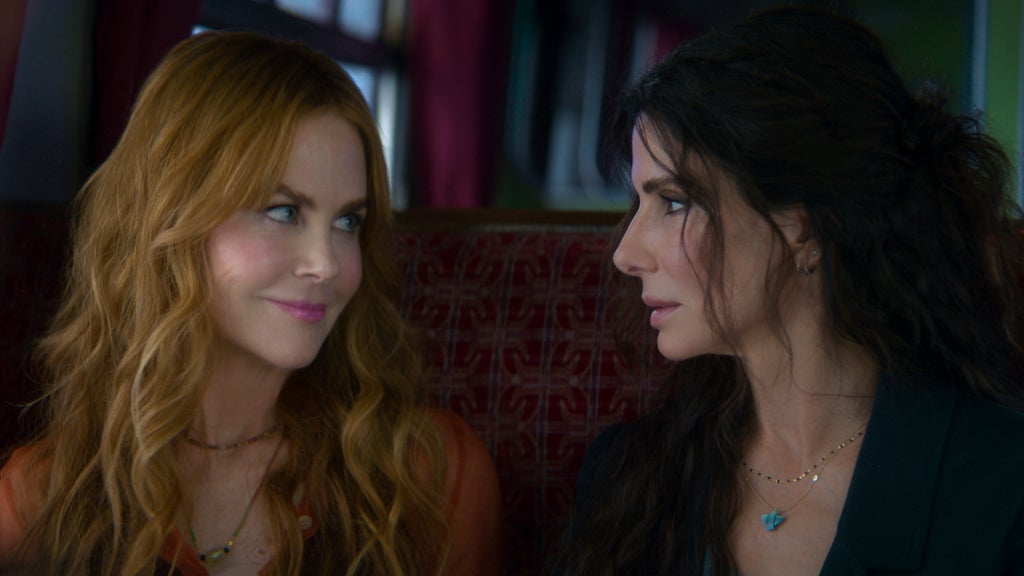
The good news is that between now and the next box office windfall expected to come with the release of Marvel Studios’ “Avengers: Doomsday” and Warner Bros./Legendary’s “Dune: Part Three” in December, there are several films that should be able to tide theaters over, starting this coming weekend with “Practical Magic 2,” a movie that could break a months-long box office slump for Warner Bros.
Other fall titles that could stand out are Sony and Zach Cregger’s “Resident Evil,” A24’s Chris Hansen-inspired drama “Primetime,” Amazon MGM’s Colleen Hoover adaptation “Verity,” Paramount’s colorful and campy “Street Fighter,” Toho’s kaiju sequel “Godzilla Minus Zero” and Lionsgate’s “The Hunger Games: Sunrise on the Reaping,” just to name a few.
“I figured at the start of the year that one of the most challenging parts of the calendar would be what happens after ‘Spider-Man’ slows down. It’s not going to be one title that can pick up the baton here. It’s going to be several titles combining their efforts,” Loria said. “I think ‘Practical Magic 2’ and ‘Resident Evil’ can be that in September, but get ready for a big downturn in Thanksgiving compared to the last two years where Disney sequels and ‘Wicked’ really boosted numbers.”