
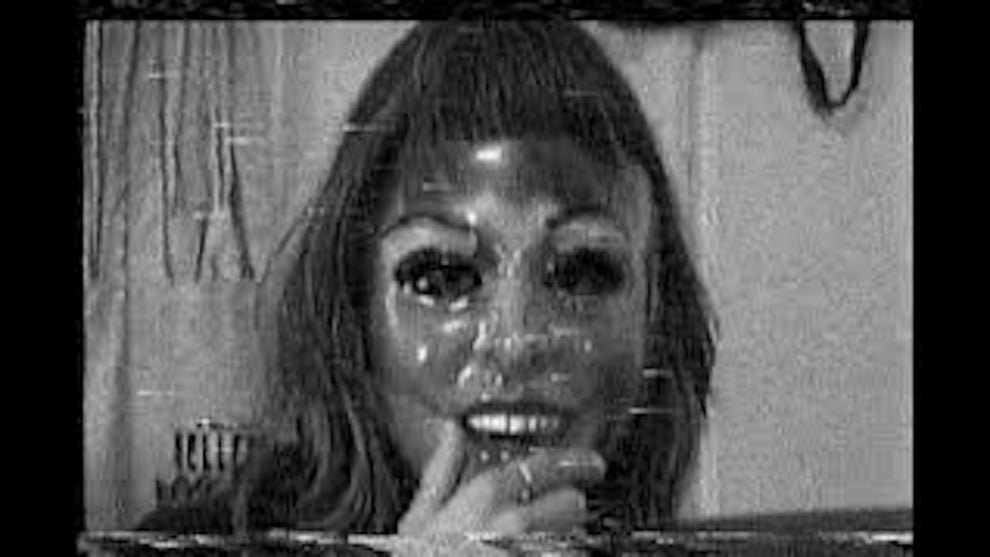
A bracingly, beautifully confessional film that’s as formally inventive as it is emotionally illuminating, Marjorie Conrad’s documentary “The Joyless Economy” is a daring demonstration of all that independent cinema can be. It’s an undoubtedly challenging work, both in terms of how it presents itself and what it ultimately shows to us about its subject, but that only makes it all the more rewarding.
It’s also a film that’s distinctly about films themselves, creating a revealing yet restrained portrait of a woman who discovers a complicated sense of liberation through the cinema she collects while reckoning with an affair. The central figure is once mysterious and intimately known, and Conrad never seeks to resolve the tension between the two as we follow this character’s journey.
Instead, she embraces it, often pointedly showing more of the films being collected than the one doing said collecting. This approach, rather than distancing us from the experience, only takes us deeper into what becomes a revelatory work of cinematic reflection. As we hear the subject speak to us in the second person, the distance this provides both protects her and allows her to open up even more than she may have otherwise.

Premiering in the Directors’ Fortnight Sidebar at the Cannes Film Festival, “The Joyless Economy” plays very much like a collaboration between Conrad and her subject, identified as B. There is a trust that was required for a project like this, and, just as Conrad deserves praise for her command of her craft, there is also much to appreciate about the way that she grounds her approach in the humanity of her subject. It’s a constantly surprising film, full of unexpected shifts in form and content.
Just as the director maintains a firm grasp on the technical elements, with the excellent sound design (which Conrad crafted with her collaborator John Tuthilland) and haunting, dreamlike visuals, it’s also refreshing to see a film so willing to explore. You get the sense that there is truly something being discovered. Conrad clearly wants to understand B.
The result is a film that’d make one hell of a great double feature with Jane Schoenbrun’s “Teenage Sex and Death Camp Miasma,” as it explores similar topics surrounding one’s relationship to sex, how it can be informed by horror cinema, and what happens when we try to find a new way forward for ourselves. Going even further, the aforementioned immersive sound design and the mini-DV sequences we see throughout “The Joyless Economy” make it feel like it could be one of the mythical video tapes that are hidden away in Schoenbrun’s latest. Only Conrad’s movie is rivetingly real and a work all its own, tapping into something increasingly unexpected the longer you sit with it.

In particular, the film soon becomes about how B. was impacted by Andrzej Żuławski’s enduring film “Possession” and ultimately begins to desire something much more for her life. This takes the form of an affair, something which we can hear is a deeply painful memory for her, even before we learn of the ways it caused fractures in her relationship. It’s something that Conrad doesn’t judge or push B. on, instead letting her work through the why of it all before it comes around to her love of cinema.
For all the complications the film wrestles with, it also ends up being a deceptively cathartic experience. It doesn’t come upon such catharsis easily, instead taking its time in going through all the struggles that B. is having with herself, her sexuality and her infidelity, though that only makes the resulting resolution to it all the more moving. There is still a tentativeness to how she discusses what she has learned about herself, and you get the sense that she’ll still likely be doing much more exploring through cinema.
If there is then one thing you could hope for, it would be that as B. continues to explore herself and her relationship to the world, Conrad also gets to continue such explorations. Whatever or whomever she sets her eye to next, if her future films are anything like this one, they’ll be equally as essential. In her hands, we witnessed something profoundly human.