
Warning: This article contains spoilers for “You Can See Everything.”
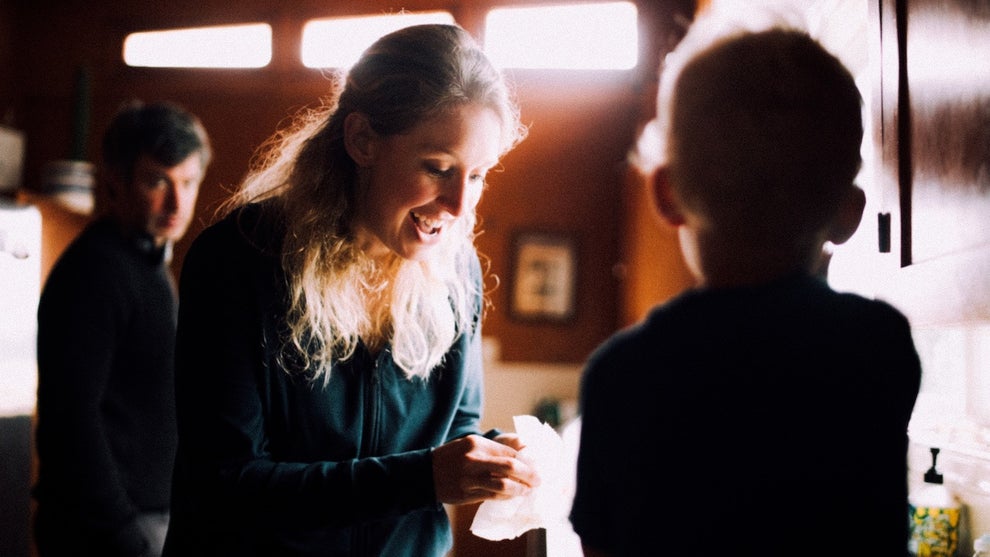
“You Can See Everything” went from being a completely unknown project in early September to one of the cinematic events of the year when it released on Oct. 16. The film, directed by Nathan Fielder and Lance Oppenheim, is a one-of-a-kind documentary, with Fielder embedding himself in the lives of Elizabeth Holmes and her partner Billy Evans in the days before Holmes goes to prison for defrauding investors with her company Theranos.
There’s a lot to chew on in “You Can See Everything,” but the three-hour documentary from A24 will likely leave viewers with more questions than answers. Let’s break a few of them down.

1. Who’s on first?
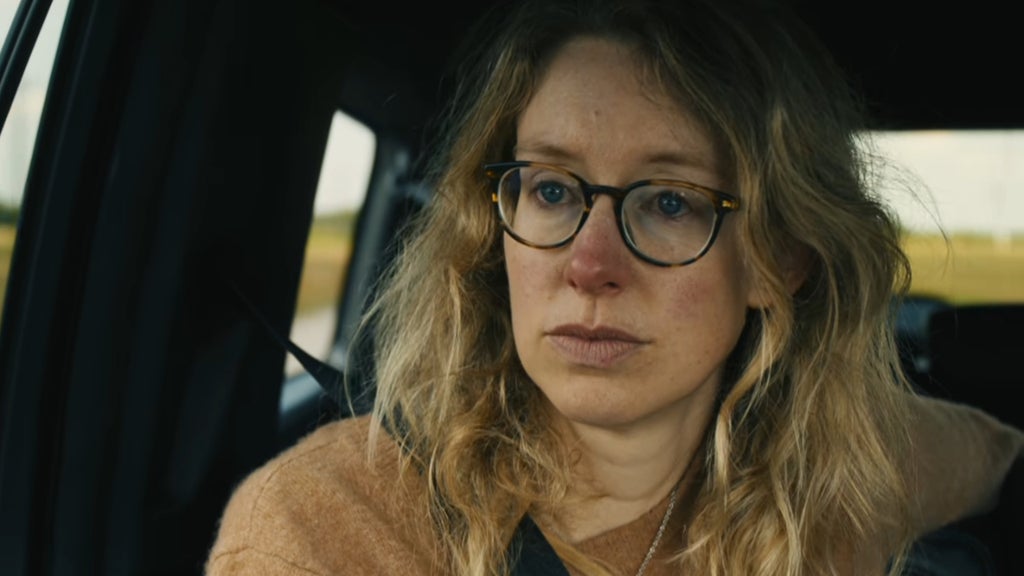
Perhaps the biggest question in “You Can See Everything” is how much control Elizabeth Holmes has over her life and circumstances. As Fielder says at the beginning of the film, there is plenty of evidence that led to Holmes’ incarceration for defrauding investors.
However, “You Can See Everything” points to a history of relationships Holmes has had with controlling men. This idea takes up much of the back half of the film’s narrative, as audiences are left to wonder how much of Theranos, Theranos 2.0, Evans’ decision to ask for money for the documentary and more were actually in Holmes’ control.
One of the best scenes in the movie involves Fielder showing Holmes “Who’s on First,” a classic comedy routine from Abbott and Costello. In this moment, the audience is again left to wonder whether Holmes truly doesn’t understand the gimmick or if this too is an act of manipulation. The movie is far less interested in a question of Holmes’ guilt than a question of just how in on everything she is. With scenes like this, you can’t help but wonder, “She’s not for real, right?” It’s a question Fielder and Oppenheim have debated themselves.
2. How did this happen?
One question that can at least partially be answered is how “You Can See Everything” got made in the first place. Fielder and Oppenheim spoke about the creation of the film at a special screening earlier in October, sharing how they were looking for a project to do together when Oppenheim learned that Holmes and Evans had asked A24 to make a documentary in the days before her sentence began. Fielder then met with Holmes — featured in the film itself — before A24 told the directors that they would be given a budget to pursue the documentary with the understanding that there was the potential that nothing comes from it.
But what we still don’t fully understand is why Holmes and Evans would agree for these directors to make a documentary about their lives (or why they would invite Fielder to live with them, as Fielder himself wondered about at the Q&A). Fielder is a known prankster and manipulative personality on television, often getting unsuspecting subjects into comic situations for his reality programming. Holmes and Evans knew at least some stuff about Fielder before he signed on, but they claim to have only seen a little bit of his programming.
So did they know what they were getting into with Fielder and Oppenheim? Did they think they could outwit the filmmakers and convince them that Holmes is innocent and Theranos 2.0 is a winner? Were they caught completely off guard by what “You Can See Everything” ended up being?

3. Nathan Fielder — Where does the bit end?
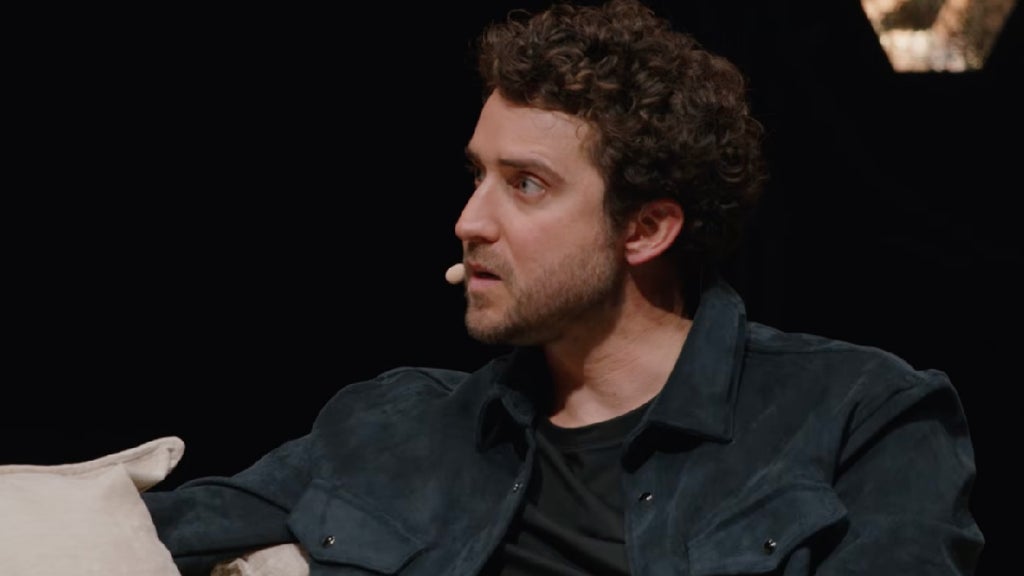
Every Nathan Fielder project comes with a big question: How much of Nathan is a bit? This is definitely present throughout “You Can See Everything,” as the audience is forced to wonder how much of this is the true Nathan and how much is part of the larger Nathan Fielder character.
This character has been at the forefront of several series, most prominently “Nathan For You” and “The Rehearsal” (and the scripted series “The Curse” co-starring Emma Stone, who gets a “Thank You” credit in “You Can See Everything”). Those projects all see Nathan to some degree or another struggle with the relationship between reality and the camera, heavily present in his and Oppenheim’s new feature.
There are definitely parts where the real Nathan seems to pop out in “You Can See Everything,” such as when he exclaims, “No you don’t!” or argues with Billy over an interview. But is Nathan actually developing some intimacy with Holmes, or is he simply pretending to be more enamored than he actually is (an idea that’s been explored in a few of his other projects)? Is everything with Amanda Seyfried truly unscripted, or was there a degree of rehearsal to these segments? How closely do his scripted reenactments of encounters with Holmes reflect reality? Just as we must question Holmes (and any other documentary, for that matter), we must wonder where Nathan Fielder the character ends and where Nathan Fielder the artist begins.
4. “It” or “Something”?
There are two major moments in “You Can See Everything” where the veracity of a quote comes into question. The first comes up early in the film, where Holmes and Evans argue that they were misquoted in the New York Times (this is continually brought up throughout the film, but neither Holmes and Evans nor the Times provided audio recordings of the quote). The second is near the end, when Fielder recalls an interaction with Holmes in prison and can’t fully decide if she said “It” or “Something.”
So which is it? Was Fielder psyching himself out to avoid incriminating Holmes? Is the New York Times standing behind a botched quote? These questions are part and parcel with the larger themes of the movie — and, while each viewer has their guess, impossible to know with absolute certainty based on the film alone.
5. How do Elizabeth and Billy feel?
As of this writing, we have yet to get confirmation that either Holmes or Evans has actually seen “You Can See Everything.” Thus, just as big a question as “Why did they let this get made?” is “What do they think about it now that it’s actually here?” Did this accomplish whatever they wanted a documentary about Holmes to be? Given how much the internet clung to an interview where Evans was asked if he was nervous about the film (“About what part?”), I’m sure people are waiting with bated breath to hear his eventual take.

6. Will Theranos 2.0 happen?
Again, part of the answer to “Why did they let this get made?” may lie in Theranos 2.0, a proposed second act for Holmes’ career that she and Evans work on throughout the film. Of course, it seems like the odds against this company would be insurmountable given the high-profile failure of its predecessor and Holmes imprisonment for defrauding investors.
But there are moments in “You Can See Everything” that show at least some people are still interested in what Holmes has to say. Stranger things have happened.
7. What are the awards chances?
The last burning question with “You Can See Everything” comes less from the movie itself than the pending reaction to it. We already know that the movie is a box office hit and a critical sensation — but what will awards voters think of it?
TheWrap’s Steve Pond broke down “You Can See Everything’s” Academy Awards chances in a much more in-depth discussion than we’ll have here, but it seems like the film has the best shot in three categories: Best Picture, Best Supporting Actress and Best Documentary Feature. Weirdly, the doc category is probably the one it has the least chance in given the typical preferences of those voters — that branch routinely snubs the most popular documentary of the year.
A documentary has never been nominated for Best Picture or an acting award, but the massive supporting behind “You Can See Everything” and surprise actress Amanda Seyfried could push it over the edge in these categories. Despite the film only being announced in September, there’s no denying that Oppenheim and Fielder’s documentary is a major player in this year’s race.