
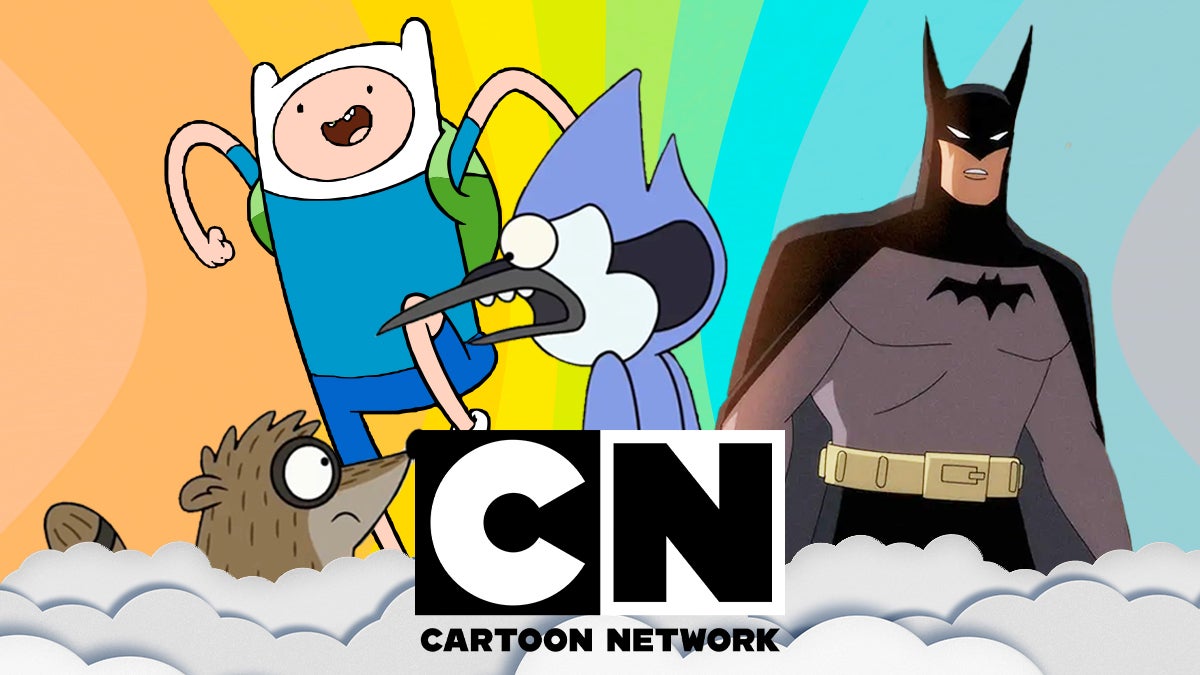
On June 29, a spinoff of Cartoon Network’s “Adventure Time,” one of the channel’s flagship series which ran for 10 seasons and 283 episodes, winning eight Primetime Emmy Awards, a Peabody, three Annie Awards and hordes of devotees along the way, premiered to much fanfare.
“Adventure Time: Side Quests,” a companion series that returned the show to its more lighthearted, standalone format and embraced a bold new art style, debuted with a twist. The new series, developed by Nate Cash and based on the original show by Pendelton Ward (who co-wrote one of the new episodes), didn’t arrive on Cartoon Network. It didn’t even show up on HBO Max, the direct-to-consumer streaming service owned by Cartoon Network parent company Warner Bros. Discovery, which is where spinoffs “Distant Lands” and “Fionna and Cake” landed.
Instead, “Adventure Time: Side Quests” arrived on Disney+ and Hulu, where it quickly became the #1 show on the platform, according to FlixPatrol. The arrival of “Adventure Time,” one of the biggest shows in Cartoon Network history, on Disney-owned platforms is the streaming equivalent of Bugs Bunny and Mickey Mouse sharing a scene together in “Who Framed Roger Rabbit?”
But “Adventure Time: Side Quests” appearing on another streamer wasn’t an anomaly. It was a strategy to expand the reach of some of its most powerful franchises — regardless of where they live. It’s also the latest chapter in an unfolding corporate saga, one which saw Cartoon Network Studios and its sister studios Hanna-Barbera Europe and Warner Bros. Animation tossed back and forth through various mergers and reorganizations.
Additionally, it offers an answer to the fate of Cartoon Network, a linear TV channel that’s largely been lost in the shuffle under Warner Bros. Discovery. A Bloomberg article in 2025 titled “Cartoon Network’s Last Gasp” revealed its annual advertising revenue plunged 80% to $133.7 million in 2024 from $668.4 million in 2014, with WBD CEO David Zaslav folding much of its operations in Warner Bros. Animation. That same year, Cartoon Network’s interactive website shut down and now redirects to a teaser page for HBO Max.
But Cartoon Network has cultivated an exciting lineup of original series that they will continue to develop and find the right home for after-the-fact. It’s an approach that allows its powerful IP and original shows to find new and existing fans on other services. And while Warner Bros. Animation doesn’t break out its financials from the large studio unit, the new model offers a new revenue stream as it produces these shows for other streamers.
At this point, Cartoon Network can be anywhere.
One re-org after another
The way that Sam Register, the avuncular president of Warner Bros. Animation, Cartoon Network Studios and Hanna-Barbera Studios Europe, tells it, the move to expand the scope of shows that Warner Bros. animation studios produce began out of necessity.
It started when AT&T purchased Warner Bros.
“They started looking at the potential of the IP that was collectively in both places, both at Warner Bros. and Cartoon Network,” Register told TheWrap.
Register, who started at Cartoon Network in 1994 (“I’ve lived on both sides of this fence my whole career and I used to bleed checkboard”), said Warner Bros. Animation and Cartoon Network were always “two separate entities.” But when Register moved to Warner Bros. Animation, “it was clear that there were some really great opportunities for me to make shows directly for Cartoon Network.”
Among those shows was the original “Teen Titans” series with DC and, later, the fabulously popular “Teen Titans GO!,” which is still on the air today.
When he started working at Cartoon Network, the higher-ups told him, “Hey, make sure that we’re buying good shows.” At Warner Bros. Animation, it was, “Keep making good stuff.” When AT&T took over in 2018, it looked at the entire WB portfolio (including HBO and Turner) and “immediately decided that we’re all going to work together.”
“It was in that environment where they brought the TV studios under one place instead of having two separate studios. And then I was the guy that they put in charge of that,” Register explained.

Then, as he put it, “the streaming bubble burst.” In 2022, Warner Bros. got new owners in the form of Discovery, which pivoted again.
Instead of the kids and family group having networks and studios, the new Warner Bros. Discovery decided “they’re going to separate it again and when they separated it, they left the studio side with me.”
Now the networks were going to be networks.
“That’s where we got to today. It was really a reaction to a streaming environment, and to the telephone company really wanting to actually be able to compete against Nickelodeon and Disney, and then the Netflixes of the world versus us operating against each other,” Register said.
The other thing that massively changed was “the kinds of things that we could sell.” Traditionally, on linear television, you could sell Pampers, kids toys and candy during kids and family programming. For adults you sell cars and phones and weight-loss drugs. It was all ad-supported. Streaming changed that.
“Streaming shows up and they’re like, Oh, we can kind of do different things for different people, and there’s different areas. YA didn’t really exist as an animation category and that sort of got bigger. We should be doing more on the anime side, so the opportunities became a little bit different,” Register said.
HBO Max, he said, “took a look at the kids and family space and they decided that this is a place that we’re probably not going to really want to spend our time and effort on.” HBO Max came to Register’s team and said, “Why don’t you guys start selling out in this space?”
“I don’t think it was a place where Max really saw that as their future. AT&T did. But Discovery looked at it and said, Where are we going to spend our money and how are we going to spend our money?” Register explained. “And the kids and family space got less prioritized.”
Warner Bros. Discovery was looking to house more YA and adult animation on HBO Max and less all-ages and family programming. “They told me, Look for other places for the kids stuff,” Register said. “And that’s what we did.”
Premium IP
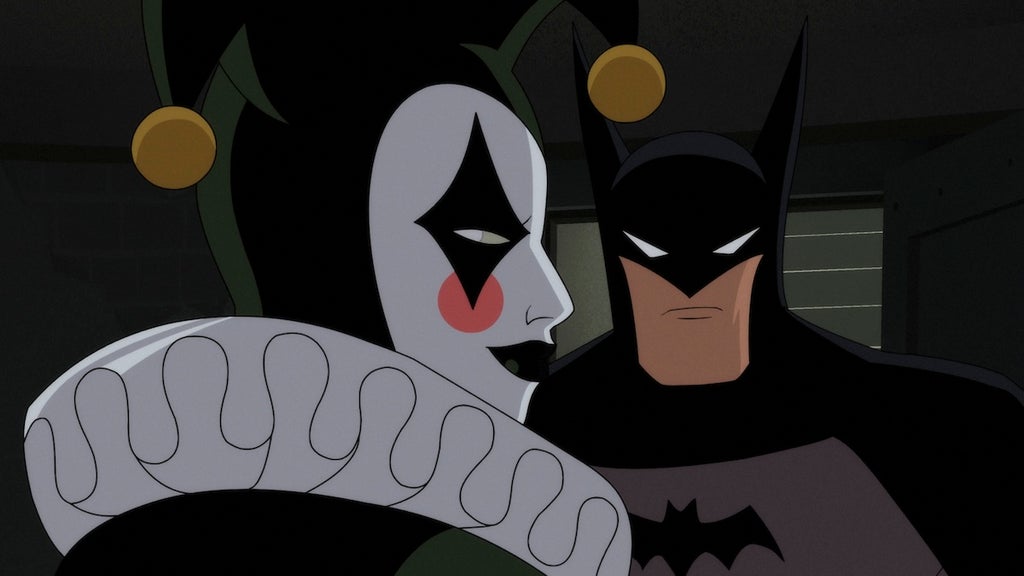
Some of this was out of necessity, since some completed series were abandoned by HBO Max. “Batman: The Caped Crusader,” the spiritual successor to “Batman: The Animated Series,” produced by J.J. Abrams and Matt Reeves, was homeless after HBO Max washed its hands of the first season. It wound up on Prime Video, who also purchased “Merry Little Batman,” an animated feature that inspired a series, “Bat-Family,” that is also on the service.
Other times, series were developed and shopped to streaming partners. A number of new projects announced at this year’s Annecy International Animation Film Festival, like an adult anime series from DC that sees the Joker tracking down Batman’s murderer, were announced without a streaming or network partner. One hotly anticipated project, an adaptation of “Conan the Barbarian” from “Primal” creator Genndy Tartakovsky, was also announced at Annecy. The series, which is currently in development, was also purchased by Prime Video. A new “Scooby-Doo” series, set in Japan, will arrive on Tubi.
The strategy seems to be working.
“Batman: The Caped Crusader” did well for Prime Video, with the animated neo-noir fitting snugly into their action-focused original programming slate. A second season was ordered and will begin streaming later this month, this time with actual input from Prime Video, who are now full creative partners. Their mandate? Don’t be afraid to make it darker.
But on the more family-focused side, things are going just as swimmingly.
“The Wonderfully Weird World of Gumball,” produced by Hanna-Barbera Studios Europe, premiered on Hulu last year. The new show is an extension of “The Amazing World of Gumball,” which ran on Cartoon Network from 2011 to 2019 and would be considered another one of the network’s hallmark series. (If you’ve never seen the show, it’s very funny and charming and uses an impressive mixed-media animation style.) A second season of the extension series debuted earlier this year.
According to a person familiar with its viewership data, within the first 28 days of the premiere, the show ranked as the #1 kids animated series on Hulu and remained within the top 1% of titles across major SVODs. Nearly three million total viewers watched 11 million hours within its first 28 days.
“Regular Show: The Lost Tapes,” a Cartoon Network Studios show that serves as a revival of “Regular Show,” which aired on Cartoon Network from 2010 to 2017, was a similar smash. It debuted in May of this year and has been doing what one source said was “solid” numbers, driving more than 600,000 total viewers and 1.2 million hours viewed in its first two weeks alone.
These moves weren’t wholly born out of necessity, but they did accelerate grander plans that Register and his team always had, which was to sell outside more and to keep these signature franchises going even if that means that they aren’t airing exclusively on Cartoon Network.
“Cartoon Network Studios means something, and by the way, I can’t take credit for a lot of what that is. That was something I inherited, but I’m smart enough to know that I inherited something very special. And because I had been there at one point, I understood,” Register said. “It was a two-prong approach, which is, we have this amazing Cartoon Network Studios IP that is valuable to potential partners, both internally and externally.”
Register points to “Adventure Time,” a series that was already being expanded “long before I re-arrived at the studio,” as an example of building out a franchise.
“IP is very valuable to [streamers] reaching audiences and being able to give them something that they feel like they have some sort of awareness of,” Register said. “You have to also imagine that the median animation buyer grew up with some of that stuff as kids.”

A powerful legacy
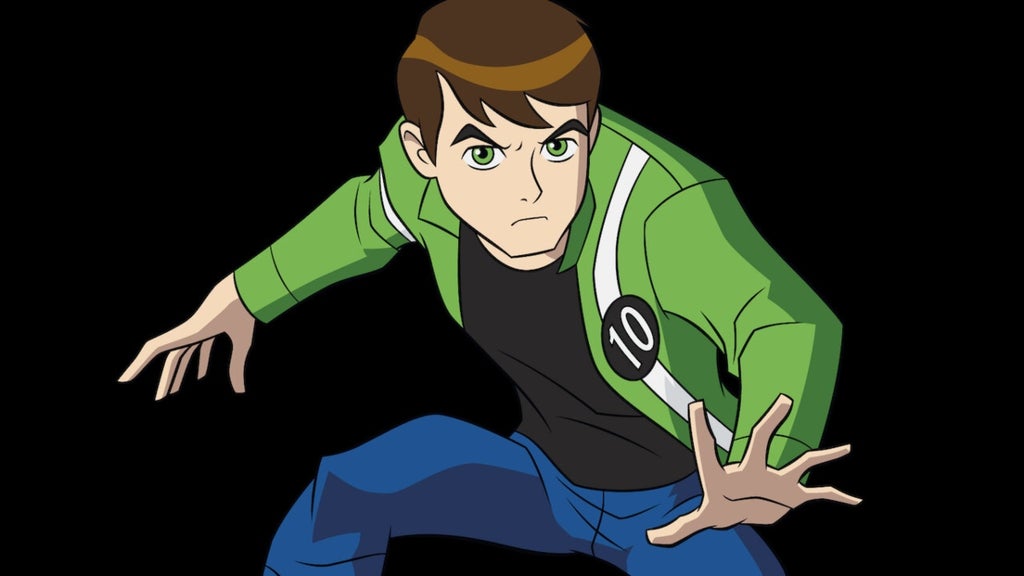
The day before we spoke, Register was at an off-site, and an employee approached him. He didn’t know them well, but the employee confessed that “I grew up on ‘Ben 10,’” an animated series that has a number of iterations but began on Cartoon Network in 2005. The employee was amazed that Register was involved in the original iteration of the show – and will be involved in future iterations that they are working on now. Register was taken aback.
But it happens all the time, he said.
When he started taking new projects out, like a “Steven Universe” spinoff called “Lars of the Stars” that Prime Video ultimately won, or “Adventure Time: Side Quests” and an upcoming “Adventure Time” animated movie, he saw similar enthusiasm.
“They were immediately very interested. They were excited about it and they felt like their audiences were going to be excited about it too,” Register said.
He’s taken it up as his mission to “try and keep the IP relevant.” Not that IP is everything.
“We have great IP that people are interested in, that was valuable, that had people excited and wanted to see iterations of that library. And then we had originals, which is still important,” Register said. “It’s still important that new voices, new storytelling, new ideas [exist] in that animation space. And the reality is there are creators who see that brand of Cartoon Network Studios, and that still feels very important to them.”
Register and his team went to Warner Bros. Animation, which “didn’t do a lot of original stuff,” and encouraged them to experiment, whereas Cartoon Network always had a “big originals program, it was a big part of what they were. But an original needs more help in being discovered.”
It was easier to create a hit out of an original on traditional television. The networks had a fixed audience watching whatever Cartoon Network was airing, so they would “promote the hell out of this premiere,” do really smart marketing, and place it in the programming schedule, next to one of the top performing shows.
“Did the audience like the new stuff? Not always. Sometimes the thing that no one cared about became the big hit. Sometimes they try to shove something down your throat and it never finds an audience, but it had an opportunity for you to, in a linear environment, be able to generate a hit,” Register said.
There were also more robust promotional partners, like toy and video game manufacturer Bandai with “Ben 10,” who would encourage the network to really push the show in the fourth quarter to drive sales for Christmas.
“In streaming, that device of marketing goes away, and it becomes the brand that becomes the important thing,” said Register.
He points to “Lars of the Stars” as an example where they were able to “bring in the original creators, who could tell an original story and something new in that universe that we haven’t seen before.”
“Old fans are going to love it, new fans are going to come on, because it’s going to be great stuff,” Register said.
As for Cartoon Network, there’s still some life in the cable channel. There are new series like “Super Mutant Magic Academy,” based on Jillian Tamaki’s webcomic of the same name and developed by “Regular Show” mastermind J.G. Quintel, which will air on Cartoon Network, or “Heist Safari” (which has subsequently been given the much blander title “Heist Brothers”), from Tartakovsky, also for Cartoon Network’s Adult Swim programming block.
“Even though those sales are a little bit harder, it’s harder for streamers to make a hit, it’s harder for them because it’s so noisy, it’s so loud, there’s so much stuff, so many choices. But we never backed away from that original stuff. It’s just that you need to do both,” Register said. “You have a brand, with that brand comes the library. You want to take advantage of the library, but within that brand is the spirit of originals and new creators. There’s new storytelling and we have to foster that too.”
In other words, you’ve got to keep things animated — for buyers and audiences.
