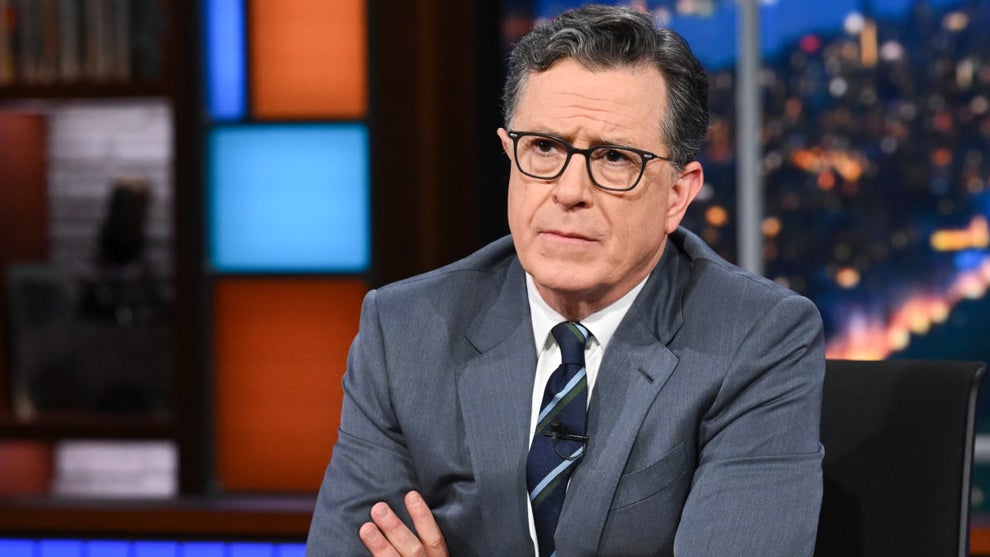
And so it’s come to an end, not with a bang, but with a sad smile.
Stephen Colbert’s tenure as host of “The Late Show” will end Thursday after almost 11 years, and with his exit comes the completion of the entire series. CBS’ late night era is done, prematurely thrown in the trash, and forever mired in a political drama that exposed the ugly truth of censorship under the Trump administration.
While fans were hoping that Colbert would burn every bridge in sight in the lead-up to his bow-out, embracing the scorched-earth approach of Conan O’Brien when NBC indignantly pushed him out of “The Tonight Show,” it was inevitable that Colbert would keep things gracious. He certainly had some fun, throwing furniture from the roof with David Letterman and earning a few kisses from some of his guests. Said guests were adoring in their praise, the audiences equally enraptured, and the industry bowing in respect.
It’s a sign of how much the TV world loves Colbert that Jimmys Fallon and Kimmel both decided not to air an episode on the night of the finale. The message was clear: To the end, the majority was Team Colbert.
The Second City-trained improviser who wrote for “The Dana Carvey Show” and co-created “Strangers With Candy” did not seem like the natural choice to follow in Letterman’s footsteps. After all, Colbert was best known at the time as the pompous conservative windbag of “The Colbert Report,” a parody of right-wing pundits and their penchant for loudly yelling the wrong thing at all times. It was a masterclass of buffoonery, the pitch-perfect response to the era of George W. Bush and Bill O’Reilly. Colbert was so adept at embodying this figure of arrogant delusion that many Republicans didn’t even get the joke, which led to him roasting Bush to his face at the White House Correspondents’ Dinner in 2006.

Did Politics Kill Stephen Colbert?
By contrast, “The Late Show” Colbert was sturdy, trustworthy and dare we say it, normal. While his oddball streak from his Comedy Central days would occasionally make an appearance, “Late Show” Colbert, behind his desk and with thick-rimmed glasses in lieu of the wired “Colbert Report” ones, was old-school. He aimed more for Dick Cavett than Letterman. The interviews were a bit more substantive than Fallon’s, and he lacked the caustic streak of Kimmel. Political monologues were not absent, but he was no firebrand like Seth Meyers or John Oliver.
You could always sense Colbert’s comfort in being himself with “The Late Show.” Like his Comedy Central neighbor Jon Stewart, he never seemed at ease with the weight of being a thought leader for the generation of President Bush opponents who felt adrift without a unifying voice to call out the lunacy.
Being such a leader is way too much responsibility for a guy who joked about baby carrots turning him gay. On “The Late Show,” he could be an elder statesman of sorts, a nice guy who seemed interested in the world and wanted to approach it with a much-needed dose of earnestness. Here was a man who seemed deadly allergic to smarm.
During the COVID shutdown, Colbert was a particular bright spot. Recording at home with his wife Evie, he struck a near-impossible chord of comforting guidance and justified fury at the Trump administration’s ineptitude. The camaraderie of the “Strike Force Five” podcast, a union of the late night quintet for belly-aching crossover laughs, only strengthened his image as a safe port in a storm. That made his brief moments of profanity all the more potent. When Colbert told Trump to “go f—k yourself,” you knew he meant it.
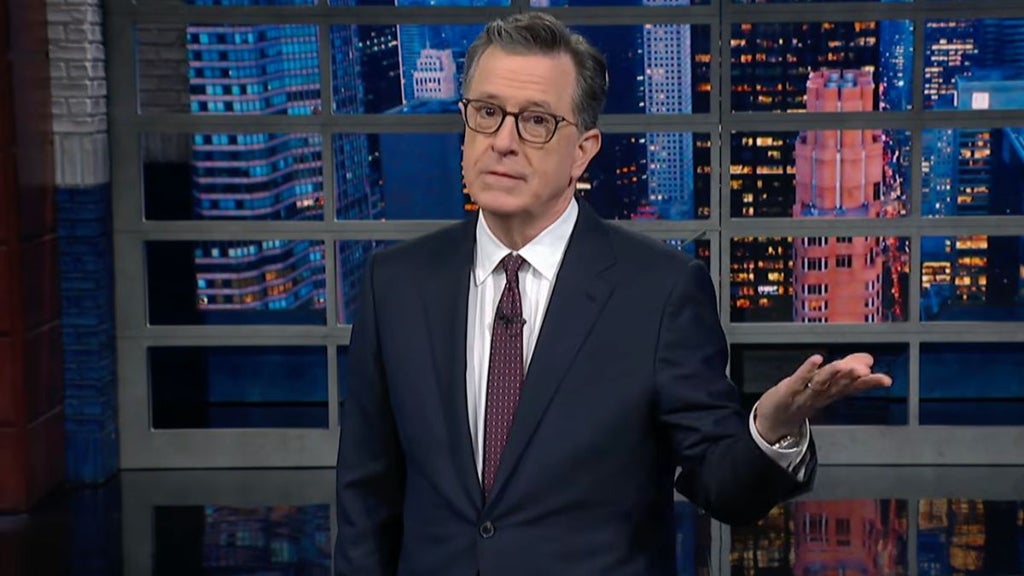
In hindsight, it took so little for CBS to throw Colbert to the wolves. The most sensible and non-inflammatory take on the network’s merger with Paramount and its obvious negative implications had both the White House screeching and David Ellison “sources” running amok. Nobody believed the cancellation was an apolitical choice, although it is true that late night has been a money drain for all the networks lately. Everyone saw it as Colbert and his team being made an example of, a fate that would befall Kimmel similarly enough just a few months later.
Colbert should have been allowed to end “The Late Show” on his own terms. It should have been a proper conclusion wherein his talents were able to shine without the hefty baggage of a perennially online president or the search for meaning amid a seemingly never-ending “culture war.”
Alas, we are in a position where not only is everything political, but it’s being tallied up as part of a win/lose battle for a nation’s soul. It’s censorship in the name of owning the libs, a corporate bending of the knee that makes our world that much smaller.

The late night era is dying in America. CBS is replacing Colbert’s show with a proudly bland comedy show, “Comics Unleashed,” that’s paying for the timeslot. Practically every network that tried to introduce a new talk show has canceled it. It seems telling that Jimmy Fallon has scuttled to avoid even suggesting an opinion on recent drama, perhaps worried that we’ll never get to ruffle Trump’s hair again (which makes his decision not to air an episode against the Colbert finale all the more surprising, albeit welcome.)
Audience tastes change, and we’re no longer beholden to the same four networks night after night, but a true entertainment tradition being replaced with bro podcasts, gambling ads and AI-generated videos of crying fruit doesn’t feel like a fair swap.
I’m sure Colbert is on some level relieved that he no longer has to be in the eye of the storm. Both he and Stewart clearly grew nervous over the baffling responsibility put upon their shoulders when Obama was president, and being the endless focus of a petulant POTUS’ thin skin turned him once more into a reluctant leader of a #resistance with grander stakes than ever.
Comedy speaks truth to power, but having to do that under the tyranny of Ellison as well as Trump seemed both unfair and impossible. We really asked Colbert to be too much for us, to buoy a series of sinking ships and reassure us that it was all going to be OK.
In fairness, if we were to believe such things from anyone, it was Stephen Colbert of “The Late Show.”
