
Note: This story contains spoilers from “Monster: The Lizzie Borden Story.”
The latest season of “Monster” brings focus to the infamous Lizzie Borden axe murders, and the housemaid who may have helped facilitate the killings of the woman’s parents.
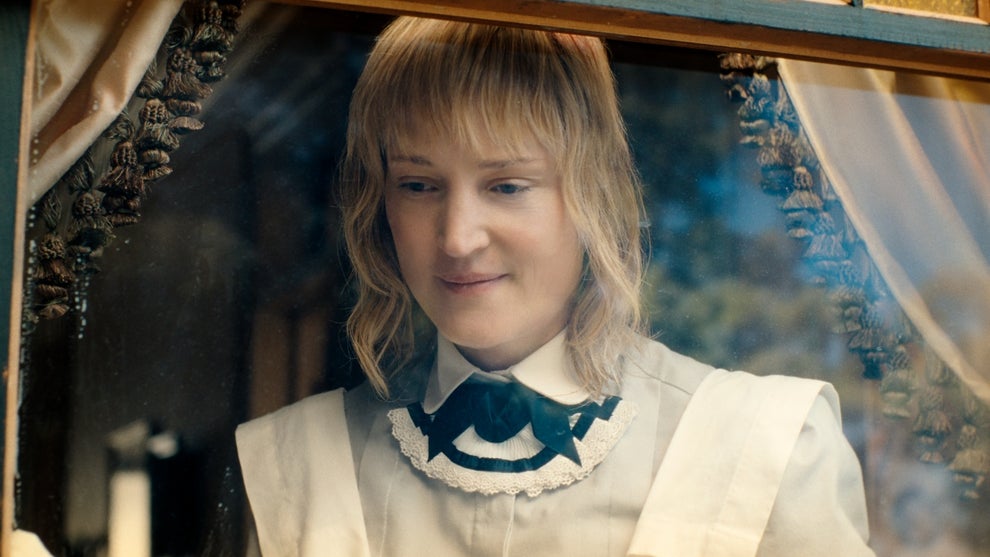
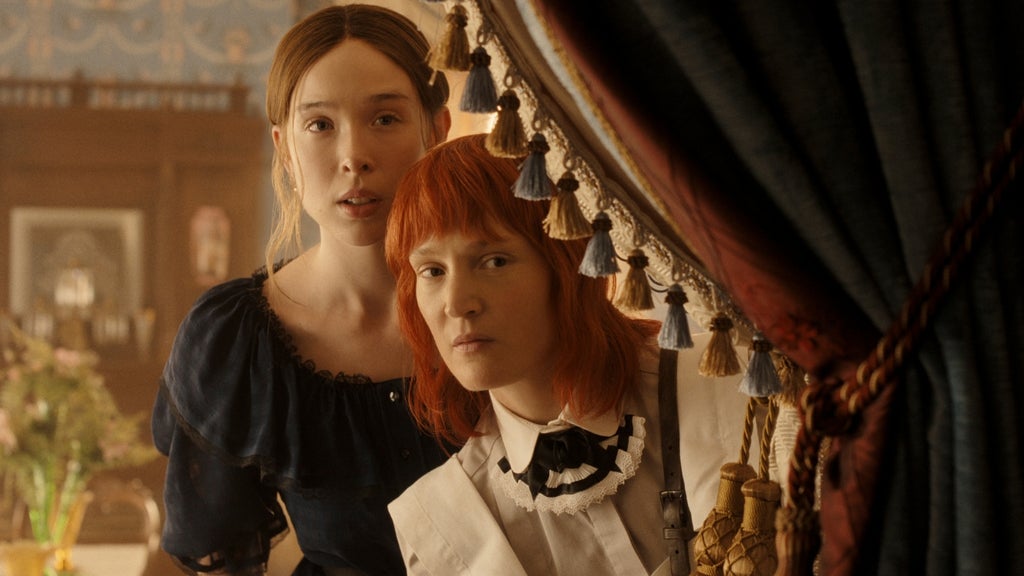
Vicky Krieps plays Bridget Sullivan, the maid who whirls into Lizzie’s life as a modern breath of fresh air — sporting a dyed wolf cut, men’s shoes and more — and ends up convincing the girl that her terrible parents Andrew (Charlie Hunnam) and Abby (Rebecca Hall) are better off dead. Through the murder plotting the two grow closer and begin a bit of a secret relationship.
But killing always throws a wrench in things, and Krieps told TheWrap that Bridget — who is called Maggie by the Borden family through the series, because they refuse to learn a new maid’s name — is a “walking paradox.” In one moment, she is so confident in her place, and especially how she’ll feel once the Bordens are dead, then the next, she’s completely unsure of any of it.
“We humans usually don’t say what we think; we don’t show what we really feel; we are not able to express,” Krieps told TheWrap. “We are always in this paradox in our lives, and to me, Maggie’s the walking paradox. She’s that paradox. She’s like, ‘I want, but oh, now I don’t know.’ You know? ‘I know where I’m going, but now I’m completely lost.’”
Below, Krieps explains how she built out the character to feel modern in a stuffy world, whether Bridget was manipulating Lizzie, and what the ending of the season could mean.

TheWrap: You’d previously mentioned Bridget’s look is supposed to be punk and modern-inspired and said Courtney Love was an inspiration. Were there other inspirations when you were trying to figure out the look of the character?
Krieps: I think it was the punk, but then it was also the practicality of someone who’s a housemaid. If you work the whole day, even if you wouldn’t work for horrible people like Abby, I think these people wouldn’t have a life. So your life is really what’s on you. So that’s why I had the idea of the little pouch that might contain some powders. I was thinking what could it be? Something to go sleep, something to wake up. Without meaning drugs, but whatever they would have used then in terms of plants. You’re always on the go basically, and you don’t have the luxury of having places to put your stuff, and that’s also why I took away the corset and I gave her men’s shoes, because I knew it needed to be something where you can run away at any moment.
She’s working in such a stuffy environment in the Borden house. Did you study more modern movements as well? How did you want her to stand out from the family in more than just the way she thought?
Yeah, and that was really my goal. That’s why I gave her flat shoes and I took away the corset so that automatically, even without thinking, I would sit and slouch, or I wouldn’t have this posture where you always have to stand straight and look beautiful. It is supposed to be a feminist, lesbian, female rage-empowered show. So I thought that is also female empowerment in a way, and the future that a woman does not have to stand a certain way because she’s being seen.
I also believe that those women who were working, they had these kind of postures more than the other ones. No housemaid would be just as straight in the kitchen as she would be while she’s serving, and Bridget is allowed to just move through the world like she doesn’t have. There’s no in and out. There’s no “I’m being seen, and I’m free not to be seen.” She is free to be one person.
Max Winkler called you his “north star” for ensuring that the show felt authentically feminist. Did you ever feel nervous to speak out about inconsistencies on set?
Funny you say that, because there was a shift. In the beginning, I felt very self-conscious and I was wondering, “Is that OK?” Because I’m very honest. I just say my opinion. I’m from Luxembourg, and we have a saying which means “from your lung to your tongue,” it just comes out. Which is not really maybe necessarily how American societies work.
So in the beginning, I felt self-conscious, and I wondered, you know, am I breaking the rules? Am I being too honest, too upfront? And then I noticed that not only was it OK, but toward the end of the show, they would come to me and say, “Hey, Vicky, can you take a look?” Or Max would always come and say, “So, did you look at the scene yet? Any notes? Anything? Do you think?” And then what you say happened a little bit. I started wondering, “oh my god! I hope I catch everything now.” You know, it felt like almost too much responsibility.
If you were Max’s North Star, what was guiding you? What were your feminist inspirations for this project?
Just thinking of the women of the past and all these hundreds of 1,000s of women in the past who carry so much, and they go through so much, but we never see them. I just had so much joy thinking that we are directing the camera, turning it around from the men, and just like, “who’s standing in the corner holding the tea?” That gave me a lot of energy and hope.
But also my colleagues. The world Ryan Murphy creates, it is really a world full of wonderful actors. He loves actors, and so you are part of this wonderful ensemble that feels almost like early ’20s studio system. You meet the same actors. Joey (Pollari) is now in the next “American Horror Story,” or Charlie (Hunnam) I knew from before. It gives such a good feeling of like we are like this troupe of troubadours. It takes itself less serious, but it really tries to speak to the people, and I like that formula.
What is it about Lizzie that interests Bridget out of the gate?
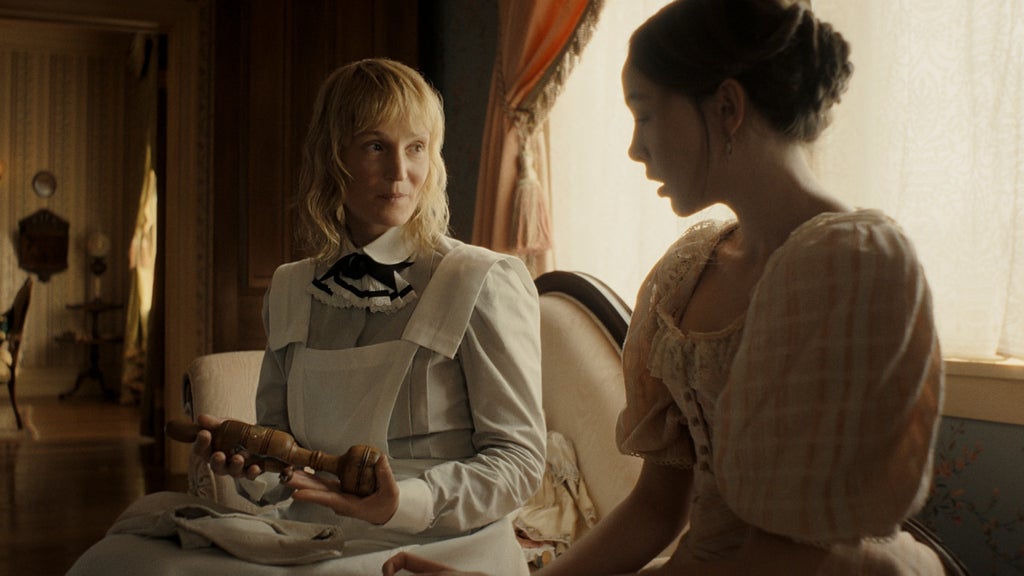
The awkwardness. Yesterday I was sitting in the cinema at the premiere and I was laughing so loud I couldn’t stop, and I was worried people were thinking we were not taking it serious. But I laughed because it was so quirky and awkward and funny and strange — her face and just when she looks at the couch.
I think, for Bridget, that’s really the beginning. It’s really “who is this creature? “If anything, I could have pushed that even more. I could have made it, made her, even weirder. But that’s again where I like this formula of the “Monster” series, it is showing weird, but of course it is giving it a shape that more people can consume, that more people can access.
You mentioned the the troupe of troubadours. You played Ilse Koch last seasonand now Bridget — both of whom serve as these murderous muses to Ed and Lizzie. Bridget’s is more direct than Ed’s imaginings of Ilse, and she kind of talks Lizzie into killing her parents. Were you approaching that as a manipulation? Empowering? An awakening?
That’s a very interesting question, and I don’t even know if I have an answer even now that we finished the show. I think Bridget is one of those characters that remains mysterious until the end. The way it was written, you could have easily read it like that – that she is the big manipulator, that she is the one who’s manipulating Lizzie, the father, wants to make money, talks everyone into it.
I didn’t feel that simple, straight manipulation thing. I was – I don’t know why – I felt like there’s much more honesty and actual feeling, and I think she actually fell in love with Lizzie, and I think she actually honestly hates this unfairness of the world that she’s living in. But through and because of society became a player. That’s why she’s so modern. She’s a woman who is struggling and surviving, but at the same time, became a player instead of becoming someone who’s only suffering. So I think that’s why the manipulation changed throughout making this season, and why now Bridget or Maggie has become this question mark.
I was off the manipulation train by the third episode when Bridget freezes watching Bertha get killed. A clear struggle between how she thought she’d feel vs. how she actually feels seeing it.
Yeah! If I had a simple way of putting what I did in the show or who the character is, what I tried to do in this character is show that we humans usually don’t say what we think; we don’t show what we really feel; we are not able to express. We are always in this paradox in our lives, and to me, Maggie’s – she’s the walking paradox. She’s that paradox. She’s like, “I want, but oh, now I don’t know.” You know? “I know where I’m going, but now I’m completely lost.”

What conversations were had about the season’s ending? Was the plan always to end with Bridget and Lizzie celebrating women gaining the right to vote and their involvement in the Suffragette Movement?
There was a lot of conversation. I feel very good with sharing my thoughts and my questions with Ryan and Max. In this case, it was Ryan. I don’t know what was always planned, but I remember writing to them and saying:
“Please, please, please take this very serious because women are going to feel close to these characters. They will identify with these women — especially women who are housekeepers. The women out there who are not in the luxury of being the leading part of society, but the women who are actually serving society, they will identify and they will feel close. I don’t know what you do with the characters, but make sure you honor that.
I feel like it did influence a little bit of the way it went, but I can’t tell you if they had always planned this. I don’t think that was always planned.
I’m curious for you take on the ending? Do you see this as a happy one, for Bridget and Lizzie but also for Aileen in a way?
I think similar to “Ed Gein,” but this is a personal opinion. I think about everything a lot, and “Ed Gein” I thought about it a lot. In the end, I thought this is all about making us understand through the ugly side of humans that we are all everything. I am everything. I think I’m me, but I’m also you. Actually, if I want it or not, I’m also the ugly guy over there. I’m also the bad woman over here. I think accepting that is how humans can evolve if we want to evolve in the future in some way. And I think Eileen represents that huge pain that women carry in this like ancient, ancient wound. This is a very deep, very old wound. You know, women being abused and ignored and violated, and then not hurt, and then often, sometimes cast out. This isolation, this feeling of isolation, that my body has been the place of abuse, and that that is maybe even my fault, and then the shame. This is in all women, and this is something we haven’t resolved yet and it is what will have to be done from now on, moving forward.
I think linking someone like Lizzie with someone like Aileen is trying to do that. It’s trying to speak of this wound of women who were not seen, who were not listened to, who were not able to express themselves, and the rage, that comes from that. But also, it has something very melancholic, and in a way very beautiful.
So in that way, it’s a happy end. It’s a happy end that all women across time can reach hands and say “it’s OK, I see you and next time we don’t have to kill.”
“Monster: The Lizzie Borden Story” is now streaming on Netflix.
