
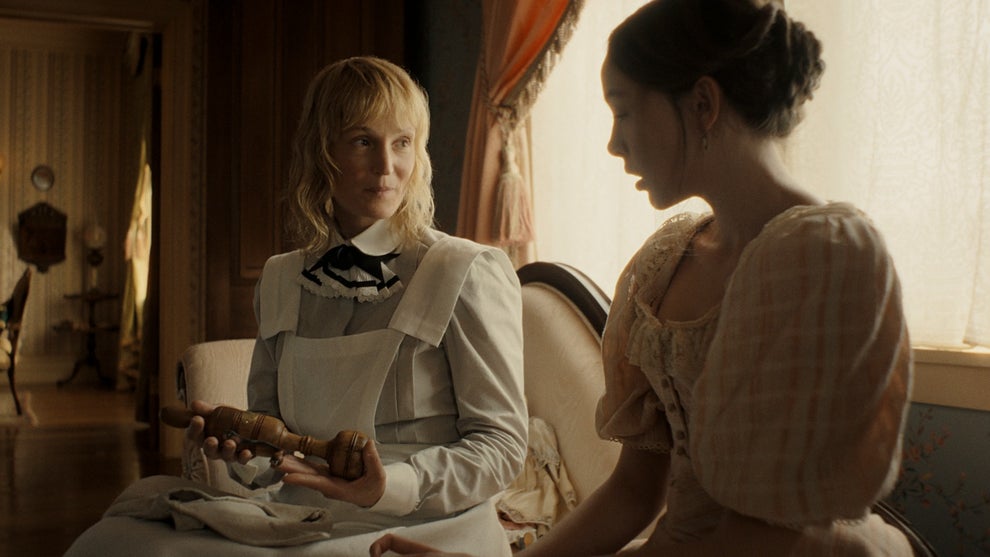
“Monster: The Lizzie Borden Story” is unlike any season of the Netflix anthology series so far. That was very much intentional.
“It’s a very, very dark comedy. I just kept thinking of ‘Noises Off’ on acid,” Max Winkler, who directed six episodes of the series from Ryan Murphy and Ian Brennan, told TheWrap, referring to Michael Frayn’s farcical play-within-a-play. “I thought about what would our version be?”
According to Winkler, the tone was baked into the script, which was written by Brennan, who also serves as the series creator, executive producer and showrunner. Ostensibly, the fourth season of “Monster” tells the story of Lizzie Borden, a wealthy young woman who was put on trial and ultimately acquitted for the grisly murder of her father and stepmother in 1893. In real life, it’s unknown whether Lizzie killed Abby and Andrew Borden. The investigation was bungled by authorities and, at the time, many refused to believe that a woman was capable of axe murder.
But Winkler, Brennan and Murphy’s take on the case makes its stance known within the first 10 minutes. According to “Monster,” Borden did it, and she was right to do so.
“I knew that it needed to be a Victorian-feeling story about being trapped and feeling claustrophobic in a cage and how you break out from that and the rage that comes from it. But I knew that there needed to be sort of a rebellious nature from the filmmaking and the sense of humor,” Winkler said. “I was so excited and scared to pull it all off, tonally.”
Instead of a somber period piece, “Monster: The Lizzie Borden Story” is more like a guttural punk rock scream set against a falsely immaculate backdrop. That’s how “Monster” views the often maddening contradictory dichotomies of what society expects from women. Graphic insults are spewed in a posh transatlantic accents. Regal dinner scenes are interrupted by projectile vomiting and explosive diarrhea. Blood is featured so often, it feels like its own character — menstrual blood, blood baths, blood-soaked sheets and, of course, blood-splattered clothes.

“I want it to feel, look like and have the authenticity of — I say this aware that we’re striving for the best, always — but of the manners of ‘Age of Innocence,’ but with my humor, which is — and also is honestly Ryan’s to a degree — very ‘South Park,’” Winkler said.
Martin Scorsese’s 1993 adaptation of the Edith Wharton novel was a major inspiration for the series, as were the movies from filmmaking team Michael Powell and Emeric Pressburger. Joe Wright’s 2005 romantic drama “Pride & Prejudice” also served as a major inspiration, a film that Winkler saw while he was in film school and that he says “enlightened” him.
“It was the first time I had seen a period piece where you could feel the sweat on people’s skin. Their hair wasn’t perfect, and the house was falling apart,” he said. [Wright] spoke to our class. He’s dyslexic, and I’m dyslexic, and it really inspired me.”
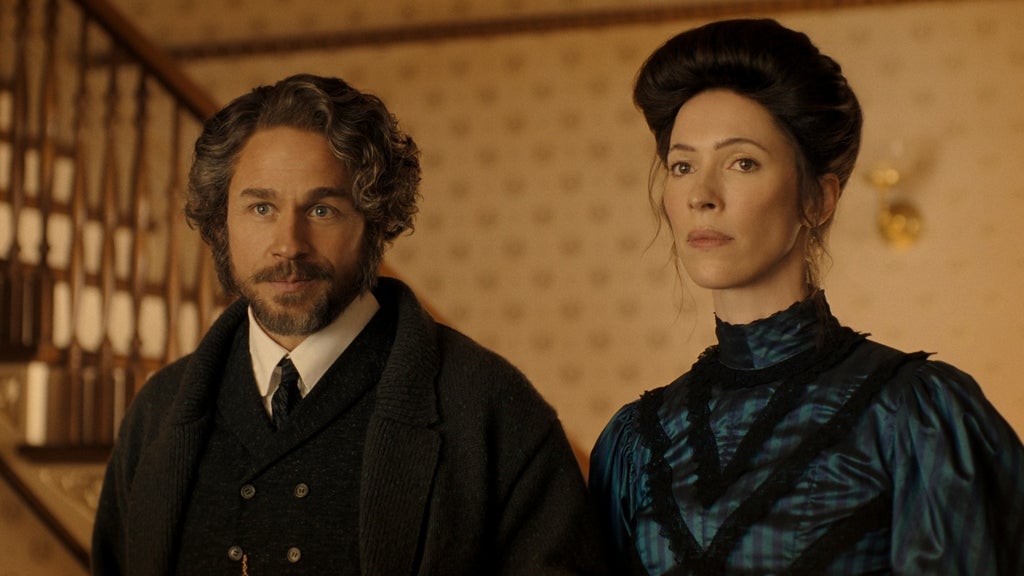
Heading into the season, Winkler knew that the series would only work if his cast understood the series’ unexpected tone, and Rebecca Hall’s biting and callous portrayal of Abby Borden was key to setting it. Winkler and Hall agreed that their Abby Borden should be like Vivian Pickles’ character in Hal Ashby’s dark comedy “Harold and Maude.” Like Mrs. Chasen, Abby Borden in “Monster” is snobbish and seems incapable of affection as she flings coarse yet well-crafted insults at her stepdaughter and husband.
“I think Rebecca felt very free, and it was very easy for her to do this,” Winkler said. “As the show unfolds, more is revealed of why Rebecca’s character is the way she is, which I think Ian and Ryan do very well. “
As for Charlie Hunnam’s Andrew Borden, the actor was largely relieved to be playing a more lighthearted role after starring as the deeply complicated serial killer Ed Gein in the third season of “Monster.” However, he approached getting into the mindset of Andrew Borden the same way he approached Gein.
“I was really surprised by [the tone] too, when I got the scripts, that it was clearly more overtly comedic, a little bit more theatrical, but at the same time every bit is sincere in trying to understand the motivations of these characters and what transformed them from being relatively normal people into being somewhat monstrous,” Hunnam told TheWrap on the red carpet for the show’s premiere. “The process is always trying to balance looking for the truth whilst also being entertaining.”
“Charlie is naturally very, very funny. We had made a movie together where Charlie was really funny, so I knew he could do it,” Winkler said, referring to 2019’s “Jungleland.” “Because it’s an ensemble, so many talented people are coming in and out constantly and bringing new life into scenes and shifting the paradigm of what a free person looks like in that time period.”
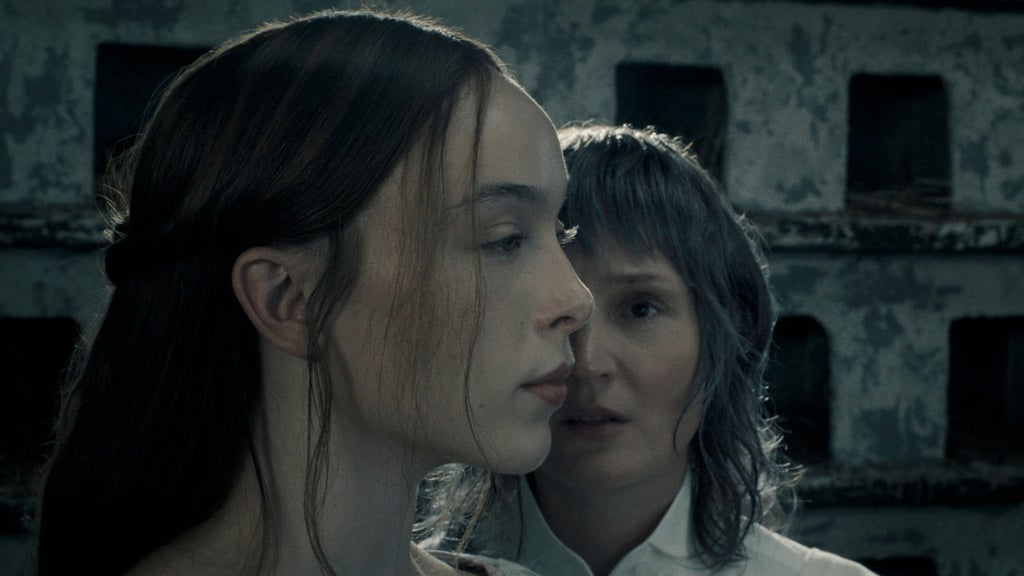
Billie Lourd, who plays Lizzie’s sister Emma Borden, was also surprised by the show’s tone.
“Max Winkler just knew what it was from the jump,” Lourd told TheWrap on the red carpet. “He directed us in such a specific, interesting way. I think the tone works so well, and is so fun and weird. There’s nothing like it … I love doing dramatic, real, intense stuff, but I love comedy too. Getting to combine like crying and comedy is my jam, so this is ideal for me. It’s very punk rock.”
Stepping into this series about feminism and womanhood, Winkler was aware of his limitations as a male director — Sarah Adina Smith directed two episodes, while he directed six. For some of the specifics of female experience, he relied heavily on the insights of executive producer Louise Shore, who was by his side throughout production.
“I know that a woman can direct an incredible movie about a man’s experience. I know that a man can direct a really good movie about a woman’s experience, but there are certain limitations of being a man that you have, especially when you’re dealing with some of the subjects that are in this series,” he explained.
Winker also relied on his three leading ladies — Vicky Krieps, Rebecca Hall and Ella Beatty — to adjust the series and make it feel more authentic.
“I would be an idiot to not have the flexibility to rely on incredibly smart people who were doing these things, who could tell me this wouldn’t happen this way, like ‘There would be way more blood,’ or ‘I wouldn’t be able to walk in this situation’ — that kind of stuff. I felt truly lucky to be surrounded by so many women.”
As for what research went into this season, it was less focused on the actual Borden case and more about female rage. This was partially because of how little is known about the Borden murders but also because of the larger societal questions the series’ creators wanted to explore.
“How could a woman kill? It’s so foreign to us. We’re dealing with it now in the news,” Winkler said, alluding to the Lindsay Clancy case. “We fetishize women that are mothers. They sing us to sleep. We kind of rob them of their humanness. It’s like how could a woman do something that’s less than perfect? They keep the home wonderful and clean, and they have food ready for us. There’s still half of the internet that believes that.”
“When a woman does something that a man has done, it is shocking. Lizzie was exonerated because men simply couldn’t believe that a woman could do such a thing. She’s not strong enough. She’s not capable of it. She’s not smart enough to get away with it. She doesn’t have the rage inside of her,” he continued.
“We researched the time. We wanted to be as accurate as possible … But the story we wanted to tell, through Lizzie Borden, Elizabeth Báthory and Aileen Wuornos, was a story that so much changes and so little changes at the same time.”
