
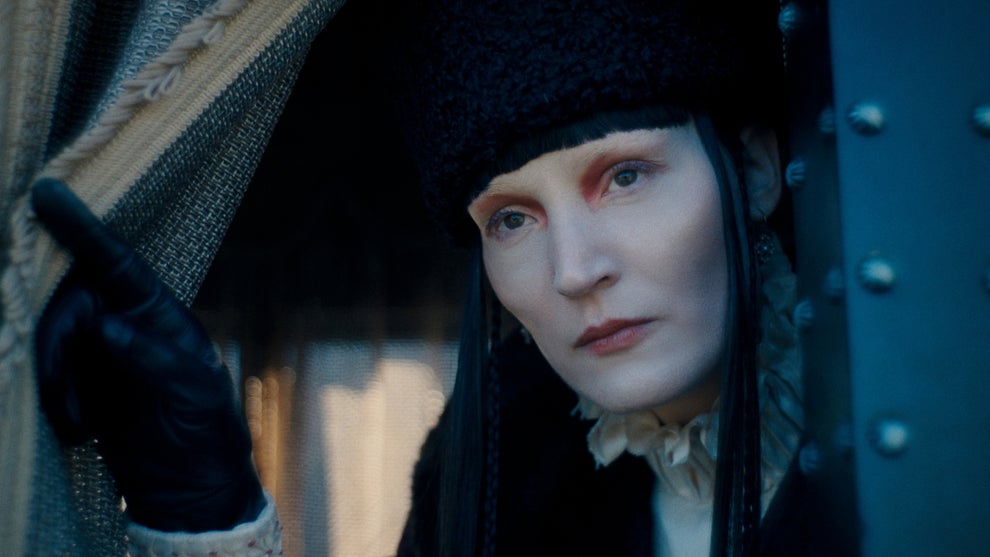
Note: This story contains spoilers from “Monster: The Lizzie Borden Story.”
It wouldn’t be a season of “Monster” with only one serial killer. Though the fourth season of Ryan Murphy and Ian Brennan’s anthology series centers around Lizzie Borden, the woman accused of murdering her father and stepmother in 1892, the series also tells the stories of one of the most shocking female murderers in all of history — Countess Elizabeth Báthory.
Modern day historians now doubt Báthory’s reign of terror. But the Hungarian noblewoman was accused of torturing and murdering up to 300 women and bathing in the blood of virgins. Consider this your guide to Vicky Krieps’ more sinister role in this season of “Monster.”
Who was Countess Elizabeth Báthory?
Countess Elizabeth Báthory of Ecsed was a Hungarian noblewoman from the House of Báthory. But she’s part of this season of “Monster” because the member of the upper class was an alleged serial killer accused of torturing and killing up to 300 women from 1590 to 1610.
Báthory was born in 1560. There were rumors that, before her first marriage, she gave birth to a child who was fathered by a peasant boy at the age of 13. That child was given to a local woman. “Monster” claims that Báthory was raped by this peasant boy and that she spent much of her life looking to take vengeance for what he did to her.
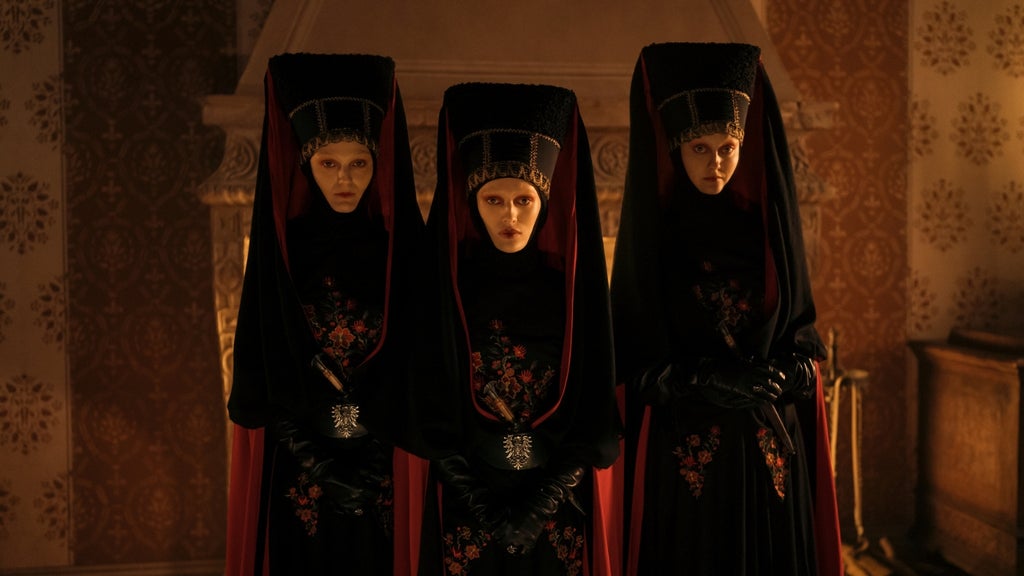
In 1575, Báthory married Count Ferenc Nádasdy, a union that combined land in both Transylvania and Hungary. Báthory’s alleged torture varied greatly. Some claimed that she would stick needles into the fingers of her victims or cut and roast their skin, while others claimed she would starve young women in her various dungeons for weeks or throw water on their naked bodies in the middle of winter. In 1609, Báthory opened a Gynaecaeum, which acted as a finishing school of sorts and allowed the daughters of noble families to join her court. By this time, rumors of torture were so prevalent that several peasant families refused to let their daughters work in Báthory’s castle. The prevailing belief is that the Gynaecaeum was opened to give Báthory access to new victims. But when the daughters of these noble families didn’t come home, their parents demanded answers from King Matthias.
There was also a rumor that Báthory victimized so many young women because she was using them to bathe in virgin blood to retain her youth. That’s the folk legend that “Monster” highlights. But, because the first instance of that rumor appeared more than a hundred years after Báthory’s, it’s unknown how much of that claim was based on truth.
In 1610, Báthory and her four loyal accomplices — Dorottya Szentés, Ilona Jó, Katarína Benická and János Újváry — were arrested. All four accomplices were sentenced to death, while Báthory was confined to a castle for the rest of her life. Though the story in “Monster” claims she was left to fester in a bricked room, in real life, her punishment was more like house arrest.
It’s difficult to know how many women Báthory tortured and killed. This is partly because all of her accomplices gave different figures and partly because not all of the missing bodies were recovered. It was also difficult to determine how many victims survived Báthory’s initial torture only to die later from their injuries.
There’s also speculation about whether or not Báthory killed anyone at all. Some scholars have suggested that these horrific stories were told to harm the reputation of the House of Báthory, which posed a threat to several powerful political parties at the time.

How is Elizabeth Báthory connected to Lizzie Borden?
Countess Elizabeth Báthory is the subject of a book that Bridget “Maggie” Sullivan (Vicky Krieps) reads to Lizzie Borden (Ella Beatty) throughout the season. That book focuses more on the exaggerated stories surrounding this historical figure — the blood baths, vast network of torturers and her death behind a bricked wall.
Though the book in the series is more closely based on folklore than historical accuracy, it serves the season thematically, contributing to its circular stories about female rage. In “Monster,” the Lizzie Borden story itself is presented as a work of fiction, with the season beginning with the opening of a curtain. Just as the fictional versions of Lizzie and Maggie use the story of Countess Elizabeth Báthory to gain courage for their own murders, a century later, serial killer Aileen Wuornos is comforted by the Borden murders.
“Monster: The Lizzie Borden Story” is now streaming on Netflix.
