
Note: The following story contains spoilers from “The Body.”
By the end of the first season of Netflix’s “The Body”, the line between reality and the supernatural is more blurred than ever, as a prophecy predicts Grace’s awakening.
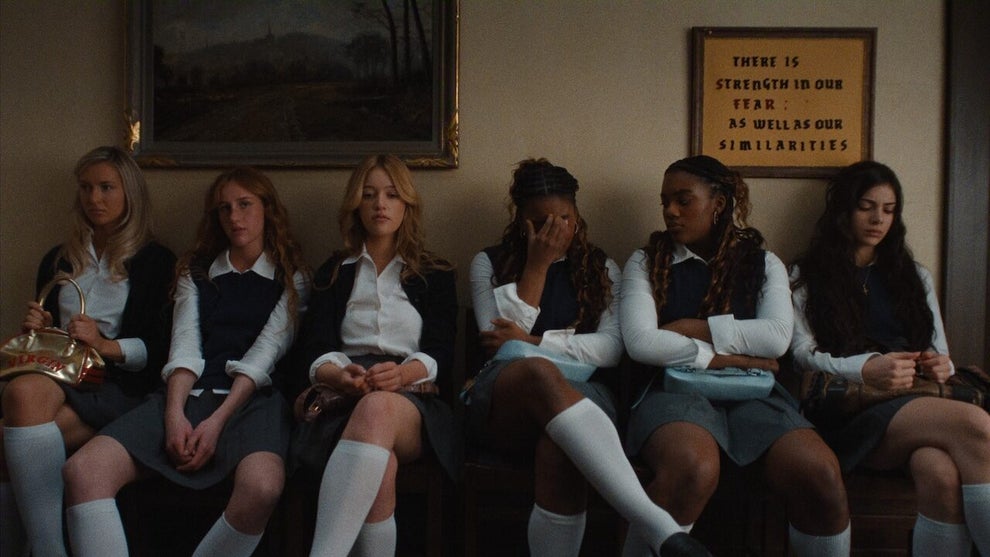
After a dance team initiation for new recruit Grace (Sofia Wylie) goes sideways, leaving her in a coma, members of the team begin having visions of her. One of them, Maddie (Shirley Chen), reveals a prophecy she says came to her in a vision of Grace: The comatose girl will awaken once all the girls confess their sins.
But it isn’t the prophecy that prompts Anya (Kristina Bogic) to come clean. Guilt leads her to confess that she was the one who brought Grace home after the Halloween party. Her boyfriend, Steven (Orlando Norman), had been preparing to take the blame, while Elise (Sara Boustany) pieces together what really happened. And after Anya confesses to Father Franklin (Nnamdi Asomugha), Grace opens her eyes and declares, “I’m God.”
“We always knew we were going to end with ‘I am God,’” creator Quinn Shephard told TheWrap. “It felt like it couldn’t end anywhere else, and that felt like a a very clear encapsulation of that theme because … people are like, ‘Could she hear everything? Did she see something? Has something happened to her? Is she possessed?’”
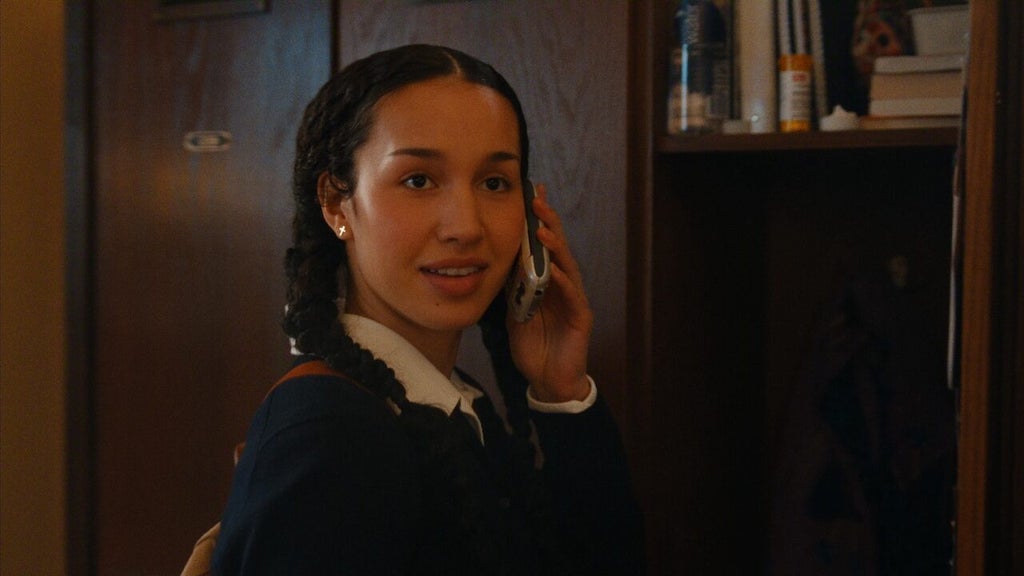
In fact, Shephard revealed the show is “meant to mimic people’s personal relationship with faith and with the supernatural,” explaining that “everything that has a supernatural theory in the show has a grounded scientific explanation.” It’s up to the viewer — and their beliefs — to guide their interpretation of what’s real and what’s not.
“That’s been one of the funnest things about witnessing people watch the show is that you have a split room of like half of the room is being like ‘this character is a f–king devil,’ and the other half of the room is being like ‘no, she’s just a little troubled and wants some friends,’” co-showrunner Gina Gammell said. Shephard added that her favorite test screening saw two guys claiming, “I know a demonic possession when I see one.”
“It was so interesting to watch a room debate out that someone was like, ‘no, she’s for sure demonically possessed,’ and someone else is like, ‘no, guys, this is a mass hysteria story,’” Shephard recalled.
That line will continued to be towed should “The Body” continue for a second season, or more if Shephard and Gammell have their way.
“I think it’s got a few seasons — I don’t know if it’s got like 10 seasons,” Gammell said, with Shephard adding “we’re hopeful of more than two, yes, and more than one, to be honest.” “I think we definitely see ways for the story to carry on — we’ve got a few seasons, I think, arcs mapped out.”
And even though any leverage that Lisbeth (Geena Meszaros) had is gone after Anya’s confession, the creators confirmed “she will make sure she’s not going anywhere.”
“She gets a goal, she’s gonna achieve it — I don’t think Lisbeth is going anywhere,” Shephard said. “I do think we’re coming into a hopeful Season 2 with quite a lot of interesting turns and excitement about how all these character dynamics will play out over the next season.”
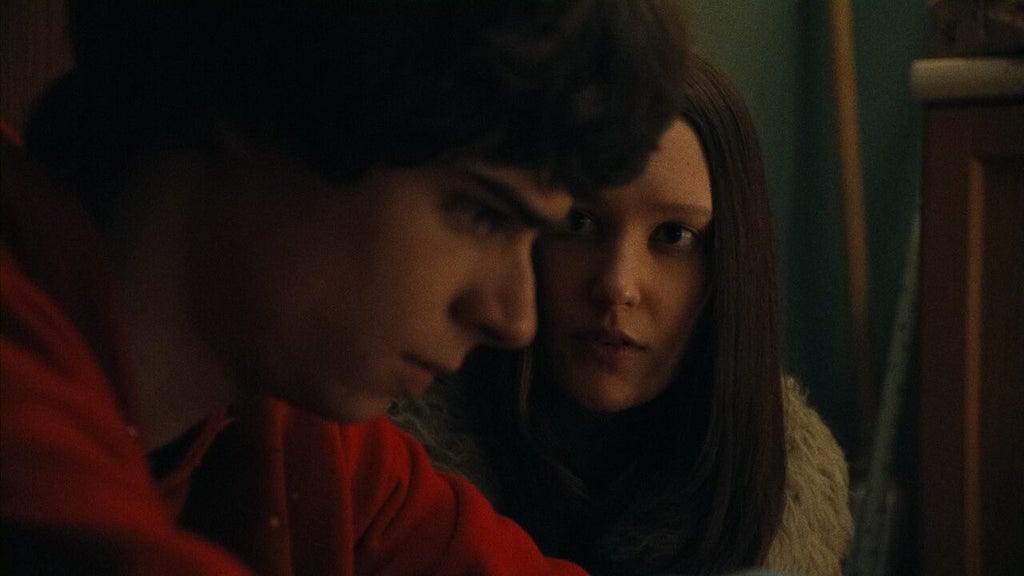
One of those newly explored character dynamics will be between Anya and Elise, whose relationship took a turn when Anya shut down the possibility of anything beyond their casual hookups. Their dynamic shifted again when Elise realized Anya had been withholding her role in what happened to Grace.
“I don’t know that we can share what’s next for them, but I think it was important to me … if we were gonna put a queer relationship in 2004 at the forefront of a show, that we weren’t gonna make it sanitized and we weren’t gonna make it easy, but we also weren’t gonna make it hard in a way that felt super TV,” Shephard said.
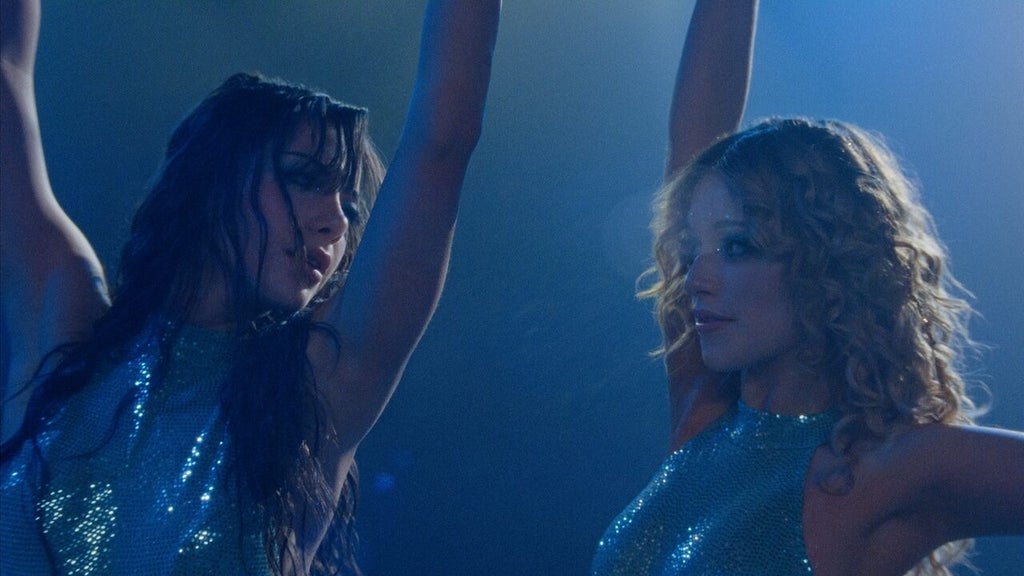
For Anya, accepting her sexuality isn’t necessarily only tied to her religion, with Shephard noting, “she’s almost like more afraid of losing her femininity and her place in the girl hierarchy than she is of like going to hell.”
“We wanted it to be messy and feel real,” Shephard said. “I’m really big on like how can you really expect people to feel seen in shows if we have characters reacting too perfect, especially characters who are supposed to be like representing a community.”
At the same time, Gammell said they were careful not to create “more traumatic lesbian stuff,” noting that being 17 years old and in love with your best friend is “messy regardless of the gender.”
“We try and approach it like it’s almost more through a teenage lens where you don’t really understand the world ahead of you or … what the possibilities are or what’s really what you’re really capable of yet,” Gammell said.
Even beyond Anya and Elise, the creators wanted to weave in a sense that “the girls are gonna be okay,” especially as they explored the darker themes of the show.
“We never wanted the show to feel tragic or bleak about their futures,” Shephard said. “I think we had a little bit of a philosophy of we’re not gonna do girls partying like ‘Oh the tragedy of youth,’ We’re doing girls partying like you should kind of want to join them.”
“The Body” is now streaming on Netflix.
