
Note: This story contains spoilers from “The Pitt” Season 2, Episode 15.
Another shift in The Pitt is done, and Season 2’s finale left plenty to unpack.
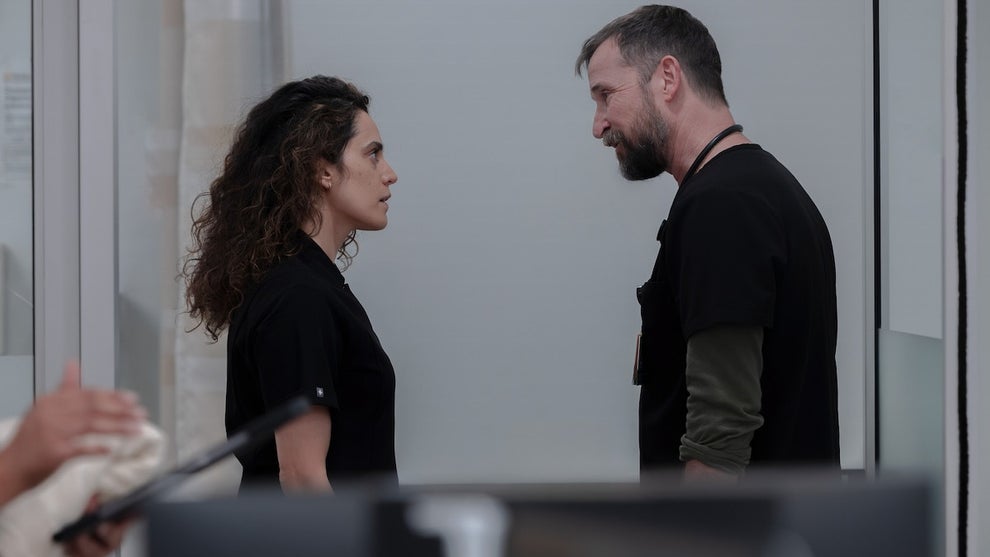
Chief among them is the reveal that Dr. Al-Hashimi (Sepideh Moafi) had suffered a pair of seizures during her shift and hid it from Robby (Noah Wyle) until the final hours of the day and he was set to leave on sabbatical. The news propels the pair into a shouting match that drags throughout the ending as Robby hypocritically questions Al-Hashimi’s ability to do her job while dealing with this.
Showrunner R. Scott Gemmill spoke to TheWrap about their fallout, but also Al-Hashimi’s surprise at Robby’s reaction after the two found a level of respect for the other’s approach to medicine throughout the day. He also went into pulling off some levity with the finale’s post-credit karaoke jam between Mel (Taylor Dearden) and Santos (Isa Briones) and watching fans grow more passionate for stories from The Pitt’s night shift.
Below, read TheWrap’s interview with Gemmill about the Season 2 finale of “The Pitt.”

Does Robby learning about Al-Hashimi’s condition serves as his final straw while he’s wavering on whether or not he should leave for his sabbatical?
Yeah, I think it gives him, if he wants, an excuse not to go, if he’s looking for an excuse not to go, and it feels like part of the day he is looking for an excuse not to go, and multiple excuses. You know, he blames a lot of different things on why he’s still around and Al-Hashimi is one of the big ones He was planning on her taking over his department, and he had his initial concerns just upon learning how she runs things. And then, of course, once he finds out that she’s suffering from these absence seizures, he’s very reluctant to leave.
Where did this final Al-Hashimi storyline come from?
It’s not based on a real doctor or anyone, but it’s based on a real condition. And we wanted to show a doctor who is sort of at the top of her game and then suddenly is forced to face her own sort of affliction that could derail her career and when does she pull the plug on herself?
What kind of conversations did you have about the ethics of Al-Hashimi working as she’s experiencing symptoms of her condition?
It’s the beginning of the season especially, when we spend all our time talking to experts in the fields. And so, for instance with Al-Hashimi, we talked to experts in epilepsy, and especially someone who’s dealt with absence seizures. And then, you know, talking about, what are her options moving forward? What are the new drugs? What are some of the side effects? Are there any definitive actions that she could take moving forward, and how would those affect her career. So a lot goes into creating the storylines that these characters live through.
I spoke with Sepideh at the beginning of the season and for the finale, and one thing we talked about was how fans might view Al-Hashimi as a character through the season and through the finale. She’s pro-AI in some regards, and now it’s revealed that she’s been hiding this condition most of the day. Where do you think fans will end up landing with her after the credits roll?
Hopefully you see her being such a good doctor that you are sympathetic to her. It’s one of those tragedies, because she has all this knowledge and all this skill, and yet now it’s going to be possibly taken away from her. She could probably still teach, but that’s not what she wants to do. She didn’t get into this to become a teacher. She came into it to become a doctor.
We don’t try to tell the audience how to think. So I believe that the audience will fall on one or two sides, whether she should be allowed to continue or not. But the reality is, it’s just not really safe for her unless she has double coverage and doesn’t do critical procedures.
Was Al-Hashimi expecting the reaction she got from Robby when she came clean about experiencing seizures throughout the day?
Well, I don’t think so. I think she was expecting someone much more sympathetic. And I think on another day, another season, Robby would have been, but he was just in a really bad place, and he’s taking out his own insecurities on just about everyone else around him.
Have the growing calls and hype for more from the night shift doctors through the season been a surprise at all?
You never know. That could have been just like handles into seasons, and the fans have really embraced the night shift as a concept and as the characters. And we’re going to see a little more of them, I think, because it’s fun. In terms of a spin-off, that’s…who knows.
So, the post-credit scene. How did that come about and who picked the song?
I knew going in, even before the first word written, that Robby was going to end with the baby, I knew that and that Digby was going to be walking the card out with the dummy and all that stuff. But I just felt I wanted something – I thought it’d be fun to have an Easter egg. It was a very late addition. The script was almost finished before I came up with the karaoke. And those two especially had a really rough day. It felt like they deserved to let their hair down, and I just thought it would be a really fun way to surprise the audience and sort of blast us off into the next season.
I offered Taylor and Isa to pick whatever song and I had that song [You Outta Know by Alanis Morissette] in the script, just because I thought you could harsh that one out pretty wildly. And they stuck with it, and they such a great job. I was really glad we did that, and I was glad they were down for it. It
is a nice sigh of relief after a heavy episode.
“The Pitt” Seasons 1-2 are now streaming on HBO Max.
