

Minutes into Ryan Murphy and Bret Easton Ellis’ “The Shards,” viewers are given a scene-setting monologue from Igby Rigney’s fictionalized version of Ellis.
“It has occurred to me when talking about what happened to us in 1981 that one thing is evident: Kids today have it fucking easy,” Bret says via voiceover as a young woman looks for her missing dog. “Sure, being a teenager is hard now because you have to deal with puberty and sexuality and online bullying. But our generation had it tougher because we had to deal with serial killers.”
Later in the pilot, it’s implied her pet has surely been mutilated by a deranged killer. But teenagers in the 1980s also had to deal with a threat more deadly and terrifying than anything out of a slasher movie: the HIV/AIDS epidemic.
“That’s what I was writing to,” Murphy told TheWrap at the premiere for “The Shards” in New York City. “It’s not so much baked into the book; it’s subtext in the book. Bret and I never really discussed that. I don’t know how he feels about it, but all you can do as a filmmaker is put in your own feelings and life. And, of course, that was the year of [the AIDS epidemic], so I wanted to be true to that.”
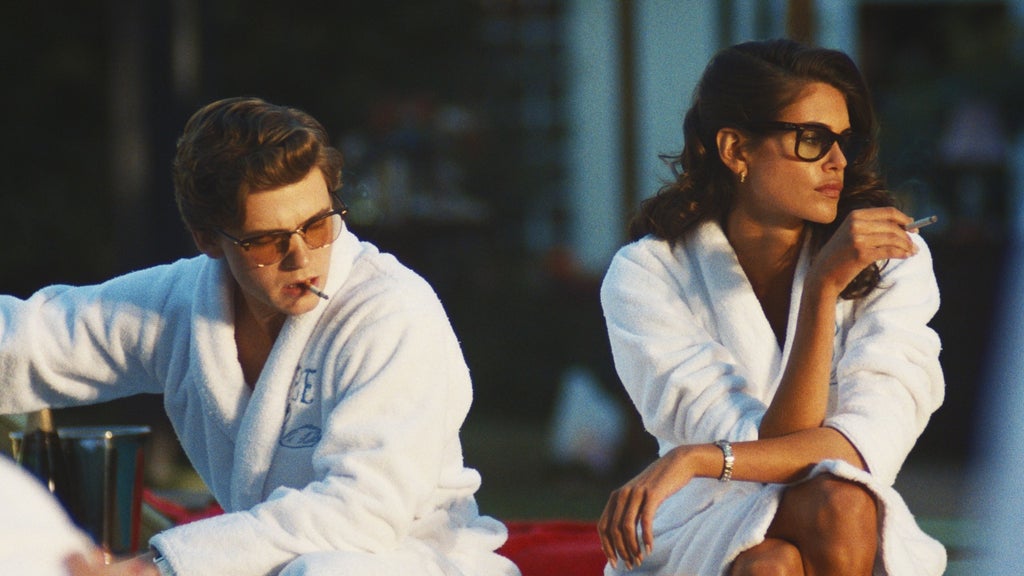
The horrors of the AIDS epidemic is also why Murphy has stayed away from telling a serious teen-centered story set in the 1980s — until now. Though the prolific showrunner, creator and executive producer has a long history of period pieces, few seasons of his many anthology series and shows have taken place during this particular decade. With the exception of Murphy and Brad Falchuk’s ode to the slasher genre, “American Horror Story: 1984,” most of the ’80s-focused stories Murphy has told have revolved around older protagonists, like the characters of the critically-acclaimed and Emmy-winning “Pose” or “American Horror Story: NYC.” These more mature characters are better equipped to process how ghastly this era was, a time when society ostracized and punished the LGBTQ community as that same community was losing loved ones at a sickening pace.
But the characters of “The Shards” don’t have the luxury of maturity. Navigating that reality proved to be unexpectedly difficult for a creator known for spearheading some of the most disturbing deaths ever brought to TV.
“I’ve never really done something about my childhood, which was interesting and fraught and cool. I was like, ‘Oh, that’s interesting. I had my first kiss. I failed my first driver’s license. I went to my first dance,’” Murphy said. “So I got to do all that stuff and revisit it as an adult with three children of my own.”
“I was shocked at how emotional I was. I was shocked. So many times we’d be shooting it, and there would be a song or a moment, and I would get really emotional and leave the set,” he revealed. “I cried. I cried, not just because it was my childhood, but because 1981 — I was 16, and I had my first date in February. Then three months later, in July of that year, the New York Times wrote about a new disease hunting young people called AIDS. I lost a lot of friends who did not get to grow up — knock on wood — like I did, and so I had a lot of gratitude that I survived that period.”

Murphy grew up reading Ellis’ work and always wanted to work with the boundary-pushing author behind “Less Than Zero” and “American Psycho.” But it was the combination of this time period, Ellis’ characters and the subject matter of “The Shards” that made Murphy extra eager to acquire the rights to Ellis’ novel about a closeted 17-year-old prep school teen who believes the charismatic new student in his class may be a serial killer known as The Trawler.
“It was very emotional for me, the early ’80s. Of course, this show was set before people really talked about [the HIV/AIDS epidemic]. But it was always present in my mind. It was always a subtext in the work. I talked to the cast a lot about it. We had many dinners, and they got to hear about my crazy childhood,” Murphy said. “I thought I had dealt with it, and I had not. I had a lot of PTSD. I started seeing a shrink again. Like [making ‘The Shards’] unearthed a lot of joyous and hard feelings, and but it was fun to make at the same time. So it was kind of a mindf–k.”
If the Hollywood legend has his way, it’s a mindf–k that’s going to continue. Though only two episodes of the FX thriller have been released, Murphy and Ellis already have a multi-season plan for the series.
“Bret always had imagined, in success, that the book could be three seasons of television because there’s a lot in there,” Murphy said. “Season 1, it really is the beginning of their innocence. And as we go on — hopefully, knock on wood — in Seasons 2 and 3, we will deal with the specter of AIDS.”
