
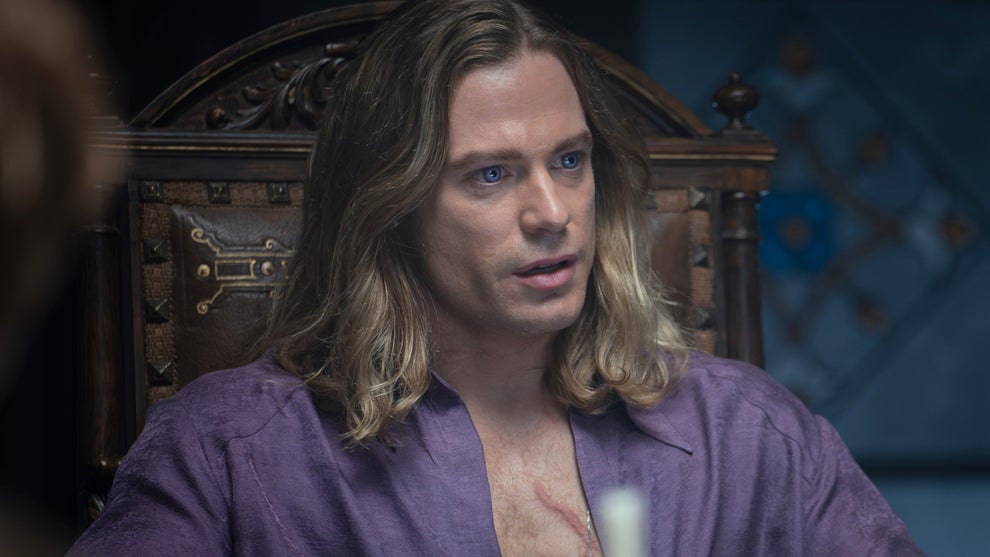
“The Vampire Lestat” has been a beautiful, fractured, frenzied portrait of its title vampire from the word go, and the finale episode, “The Failures,” brought things to a close by taking the audience inside his head. Literally.
Following on the Episode 6 shocker, which saw Armand and Daniel lop off Lestat and Louis’ heads during a bit of tender park bench bonding, Episode 7 followed their decapitated heads to two very different nightmares as a literal ticking clock counted down the minutes they had left before they died for real.
TheWrap spoke with series creator Rolin Jones and several key members of the cast to break down all those “The Vampire Lestat” finale revelations.
Lestat’s Head Trip
Lestat’s journey in “The Failures” turned inward for a surrealist bit of soul-searching that jumbled up all the past and present horrors of his life. While Louis is stuck in a very corporeal hell with Armand (we’ll get to that), Lestat was caught in a dream state, confronting the demons in his head while Daniel Molloy carried it across town in a bowling bag.
It’s an unexpected diversion from what series creator Rolin Jones describes as a “very clear, precise place to end it” in Anne Rice’s book of the same name. But due to practical considerations, they knew from the start that the book-accurate ending would have to wait for a potential Season 4 (AMC has not yet renewed the series at the time of publication).
So they decided to “Just go inside Lestat. Just go after the id, and play an ‘Eternal Sunshine of the Spotless Mind’ version of this thing,” Jones explained.
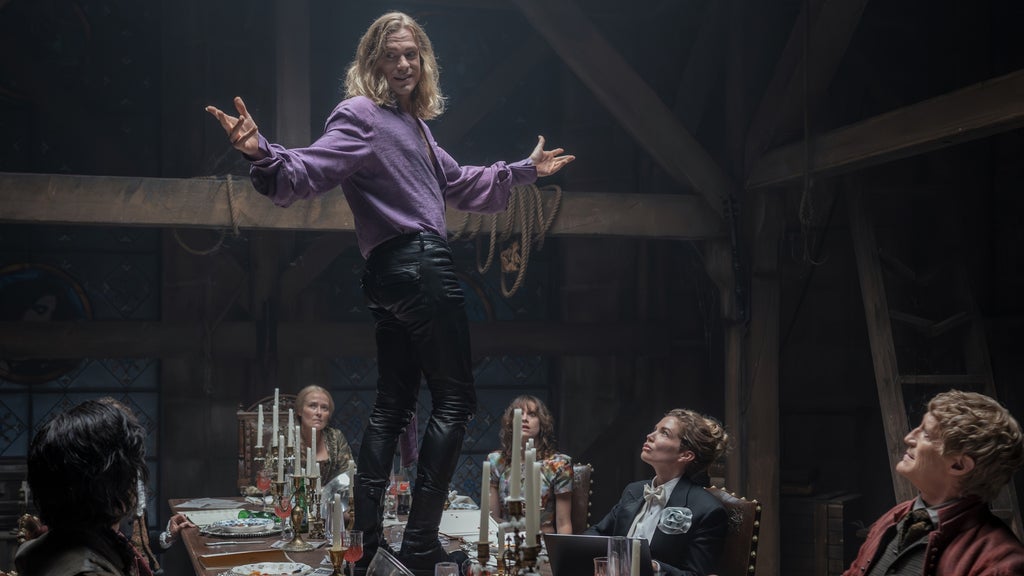
Inside Lestat’s mind, we meet his fledglings at a long table where they make measure of his soul, but as his clock ticks down to its final minutes, Lestat makes his way to a crowd of familiar faces – those he has killed or traumatized. That last detail is important for those who might take the wrong message from Lestat’s unlikely reunion with Paul, Louis’ brother.
Paul died by suicide in the first episode of Season 1, while Lestat was actively seducing Louis to become a vampire, and after a bitter tableside confrontation that saw Lestat briefly antagonize Paul. Ever since, audiences have wondered if Lestat had anything to do with Paul’s death. Anne Rice said no (Lestat and Paul never even met in the book, but readers still wondered), several creatives from the series have echoed that in interviews, and if you’re worried the “Vampire Lestat” finale changes that interpretation, Jones plainly said that was not the intention.
“You’re in a dream. You know, he’s sitting there with a fledgling table, and then there’s Marius. The dreams begin to fragment all over the place,” Jones explained.
“For us, the table and all those people there, and that concert afterward, is just this absolute manifestation of his self-loathing to an extreme level,” he continued. “Paul sort of represented this little kernel of self-love or forgiveness for yourself and your actions, and that unconscious manifested itself not in Louis, but the thing Louis loved the most in this world. I think that was the intent there.”
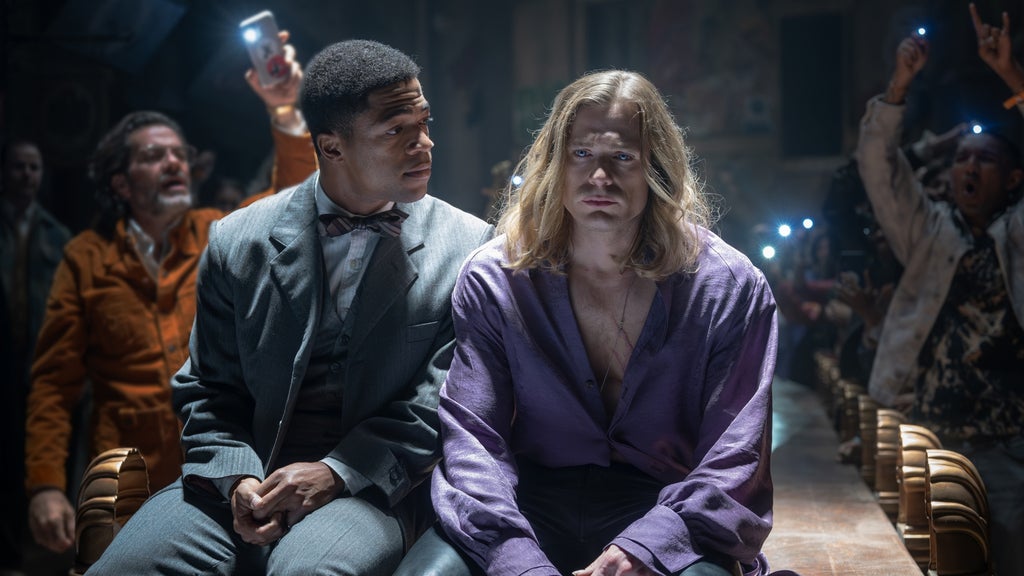
Like everything in “The Vampire Lestat” and “Interview With the Vampire” before it, however, it’s up for interpretation. “My guess is people who hate Lestat the character will seize onto that immediately, and that’s okay. That’s all right,” Jones said. “But that was probably not the intention.”
That reunion also happens in what Lestat thinks are the very final moments of his life, and he spends them thinking about Louis. Something that Jacob Anderson said he loves about the finale.
“A big part of the season is about Lestat feeling unlovable and like a failure. I guess failure is really the theme of the season,” Anderson said. “So I think for Lestat to finally hear that Louis does in fact love him and always has loved him, but was unable to say it, really, that’s all it is. I think that they do show each other that they love each other in different ways, but that he just hadn’t ever said it.”
And according to Anderson, hearing it come from Paul is particularly meaningful because of how his tragic death warped Louis’ relationship with love and his ability to express it.
“Who better to hear that from than Paul? Because I believe that the last time Louis ever said ‘I love you’ to somebody, it was Paul, and the next thing that happens is that Paul jumps off a roof,“ Anderson explained. ”So it’s a pretty scary idea to say that to somebody else you love at the risk of losing them. I think it’s a really beautiful moment.“
Armand and Louis Hash It Out
While Lestat was confronting the nightmares of his past in his mind, Louis was confronting real-world horrors past and present thanks to Armand, their mutual ex, who has been scheming in the background all season. While most viewers thought he was reverting to his role as enforcer of the Five Great Laws (which both Louis and Lestat have been flagrantly breaking), he was actually plotting something much more personal: a confrontation with his ex.
And what a confrontation. With the help of Dr. Fareed, Armand hooks Louis’ head up to some electrodes and reveals he’s been behind the scenes ripping everything apart all season, destroying not only Lestat’s band but Louis’ mind. He was the one who found Regina, aka Fraudia, and set Louis up to connect with her. In the finale, he uses her as a device to get what he wants from Louis, threatening to kill her if Louis doesn’t give him the apology he believes he deserves while the life drains out of Louis by the minute.
It’s probably the series’ most disturbing horror sequence to date
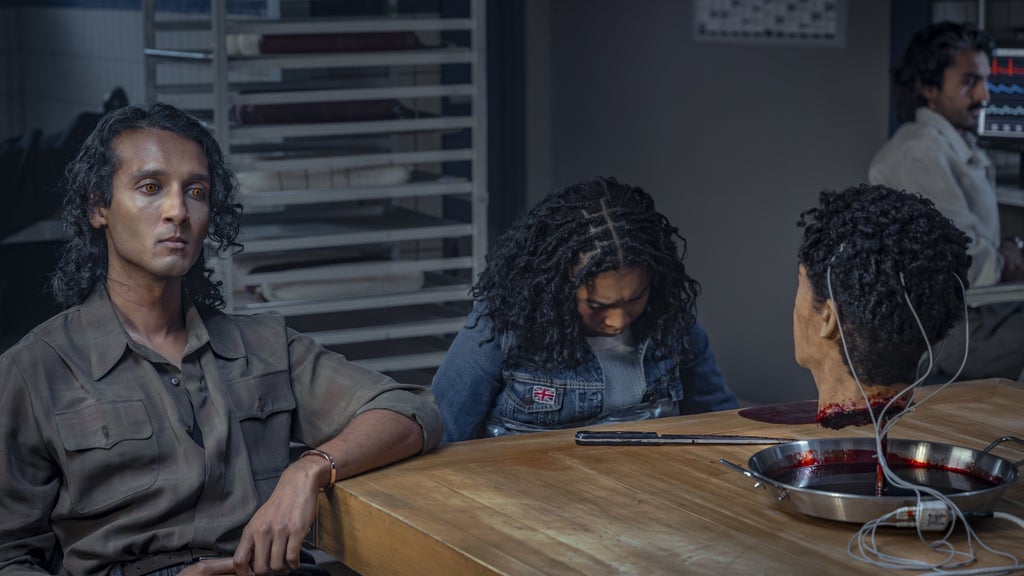
“Occasionally, we’re allowed to be a horror show too,” Jones said, “and I think in this sort of golden age of horror, it’s not enough just to scare and be terrifying and get primal fears, you got to get to someplace emotionally cathartic.”
For Jones, Armand’s journey in “The Vampire Lestat” was built directly from where we left him at the end of “Interview With the Vampire” Season 2, literally tossed aside by his partner of 77 years. We saw where Louis went after that. But what about Armand?
“I think the germ of it all is just to stop and say, you know, the scene in Dubai when he gets thrown into the wall. We follow into the next room, with Malloy and Louis, and then Louis after that. And you’re like, okay, let’s move the camera back here and go, ‘What’s in this guy’s brain?’,” Jones said.
“The idea of this 77-year relationship and the fact that Louis is just going to go play the victim card and say, ‘Oh, you lied to me twice,’ is like, ‘Let me tell you what it was like living with you for 77 years,’” Jones explained. “Starting that kernel and letting that tree grow with him about how Armand will go about getting satisfaction for that.”
For Assad Zaman, it’s about Armand wanting Louis to acknowledge that he also shared fault in their relationship. His context also illuminates the fact that the ways that Louis used Armand were particularly cutting given the character’s heartbreaking history as a sex-trafficked youth.
“What Armand was wanting from Louis, I don’t think he fully knew, but he wanted some sort of acknowledgment of Louis’ role in the relationship, Louis’ role in the breaking down of their love, before even Malloy stepped in to tear it all apart,” Zaman said. “I think he wanted him to acknowledge more succinctly his role in using Armand as a way to get back to Lestat and knowing that Armand was just a body.”
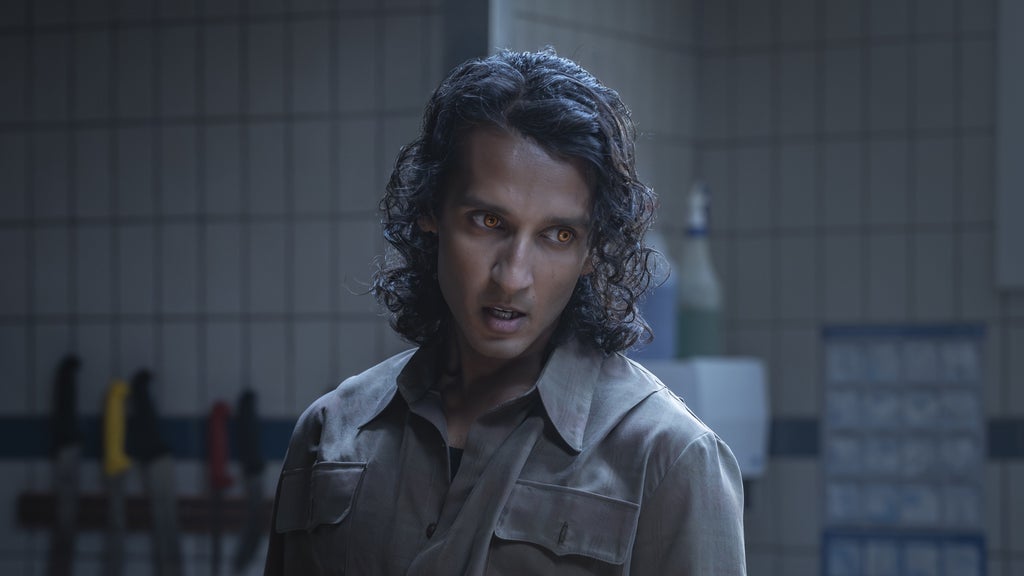
For Anderson, Louis’ confession is real to a certain extent, though being a head on a stick might play a role in how much blame he’s willing to take.
“I think he’s under extreme duress, so there is an element of self-preservation, but I think there is truth in what he says as well,” Anderson explained. “I think he means it when he’s talking about, you know, I could never really go there with you about what happened to you as a child, because it would mean that I’d have to reflect on my own past and things that I saw and did nothing about.
I think Louis’s realizing some honest things as he’s speaking, and he’s dying as well. That’s the other thing. Like he’s dying, so you might as well. I think it gets to a point where like you might as well just say the things that haven’t been said. But then I also, I don’t know that I agree that Louis would be like, it’s my fault that you chopped off my head.“
In the end, it’s Louis’ acknowledgment of that suffering that leads to the most surprising twist of the episode: mercy from Armand.
“He wants that level of acknowledgment from Louis, but what he gets is Louis actually seeing Armand, seeing Arun, and that is something that he wasn’t prepared for,” Zaman explained. “He wasn’t ready for it because no one’s ever acknowledged him in that way. No one’s ever seen and understood what he’s been through like that, and everyone who knows has either dismissed it or belittled it, or made fun of it, or not even acknowledged it.”
Ultimately, it’s Louis’ willingness to shoulder that blame that saves not only his life, but Regina’s.
“Regina was always going to be just collateral damage, but he already sees how much she means to Louis,” Zaman explained. “I think that’s just a mercy thing.”

That said, don’t expect Armand to be suddenly an all-healed hero going forward, Zaman made that clear.
“At the end, he still has his little signature that he gives to him to just to remind everyone that yeah, he’s still a psychopath,” Zaman said. “He’s not fully recovered yet. This isn’t a switch that is, now he’s going to be suddenly a good guy. He is messed up. He’s still going to be messed up. He’s just been seen for the first time, and that’s displaced him a little bit.”
Jones also encourages audiences to give the season a second viewing now that they know it’s been Armand all along.
“What I think is powerful about the reveal for a second viewing, if people have the time to do it, is you will now know that Armand is lurking in just about every scene,” Jones said. “He’s present everywhere. Already in the first scenes when they’re talking about, ‘I saw this girl come up in the subway.’ He’s been there. He is everywhere. He is that wallpaper that’s pulling down and then suffocating you. And he’s there through Alex on the other side too. Armand has been haunting this season the entire time, and it’s rough.”
And that’s not the only reason Jones wants audiences to revisit the episode, he also thinks it’s worth revisiting to take in the score by Daniel Hart, the series composer, who also wrote all of Lestat’s songs this season.
“It’s the best episode of scoring of the three seasons by far. It’s incredible. It’s the most astonishing piece of score that you’ll ever hear,” he said. “Go back and next time just listen to it and hear the every theme that has ever been explored for this, like manipulated and warped and looping in and out. Plus, the witch’s place piece of music is just out of control.“
Akasha (and Devil’s Minion) Awaits
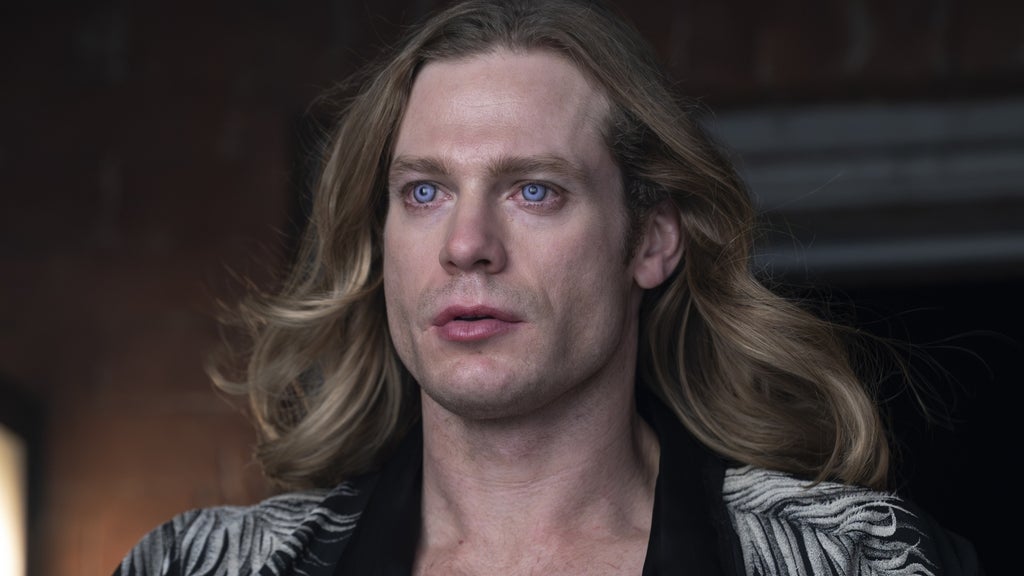
Something Armand did not get up to this season – at least not to the extent some book fans were waiting for – is his unlikely romance with Daniel Malloy, a fan-favorite romance dubbed “Devil’s Minion”. Armand turned the sharp-tongued journalist off-screen between “Interview With the Vampire” Season 2 and “The Vampire Lestat,” and he confessed his love mid-way through the season, but the dynamic between the two has left much to the imagination.
Jones was quick to point out that, if the series is renewed, that’s when they’ll get to tackle “Queen of the Damned” and that’s when Devil’s Minion truly begins.
“In theory, it’s like, hey, we are now at ‘Queen of the Damned,’ which is exactly when the Devil’s Minion starts, and we have met it, but we have now, I think, tabled it to go play with it,” Jones said. “That, and also because of The Failures, and the point of view, there’s just a lot of stuff that happened off screen this year.”
“If you know ‘Queen of the Damned’ really well, and you know how it’s structured, with very strict point of views, you know this is part one of two,” he continued. “You will see a lot of stuff that you were not privileged to see just yet. And so, patience, patience, patience, everybody. Anne sets the map. We are always inspired by that, and we will be going that way too.”

The finale’s final moments are a direct tease for ‘Queen of the Damned,’ which, as Lestat has been foretelling all season long, promises the return of Akasha and the profound world-altering destruction that comes with her. What should audiences make of that final shot?
“You’re looking at what is the visual picture of him saying ‘It was all my fault,’” Jones explained. “You see that this internal thing – he might be overshooting it a little bit, there’s a lot of people to blame coming up – but on the tail end of him finally taking responsibility, the wreckage of him inside here is shown out. Half of drama is ‘Lear.’ There’s a storm inside. There’s a storm outside, right?”
Jones says they also took some inspiration from “Planet of the Apes” for that cliffhanger, which sees Lestat peering out at a leveled city, giving viewers a peek at the cataclysm Akasha’s return unleashes. And according to Jones, you should also look around those ruins for more details.
“We’ve been teasing this great doom and damage this season, and a little bit in the first two, you get a taste of Akasha coming,” he explained. “Go look at that last image. There’s some graffiti on the ground too. Like she’s out there, man. Go look again. There’s stuff out there.”
And viewer beware, or be excited, depending on how you felt about the narrative shakeups between “Interview With the Vampire”and “The Vampire Lestat.”
“You want an aggressive throw, and you want to say it’s going to happen again,” Jones said. “If you didn’t like this season or you cuddled up to it and you loved it desperately, get ready. We’re going to do it again. It’s going to flip.”
At the end of “Interview with the Vampire” Season 2, Jones promised the next season would “feel like Lestat just hijacked the show,” and boy did it! So who’s hijacking the show next time?
“We’re following what Anne did: strict point of view,” Jones said. “Many people will be leading that next season. Everyone will have a shot to tell you what the f— happened.”
