
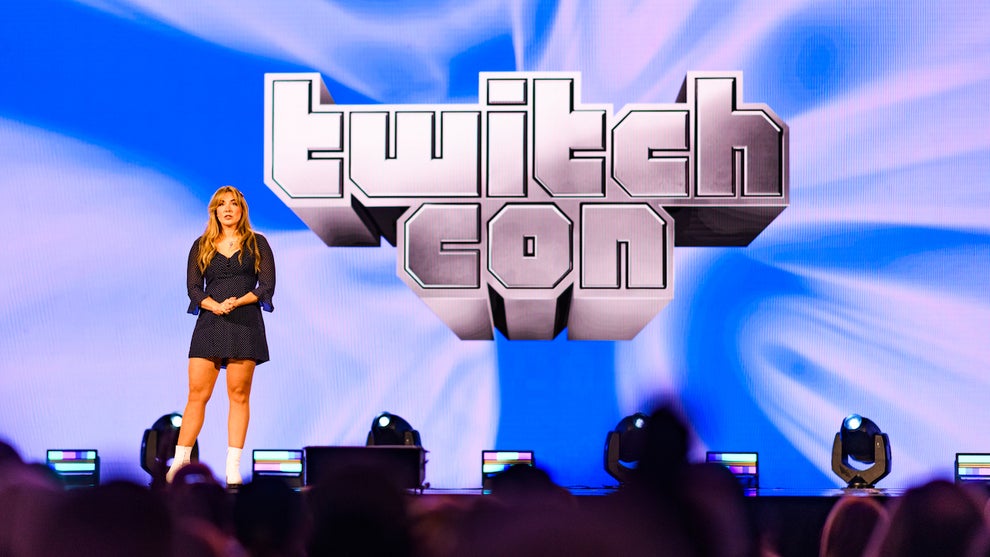
If you looked around the crowd at TwitchCon 2026, you’d see a group of younger-skewing people who clearly had a love for Internet and gaming culture. And according to Chief Marketing Officer Christine Cassis, that’s just an innate aspect of that demographic.
“When I think about Gen Z and younger, they are both more savvy and more skeptical — and I think that’s a good thing. They don’t just like to be broadcast at; I want to show you why you should care, not tell you. That’s very different than the media and the TV that we probably grew up with, certainly the media and TV that my parents grew up with. It’s not enough to just get your nightly news from one source,” she told TheWrap. “As early users of the Internet and social media users of this generation, Millennials started to recognize, Oh, I read something and now I’m going to go back to four other places. The younger generations now not only want to read multiple sources or hear multiple sources, but they want other POVs and then they want to discuss it and be in dialogue with each other.”
“One, that is impressive; and two, I think it’s dictating a lot of the ways that we engage in consumed media ourselves. It lends itself well to this idea of fandoms and lore. You get to be in dialogue with people and be able to nerd out with them, or sometimes debate them or question things. Just to have the chat popping off in this way is where people really connect about topics that are of interest to them,” Cassis continued. “It’s native to them in a way that Millennials sort of bridge that gap and understand it, but it’s not always native to us because we do absolutely consume media in a different way. It’s almost like media literacy online is changing in large part because people want to be in dialogue with versus broadcast at.”
Naturally, it’s impossible to examine Twitch’s cultural impact without comparing it to other tech companies, streaming services and social media platforms that are also making names for themselves in Hollywood alongside the legacy studios.

“Hollywood is waking up in an interesting way to the creator economy, which sounds insane to say because we’ve been talking about it as people that are Internet users and consumers of Internet for at least a decade, if not two. But if you go to a traditional Hollywood film premiere, there are creators that are either playing a role on the red carpet or sometimes even in the film and that IP itself,” Cassis said. “An audience member or a viewer coming to Twitch, they’re there to camp and hang out with each other and with their favorite creator and streamer. I think Hollywood is realizing that the participation is what they want.”
“A really clear example of this is every major film studio now isn’t just doing the linear progression of storytelling series; they’re doing these overlapped cinematic universe moments — and that is endemic to our culture,” she added. “That is what Twitch users have always experienced.”
TwitchCon 2026 was held at the San Diego Convention Center this past weekend, bringing together thousands of streamers and other users across their many varied genres and interests.
“So much of what Twitch is is what these streamers and their communities and their fans make of it,” Cassis explained. “So when we are thinking about designing things for your core gamers when you walk the show floor, you can see all of these different opportunities come to life for how you can interact with products or games or your favorite IP. Or if you’re more here for IRL streaming, we have Artist Alley and a picnic area really inspired by things that folks saw the IRL streamers doing last year, just kind of hanging out. We really take into account what people are doing here, how they interact with the space, each other, and then designing for even better experiences every single time we come together.”
“There’s competition all of the time for people’s attention. All of us, when we open our phone or sit at a laptop or computer, any type of screen, everything’s competing for our attention. I think the event is different, though,” she further noted. “I don’t know that a lot of other services or platforms have communities that feel like they’re coming together and meeting their friends IRL in the same way that you hear about at a place like TwitchCon. This feels really unique.”
Plus, it’s that 24/7 live aspect to Twitch that translates so naturally to an event of TwitchCon’s scale.
“If it’s a small, intimate creator dinner or something like a 20,000-person con like ours, we as humans right now are craving this level of connection. That’s probably a little bit in a post-pandemic era — all isolated with our feeds at home — but I think a convention like this is really special because it’s that moment where people can actually come and talk to the people that they talk to all year long in a totally different way,” Cassis concluded. “We have technology that supports that all the time, but it is really important to make sure that we also maybe log off that technology for one weekend and come together and realize what makes it special. Reconnect in a totally different way that sustains us for the rest of the year.”
