
Twitch has been a pioneer in livestreaming for 15 years. CEO Dan Clancy said the platform has maintained relevance by encouraging audiences to “pull up a chair and stay for a while.”
The live streaming platform has launched the careers of streamers Kai Cenat, the most-subscribed Twitch streamer in the world, and IShowSpeed, who performed at the World Cup earlier this summer. It started as a hub for gamers to build communities but has since expanded to music, lifestyle, sports and politics commentators.
But, as Clancy told TheWrap’s Office With a View, Twitch isn’t just about video; it’s a community. While short-form platforms excel at discovery, creators can build more enduring businesses when audiences stick around instead of endlessly scrolling.
“There’s a phrase, ‘Content is king,’” Clancy told TheWrap. “But it’s the creator that’s the king, not the content, ultimately, because we, as human beings, want human connection.”
That philosophy has shaped Twitch’s creator-first monetization strategy, where more than two-thirds of creator earnings come directly from fans through subscriptions, gift subscriptions and other community-driven support rather than patronage and brand partnerships.
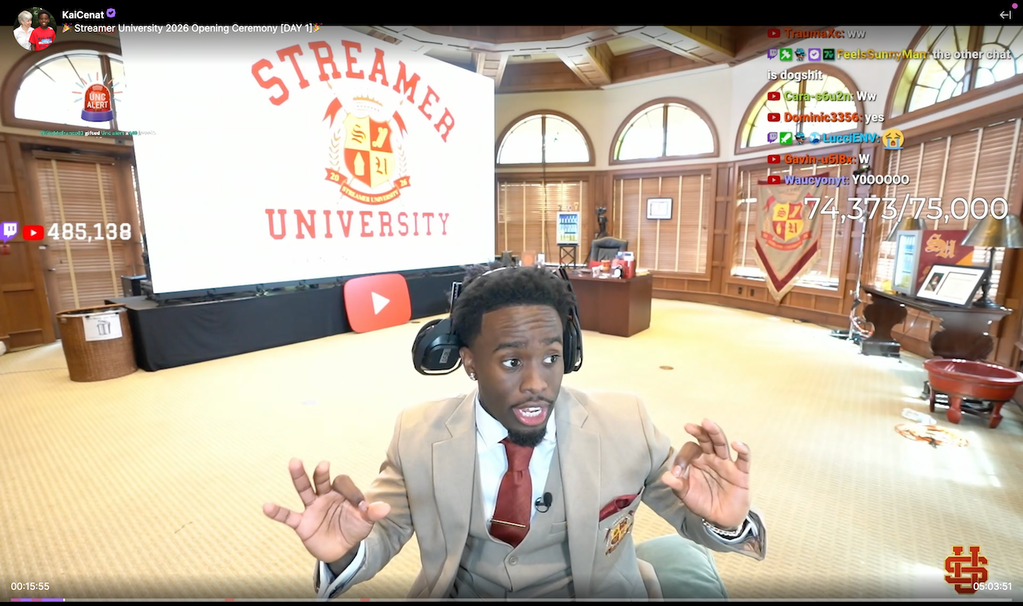
Just last week Cenat hosted the second-annual Streamer University in Arkansas, educating the next generation of creators. His educational streams became one of Twitch’s biggest cultural moments of the year, underscoring the growing power of live as both entertainment and a creator business.
In an interview, Clancy discussed why musicians like Justin Bieber and Ty Dolla $ign are embracing livestreaming, how Twitch is partnering with the NBA and Prime Video, and why he believes creators who rely solely on algorithmic platforms are ultimately “renting space.”

Other apps have tried to make live part of their platform, but that is core to Twitch. Why does live work here?
Live streaming on Twitch is different. The reason it’s different is because the site is designed so you pull up a chair and you stay for a while on the same thing.
On TikTok, if you’re watching live streaming, you’ve been programmed to swipe whenever you get a little, so you’re always swiping, but watching someone for five minutes doesn’t connect you with anyone else in the audience. Even on YouTube, you’re programmed to look to the bottom right if you get a little bored.
On Twitch, we don’t have something to distract you. What happens is people end up staying — average watch time on a live stream on Twitch is 73 minutes. On TikTok, it’s less than 73 seconds.
When you spend time that creates both a deeper connection between you and the creator, and you start recognizing other viewers. You start interacting horizontally with other viewers. It’s not just a bunch of people individually watching you.
If you look at all the streamers that YouTube recruited away at one point, they all came back [to Twitch] after they stopped getting paid the big contract, and every single one of them said this because they missed the community, because it’s not the same, because there’s something special about knowing who those people are and being heard.
How do creators monetize on the platform?
On Twitch, over two thirds of the money come directly from your fans.
A subscription is not for access to content, it’s a patronage. Suppose I subscribe to you, give you six bucks a month. If I want to give you 50 bucks, what I do is I buy 10 gift subs, which I’m gifting subscriptions to 10 people.
The money goes to you [the creator], but they each get a subscription. It’s kind of like you’re watching a street musician, and I give you some money and everyone in the crowd gets a little something. Everyone in the crowd applauds.
We make more money from gift subscriptions than we do from subscriptions, and creators do, too, and so this taps even more of that kind of giving.
The fandom is feeding each other.
Because you get status in the community.
Twitch can also be upstream of your YouTube or TikTok or Instagram. In other words, frequently creators do their stream, and then they create clips from it, or they create YouTube videos from it, so you still make money from your YouTube video or your sponsorship on clips. You’re making money directly from the platform.
If you take something like TikTok, usually it’s all just brand sponsorships, and so it gives you a steady income, too. It takes a while to build a community on Twitch, but once you build it, they’re very loyal.

What are the biggest trends in streaming for 2026?
What you’re seeing is this trend of creators of all types discovering streaming as another medium to engage their fans. In the past the people on Twitch were predominantly people that were first and foremost streamers, and now more and more you see creators of all types thinking, “Oh, I should stream, too.”
Whether it’s in music — Ty Dolla $ign, Justin Bieber, Kid Cudi — the list goes on and on of musicians, and when I talk to musicians, not just the ones that are doing it, so many more that are thinking, like, “Oh, I need to do it.”
Is it connecting with fans, or do you think it’s the live experience of it all? Why are musicians flocking to it?
Music at its root was a communal experience. If you go back before recorded music,whether it is a pub in Ireland, or a tribal fire in Africa, music was this communal experience. Then, in the 1900s it became a recorded artifact.
People yearn for this communal experience … It’s not just about every now and then when you go on the road, and it’s not just about playing your music, it’s about creating a communal experience and engaging with your fans.
People care about the person creating the music. They care about the artists. Twitch is really just the same thing. It’s the creator, and then the audience is watching as a community, and it’s about creating a communal experience centered around the creator.
Your platform has so many different creators. There’s political creators, there’s sports creators, music, gaming. Can you talk about why you think the diversity is able to foster on Twitch?
Twitch, of course, got big in gaming, but that need for connection and belonging isn’t just the need that gamers have, it’s a need that we all have.
The reality is it took a little while for it to diversify, but it really works. Last year the winner of the Newcomer of the Year Awards was a 50-something Black woman who creates puzzles on stream.
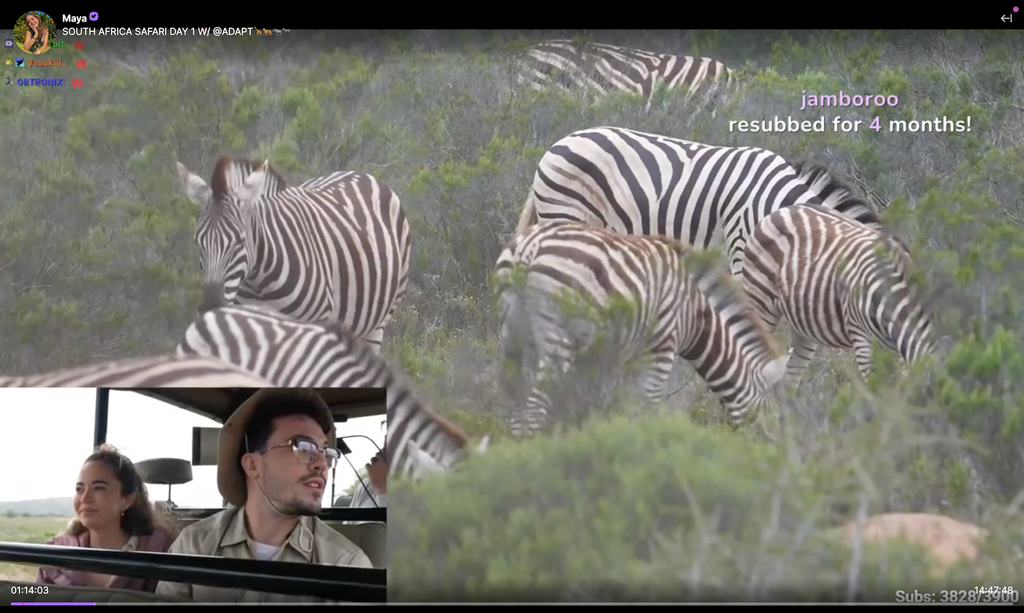
There are people that paint birds on stream. Maya Higa runs an animal sanctuary. There’s a streamer paleontologist that goes on dinosaur digs. PizzaPrincessG runs her pizza shop at any given time. There will be 1,000 people watching her, and she’s like a Disney princess, but she runs a pizza shop, so kind of anything you think of you can stream.
People are streaming, while they’re doing other things. It then becomes an extra stream of revenue that’s coming in?
On one hand, short form content is great for discovery because you can create a 30-second thing and someone finds you and you can virally explode, but things that grow virally can disappear virally. If somebody on TikTok stopped creating stuff for a week, you wouldn’t notice it, literally wouldn’t. Your connection is with the platform, and you find the creators entertaining, but they’re renting space.
YouTube is a little bit better because you can subscribe to YouTube, it’ll appear in your feed, but it’s still where the algorithm really dictates much of what you watch.
Twitch, our algorithm dictates very little of what you watch, it’s primarily the folks you follow and then what you choose to watch.
If you take someone like IShowSpeed or Kai Cenat, the kind of fandom they have is really almost at the Taylor Swift level. What do I say to a creator? If you’re thinking about a long-term career, ultimately take advantage of short-form content for discovery, but then translate it to emotional connection with live.
Which categories are you seeing growing the most?
IRL [in real life] we’ve seen a lot of growth in chatting, which is a variant, where I’m just spending time with my community. “Get Ready With Me” (a popular casual interactive chat session) is starting to become popular, but that’s just another form of me hanging out with my community.
When we have musicians coming, they’re not playing their music, they’re doing IRL, they’re hanging out with the community. [NBA star] Jaylen Brown streams. He streams him talking with his community, not him playing basketball.
Because the algorithm does not distract you from the stream, how does discoverability work on the platform?
The way you get discovered on Twitch is by collaborating with other streamers, so on Twitch, there’s this really deep community across streamers that is much stronger than YouTube or TikTok. The streamers are bonded together much more, because often they are co-creating together.
What do your partnerships with gaming platforms look like?
We work closely with them. There’s no exchange of money. But they love working closely with Twitch. If you’re a gaming platform and you’re going to launch your new game, you have a Twitch strategy.
Outside of gaming, are there any other professional partnerships?
We have great relationships with the music labels. The NFL Players Association does this thing called Streamer Bowl at the Super Bowl, where we get eight NFL players. I met with the NBA the other day, because they want to get streamers coming to the summer league. We have a partnership through Prime [Video], where we have creators doing kind of watch-alongs of the NBA games on Prime.
You also have traditional media companies. When you think of Prime Video, but also Netflix, and Disney, Paramount, they use Twitch when they’re launching new movies and new TV series. For “The Boys,” they put Season 3 on Twitch when Season 4 was coming out to get people watching it with their communities in anticipation of Season 4.
This interview has been edited for length and clarity.
