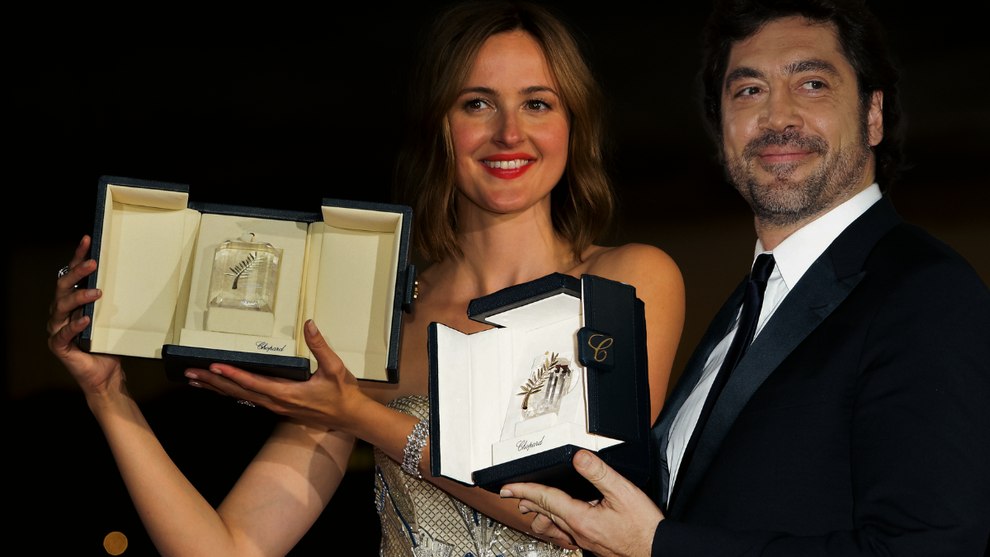
Quick — what do Christoph Waltz, Javier Bardem and Mads Mikkelsen have in common?
Two answers, for those keeping score: All three have faced off against 007 on screen, and each has won Cannes’ Best Actor prize.
That overlap hardly seems trivial — not least because that small club, which also includes Jonathan Pryce and Benicio del Toro if you’re counting Bond-villain henchmen, could conceivably add a new member this year.
As of press time, rumors still swirled around the next Bond baddie, with fellow Cannes winners Wagner Moura and Jean Dujardin reportedly in the mix, alongside “The Zone of Interest” star Christian Friedel, whose film had to settle for a measly Grand Prix in 2023. And thanks to the Ira Sachs musical drama “The Man I Love,” one of two American titles in competition, star and outgoing Bond heavy Rami Malek stands a chance at earning that rare double crown.
This year’s festival is conspicuously light on U.S. films, and entirely missing the kind of studio footprint that brought blockbusters like “Mission: Impossible — The Final Reckoning,” “Furiosa: A Mad Max Saga,” “Indiana Jones and the Dial of Destiny” and “Top Gun: Maverick” to the south of France in recent years. But while the American presence may seem muted, it’s far from absent. And if this summer’s crop of blockbusters will mostly appear as banners along the Croisette, next year’s are being cast from inside the Palais.

Cannes has always been a catapult for a class of European star whose route to Hollywood runs through the Riviera. The specifics may vary, but for years the pattern held: International performers broke out at home, hit it big in Cannes, then leveraged that buzz in California, shaping the next generation of continental character actors with a certain debonair edge.
To see that trajectory at high speed, look no further than live-wire French actor Mathieu Amalric. In May 2007, the nervy star rode “The Diving Bell and the Butterfly” to a Cannes Grand Prix; less than four months later, he was on the set of “Quantum of Solace.”
That year, Cristian Mungiu’s “4 Months, 3 Weeks and 2 Days” won the Palme d’Or; 19 years later, the Romanian director returns to competition with “Fjord,” a film emblematic of a new paradigm in which the road between Cannes and Hollywood isn’t just a one-way street or a springboard toward lucrative opportunities.
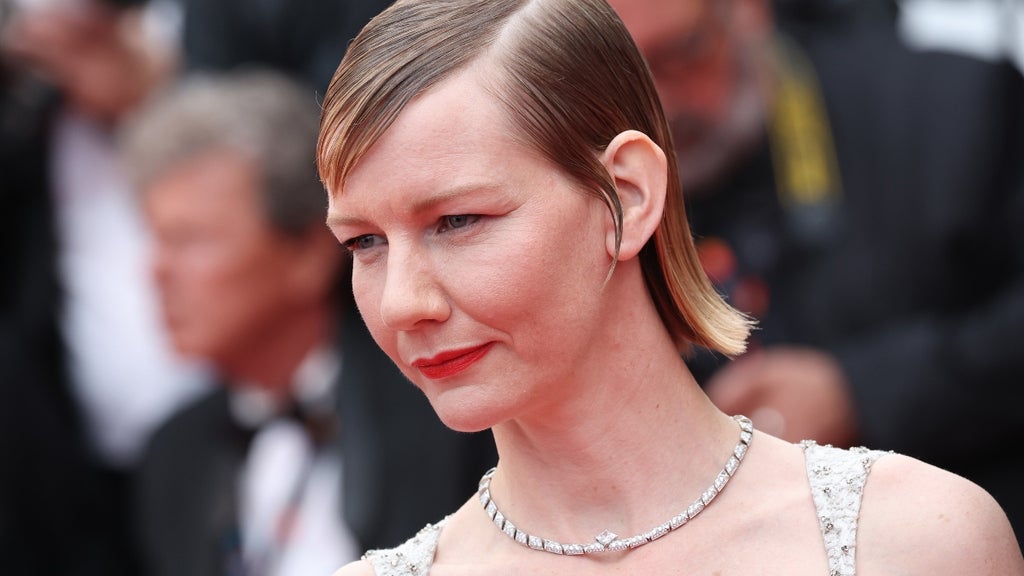
Just ask “Fjord” star Renate Reinsve, who followed her 2021 Cannes Best Actress win for “The Worst Person in the World” with an Oscar nomination for last year’s Grand Prix winner, “Sentimental Value” — all without leaving her native Norway. Meanwhile, her “Fjord” co-star Sebastian Stan has inverted the traditional route, moving from blockbuster mainstay into the European auteur circuit and rebooting his awards prospects along the way.
An ever more international AMPAS body, combined with an industry that now needs imported mid-budget adult dramas, has dealt Cannes a winning hand and helped the venerable festival affect the awards race on its own terms. Whether or not Wagner Moura bares his fangs for Bond — and his financial team surely hopes he does — is almost immaterial: In many key respects, the Brazilian star has already won.
Meanwhile, the increasing overlap between Cannes and AMPAS means that the leads of Paweł Pawlikowski’s “Fatherland” (Sandra Hüller) and Rodrigo Sorogoyen’s “The Beloved” (Bardem, again) are playing with house money. Should either film break out, Hüller and Bardem will instantly segue into the awards race.

From this early vantage point, the lack of any clear Palme d’Or favorite and the festival’s unrivaled gravitas as an awards-circuit incubator lend this year’s selection an air of thrilling uncertainty. Anything could break through, with even the reliable bellwether Neon, which has won an astonishing six consecutive Palmes, hedging its bets by entering the race with six titles already acquired in the Main Competition alone, and three more elsewhere in the program. History suggests that the company also has the budget and the will to pick up other movies that may pop once the festival begins.
Éminences grises like Pedro Almodóvar and Andrey Zvyagintsev could easily find favor with a jury led by former film critic Park Chan-wook, while the “Oldboy” director might just as readily elevate more outré offerings like Léa Mysius’ horror-tinged “The Birthday Party” and Arthur Harari’s Kafkaesque gender bender “The Unknown.”
To go by early word from CinemaCon — and the perhaps unfair assumption that a South Korean auteur could be inclined to honor his own country’s cinema with only its second-ever Palme d’Or — much speculation now turns to Na Hong-jin’s alien-invasion epic, “Hope.” But don’t ask me; just look to Kalshi, where at press time the film sat comfortably in fourth position, behind Pawlikowski, Mungiu and Ryusuke Hamaguchi (for “All of a Sudden”).
Still, those looking for the surest returns would do better to ignore the odds boards and bail on the horse race. The Bond franchise knows it well: Cannes does best when betting on futures.
This story first ran in the Cannes issue of TheWrap’s awards magazine. More from that issue coming soon.
