
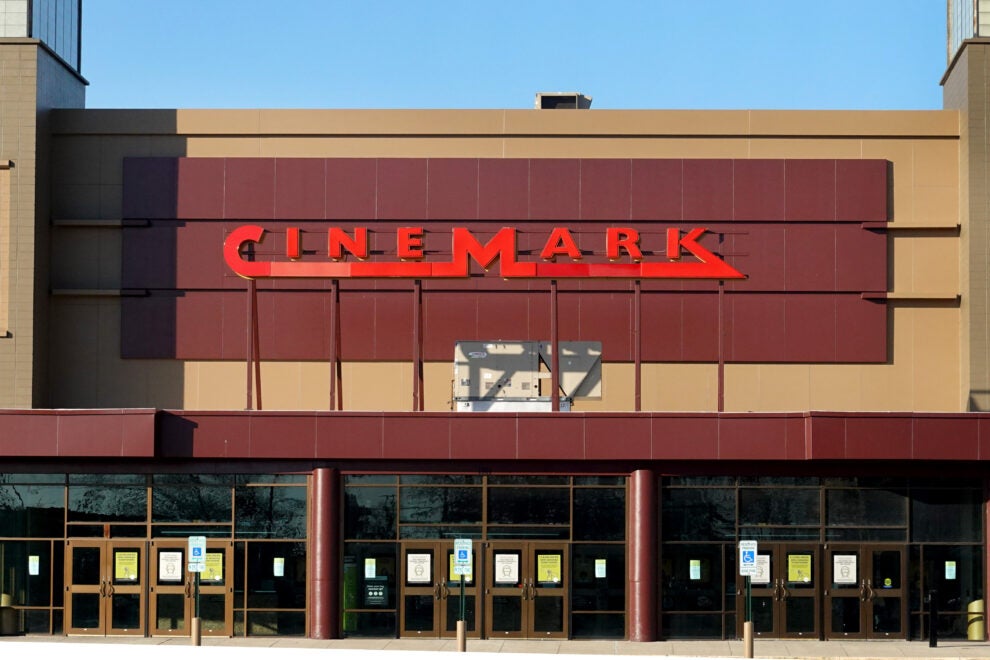
In a major shift, movie theater trade organization Cinema United has sent a letter to California Attorney General Rob Bonta and Paramount Skydance leadership urging a settlement of the states’ lawsuit seeking to block the studio’s acquisition of Warner Bros. Discovery after Cinemark joined AMC and Regal in publicly supporting the merger.
On Tuesday, Cinemark released a letter that echoed the sentiments made by Regal CEO Eduardo Acuna, noting the revived momentum at the box office that has provided a resurgence for exhibitors worldwide and noting Paramount’s willingness to put its pledge to release 30 films annually with 90-day theatrical windows into writing.
“We collectively benefit most when all stakeholders work together in pursuit of shared industry objectives, including creating and releasing compelling films, attracting audiences to theaters and fostering long-term growth,” Cinemark said. “To that end, we join those who have recently called for an expedited resolution of the proposed Paramount Skydance and Warner Bros. Discovery merger as prolonged uncertainty runs the risk of diverting time and resources away from achieving these priorities.”

Shortly after the Cinemark statement was released, Cinema United released a letter signed by President/CEO Michael O’Leary and the organization’s board, which includes the CEOs of Regal, Cinemark, Cineplex, B&B, Santikos Entertainment and Marcus Theatres, among others.
In the letter, Cinema United urged Bonta and Paramount to reach a settlement that would include a consent decree that would ensure no increases in rental terms against theaters, long-term commitments to wide theatrical releases, continued access to the film catalogues of both Paramount and Warner Bros., and continued access to new releases that is not “conditioned on requirements that impede theatre owners from making business decisions that are responsive to their communities’ preferences and the broader marketplace realities that many theatre owners face today.”
“Our industry is familiar with the impact of legacy studio consolidation on moviegoers and exhibition, and those facts are well documented. As a result, all relevant parties understand the enduring value of the theatrical experience not only to our culture, but to the overall economy and the financial success of films themselves,” the letter reads. “At the same time, we have remained open to tangible and enforceable guardrails that can offer our industry some measure of certainty in the face of an evolving and otherwise challenging future.”
Cinema United has repeatedly and publicly expressed its concerns that continued studio consolidation will dramatically reduce the number of films that are available for theaters to screen.

But beneath that firm opposition, the organization has expressed a willingness to negotiate with Paramount, though sources told TheWrap that the last round of talks between the two sides in June fell through because of disagreements over how long Paramount should commit to its 30-films-per-year promise. Paramount has offered to put the pledge in writing for three years, but Cinema United sought longer.
Cinema United’s letter supporting a settlement with specific conditions is similar to one sent by the Directors Guild of America and IATSE last week, which also expressed its concern over the negative effects that could impact the entertainment industry if the AGs lawsuit is carried out to its March 2027 trial date.
But the conditions that the DGA and IATSE requested are unlikely to be considered by Paramount, as they include the requirement that Paramount keep Warner Bros.’ production, marketing and distribution divisions separate from its own rather than merge them together for the sake of efficiency to reduce debt.

Last week, Bonta maintained his opposition to the consent decrees that Paramount has discussed with Cinema United, calling them “behavioral remedies” that he feels would not be adequate enough to mitigate the negative effects that he and his fellow AGs argue the merger would have on theatrical film distribution. At a Politico event in Sacramento, he called the 30-film pledge an “old, stale promise.”
“It doesn’t really vibe, in my humble opinion, with what the market will dictate and what history has shown,” the AG said. “Keeping certain corporate entities separate … in the markets that we have challenged in our complaint. That’s what we’re interested in.”
Earlier this month, Matt Stoller of the American Economic Liberties Project, one of the organizations that is part of the Block the Merger coalition, argued that consent decrees are not enforceable and that past agreements made to settle legal challenges to mergers have fallen apart once the merger has been completed.
One of the examples Stoller listed was the 2010 merger between Ticketmaster and Live Nation in which Ticketmaster agreed as part of negotiations with federal antitrust officials to not retaliate against venues that did not work with them, a promise it was later accused of reneging on without punishment.
“There is very little value to negotiated consent decrees. They are managed by enforcers, who have little power once a merger has gone through. If enforcers find a violation, they must convince a judge to act, which is rare,” Stoller wrote.
“While litigation is not guaranteed to result in a decision blocking a proposed transaction, there is no better way to expose problems with a deal than putting executives on a stand, in public, and having well-prepared antitrust counsel cross-examine them under oath on their promises,” he added.
The letter from Cinema United can be read in full below:
Dear Attorney General Bonta and Mr. Ellison,
We are writing to you in our capacity as the leadership of Cinema United, the world’s largest trade organization representing the global theatrical exhibition business. We write to encourage you both to meet in the immediate future and discuss all possible avenues for resolving the state of California’s pending challenge to Paramount’s proposed acquisition of Warner Bros. Discovery.
Theatrical exhibition is a Main Street industry. A night at the cinema not only benefits the movie studios and theatre owners, but it also benefits nearby restaurants, coffee shops, bars and shopping frequented by moviegoers. From family-owned independent theatres to vibrant mid-size circuits to the world’s largest theatre chains, Cinema United members are cultural and economic drivers in communities across this great nation.
Our members have been partnering with Paramount and Warner Bros. for over a century to provide movie fans of all ages with the unparalleled experience of a movie on the big screen. We look forward to strengthening and growing that proud tradition for generations to come. Movie theatres are also undeniably a part of the fabric of this nation. In just the twelve states represented in the litigation we have 196 members doing business. The majority of those are independent or family-owned theatres: 130 operate fewer than ten screens; 90, with less than five screens; and 30 of those members operate single-screen theatres.
Our industry is familiar with the impact of legacy studio consolidation on moviegoers and exhibition, and those facts are well documented. As a result, all relevant parties understand the enduring value of the theatrical experience not only to our culture, but to the overall economy and the financial success of films themselves. At the same time, we have remained open to tangible and enforceable guardrails that can offer our industry some measure of certainty in the face of an evolving and otherwise challenging future. That is why we have engaged, in good faith, with both the coalition of State Attorneys General and Paramount.
As you both know, we believe any resolution of the current situation must ensure four core elements, which are essential to the long-term strength of the entertainment industry:
- A long-term commitment to maintain or expand wide-release theatrical movie production that is supported by a meaningful period of theatrical exclusivity, fully marketed, and promoted in theatres of all sizes.
- Provisions ensuring that the merger will not cause an increase in rental terms, so that theatre owners, and in turn, moviegoers, do not bear the brunt of the cost of this transaction, particularly independent theatres across the United States.
- Enforceable safeguards to ensure broad access to films for moviegoers and theatres of all sizes that is not conditioned on requirements that impede theatre owners from making business decisions that are responsive to their communities’ preferences and the broader marketplace realities that many theatre owners face today.
- And finally, continued access, under reasonable conditions and precedents, to the valuable and vast film catalogues of both Paramount and Warner Bros.
Today, our industry has the wind at its back. Studio partners are creating and distributing extraordinary films. Audiences across generations are responding with enthusiasm. Theatre owners are continuing to reinvest in their cinemas and build remarkable experiences for moviegoers. Movies are once again at the center of our shared culture. But none of that can be taken for granted. Global exhibition believes in a bold future for this industry, but reaching our full potential requires working together.
For many in our industry, the current environment is marked by disruption and uncertainty. That is why we believe that it is incumbent upon both of you to meet in good faith to discuss a resolution that would provide robust protections and serve the entire industry. In fact, it is the next logical step. Our goal remains a resolution that puts this industry on a positive path to continued success, not just in the near-term, but for generations to come. As has been the case since the outset, we stand ready to assist in any way we can. However, we urge you both to take the steps necessary to explore a meaningful resolution of the current situation as soon as possible.
