
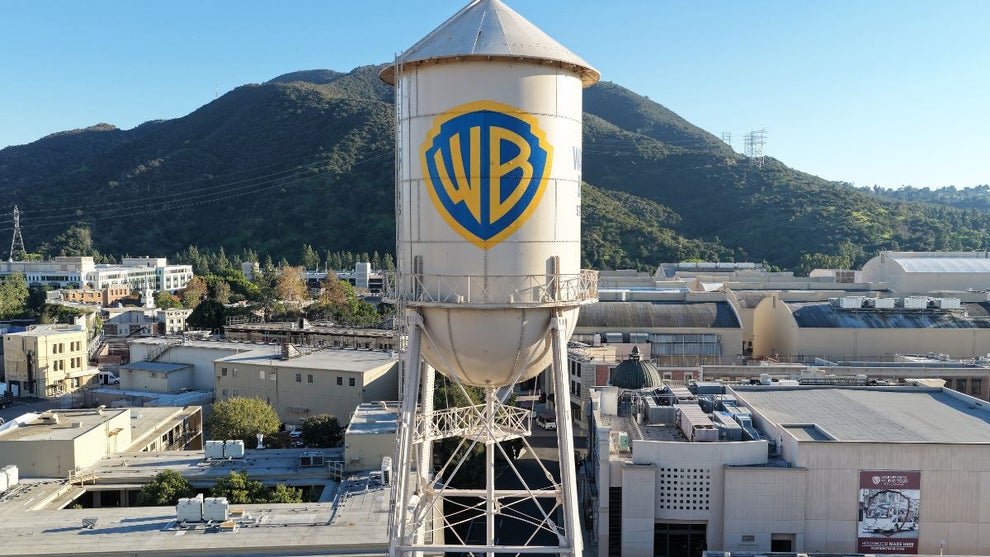
Regulators in the United Kingdom have cleared the pending $110 billion Paramount-Warner Bros. Discovery merger.
After formally launching its Phase 1 investigation into whether the deal would “substantially lessen” competition in film distribution, TV content production and the supply of children’s channels and the supply of streaming services, the Competition and Markets Authority determined that Paramount would “continue to face sufficient competition in the various areas it operates in” after the merger.
While the combined company would become the U.K.’s largest distributor, the CMA noted that it could continue to face competition from Universal, Disney, Sony and a range of other small studios. It also said Paramount-WBD would be “sufficiently constrained” in the supply of linear children’s TV channels, citing alternatives such as streaming services and free-to-air channels. Additionally, it found that Netflix, Apple, Disney and Amazon’s Prime Video, as well as BBC iPlayer and ITVX would provide sufficient competition to the combined entity on the streaming front.
In addition to the CMA, U.K. Secretary of Culture, Media and Sport Lisa Nandy decided not to intervene after reaching a “deed of covenant” with Paramount. This agreement includes a commitment not to combine linear channels with its streaming services, to maintain the editorial independence of its news services and children’s networks and to provide more funding to Channel 5 to support high-quality news, original children’s programming and drama.
The commitments in the deed take effect upon completion of the transaction and remain in effect for five years. Commitments relating to Channel 5 will remain in effect until December 31, 2034, when Channel 5’s current public service broadcasting license ends. Parliament will be updated on the commitments from Paramount when it formally returns from its summer recess in September.

Following the CMA’s approval, the merger has been cleared by regulators and governments representing 66 jurisdictions. The deal already received approval from the U.S. Department of Justice and Warner Bros. shareholders. The European Commission also cleared the deal with conditions, including Paramount’s exit from United International Pictures.
Other countries where the deal has received clearance or where relevant waiting periods have expired include Australia, Austria, Brazil, Canada, China, Kuwait, Saudi Arabia, Serbia, South Africa, Ukraine, Montenegro, New Zealand, and North Macedonia. Foreign direct investment authorities in Spain, Germany, Slovenia, Belgium, Czechia, Italy, France and Romania have also signed off.
The U.S. Federal Communications Commission is also still reviewing the foreign investment in the deal, though a specific timeline for completion has not been publicly announced.
“These clearances recognize that the combination of Paramount and WBD will enhance consumer choice and enable a creative-first company to invest in more projects and bring stories to audiences worldwide,” Paramount said in a statement. “It will create a scaled media and entertainment company capable of competing with the tech companies that have come to dominate the industry, strengthening the media ecosystem and creating more opportunities for creatives both in front of and behind the camera.”

Despite the clearances, a group of 12 state attorneys general also secured a temporary restraining order against the merger. A 12-day trial has been scheduled to start March 2, 2027, which will put Paramount on the hook for over $1 billion in ticking fees. The 25 cent per share fee, which takes effect starting Oct. 1, translates to to a payout of roughly $650 million per quarter, or $7 million per day, until closing.
Paramount argued that the CMA’s conclusions reinforce that the merger does not raise antitrust concerns and slammed the state AG lawsuit’s “misguided and gerrymandered market definitions.”
In addition to the state AGs and WGA, a Paramount shareholder and a group of consumers filed separate lawsuits to block the merger, though the latter was dismissed by a judge.
Paramount said it would push the closing of the merger back until five days after the outcome of a trial, or June 1, 2027, whichever comes earliest. In the event that the deal does not close at all due to regulatory matters, Paramount will pay WBD a $7 billion termination fee.