
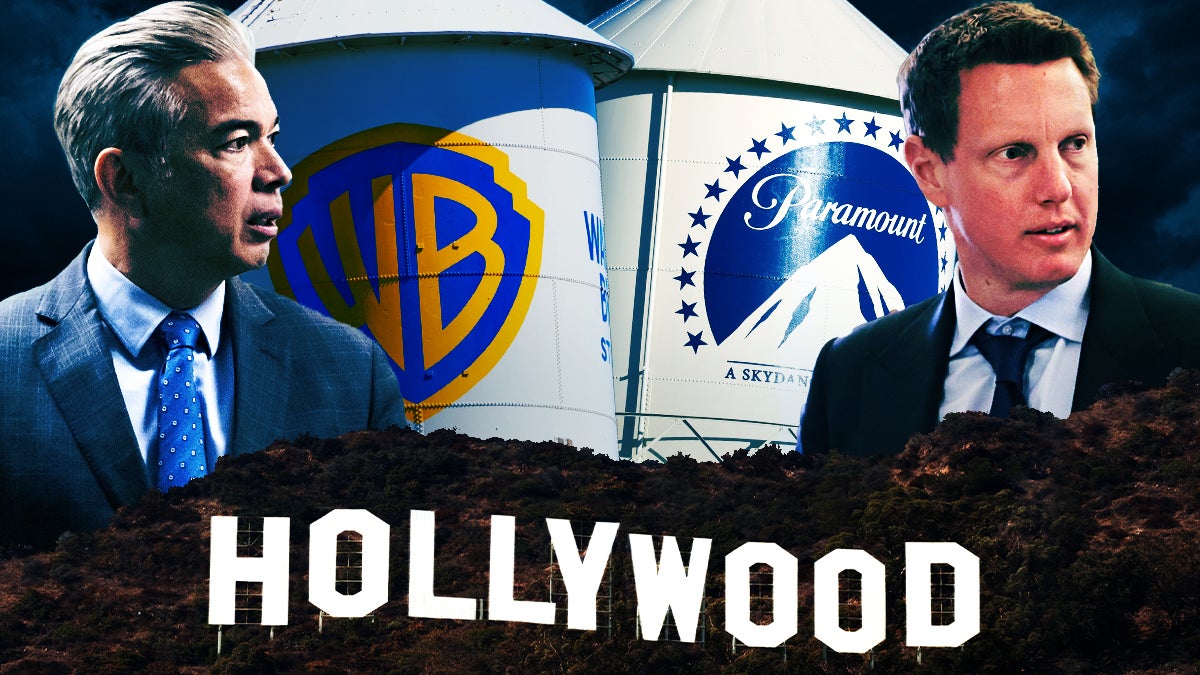
After months of steamrolling through various regulatory agencies, the Paramount-Warner Bros. Discovery merger finally needed to hit the brakes.
California Judge Araceli Martínez-Olguín on Monday granted a request by 12 state attorneys general to issue a temporary restraining order against the pending $110 billion deal, which halts it for two weeks.
The decision came after the AGs sued to block the merger last week, arguing it would create an entertainment giant that would control too much of the wide-release theatrical market, the submarket of “anticipated blockbuster films” and the basic cable bundle. The group warned that the deal’s approval could give the combined company increased leverage over movie theaters and cable distributors, lead to an increase in consumer prices and reduce content output.
The TRO represents the first step in legal proceedings that will come to a head on Aug. 3, when the judge will hear arguments for a preliminary injunction. Such an injunction, if granted, would create a devastating delay for Paramount, since it would be forced to pay a costly penalty to Warner Bros. shareholders if the deal doesn’t close by Sept. 30.
This early decision doesn’t bode well for Paramount.
“While the bar for a temporary restraining order is lower than the bar for a preliminary injunction, the wording of the judge’s ruling cannot be viewed as a positive for Paramount,” Lightshed Partners analyst Rich Greenfield said in a research note.
In her order issuing the TRO, Martínez-Olguín said that the states presented “compelling evidence that the combined firm resulting from the transaction will possess substantial market share in the wide-release theatrical distribution market” and that the court is persuaded that the proposed merger is likely to violate antitrust laws on that market share alone.
“Because the Plaintiff States make a strong showing that the Transaction will substantially lessen competition in the wide-release theatrical distribution market, they demonstrate irreparable harm would result if a TRO does not issue,” she wrote. “The Transaction would also be difficult, if not impossible, to unwind if permitted to proceed given the anticipated consolidation of operations, sharing of business-sensitive information, and potential termination or reassignment of employees. The Plaintiff States have sufficiently established that irreparable harm would result in the absence of a TRO.”
The TRO will remain in effect for 14 days, with the possibility of an additional 14-day extension.

What Paramount says
Paramount on Monday said it was “grateful” for the court’s “swift order” on the TRO, which “preserves the status quo while the Court considers the antitrust issues presented.” The statement exuded the confidence that the company has projected all through this process.
“We are confident the evidence will demonstrate that the State AGs’ antitrust arguments are without merit as their alleged markets and claims of anticompetitive effects are without any basis in modern market realities,” Paramount added. “This merger is lawful, pro-competitive, and will benefit consumers, creators, workers, and the entertainment industry. We will continue to vigorously defend the transaction and will look forward to the hearings on the substance of the State AGs’ action.”
The media giant’s lawyers argue that the AGs’ case is “one of the weakest” in modern history, ignoring the intense competition from both established and emerging studios. They also say that the combined company’s cable networks are largely complementary, as opposed to being direct substitutes, making them unlikely to reduce competition. More fundamentally, the company noted, the continuing decline of pay TV has weakened every programmer’s negotiating position.
The David Ellison-led media giant has stated that the WBD deal remains on track to close by the end of the third quarter.
On Friday, Paramount’s lead outside attorney Jeffrey Kessler said that a preliminary injunction hearing prior to Sept. 30 was needed in order to prevent the media giant from suffering “very severe harm” due to a 25 cent per share ticking fee for every quarter until closing, translating to around $7 million per day and $650 million per quarter.
Martínez-Olguín was not particularly convinced. She wrote in her ruling that Paramount will suffer “no apparent harm in the near term,” but set a preliminary injunction hearing for 3 p.m. on Aug. 3. Paramount will have until July 27 to provide their opposition brief, with plaintiffs’ reply due July 30.
“Even if Defendants argued that they would suffer economic harm as a
result of delaying the merger, the equities do not weigh in their favor when contrasted with the potential public harms that would result from consummation of the Transaction, including the loss of competition,” she added. “Paramount and Warner Bros. will continue to operate as separate, viable companies competing in the marketplace while they wait for the Court to adjudicate this case. The balance of equities, combined with the public’s vital interest in antitrust enforcement, therefore tips sharply in favor of the requested injunctive relief.”

What the AGs say
California Attorney General Rob Bonta said the ruling is a “critical first win in our case to ensure this megamerger never sees the light of day.”
“History tells the tale of what happens when a few people have great power over markets that are central to Americans’ lives: fewer opportunities for more people, worse products and services for all people,” he shared. “With our lawsuit, we’re fighting for a free and fair market and a thriving film and television industry that serves creatives and audiences alike. We have a full tank of gas, the law on our side, and look forward to continuing to make our case.”
In addition to California, states involved in the case include New York, Arizona, Colorado, Connecticut, Massachusetts, Minnesota, Nevada, New Jersey, New Mexico, Oregon and Washington.
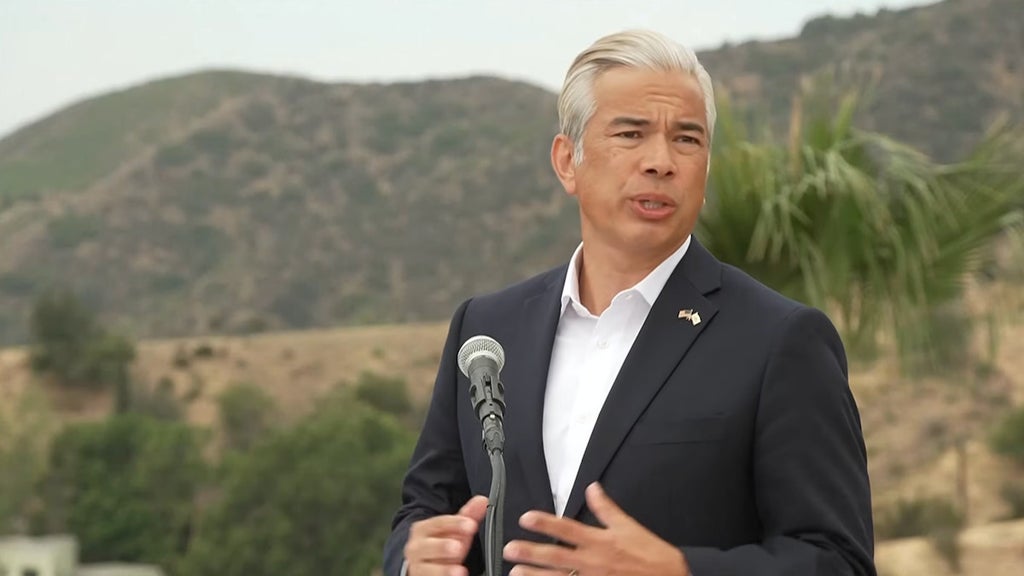
While Paramount has talked about the threat of streaming competitors like Netflix and Amazon, the AGs have stayed away from that topic entirely in their lawsuit. In an interview on The Town with Matt Belloni, Bonta laid out his argument that one aspect of the deal being illegal invalidates the whole deal.
“We haven’t challenged their merger based on the impact on the streaming-service market,” Bonta said. “Their argument is almost like, ‘You have to allow us to do illegal things [in theatrical and cable networks] so that we can create a combined megacorporation that can compete with these other megacorporations.’ That’s not how the law works.”
In a footnote in Monday’s order, Martinez-Olguin said she could not accept the idea that efficiencies in one market offset competitive harms in another.
“The Court notes separately that it cannot accept Defendants’ argument that the Transaction will produce efficiencies in the streaming market,” she wrote. “Courts have expressly and repeatedly rejected the defense that a challenged merger will result in economic efficiencies ancillary to competition in the relevant market.”

What’s left?
The deal has already received approval from the U.S. Department of Justice and Warner Bros. shareholders.
Other countries where the deal has received clearance or where relevant waiting periods have expired include Australia, Austria, Canada, China, Kuwait, Saudi Arabia, Serbia, South Africa, Ukraine, Montenegro, New Zealand and North Macedonia. Foreign direct investment authorities in Spain, Germany, Slovenia, Belgium, Czechia, Italy, France and Romania have also signed off.
Meanwhile, the European Commission’s review period on the foreign investment in the Paramount-Warner Bros. deal expired last week. Its deadline to clear the merger or refer it for a more in-depth Phase 2 investigation is set for Wednesday.
The other X factor is United Kingdom’s Secretary of Culture, Media and Sport Lisa Nandy, who has informed Paramount and WBD that she feels “minded to intervene,” with a decision on whether the regulator will clear the merger or move to a Phase 2 investigation expected by Aug. 7. And the U.S. Federal Communications Commission will also weigh in on the deal’s foreign investment, though a specific timeline for completion has not been announced.
In addition to the state AG lawsuit, the Writers Guild of America, a Paramount shareholder and a group of consumers have all filed separate lawsuits to block the merger. The latter was denied a preliminary injunction after a judge ruled that they failed to show irreparable harm or that their case would have a likelihood of success.
In the event that the deal does not close at all due to regulatory matters, Paramount will pay WBD a $7 billion termination fee.
