
When word first broke that Letterboxd was being circled by several suitors, including movie studios, interested in buying the beloved social network for cinephiles, its users were pretty irate. The platform where uber film fanatics log reviews and leave comments on others’ has become a clean haven of sorts for film discourse, unbothered by outside interest or algorithm toggling to the owner’s whims.
The reaction brings up a key question amidst the M&A frenzy: Can Letterboxd possibly remain cool if it’s gobbled up by a conglomerate? That’s why a small group of indie film advocates is mounting a long-shot campaign to protect the platform’s independence.
Intrinsic Entertainment Collaborative, a public benefit corporation founded by Boston-based economic sociologist and aspiring screenwriter Elizabeth Joyce to to support indie filmmakers, has raised over $100,000 to cover the legal costs of making a formal offer for Letterboxd and conducting due diligence. It is also seeking mission-driven angel investors who will help finance the bid, though any additional funds raised via crowdfunding will decrease the need for an equity investment.
Those funds, which represent a fraction of Letterboxd’s $250 million valuation floated by bankers, highlights the longshot nature of this bid. But the effort also represents the antithesis of the state of media consolidation, with megamergers conducted by massive media companies or private equity firms becoming a more regular occurrence. The idea that an owner would come in and not try to leverage the platform to score a massive payday represents a fresh, if idealistic, notion.
“The reason that we want to buy it is not about ‘Oh my God, this is where we’re going to make the most money in history,’” Joyce told TheWrap. “We understand its value as a cultural institution within a flailing industry that needs new economic models and have a vision for making that work.”
With companies like Sony, Netflix and private equity firms RedBird and TPG among the potential suitors taking initial interest meetings, Intrinsic could be left out in the cold as the price spirals higher.
“As Letterboxd has grown, it’s natural there will be interest in what we do next,” a spokesperson for the platform said. Letterboxd declined to share any updates on the sale process, but said any decisions about its future would involve founders Matthew Buchanan and Karl von Randow, who have a working relationship with Joyce.
Representatives for Tiny, a Canadian holding company which owns a majority stake in Letterboxd, investment bank LionTree and Cactus Lab, the design and development studio behind the Letterboxd platform, did not return TheWrap’s request for comment on this story.

How did Intrinsic Entertainment Collaborative get started?
Joyce came up with the idea for Intrinsic as the COVID pandemic ravaged the globe, moving meetings in Hollywood from in-person to Zoom. She had been looking for her own big break to become a screenwriter when she started learning about the issues low- and mid-budget independent filmmakers face in getting projects discovered, funded, produced and distributed.
“I kept having people on the buy-side say things like, ‘If you want to break in, you should write a low-budget horror film that has cultural buzz.’ Basically the advice was to do ‘Obsession’ or ‘Backrooms’ before those happened,” Joyce recalled. “I would say, ‘That’s fine, I get it.’ But also it’s just not what I write.”
Where Joyce felt she could help was in fixing the unit economics for these indie films that didn’t fit into the industry’s box, and helping them more effectively target potential audiences.
Over the past year with the help of Harvard Law School and Boston College Law School, Joyce used her previous experience studying alternative business models to form a public benefit corporation, a for-profit business that’s legally required to balance maximizing value for shareholders with a specific social or environmental mission. Intrinsic’s articles of incorporation were officially approved by the Massachusetts Secretary of State in April.
In addition to Joyce, Intrinsic has assembled a coalition of indie filmmakers, producers and advocates, including former Amazon film executives Ted Hope and Alex Pennebaker and former Universal film executive Juliet Liu. The company also added Daniela Pimentel, a former operations manager from Paris Hilton’s 11:11 Media, who will deepen the company’s fundraising within the creative community and expand its formal industry networks.
“The coalition that we have built and are continuing to build is a diverse group of parties who care about the future of independent film as an ecosystem, not just the financial health of one publicly traded company,” Joyce said.

What is the purpose of Intrinsic?
Initially, Joyce had been focused on developing Community Center, a marketing platform designed to generate buzz and create a community of support for indie films while they were in their earliest stages of development.
“Community Center is the first rung of the ladder for an independent film,” Joyce explained. “We’re trying to enable filmmakers to essentially export that benefit to every additional rung of the ladder, whether that’s across other social media platforms, crowdfunding, bringing it to festivals, self distribution on platforms like Kinema or YouTube or negotiating with one of the legacy distributors. What it does in that negotiation is allow you to say we’ve built an audience but we didn’t have to depend upon Instagram and TikTok and X for bringing that audience with us.”
In October, she pitched Community Center to Buchanan and von Randow’s CactusLab. Six months later, news of the Letterboxd sales process broke in the middle of Community Center’s development, prompting Intrinsic to pivot its focus to the crowdfunding campaign.
Intrinsic’s goal is to bring in mission-driven angel investors whose ownership in Letterboxd would eventually be bought out by the community through crowdfunded equity raises of up to $5 million every year via a platform called WeFunder.
“What we’re looking for is the optimal point between providing the investors with a fair return on their capital and also providing a service to the community at a fair price that makes sense for filmmakers and the economics of film,” Joyce said.

What is Intrinsic’s plan for Letterboxd?
Rather than buying Letterboxd to leverage its data and eventually exit for a massive payday, Intrinsic is focused on maintaining the platform as a “point of discoverability” to help indie filmmakers own their own audience.
“If the future of independent filmmaking is moving in the direction of self-distribution, we have to really think about what opportunities and platforms are out there and whether those incentives are aligned between the investors, the businesses and the filmmakers,” Joyce explained. “We’re really excited to offer new ways for filmmakers to engage with their audiences and for the audiences to be able to find films that they are genuinely, authentically interested in, not just what is being advertised to them in a pay-to-play environment.”
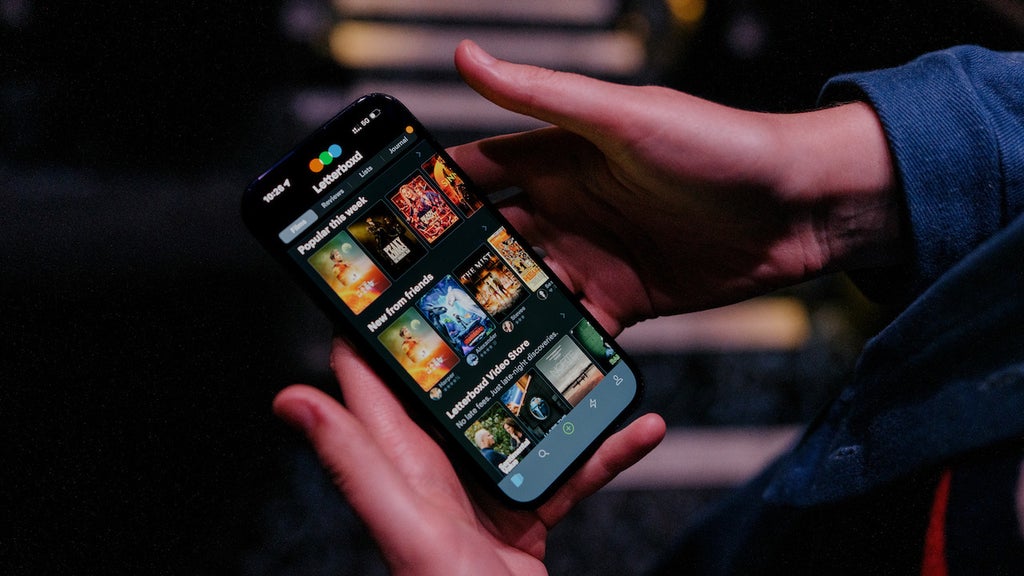
While Intrinsic has a long list of proposals should they acquire Letterboxd, Joyce declined to disclose any of its specific plans, citing “active” interest from other potential suitors.
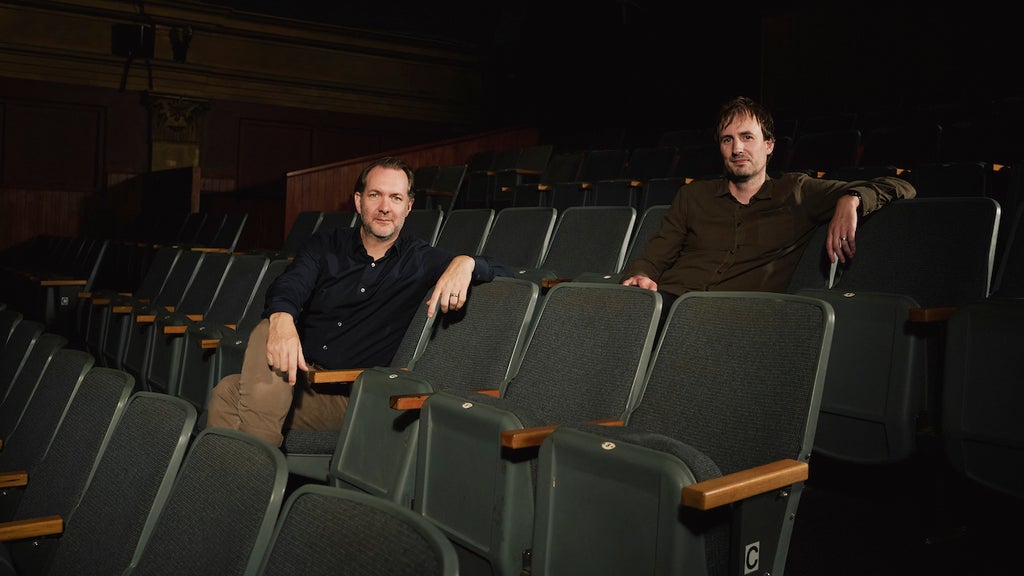
She added that Intrinsic’s ideas are only a starting point and that they plan to seek input from Buchanan and Randow, who own the remaining 40% of Letterboxd, on what to prioritize. Semafor reported that Buchanan retains veto rights over any potential buyer.
However, one issue that Joyce hopes to tackle is expanding the audience of micro-budget and emerging filmmakers who aren’t showing up in The Movie Database (TMDB), which Letterboxd uses to pull metadata about indie films, including titles, cast, crew, release dates, synopses and posters.
“Helping emerging filmmakers is not a profit-driven initiative, but it’s one that we believe is fundamental to the future of the film industry,” she said. “We don’t think that everybody flocking to YouTube is going to shore up the industry as much as it’s going to shore up Alphabet.”
If the bid is ultimately not accepted, Intrinsic will give its supporters the opportunity to cancel or lower their pledge amounts. Those who choose to proceed with their pledge will see the funds reallocated towards Community Center’s launch and establishing a grant program for indie filmmakers.

Big suitors loom
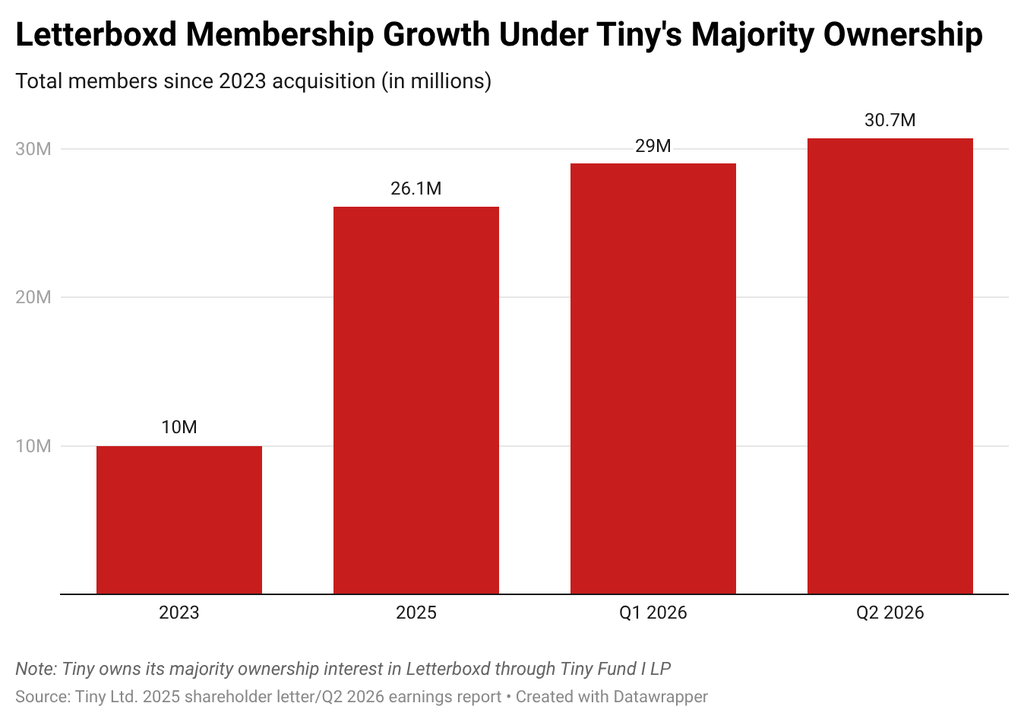
Letterboxd has surpassed 30.7 million members as of the end of the second quarter of 2026, an increase of 43% year-over-year and up 185% since being acquired by the Canadian holding company Tiny, which took a 60% stake in 2023 in a deal valued at $50 million to $60 million.
While Tiny’s Fund I LP does not break out the individual financials for Letterboxd, bankers are floating an estimated $250 million valuation for the platform, according to Puck.
TheWrap previously reported that Sony and Netflix are among several parties that have taken an initial interest meeting. Other potential suitors that have been floated include Paramount, private equity firms RedBird Capital Partners and TPG, and Reddit co-founder Alexis Ohanian.
Tiny also previously approached Versant and The Ankler about a potential acquisition earlier this year, though the Janice Min-led outlet did not end up agreeing to deal terms and is not actively pursuing a bid, an insider familiar with the matter previously told TheWrap.
Despite the uphill battle Intrinsic could face if any of those parties or another well-funded suitor decides to put in a bid, Joyce said Tiny and LionTree are “aware” of the company’s interest and that she’s not daunted by the valuation being floated nor the prospect of competing with major studios and private equity firms.
“It’s a competitive advantage to be underestimated rather than overestimated. I feel great about our bid,” Joyce said. “When I look at Intrinsic, we are through the roof on community, on business objectives and we are steadily going up on money. Any billionaire could show up tomorrow and say, ‘I’ll give you a billion dollars for it.’ But does it align with their business objectives and the community? Otherwise, they’re just putting down cash for some asset that’s going to immediately devalue itself.”
While she acknowledged a deal for Letterboxd will ultimately come down to who can make the math of a deal work, Joyce argued that any potential suitors need to consider how the community may respond to their ownership.
“Is the community going to flee because I am the owner and do I have an opportunity to extract the amount of profit that I need to cover my investment before they all flee? Is my play just to squeeze the life out of something and get as much juice as I can before it’s a husk of itself?” Joyce questioned. “There are private equity companies where that is literally their play, so they might not care, that might be fine with them. I have no control over that part of the process, but what I do know is that our math maths.”
