
“It Ends” didn’t have a home after South by Southwest.
The debut feature written, directed and edited by Alexander Ullom follows a group of young adults who find themselves stranded in a car on an endless, purgatorial road. Despite receiving rave reviews out of the festival in March 2025, “It Ends” failed to get distribution.
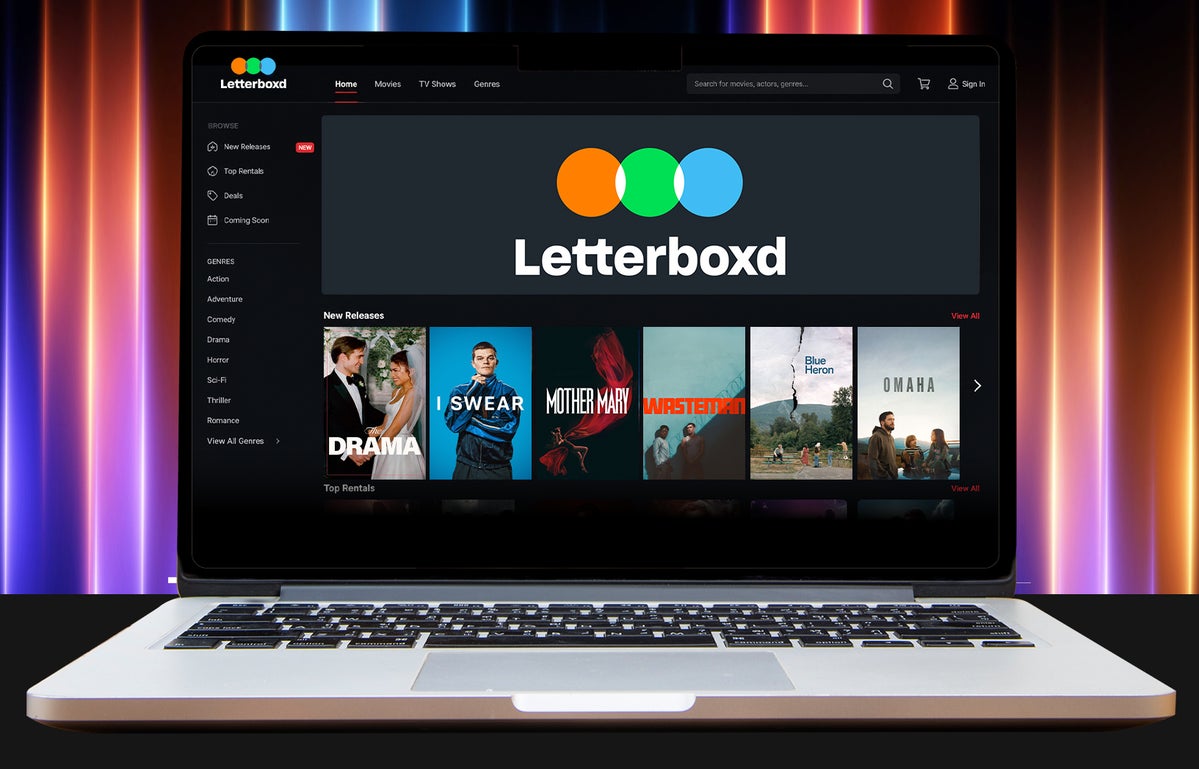
That is, until it popped up on the Letterboxd Video Store, a video rental service that lives on the New Zealand-based film platform Letterboxd.
“We saw (‘It Ends’) bubbling up in the community, and the team on Journal (Letterboxd’s online magazine) as well actually had it as one of their crew picks at SXSW when it premiered there,” Courtney Mayhew, head of programming and content for the Video Store, told TheWrap. “It’s important to give kudos to the community first because they’re the ones that started that bubbling up. It wasn’t us.”
Eight days after the Letterboxd Video Store became its new home, Neon acquired “It Ends” for worldwide distribution in 2026. Neon has preemptively acquired “4×4: The Event,” Ullom’s sophomore feature.
“We’re excited by ‘It Ends’ and the journey it’s had on the Video Store,” George Linehan-Mitchell, head of strategy at Letterboxd, told TheWrap. “We hope for that for more of our films.”

The success of Ullom and “It Ends” underscores the influence and reach of Letterboxd, a site that boasts more than 28 million members who share and review films they’ve watched, and is often billed as “Goodreads for movies.” Despite its explosive growth, questions remain about the company’s fate, with Semafor having reported on Sunday that Tiny, the Canada-based controlling investor in Letterboxd, is looking to sell its stake.
“As Letterboxd has grown, it’s natural there will be interest in what we do next. There’s nothing specific for us to share at this time,” a Letterboxd spokesperson said. “Any decision about Letterboxd’s future would involve the founders.”
Tiny manages a fund that owns 60% of Letterboxd, which it purchased in 2023 at a $50 million valuation. Letterboxd has grown significantly since then, though one insider said Tiny might be seeking to sell to pay down its debt load. The company generates revenue through a model combining paid subscriptions, advertising for film studios and affiliate partnerships with streaming services.
Letterboxd’s Video Store, which lets members pay $4 to $20 to rent a digital copy of a film, launched in December and has become a home for select indie films that never found a distributor. That’s badly needed at a time when smaller distributors are struggling and larger studios are placing fewer bets on indie films.
Films are priced comparatively with other rental services, with films like Ullom’s (which don’t have outside distribution) costing closer to the PVOD price of $20. Like similar services, customers may rent the films for a period of 30 days. That timeline shrinks down to 48 hours once the customer begins watching the film for the first time.
The Video Store carries only a limited selection of films, with no more than a few dozen on the service at a time thus far. However, films that aren’t on “limited time only” shelves like Unreleased Gems will remain on the service indefinitely, making this number go up over time. Letterboxd sources these films through a mix of cold calls from its team and offers from the platform’s industry partners.
“The coolest part of those cold calls is the response we’ve been getting, moreso than I was even hoping,” Mayhew said. “The response that you get when you’re talking about Letterboxd to people is so heartwarming.”
“It Ends” was one of an initial wave of four features to land on the Unreleased Gems section (or “shelf,” as they call it, keeping with the video store brand) of the Letterboxd rental platform when it launched. This shelf, which also featured “The Mysterious Gaze of the Flamingo,” “Sore: A Wife From the Future” and “Kennedy,” housed films that had previously premiered on the festival circuit but had yet to find greater distribution.
“Notable as being among the first wave of films championed by Letterboxd’s distribution arm, (‘It Ends’) represents a new pipeline for viral indie cinema that requires internet buzz and discussion — a film made for exactly, well, us Letterboxd folks, who intend to bore our partners with long diatribes about A24 movies on dates,” wrote Letterboxd Patron Hans Schneider in a review while “It Ends” was still available to rent.
On Monday, Letterboxd announced four new movies that would make up the next Unreleased Gems shelf: “The True Beauty of Being Bitten by a Tick” (directed by “Erupcja’s” Pete Ohs), “Eugene the Marine” (starring Scott Glenn), “Amoeba” (a directorial debut that premiered at TIFF 2025) and “Lemonade Blessing” (described by Letterboxd’s samantha_anne as “‘Shiva Baby’ for Catholics”). Like the last batch, these Unreleased Gems will be available on the service for 30 days, starting April 29 and ending May 28.

“A big reason why the films are limited is so that they can go onto a broader life,” Mayhew said. “We’re not distributors. We saw a gap where some films lose a bit of momentum for whatever reason or they’re just still trying to find their feet between festival and wider distribution. We were like, ‘We can do this so we can give them a little bit of a boost.’”
A modern video store
You may stream films through the Letterboxd Video Store, but Mayhew and Linehan-Mitchell were insistent that it is not a streaming service.
Following a transactional video-on-demand (TVOD) model, the platform shares little in common with your subscription-based streamers like Netflix or Hulu. Yet the Video Store also diverges from rental services like Apple TV or Fandango at Home, stocked with seemingly endless libraries including all the latest PVOD releases. Compare that to a more limited rental platform that offers only a handful of carefully curated selections at a time.
“It harkens back to that nostalgia of being able to walk into that third space … and have, in some sense, a limited selection and know you’re gonna walk out with something,” Linehan-Mitchell said. “If we’re able to provide this third space by being online, and all those feelings arise, I think we’ve all done a really good job.”
The Letterboxd Video Store features a library of only a select few films, all living on a handful of shelves. Current shelves include Oscars 2026: Selects (including this year’s nominees such as Best International Feature winner “Sentimental Value” and Best Documentary Feature winner “Mr. Nobody Against Putin”) and Lost and Found (highlighting “underseen underdogs with stellar star ratings” like Kiyoshi Kurosawa’s “Before We Vanish” and Todd Haynes’ “Poison”).
“The shelves at video stores, I remember used to have ‘staff picks’ and ‘new releases’ and things,” Mayhew said. “It kind of makes sense with what we’re actually trying to present as well.”
The team landed on this “video store” branding early on, feeling that it speaks to a bygone era (with stores like Blockbuster and Family Video put out of business) and a community familiar to Letterboxd users. According to Mayhew, the concept of sharing movies directly with the platform’s users has long been in the heads of Letterboxd founders Matthew Buchanan and Karl von Randow, but the ball really started rolling around mid-2024.
“The branding of a video store leans into how Letterboxd does lead with community and what the community is telling us,” Mayhew said. “Often people are saying, ‘Hey, it feels old school on here’ … There’s a nostalgic element to Letterboxd, which is very purposeful in the way it’s been designed.”

One hope for the Letterboxd Video Store is that this community can start coming more from the filmmakers themselves. One of the store’s early shelves was curated by Richard Linklater, who selected a handful of his favorite French New Wave films to tie into his latest feature, “Nouvelle Vague.” This shelf still remains on the service.
“We have community signals that tell us, ‘This is what we want to watch,’ and then we have those typical sort of patterns that we observe. With ‘Nouvelle Vague,’ because that was about the making of ‘Breathless,’ quite often when that happens, we see members go on the journey,” Mayhew said. “(Linklater) had a list of films that he gave us, and we just went for gold on getting most of them. If we have to tap in with their help, the people who are curating, we will, but we were already talking to many of the distributors that had the rights to those films.”
“Films out of reach, until now”
The Letterboxd team wouldn’t share exact rental numbers for their service, but a look at its membership logs indicates that, prior to its appearance on the Video Store shelf, “It Ends” had been watched by roughly 2,500 members. Now, that number sits at more than 40,000.
“If we can get these films in front of a wider audience, that then means that they can have a larger life outside of Letterboxd,” Linehan-Mitchell said. “For them and for us, and for distributors too.”
Linehan-Mitchell said that every film added to the Video Store sees a “massive uptick in activity” from Letterboxd users. Beyond pure rentals, he said the team also finds value in the amount of conversation drummed up by newly added features.
“A bigger measure of success, which I think hopefully helps lead to success, is how much an impact does this have on the Letterboxd community? Because it drums up awareness for these films — yes, in some of the territories we’re able to license these films in, but also wider than that as well,” he said. “There’s a huge opportunity for distributors further down the line to look at how well it’s done at Letterboxd and say, ‘Great, we’ll take it to these territories as well.’”
Linehan-Mitchell and Mayhew wouldn’t say where Letterboxd is headed next, keeping mum about potential features such as the addition of TV series, once promised in 2024. (The pair spoke to TheWrap well before Semafor reported on Tiny’s possible divestment.)
The Semafor news scared Letterboxd users across social media, as fans of the service worried that a sale to private equity would threaten the integrity of the service (though it survived a transition to private equity once before). To many Letterboxd users, this sale could upset the small, community nature they’ve come to love on the service — the very qualities that made the Video Store so fitting for the company’s next steps.
“Our last vanguard of good social media. letterboxd cannot go to one of the billionaires,” said @artwithinpod on X. “i can’t do it, i can’t take it.”
At the time of our interview, Mayhew said that the service intends to stick with its mission and continue with surprising additions as Letterboxd continues to grow.
“(Letterboxd) is not a social media platform. It’s more of a community of people who have come together. It doesn’t have infinite scroll. It doesn’t have DMs. It doesn’t have a lot of those things that a social media platform would have, and so ‘Video Store’ feels quite in line with it,” she said. “There’s a lot more in the pipeline with Letterboxd than Letterboxd Video Store. That’s really just one part of it.”
Sharon Waxman contributed reporting to this story.
Editor’s note: A previous version of this story noted that Tiny owns 60% of Letterboxd. It has been changed to reflect that Tiny manages a fund which owns 60% of Letterboxd.
