
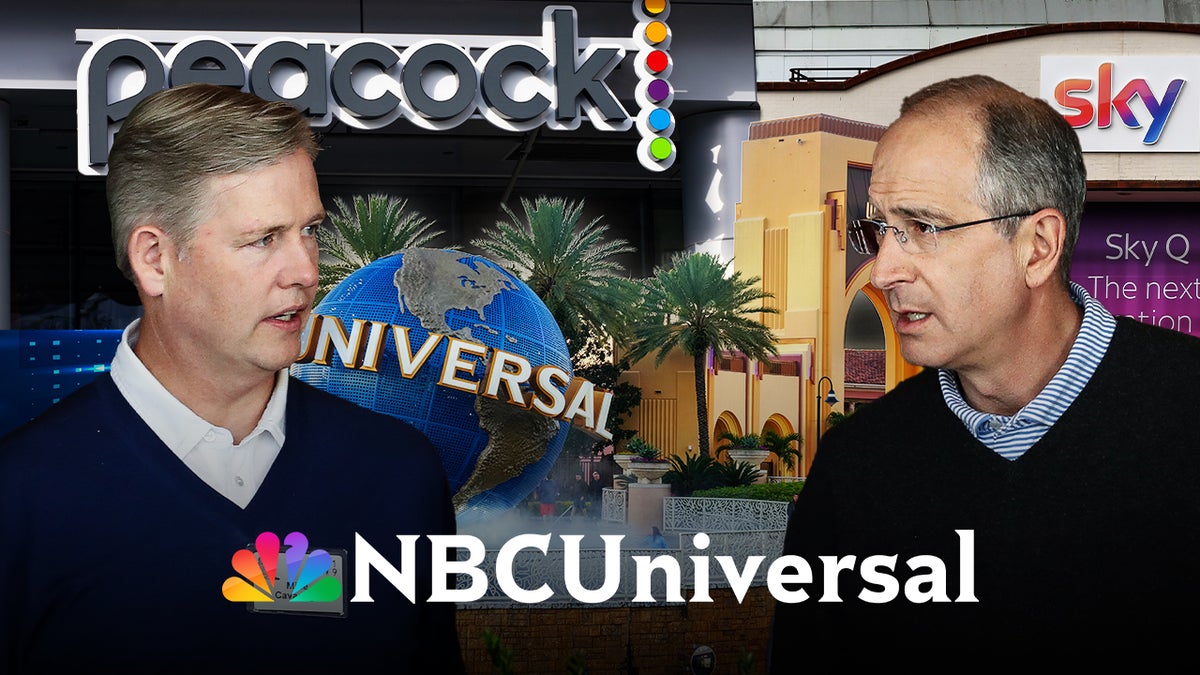
When Comcast unveiled its plans to split NBCUniversal into a standalone company, its leaders were quick to insist that they see the business as a buyer and not a seller. But in a media business that’s quickly merging into a few major players, what’s left to buy?
As NBCUniversal/Sky prepares to embark on its own as a separate, publicly-traded company over the next 12 months, the business faces many challenges, from building on Peacock’s first-ever profitable quarter to remaining competitive for entertainment and sports content, creative talent and audiences in the face of AI disruption and media consolidation.
Comcast co-CEOs Brian Roberts and Mike Cavanagh have repeatedly insisted that standalone NBCUniversal will have the heft, relationships and operational capabilities to remain a strong, independent player. But those challenges and shifting market dynamics highlight the unusual situation the company finds itself in — and is the reason why some industry observers are skeptical about its ability to go it alone long-term.
TheWrap spoke to experts who suggested that NBCU could look to pursue a merger with Sony Pictures Entertainment, acquisitions of smaller studios like A24 and Mediawan or expand into gaming through an acquisition of video game publisher Take-Two Interactive.
If it doesn’t go the M&A route, other options to strengthen its hand include ramping up investment in its theme parks and experiences business and its existing film and TV franchises, as well as striking more talent deals similar to its partnership with “Yellowstone” creator Taylor Sheridan. It could also look to pursue more licensing and distribution partnerships
“Our approach is to build great businesses that serve our own platforms, but look for opportunities to partner, bundle and exhibit other people’s IP in our parks and create IP in our studios that go to other platforms,” Cavanagh told Wall Street analysts last week. “That’s a good strategy for the collection of assets we have and presents a path for growth in this business over time.”
But experts also observed that NBCU could just as easily become an acquisition target. The dilemma is there aren’t many existing assets out there to acquire to help it stand out from the competition, they said.
“They’re just making it so clear that they’re available for sale. I really don’t understand what is out there in the marketplace that they could be picking up,” said a media executive who requested anonymity. “They’ve got to think outside the box and none of this feels so reinventive that [NBCU is] going to be able to compete at scale with the rest of them. They’ve shown how to maximize their value with the assets they have. It has to be something different.”
An NBCUniversal spokesperson declined to comment for this story.

NBCU’s M&A options
While the split will give NBCUniversal the option to explore M&A, experts argued that assets that have been floated as takeover targets, such as Lionsgate, are duplicative.
Though it was announced prior to the split, Sky has agreed to acquire ITV’s media and entertainment arm for $2.1 billion, which is poised to transform the British TV landscape if approved by regulators. The deal includes ITV’s linear channels, ITVX streaming platform and “The Great British Bake Off” producer Love Productions, though ITV Studios will remain a standalone entity.
LightShed Partners analyst Rich Greenfield, who believes NBCUniversal is a buyer and not a seller, said he doesn’t view the Sky-ITV deal as a one-off and speaks to the company’s “larger global content ambitions.” He said the standalone entity could look to pursue a deal to acquire Mediawan or other international content assets. Greenfield also floated a Sony Pictures Entertainment tie-up as the “next logical” transaction after the Disney-Fox and Paramount-Warner Bros. deals, arguing that “owning less of more” could be a compelling transaction for the Japanese multinational media conglomerate.
Qualia Legacy Advisors managing director Aaron Meyerson agreed with Greenfield that Sony would “vault NBCU into true content scale against the combined Paramount/WBD entity,” but warned that the key obstacle would be the Japanese conglomerate’s “historical reluctance to sell and the sheer complexity of the transaction.”
He also floated A24 as a potential target, noting that it is “the most culturally resonant studio brand in America right now” that represents a “prestige scripted pipeline with genuine awards credibility.” However, he emphasized that A24’s value is entirely tied to its independence and warned an acquisition could “risk killing what makes it valuable.”
While acknowledging that video game M&A has “largely been a failure,” Greenfield also said NBCU could boost its entertainment flywheel through a Take-Two Interactive acquisition, which would give it access to IP such as “Grand Theft Auto,” “Red Dead Redemption,” “BioShock,” “Mafia” and “NBA 2K.” In addition to its reach on consoles and mobile, Take-Two has no controlling shareholder.
“[Take-Two] is not the perfect target. It does not have Nintendo’s family-friendly IP or Roblox’s positioning for the future of game creation. Roberts would still be buying into an industry media companies have proven they cannot run,” Greenfield said. “But if NBCU is determined to make a large games acquisition, [Take-Two] feels like the most practical deal to get done and the one with the highest probability of actually working. In our view, it should be at the top of the list.”
A second media executive who requested anonymity also floated the idea of NBCU following in the footsteps of the $587 million Netflix-InterPositive deal and acquiring an AI firm to help reduce its content costs and better market and promote its existing assets. But the first media executive was skeptical, arguing that NBCU would need to look at it as a “real investment, not a marketing play to get their names associated with AI and a big star behind it.”
“They’re not big enough to be able to play that game,” the first media executive added. “Their margins are different.”

NBCU’s organic growth opportunities
Even with M&A optionality, there are no silver bullets that will suddenly supercharge its prospects. There’s an argument for investing in its core business and finding ways to innovate within, but time is of the essence given AI’s rapid evolution.
“I just don’t think the industry is prepared for how quickly and how forcefully the quality of AI programming is going to change the entire structure here. They’ve got to figure out quickly what it is they have that is going to allow them to stand out,” the second media executive warned. “It’s going to be very hard to sit here and point to a particular asset and say, ‘That’s what they need to grow’.”
In a memo, Cavanagh told employees that standalone NBCU would look to expand its presence within vertical video, microdramas, AI-powered personalization and interactive mobile features, such as IP-based mini-games and its Your Bravoverse feed. The company has partnered with Wolf Games, co-founded by Elliot Wolf, the son of famed TV producer Dick Wolf, to develop AI-driven interactive games that run on its Peacock app.
It will also look to invest in its existing franchises and strike new partnerships with creators and high-profile talent, such as the over $1 billion partnership with “Yellowstone” creator Taylor Sheridan that will take effect in full after the expiration of his Paramount contract in January 2029.
Additionally, NBCU has renewed most of its major sports rights, which don’t expire until the near end of the decade. It is also expanding its distribution partnership with YouTube, with plans to launch a new Peacock bundle in early 2027 and expand international streaming services Universal+ and Hayu in select YouTube Premium markets.
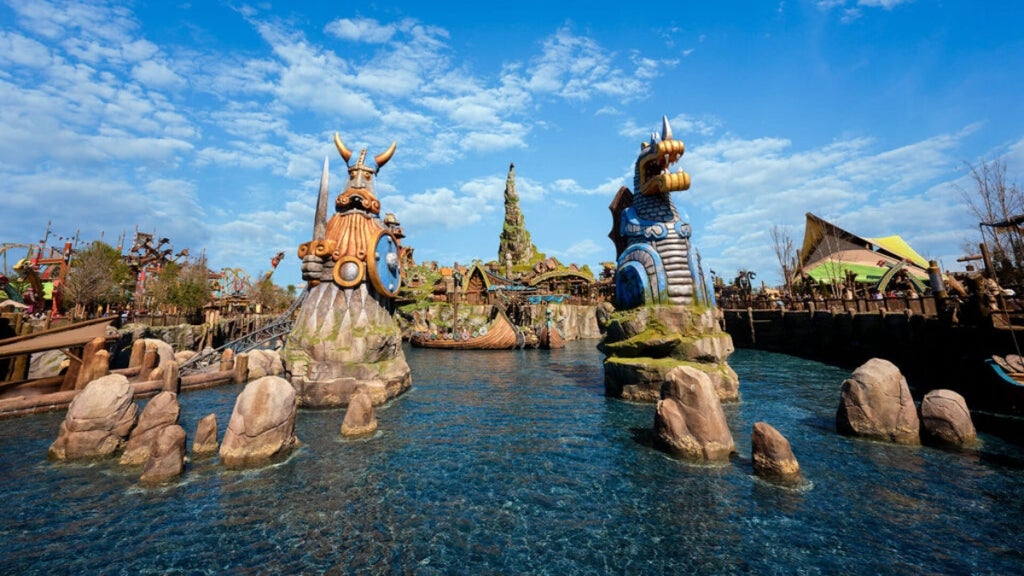
While the theme parks business has experienced softness, some of which has already bled into Comcast’s third quarter results, Cavanagh touted a “long runway” for growth in that area, citing the opening of its Universal Kids Resort in Frisco, Texas, and its plans for a new United Kingdom theme park, which is slated to open in 2031.
The second media executive said they expect NBCU to invest aggressively in theme parks and experiences, noting they could explore joint ventures similar to Universal’s Beijing resort in order to bring down operating and construction costs. Activate Consulting CEO Michael Wolf added that an expansion into cruises could be a “natural next step to extend their theme park franchises and capture more share of consumer leisure spend.”
“They have a lot of the raw materials to really expand upon their IP and engage more fans more of the time in more places,” Hub Entertainment Research analyst Jon Giegengack said. “They’ve actually done a better job than a lot of others at capitalizing on the flywheel. That’s where a lot of the future value of all of these media companies is going to come from.”
