

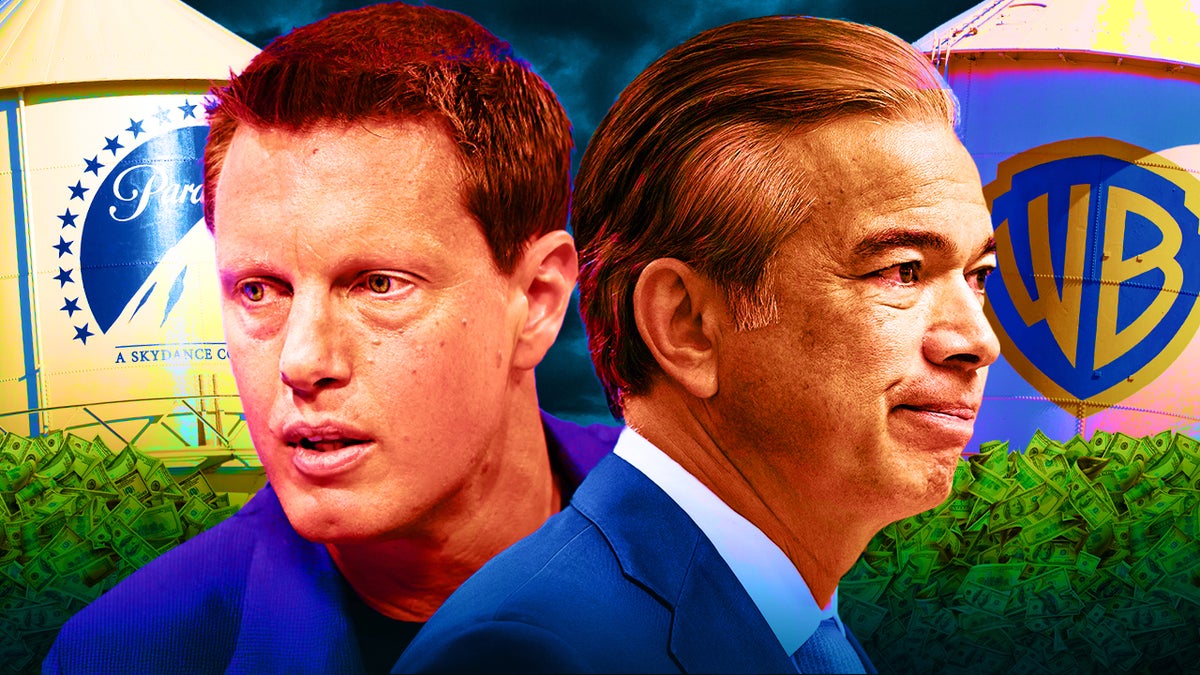
It looked like a victory on Friday for opponents of Paramount’s $110 billion merger with Warner Bros. Discovery. Paramount agreed to push back the acquisition — all the way to as far as next summer.
But, as with everything in this M&A saga, it’s not that simple. In reality the move is a way for Paramount to move past the latest obstacles faster — but at considerable risk.
“I think this is pretty good for (Paramount),” said Morningstar Research analyst Matthew Dolgin. “I think it’s unlikely this gets dragged out beyond June, so PSKY has more certainty that its ticking fee is capped at about $2 billion, and on the merits, I think it is likely to win and close the merger.”
In the Friday court filing, lawyers for the David Ellison-led media giant said the deal shall “not close, be consummated, or otherwise be completed” until five days after the outcome of an antitrust trial, or June 1, 2027, whichever is earliest. And they stated they will “not take any steps, directly or indirectly, to integrate or consolidate their operations pursuant to the Transaction.”
With a $7 million-per-day ticking fee that kicks in starting Oct. 1 — which would cost Paramount $650 million a quarter — why would Paramount agree to such a delay? The key lies in the nine words preceding the June 1 target date: “until five days after the outcome in a trial.”
The latest legal maneuver by Paramount isn’t a concession to the plaintiffs, 12 states attorneys general and the Writers Guild of America, but a calculated bet that by clearing out the preliminary procedural steps and moving straight to trial, it can fast-track the process and get a ruling in time to close its merger by its self-imposed Sept. 30 deadline. As part of this agreement, the state attorneys general and WGA agreed to withdraw their requests for preliminary injunctions, and will all submit a joint statement on the scheduling of the trial by next Friday.

“Today’s agreement is a significant win because the result is exactly what we have sought from the outset: a direct path to a trial based on the evidence,” the company said in a statement. “This is the fastest and clearest way to prove that this transaction is good for competition, good for consumers, and good for creators, a conclusion dozens of competition authorities around the world have already reached.”
It’s a high stakes gamble. If a trial drags out through the length of the stated period, the company would be on the hook to pay $1.7 billion in ticking fees to Warner Bros. shareholders. That would come on top of additional legal costs, covering the $2.8 billion break-up fee Warner Bros. paid to Netflix and the $110 billion for the acquisition itself. If the deal doesn’t close due to regulatory matters, Paramount is also on the hook for a $7 billion break-up fee.
California Attorney General Rob Bonta called the agreement “great news for audiences, movie theaters, and the many people who write, build, and create the art, news, and entertainment so many of us enjoy.”
The WGA also chimed in: “It remains our view that this merger is unlawful, and we will continue the fight to block it.”
It’s unlikely that Paramount will come out of this without paying something.
“Going to trial would be faster but they more than likely aren’t getting a hearing date before the ticking fee kicks in,” said Abiel Garcia, an antitrust attorney at Kesselman Brantly Stockinger.
Said Dolgin: “Even more debt will be unfortunate, but it’s almost inconsequential considering the massive numbers we’re already talking about with the total acquisition price.”

Clearing the deck
Over the past two weeks, since the state AGs first filed their antitrust lawsuit against Paramount, there have been a number of legal and procedural moves. A day after the states’ suit, the WGA filed its own suit. A week ago, both sides appeared before U.S. District Judge Araceli Martínez-Olguín’s hearing for the temporary restraining order, which was granted on Monday.
On Wednesday, Paramount requested the judge hold a three-day evidentiary hearing for the impending merger. The following day, a judge granted an extension of another two weeks on the restraining order.
Now both sides are dispensing with the incremental procedural steps. For Paramount, this saves time considering the company would have had to go through a hearing on a preliminary injunction and potentially appeal before even going to trial, dragging out the process even further.
“The writing on the wall seemed to indicate a (preliminary injunction) would be granted so if that is their read, better to just skip to trial if you are trying to resolve this as fast as possible,” Garcia said.
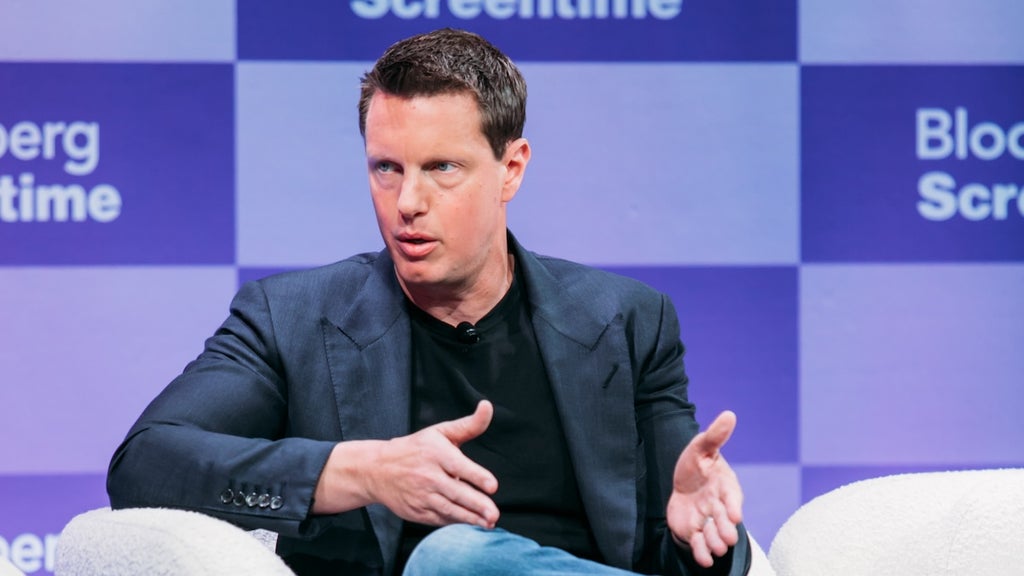
While both sides were in agreement that this should go straight to trial, each couldn’t help but to take parting shots at each other.
“Plaintiffs’ market definitions bear no relationship to the realities of today’s marketplace and cannot withstand scrutiny,” the company said. “We look forward to proving our case at trial.”
“Our argument against this illegal merger is straightforward: When too few corporations have too much power in markets central to American life, it makes things more expensive, and it makes things worse,” Bonta said. “We are eager to continue to make our case in court and celebrate another tremendous win in our effort to ensure this unlawful merger never sees the light of day.”

Nearly all other hurdles cleared
Opponents of the deal applauded the development.
“The Ellisons believed their relationship with President Trump would help them push through a disastrous deal that threatened democracy, creative freedom, and independent journalism. We in the #BlocktheMerger campaign helped prove them wrong,” said Democracy Defenders Fund co-founder and executive chair Norm Eisen.
“A deal once treated as inevitable is now frozen because thousands of people spoke out and state attorneys general acted,” the Block the Merger coalition added.
Still, the antitrust trial comes as the Paramount-Warner Bros. merger has been approved by Warner Bros. shareholders, the U.S. Department of Justice and, this week, the European Commission. Other countries where the deal has received clearance or where relevant waiting periods have expired include Australia, Austria, Brazil, Canada, China, Kuwait, Saudi Arabia, Serbia, South Africa, Ukraine, Montenegro, New Zealand and North Macedonia. Foreign direct investment authorities in Spain, Germany, Slovenia, Belgium, Czechia, Italy, France and Romania have also signed off.
The merger also still faces a potential hurdle in the United Kingdom, where Secretary of Culture, Media and Sport Lisa Nandy informed Paramount and WBD that she feels “minded to intervene.” The U.K. Competition and Markets Authority will decide on whether to clear the merger or move to a more in-depth Phase 2 investigation by Aug. 7.
In addition to the lawsuit from the state AGs and WGA, Paramount is facing a separate shareholder lawsuit. A group of consumers also sued, but were denied a preliminary injunction after failing to show irreparable harm.
