

Early voting has opened, and ballots are out as the entertainment community awaits the results of a midterm election that could have big implications for Hollywood.
The industry, battered by strikes, job cuts and seemingly endless media consolidation, is at a crossroads — particularly in Los Angeles. Even as California fought to pass a $750 million tax credit program, it remains outgunned by rival states and countries with more lucrative incentives, and production shoot days on location here remain on decline.
It’s with that backdrop that several pivotal races are playing out, the most consequential — and competitive — being the face-off between mayoral candidates Karen Bass and Nithya Raman, which are effectively tied going into the Nov. 3 election, but a L.A. Times poll found that 19% of Angelenos are still undecided.
There’s also the contest between gubernatorial candidates Democrat Xavier Beccera and Republican Steve Hilton.
Here’s what these top candidates in California have said about Hollywood and the entertainment industry.

Los Angeles Mayor
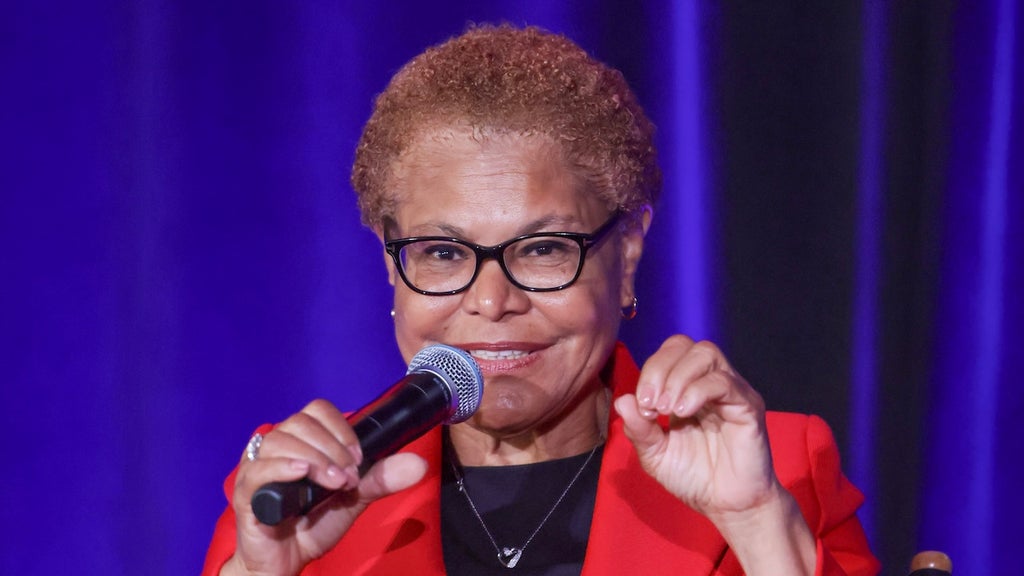
Incumbent Mayor Karen Bass has stated repeatedly that her advocacy for the entertainment industry in California has been part of her campaign for decades. She touted that she was one of the politicians in Sacramento fighting for the first tax credit program when she was Speaker of the California State Assembly from 2008 to 2010.
If reelected, the incumbent said that she will maintain the film czar role she created just last year and continue to expand industry support at the city level. Bass received criticism for taking three years into her term before hiring a film czar to ease production woes in L.A. She appointed Board of Public Works president Steve Kang as film liaison in August 2025.
Her plan also states that she will sustain “concierge-style services” that streamline permitting and support for film and TV productions. There has, however, been a decline in productions overall and an exodus of film jobs under Bass.
Bass has been endorsed by California International Alliance of Theatrical Stage Employees (IATSE) Council and Teamsters 399 (Hollywood Teamsters).
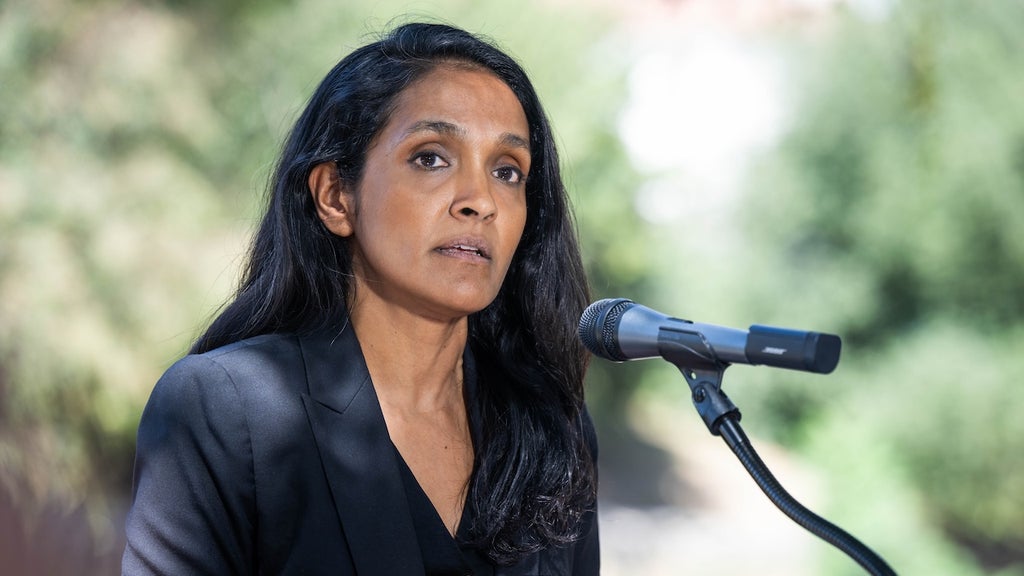
District 4 Councilmember Nithya Raman has always said Hollywood is a personal issue for her. The councilmember’s husband is a TV writer-producer, working on “Modern Family,” “30 Rock” and “The Four Seasons,” to name a few.
The mayoral candidate has complained that under the current leadership, city permitting is slow and unpredictable, departments contradict each other and fees rack up even on the smallest shoots. If elected, she said that she will staff the L.A. Film Office with individuals with industry experience.
Raman said she would engage studios and production companies to encourage local production. She also said that she would work to lower and eliminate fees for smaller productions so indie and mid-sized projects can afford to shoot in L.A.
The incumbent mayor has previously accused Raman of having a weak legislative record, pointing the finger at the councilmember for failing to fight for Hollywood.
Raman has been endorsed by the WGA.
Both Bass and Raman have stated they would advocate for an uncapped film tax credit program at the state level. The candidates have also stated that they would advocate for a federal film tax credit program, which lawmakers are hoping to push through this year.

California Governor
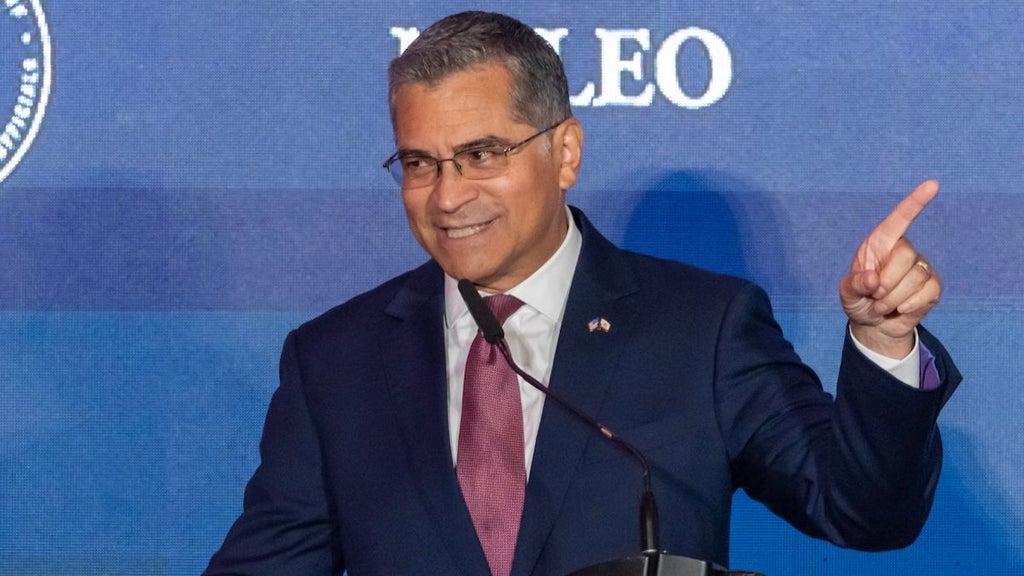
Xavier Becerra is the Democratic candidate for California governor, beating out his Democratic counterparts in a hotly contested primary race. He boasts extensive public service experience, and most recently served as U.S. Secretary of Health and Human Services under President Joe Biden.
Becerra said on his website that he would defend and expand the state’s $750 million tax credit cap, but he has been unclear on whether he would include “above the line” salaries in the tax credit program or uncap it all together — elements that would help make California competitive with other states like New York and New Jersey.
“I’ll sit down with all the legislators to see what kind of proposals are put before us,” he said.
Becerra argued his experience with the first film and TV federal tax credit program makes him uniquely equipped to tackle the production crisis plaguing the state.
The gubernatorial candidate said in the primary debate that he would support a state tax credit as long as the state receives at least $1 in return for every dollar it provides in tax credits. Even if Congress passes a federal film incentive, state lawmakers argue that California must do more to compete for film jobs.
As for permitting, Becerra claimed that he will work to “clear the bureaucratic friction that turns a permit request into a multi-agency ordeal, giving California’s irreplaceable locations back to the productions that want to shoot in them.”
He added that he will also push for a more formalized state-local incentive structure to encourage local governments to compete with other competitive film markets.
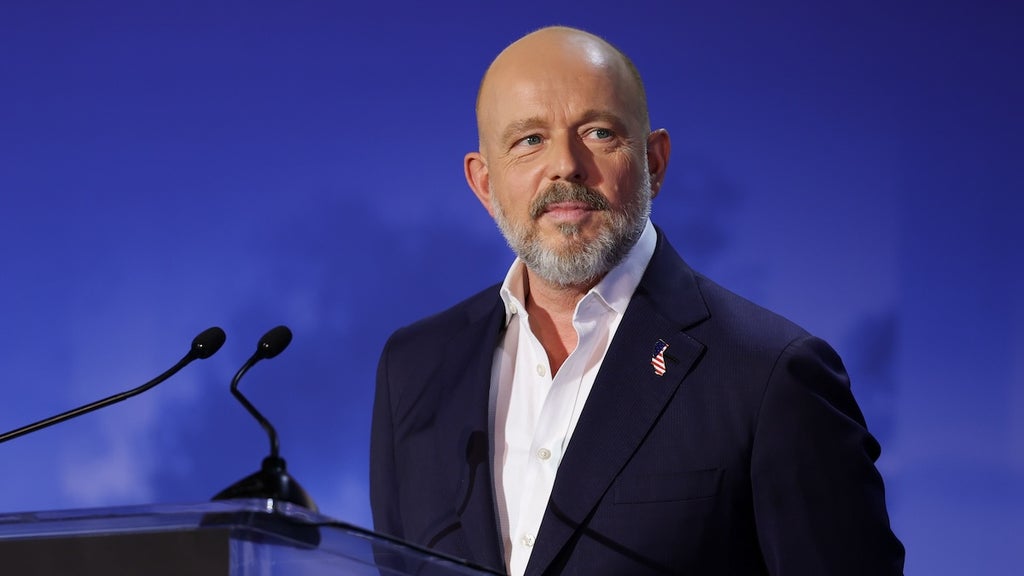
Steve Hilton rolled out his latest plan to support Hollywood earlier this month. The Republican candidate, who has been endorsed by President Trump, has definitively promised to eliminate the $750 million cap on the state’s film incentive and to include actors’ salaries and other “above the line” costs in the program.
California offers a 35% tax credit on all below-the-line costs for films and TV shows that are chosen by the state film commission, with bonuses that go up to 45%. Hilton proposed that he will offer a 40% state tax credit for production and even floated the idea of going as high as 50% for a period of five years. Hilton also pledged to include commercials, documentaries and reality TV in the tax credit program to make California more competitive.
At the gubernatorial debate this fall, Hilton blamed Becerra and the Democrats for Hollywood flailing.
“Who’s been in charge when all those jobs have gone, when this industry has collapsed?” he asked. “The [California] Democrats have been in charge for 16 years, and the jobs have gone, the industries have gone, and this city, this iconic industry, is on the brink of collapse,”
The candidate added that he would implement rolling approvals for production permits, so producers would get answers from the state within 30 days. He said he would also appoint a Governor’s Production Expediter to resolve permitting problems across state agencies and work directly with local governments.
Both are supportive of a federal film incentive, which was introduced in Congress last month, that would create a 20% tax credit on all U.S. labor costs.

California Attorney General
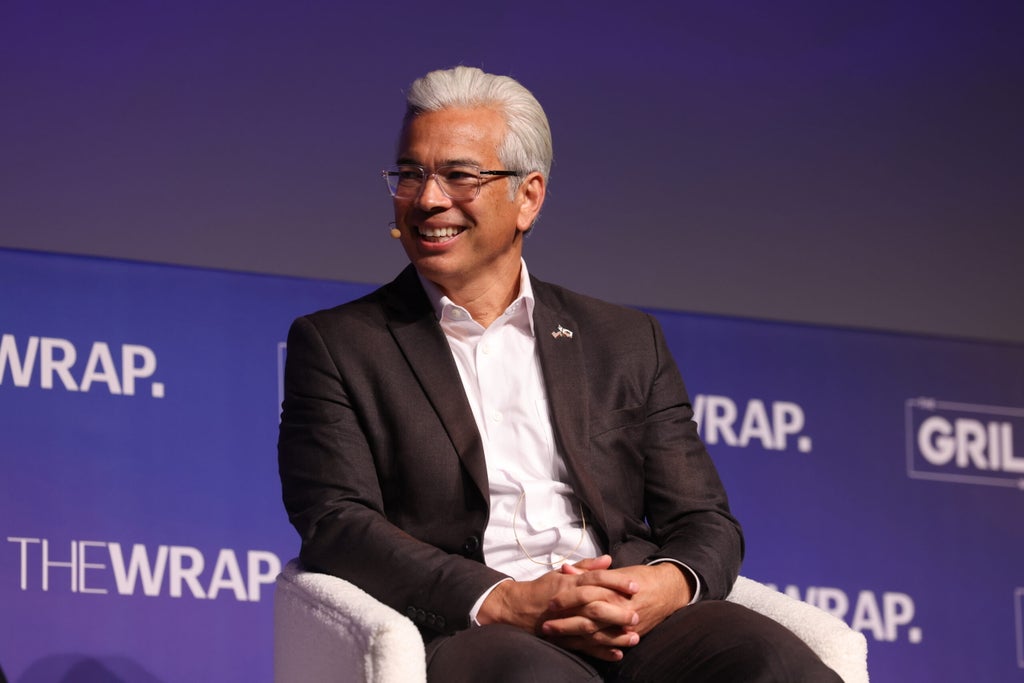
California AG Rob Bonta, who has been outspoken against mergers and acquisitions in Hollywood, is up for reelection this midterm season. The legal official spearheaded an antitrust lawsuit in July to block Paramount’s acquisition of Warner Bros. Discovery before settling in September.
Bonta also sued to stop a megamerger between broadcasting giants Nexstar and Tegna. The merger closed in March after receiving approval from the FCC, but is in legal limbo thanks to the states’ lawsuit.
As far as keeping production in California, Bonta has been an advocate for competition specifically in the entertainment industry.
Bonta has also been accused of caving on the Paramount-WBD merger due to David Ellison’s threat to move out of the state and pressure from California Gov. Gavin Newsom, Bass and Becerra. Bonta denied the idea that he was pressured into a settlement.
If reelected, the attorney general said he would sponsor a bill to eliminate the tax credit cap entirely. He was sworn in as attorney general in 2021. Previously he served on the California State Assembly from 2012 to 2021.
His opponent Michael E. Gates, Republican Deputy U.S. Attorney, has not made any public statements about the entertainment industry.
His campaign website outlines several issues that the candidate plans to advocate for if elected, including public safety, funding the police, mismanagement of tax dollars, defending the second amendment and tackling homelessness.

Proposition 40: Billionaire tax
Prop 40, also known as the “billionaire tax” is a one-time, 5% tax on the asset of billionaires who call California home. The funds would go towards healthcare.
Proponents, including the California Democrats, say it will serve as a stopgap measure to compensate for federal funding cuts. Prominent opponents to the measure include Gov. Newsom and Becerra, who has previously said that he does not think the one-time tax is a predictable or sustainable way to handle state tax policy.
Other notable races
Rick Zbur, who co-authored the state’s tax credit expansion, is up for reelection in California’s 51st Assembly District. He’s getting a challenge to his left from digital communications strategist Colin Hernandez. Zbur got 54% of the vote in the primary election.
Ben Allen, who also co-wrote the tax credit expansion, will not run for reelection and is instead running for insurance commissioner. Two Democratic candidates Brian Goldsmith, a billionaire-funded Dem strategist, and John Erickson, a WeHo city councilmember, are in the running to take his seat for California’s 24th State Senate District.
