

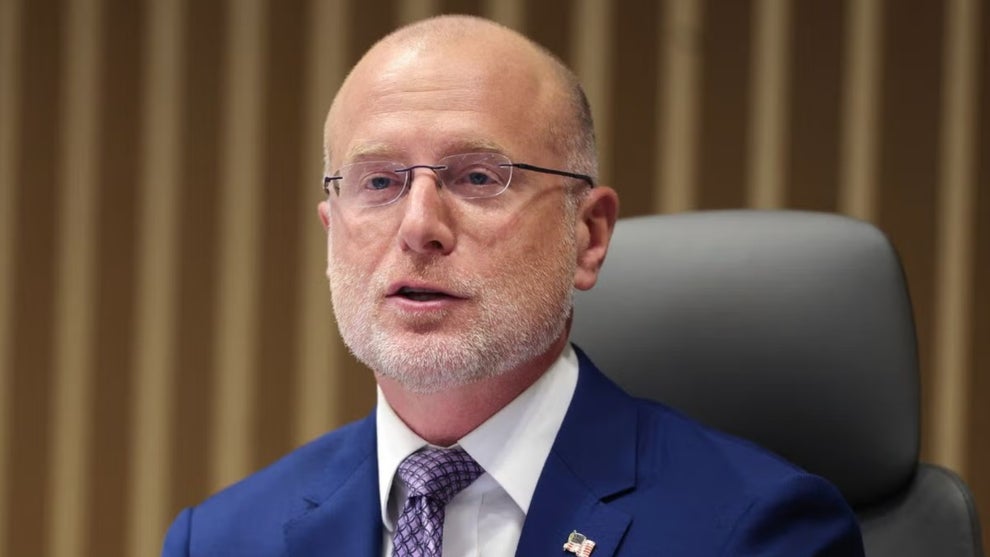
The Federal Communications Commission voted to repeal the national broadcast ownership cap and replace it with a case-by-case review, approving the measure by a 2-1 margin on Thursday.
The cap, which was implemented by Congress in 2004 to prevent monopolization, limits entities from owning or controlling broadcast television stations that, in the aggregate, reach more than 39% of TV households in the United States.
The vote by the FCC comes as local TV giants like Nexstar and Sinclair have previously lobbied for cap to be raised or eliminated, arguing that their competition is no longer just other stations, but streaming services and tech giants like Amazon and YouTube.
The FCC issued a waiver to allow Nexstar’s $6.2 billion merger with rival Tegna to go through and the combined company agreed to divest six stations in its portfolio within two years of the deal closing. But that decision, which was made without holding a public vote among commissioners, drew criticism from both sides of the political aisle.
It also prompted an antitrust lawsuit from a group of state attorneys general and DirecTV seeking to block the deal. The parties were granted a preliminary injunction, which has stopped Nexstar from absorbing Tegna’s assets and operations as the litigation plays out.

FCC Chairman Brendan Carr said the move would provide essential relief for local broadcasters by “restoring a healthy counterbalance to the growing leverage of national programmers” and allowing for increased scale to attract capital and ad revenue needed to “sustain and produce trusted and community-focused news and programming.”
“I don’t want local broadcast TV to go the way of local newspapers. And yet the risk is real,” Carr warned. “We should learn from our mistakes with the local newspaper industry, and we should not let the same thing happen to the local broadcast TV industry. Trusted sources of local reporting, broadcast over the public airwaves, are worth protecting and worth fighting for.”
But Democrat FCC Commissioner Anna Gomez argued that repealing the cap violates the law, exceeds the regulator’s authority and “undermines core public interest principles of localism, viewpoint diversity and competition.”
“A handful of of station group giants does not represent the wishes of local broadcasters. They are large national companies that own local stations and increasingly dictate what airs on them without much local input. Trading a squeeze from big tech for a squeeze from big media does nothing to protect the communities this cap was designed to serve,” she said. “I recognize that broadcasters are facing serious economic pressures, but addressing one pressure point in isolation without looking at the full picture of rules, obligations and relief already on the table, risks setting the wrong incentives.”

Though Gomez and other critics of the move argue only Congress can eliminate or raise the cap, Carr disagreed. He cited a D.C. Circuit court ruling that setting the cap at a specific percentage determined “only the starting point from which the Commission was to assess the need for further change.”
“Everyone is free to appeal FCC decisions. That’s how the process works. For us, it comes down to an analysis of what’s the right policy call, where do we think the law is, and everyone is free to litigate,” Carr said during his monthly press conference following the vote. “Folks have litigated FCC media regulation decisions historically. I wouldn’t be surprised if there’s appeals here, and we’ll allow the courts to work through it. But we’ve done our part.”
When asked about evaluating future transactions, Carr said the case-by-case review would look at the facts and implement conditions to protect localism.
“The future of local broadcast TV has to be localism. If they are just, a pass-through, a mouthpiece for the national feed, people can get that through YouTube TV or other channels. So I think if they’re going to continue to exist, they have every market incentive to continue to focus on localism,” he continued. “We have the right to preempt where you’re supposed to. If you think there’s a better fit, preempt national programming. We’d like to see that trend continue. So we will be focused to make sure that broadcasters continue to focus on localism and not just being dumb pipes for the national feed.”

“The FCC’s decision to eliminate the broadcast ownership cap is a welcome, necessary and long-overdue recognition of today’s competitive landscape, which is dominated by legacy Big Media and Big Tech,” a Nexstar spokesperson said in a statement Thursday. “For too long, local broadcasters were handcuffed from reaching the scale they needed to compete on a more level playing field by outdated federal rules that didn’t apply to the largest and most powerful companies like Google’s YouTube, Meta’s Instagram, or Netflix. Modernizing these rules will help ensure broadcasters can continue investing in local journalism and providing the free, trusted news and information that communities across America rely on every day.”
During Nexstar’s second quarter earnings call earlier in the day, CEO Perry Sook said the move would “remove a certain level of uncertainty in future M&A,” but noted he expects a judicial review of the decision.
“We believe that they are on very firm legal footing to make this declaration and we support and applaud the chairman for his leadership in this issue to allow broadcasting to compete on the same playing field in the domestic U.S. with every other purveyor of advertising and every other purveyor of video that we compete with that has access to 100% of U.S. households,” Sook added. “As it relates to our legal process, I think on balance there could be marginal benefit because it makes the unknown known from a regulatory perspective, but I don’t know that it will have a ton of effect as we go through our process.”
Similarly, Sinclair CEO Chris Ripley said on Wednesday that the move would “set the stage for broadcasters to be able to compete on a more level playing field” and “facilitate M&A activity across the industry.”
“Sinclair is well prepared to participate in value creating consolidation, and we will remain disciplined in how and when we do so,” Ripley added.
Meanwhile, the American Television Alliance called the move a “serious setback for American consumers and local communities.”
“By eliminating this safeguard, the FCC has ignored Congressional intent and opened the door to unchecked ‘Big Broadcast’ consolidation that will drive up costs for viewers and reduce local news programming,” the organization added.
