
As “Hell’s Kitchen” celebrates its milestone 25th season, the Fox cooking competition show welcomed Gen Z contestants ages 21-25 to compete for $250,000 cash prize and a head chef position at one of Gordon Ramsay’s Hell’s Kitchen restaurant.
Bringing in the Gen Z contestants, most of which grew up watching the show and were inspired by Ramsay to try their hand at a culinary career, is just one way EP Arthur Smith and his A. Smith & Co. Productions hope to keep the show relevant, over two decades after its 2005 launch.
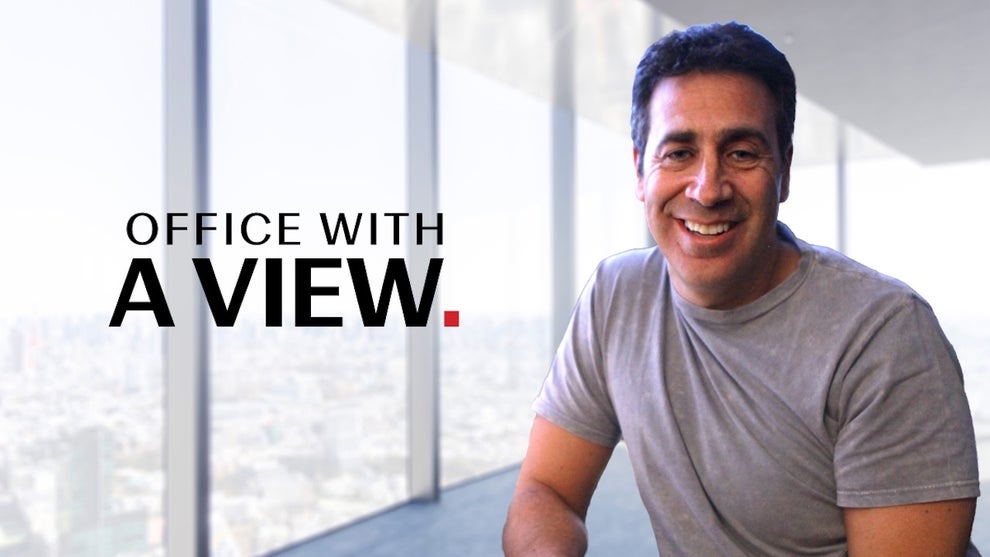
“I have this thing that I always say when we get the crew together and we start developing the show … if we’re not saying ‘for the first time in ‘Hell’s Kitchen’ history’ 10 times a season, we’re not doing our job,” Smith told TheWrap’s Office With a View. “We’re always looking to innovate while still protecting what people want.”
While the format of the show has proven to be tried and true, Smith, who serves as chairman and CEO of A. Smith & Co. Productions, finds ways to shake it up, revealing this season’s challenges cover everything from influencers to emojis.
“We’ve evolved … as food in America has evolved,” Smith said. “We’re always looking at — whether it’s food trends and having challenges that connect with what’s going on right now, or whether it’s just a style in terms of how we do the show.”

Below, Smith discusses the evolution of another longrunning broadcast unscripted series, “American Ninja Warrior,” which wrapped its 18th season this summer, and gives his outlook on the unscripted business.
TheWrap: You also have “American Ninja Warrior” over on NBC, which is another long-running show. How have you also evolved that format?
“Ninja” has been this amazing ride because no one could have ever predicted that an obstacle course show would be working in primetime on NBC, nominated for Emmy Awards and now it’s part of the Summer Olympics. You make your good fortune. “Ninja” is an example of working really hard and having a little bit of luck or a lot of luck in the case of “Ninja.” Our luck was something we had no control of — Comcast bought NBC Universal, and Ninja got on NBC as an experiment. We were all surprised about how well it did.
“Ninja” is an obstacle course show, but “Ninja” is so much more than that. The thing that got me right away is that the people who were running the course were a dental hygienist and a plumber, and they were all failing. There was something unbelievable in the celebration of the attempt, and that got to me. This has become more the obstacle course being a metaphor for life. What are they trying to overcome? It’s the stories, to me, that have made “Ninja” so compelling.
Unscripted has evolved beyond just broadcast and I know you’re working with Netflix on “Physical 100.” Where would you say we were at right now in the unscripted world, and and what’s your vision for where the studio is heading?
I love the fact that we’re into a lot of things. “Hell’s” is very different from “Ninja,” which is very different than “Welcome to Plathville.” While we don’t do a lot of things like sitcoms and dramas, in this genre we do all the subgenres and that has been one of the reasons among others that has kept us around for so long is that we’re very diversified in terms of the unscripted world.
I always have this list of qualities that every great scripted show or every great unscripted show needs: you have to have a great format or outline, you have to have great casting, and you have to have the right executors making it. But the other thing, especially in the unscripted world, is you need freshness. Sometimes the freshness is a concept. Sometimes it’s POV. Sometimes it’s how you shoot it. The industry’s kind of mature in a way, and people are always excited about things that are new and fresh. You still have to have the other qualities — just being weird and fresh or unique is not enough, but it’s a really important part because you could have a great outline with a great cast, and if it doesn’t have that freshness and it feels derivative, it’s not going to work.

What kinds of projects are you seeing an appetite for right now in the marketplace across broadcast and streaming?
It’s different at different places. How we develop for streamers is very different than how we develop for broadcasters, just understanding how their business functions. If you look at the landscape, I think it’s pretty wide open in terms of the types of genres that we’re talking about — certain genres don’t work on streamers, or they don’t work on networks like they used to. We’re aware of those factors, and then try to shake it up.
A number of years ago, we were having a development meeting, and we were talking about ideas, and I said … this may be extreme, but develop less, pitch less, sell more. What that means is develop things that you really care about. I don’t believe in going out there every day and knocking on the door because we don’t have the greatest idea every week. When you go out there to pitch, it is something that you’re so excited for you’re hyperventilating by the time you get to your meeting because you believe in it so much and you thought about it so much and you’ve done the work. You’ll have a better chance for success, and that’s the way we operate.
What advice would you give to a young person trying to enter the industry?
Take your best guess at what you really think you want to do and find the model that’s out there and then start making your plan on how to achieve that. You can change your mind later. I guessed and sometimes I guessed wrong. I spent two years as an executive at Universal, a senior vice president of television group … it was a job that didn’t fit me. I know production is everything to me. Still to this day, when I’m on set, I’m at my happiest. This is the longest job I’ve ever had and it’s the only job I’m ever going to have, but it took me a while to get there.
You learn as as you grow. I wrote a book called “Reach” … you only realize your full potential [by reaching] beyond what you think you can do. You still have to have a plan … but the worst thing you could do is overanalyze to the point that you’re not moving. You got to move. You got to go.
This interview has been edited for length and clarity.

Disney+ to Livestream 2027 Super Bowl