
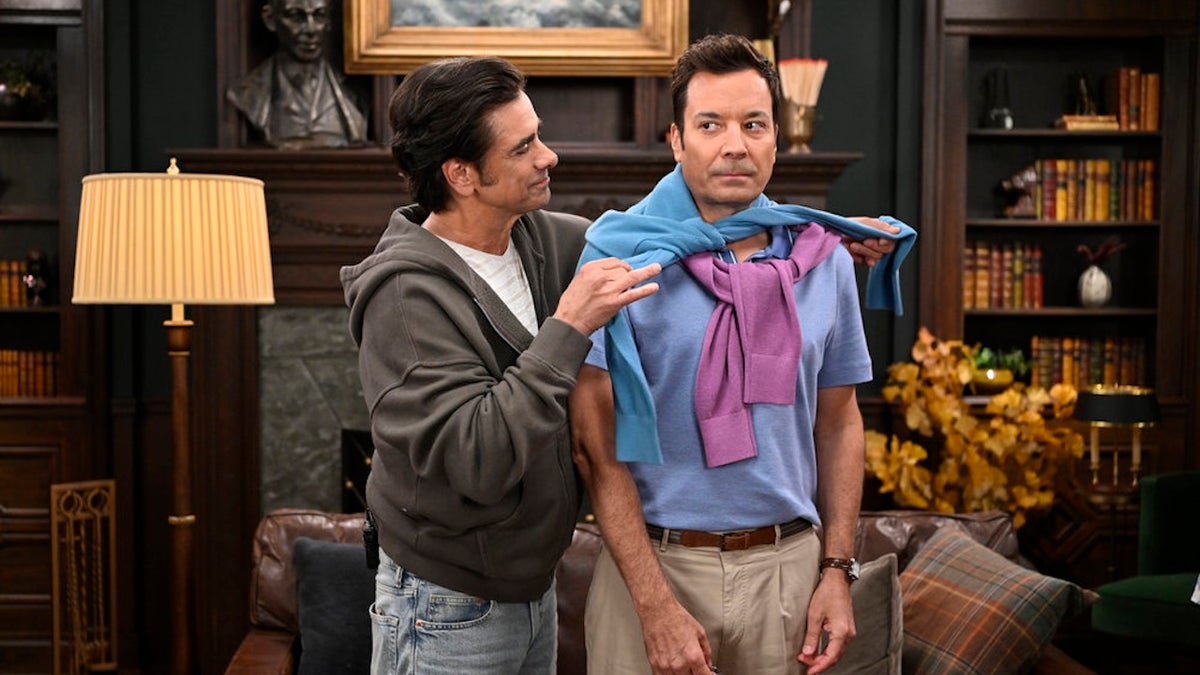
Microseries breakout star Kasey Esser’s manager had to make sure it wasn’t a scam when Jimmy Fallon’s team at “The Tonight Show” reached out to cast him in its first microdrama series, “Who Billionaire? Me Billionaire.”
Esser has spent the last three years acting in dozens of microseries (since they were still called mobisodes in 2023), but this project represented something different. Rather than another vertical-series app, he was helping introduce the genre to one of television’s biggest stages.
Late night television has long been on the precipice of new media trends, uploading full clips on YouTube for years and creating sketches and content for digital audiences specifically to boost engagement. Now, two leading late night programs, “The Tonight Show” and “The Daily Show,” are satirizing the microseries industry, which has loomed large in the past year as one of the fastest growing segments of the entertainment industry.
Microseries have spent the last three years building massive audiences on mobile apps, but they’ve reached another key milestone: They’ve become a big enough part of the cultural conversation to be spoofed. As traditional media companies increasingly experiment with producing and distributing the bite-sized dramas, “The Tonight Show” and “The Daily Show” are betting audiences know the genre’s signature billionaire romances, cliffhangers and melodrama well enough to laugh at them. And the format, in turn, offers a new avenue for these flagship late night programs to reach younger audiences as downward linear trends continue to pose a threat to late night as a whole.

Fallon and “The Tonight Show” dropped their microseries spoof less than one week after “The Daily Show” announced that they, too, would produce their own microseries. Both late night programs leaned into the billionaire trope that has dominated the microdrama platforms for the past three years, which often see an underestimated secret billionaire seek revenge when he’s snubbed by wealthy elites.
(Some of the most viral titles on ReelShort include “Accidental Triplets With the Billionaire,” “Never Divorce a Secret Billionaire Heiress” and “The Janitor Billionaire & His Swapped Bride”).
‘Tonight Show’ cranks up the production speed
“Who Billionaire? Me Billionaire” stars Esser alongside Fallon, John Stamos, creator Delaney Rowe and comedian Rose Kelso. Despite being on dozens of sets for these quick-turn microdramas, Esser said that he had never experienced the professionalism, scale and speed that he witnessed on the late night show’s stage.
Esser told TheWrap that he shot the 10-episode microseries in just one Friday afternoon on the NBC show’s typical day off. “The Tonight Show” team released the first two episodes three days later, on Monday night. The production moved even faster than a traditional microseries, which Esser said typically takes around 10 days to shoot. (The actor explained they were aided by cue cards, a crew of 30 and a multi-cam setup.)
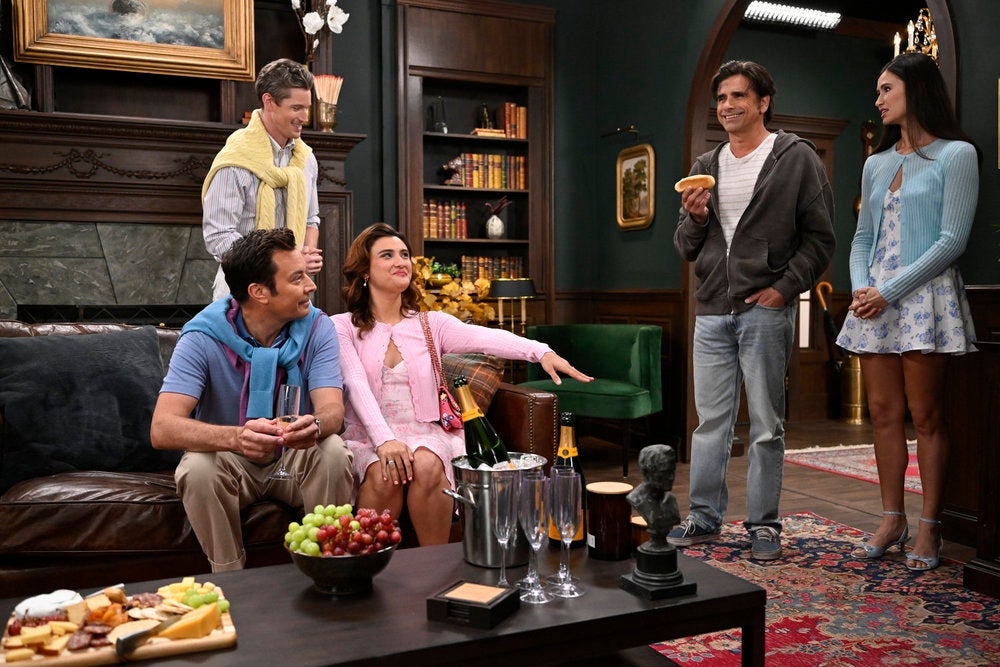
“What I appreciated about ‘The Tonight Show’ in particular was it wasn’t going back and forth for weeks,” he explained. “It was just like, ‘OK, we got this idea, let’s shoot it right now,’ and that’s kind of the microdrama game – moving quickly, committing to an idea and testing things out.”
Each of the episodes have reached over 1.5 million views a piece on Instagram since they were released on July 27, and the series as a whole has generated more than 21 million views across social and digital since its premiere. Viewers flooded the comments, saying they were entertained by the spoof and shocked at how addictive even the satirical series was.
The efforts by “The Tonight Show” and “The Daily Show” came as traditional entertainment players have leaned into microseries and the industry has exploded in popularity. Peacock has produced two unscripted microseries of its own, starring Bravo talent, in addition to hosting microseries from ReelShort on its platform. Fox also jumped into the space, adapting its own traditional dating series “Farmer Wants a Wife” into a 100-episode microseries.

But the late night spoof is something different. Existing entirely on social, this conversation is poking fun of the format more than attempting to profit from the payment structure that has built it into a billion-dollar business.
“The numbers tell you everything you need to know about this space,” Andrew Topel, manager in the comedy division at Underscore Talent, told TheWrap. “In a market where everyone is competing for attention, I just don’t think you can argue the numbers that this space is producing.”
For “The Tonight Show,” the series was a scripted experiment.
“I don’t even know if it’s funny,” Fallon joked in an interview with USA Today following the series release last week.
Adding political satire to the medium
“The Daily Show” is following closely behind Fallon’s team with their spoof “Two Billionaires Fight to Dominate the Country … And My Heart!” coming out in the near future. The political satire series will evaluate the political landscape through the microseries format for the first time.
“If there is a way that makes sense to bring our voice to a new format, we’ll try it,” Jen Flanz, showrunner and executive producer for “The Daily Show,” told TheWrap. “We spend a lot of time dealing with the mega-drama that is politics, so thought we’d easily take on the microdramas.”
Senior writer at “The Daily Show” Daniel Radosh said that microseries are natural vehicles for comedic material, despite the fact that traditional apps haven’t yet leaned into this genre.
“Microdramas are extremely ripe for comedy because they lean so heavily on their own rules and tropes. When the audience is already familiar with that, any little twist you can give them becomes instantly funny,” he told TheWrap. “The more tricky part is that we also hope our show will be discovered by people in our ‘Daily Show’ audience who may not have any idea what microdramas are, so the jokes have to be funny independent of the format as well.”
As late night introduces microseries to broader audiences, viewers are discovering a format that has largely existed within dedicated apps and siloed social media algorithms. For “The Tonight Show,” the spoof also served as a way to reach younger, digital-first audiences who may not regularly tune into its broadcast.
“These microdramas have a huge audience on social media,” Esser said. “I think there’s a huge attractiveness to bolstering a program like [‘The Tonight Show’], bolstering their TikTok, bolstering their Instagram, grabbing a different kind of audience that maybe doesn’t watch the late night show, necessarily, but it’s a different type of entry point.”
For Esser, who has watched the genre evolve from an industry curiosity into mainstream entertainment conversation, seeing one of television’s biggest franchises embrace the format feels like another milestone.
“A lot of the people who’ve tracked me have been tracking [the industry] for three years now,” he said. “To see it progress into getting more mainstream attention is really exciting for them, probably more so than me.”
